Maharashtra / West India · Indian
Kanda Poha (Maharashtrian Onion Flattened Rice)
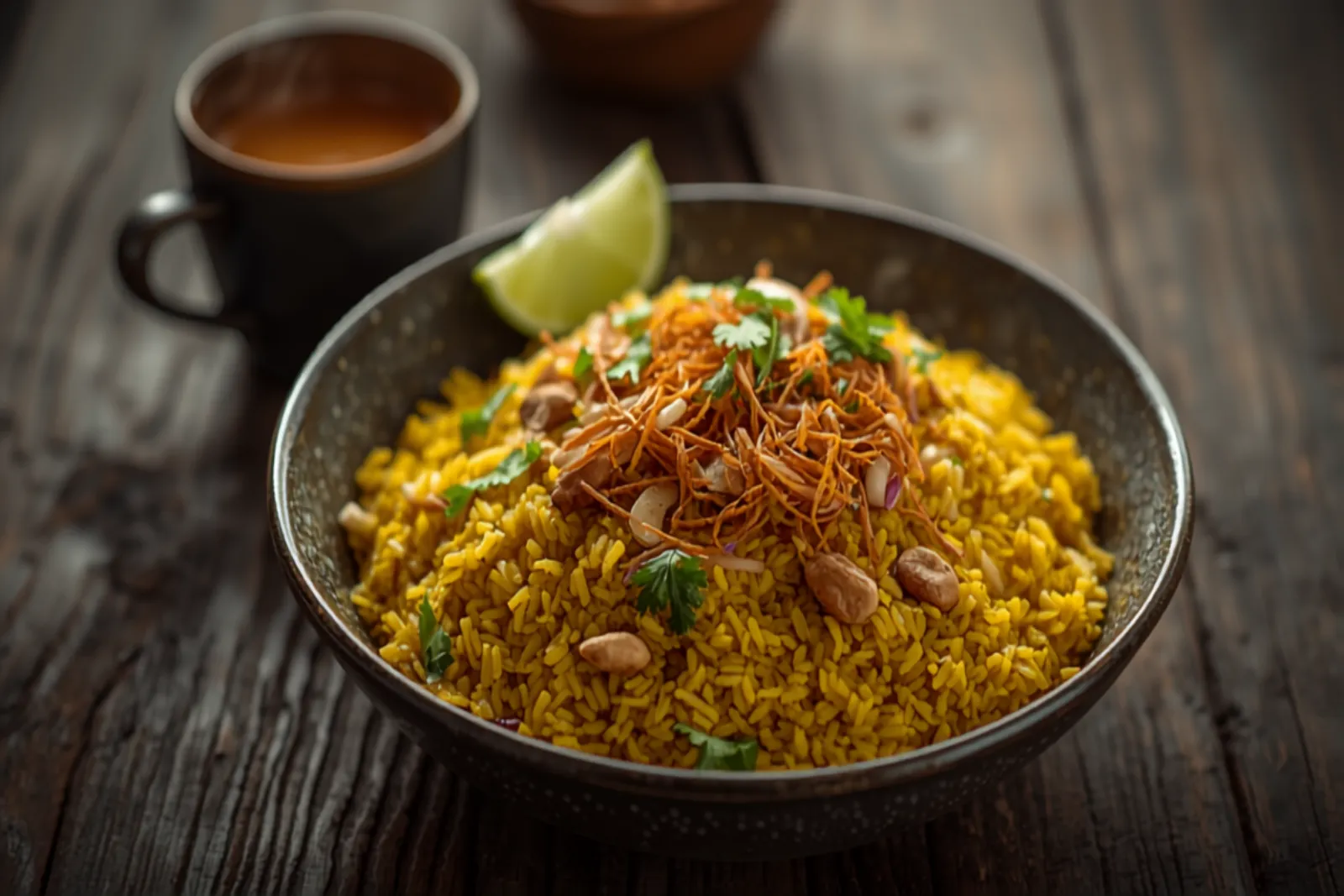
Maharashtra's beloved 15-minute breakfast: soft flattened rice tossed with onions, a mustard-and-curry-leaf tempering, toasted peanuts and a bright squeeze of lime. Light, savoury and endlessly comforting.
Published July 1, 2026
Cultural context
Kanda poha — kanda means onion in Marathi — is the everyday morning plate of Maharashtra, ladled out at home kitchens and roadside stalls alike and served with a cup of chai. It's also the dish traditionally offered when a prospective bride and groom's families meet, so much so that 'kande pohe' is Marathi shorthand for an arranged-marriage first meeting. Neighbouring Indore, in Madhya Pradesh, has its own sweeter, sev-and-jeeravan-crowned version; this is the plainer, savoury Maharashtrian one.
Kanda poha is the sound of a Maharashtrian morning — flattened rice steamed soft, stained gold with turmeric and tossed with sweet onions, a crackle of mustard seeds and curry leaves, and a handful of peanuts fried until they crunch. It comes together in the time it takes the chai to brew, which is exactly why it’s the breakfast half of western India seems to make on autopilot. Kanda is Marathi for onion, and here the humble onion is the whole point.
Poha is a pantry staple with real history
Poha is raw rice that’s been parboiled, rolled flat and dried into papery flakes, a preservation trick that lets rice keep for months and cook in minutes. It shows up all across India under different names, but in Maharashtra and Madhya Pradesh it became a morning institution. In Maharashtra, kande pohe is so tied to the ritual of two families meeting for an arranged match that the phrase itself is shorthand for that first awkward, hopeful get-together over tea and a plate of poha.
The technique that makes or breaks it
Everything rides on how you hydrate the flakes. Thick poha wants a quick rinse in a colander — not a soak — until each flake bends without snapping, then a rest while it drinks up the clinging water. Season the poha directly with turmeric, salt and a whisper of sugar so the colour and seasoning reach every flake, and fry the peanuts right at the start of the tempering so they stay crunchy in the finished dish. Fold, don’t stir hard, over low heat, and you get separate, fluffy flakes rather than a paste.
The finishing squeeze
The lime at the end isn’t just for brightness, though it does wake the whole bowl up. Flattened rice is a good source of iron, and the vitamin C in that squeeze of lime helps your body take it in — a bit of everyday kitchen wisdom that happens to be good nutrition. Scatter over coriander, and if you’re leaning toward the Indore end of the spectrum, a shower of fine sev and grated coconut.
Serve it hot with a cup of masala chai, and if you’re building out a Maharashtrian spread, follow it with misal pav. For more on the region’s cooking, see our guide to West Indian cooking.
Ingredients
For the poha
- 2 cups (about 150 g) thick poha (jada/thick flattened rice) Use thick poha, not the thin nylon kind — thin poha turns to mush when rinsed.
- 1/2 tsp turmeric powder
- 1 tsp sugar A small pinch that rounds out the salt and lime; leave out if you prefer it fully savoury.
- 1 tsp salt, or to taste
For the tempering
- 2 tbsp oil Neutral oil or, for extra aroma, a spoon of peanut oil.
- 1 tsp mustard seeds
- 1 tsp cumin seeds
- 3 tbsp raw peanuts Skin-on; they get fried first so they stay crunchy.
- 10 to 12 fresh curry leaves
- 2 green chillies, slit or chopped
- 1 large onion, finely chopped
- 1 pinch asafoetida (hing) Use a gluten-free hing if you're keeping the dish gluten-free.
To finish
- 1 lime or lemon, cut into wedges
- 3 tbsp fresh coriander, chopped
- grated fresh coconut and fine sev, to garnish (optional)
Method
Tap a step’s number to check it off as you go.
-
Put the poha in a colander and rinse briefly under running water, tossing gently, until every flake is damp and softened but not falling apart. Let it drain and sit while you prep everything else, about 5 minutes.
Why: Thick poha only needs a quick rinse — it drinks up the clinging water and plumps as it rests. Soaking it in a bowl of water makes it soggy and gluey.
-
Sprinkle the turmeric, sugar and salt over the drained poha and fluff it with a fork so the colour and seasoning coat the flakes evenly. Set aside.
Why: Seasoning the poha directly, rather than the pan, means every flake is turmeric-yellow and lightly salted instead of some clumps being bland.
-
Heat the oil in a wide pan over medium heat. Add the mustard seeds and let them splutter, then add the cumin and the peanuts and fry until the peanuts turn a shade darker and smell toasty, about 2 minutes.
Why: Frying the peanuts in the hot tempering oil at the start keeps them crunchy right through the finished dish — added later they'd stay raw and soft.
-
Add the curry leaves, green chillies and asafoetida — stand back, the curry leaves will crackle — then tip in the onion and cook, stirring, until soft and translucent, 3 to 4 minutes.
Why: The curry leaves and hing bloom in the oil for aroma; cooking the onion until just translucent keeps it sweet and jammy rather than raw and sharp.
-
Turn the heat to low and fold in the seasoned poha, mixing gently until it's warmed through and evenly coloured, 2 to 3 minutes. If it looks dry, sprinkle over a tablespoon of water and cover for a minute.
Why: Low heat and a light hand keep the flakes separate and fluffy; a splash of water and a lid steam it back to softness without turning it to paste.
-
Off the heat, squeeze over a wedge of lime and scatter with coriander (and coconut and sev if using). Serve hot with more lime on the side.
Why: The lime goes on at the end so its brightness stays fresh — and, as cooks in Maharashtra will tell you, the acidity helps your body absorb the iron in the flattened rice.
A quick, anonymous tap — no review needed.
Variations
- Batata (potato) poha
Add one small potato, peeled and diced small, with the onion and cook until tender before folding in the poha — a heartier version common alongside the onion one.
- Indori style
Finish with a heavier hand of fine sev, grated coconut and a sprinkle of jeeravan masala, plus a touch more sugar, for the sweeter Madhya Pradesh take.
- Gluten-free
The poha itself is naturally gluten-free — use a certified gluten-free asafoetida and skip the wheat-based sev garnish (or use a besan-only sev).
Serving & Storage
Serve hot for breakfast or an evening snack with a cup of masala chai. A wedge of lime and a little extra coriander on the side let everyone brighten their own plate.
Pairs with: Masala chai, Fresh lime wedges, Grated coconut, Fine sev.
Storage: Best eaten fresh and hot. Leftovers keep a day refrigerated; revive with a sprinkle of water and a gentle reheat, as poha dries out and firms up once cold.
Nutrition
Per serving (1 serving (about 1.5 cups))
- Calories
- 290
- Protein
- 7 g
- Carbs
- 42 g
- Fat
- 11 g
- Fiber
- 4 g
- Sugar
- 5 g
- Sodium
- 480 mg
Notable micronutrients: Iron, Vitamin C, Folate
Estimated using standard ingredient data. Values vary with brands and substitutions.
Frequently Asked Questions
What kind of poha should I buy?
Use thick poha, often labelled 'thick' or 'jada' poha — it holds its shape through a quick rinse and turns fluffy. Thin (nylon) poha is meant for chivda and roasted snacks; it dissolves into mush if you try to rinse and cook it this way. Medium poha works too, but rinse it even more briefly.
My poha turned out mushy / dry — what went wrong?
Both come down to water. Mushy poha means it soaked up too much — rinse it in a colander rather than soaking it in a bowl, and only until the flakes bend without snapping. Dry, hard poha means it needed a touch more moisture — sprinkle over a tablespoon of water, cover, and steam on low for a minute to soften it back up.
Is kanda poha the same as Indori poha?
They're close cousins. Kanda poha from Maharashtra is the plainer, savoury everyday version built on onions, peanuts and a curry-leaf tempering. Indori poha, from Indore in Madhya Pradesh, is sweeter and more decked out — piled with fine sev, grated coconut, pomegranate and a special jeeravan spice blend.
What to drink with this
All drinks →Hand-picked pours to match this dish.
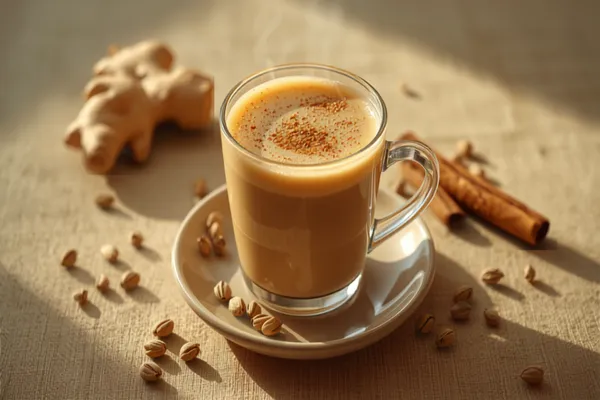
Pan-Indian (the everyday tea of the subcontinent) · Indian
Masala Chai (Spiced Indian Tea)
India's daily ritual in a cup: black tea brewed with milk, sugar and freshly crushed spices. The proper stovetop method, plus how to build your own masala.
North & West India (peak-summer drink across the subcontinent) · Indian
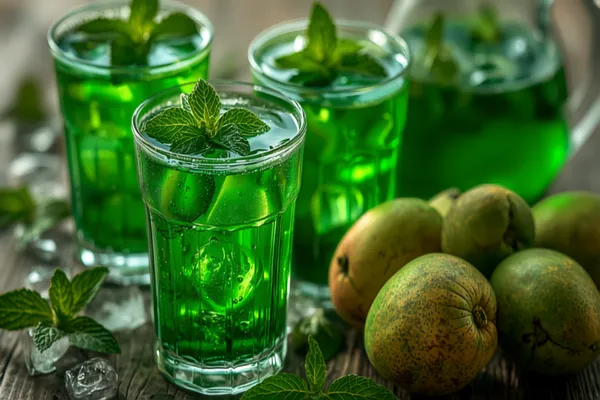
Aam Panna (Raw Green Mango Summer Cooler)
India's tangy, jade-green raw-mango cooler — roasted or boiled green mangoes blended with cumin, black salt and mint. The traditional heat-stroke remedy that tastes like summer.
Pan-Indian (North & West India) · Indian
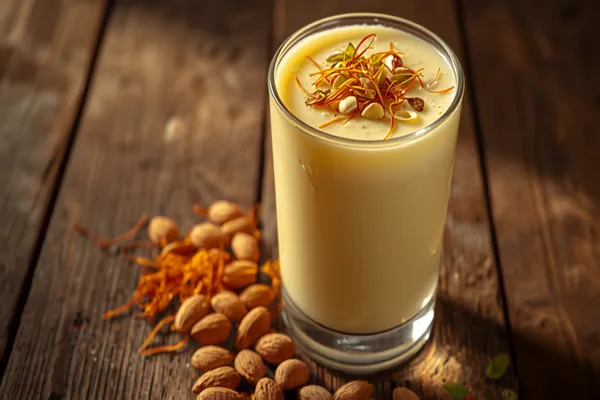
Badam Milk (Saffron Almond Milk)
Milk simmered with a paste of soaked almonds, saffron, cardamom and a whisper of nutmeg — India's rich, fragrant almond drink. Comforting served warm in winter, reviving served chilled in summer, festive any time.
From our kitchen community
Ratings & Reviews
My Rating
Tap a star to rate — no sign-in, no form needed.
My Review
0 Ratings
🥣 0 home cooks made it!
Be the first to rate Kanda Poha (Maharashtrian Onion Flattened Rice).
Related Recipes
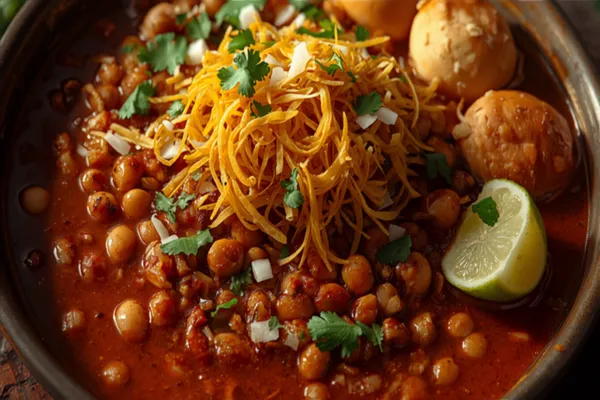
Maharashtra / West India · Indian
Misal Pav (Maharashtrian Sprouted Bean Curry)
Maharashtra's fiery street-food breakfast: a spiced sprouted-moth-bean curry (usal) under a slick of spicy tarri gravy, topped with crunchy farsan, onion, and lime, scooped up with soft pav. Big, bold, and built for a crowd.

Mumbai, Maharashtra / West India · Indian
Vada Pav (Mumbai's Spiced Potato Burger)
Mumbai's beloved street snack and unofficial city sandwich: a spiced, deep-fried potato dumpling (batata vada) tucked into a soft pav with dry garlic chutney and a fried green chili. Cheap, fiery, and completely addictive.
Pan-Indian (the everyday tea of the subcontinent) · Indian
Masala Chai (Spiced Indian Tea)
India's daily ritual in a cup: black tea brewed with milk, sugar and freshly crushed spices. The proper stovetop method, plus how to build your own masala.
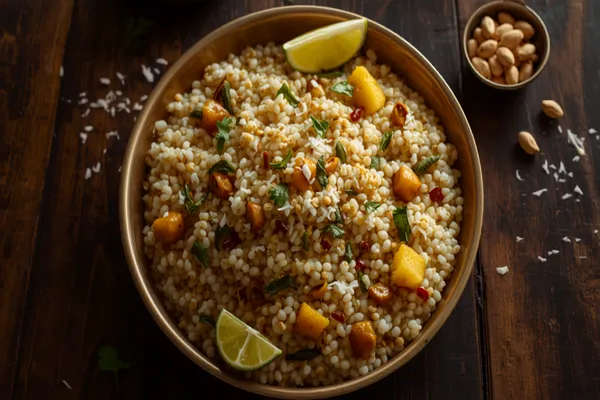
Maharashtra, West India (the Pune–Nashik belt) · Indian
Sabudana Khichdi (Maharashtrian Fasting Tapioca Pearls)
The Maharashtrian upvas classic: tapioca pearls soaked until they squash between your fingers, then tossed with ghee, cumin, potato and a thick coating of crushed roasted peanuts. Every pearl separate, glossy and nutty — never a sticky lump.
Further reading
- Cultural Story · West IndiaA Complete Guide to West Indian CookingFour very different states, one coast: Maharashtra's street food and fiery Kolhapuri curries, Gujarat's sweet-savoury vegetarian thali, Goa's twin Hindu and Catholic kitchens, and Rajasthan's desert cooking. A guide to western India's table.
- Ingredient Deep DiveThe Indian Spice Pantry: A Beginner's MapYou don't need a hundred spices to cook Indian food — you need a dozen, and the know-how to use them. A practical guide to the essential Indian spices, what each does, and the techniques (tadka, bhuna, dry-roasting) that unlock them.