North India (Mughal-era Delhi) · Indian
Malai Kulfi (Traditional Indian Frozen Custard)
The original Indian frozen dessert — full-fat milk slow-cooked until thick and caramel-sweet, scented with cardamom, saffron and pistachio, then frozen dense and hard. No churning, no ice-cream machine, just patience.
Published June 29, 2026
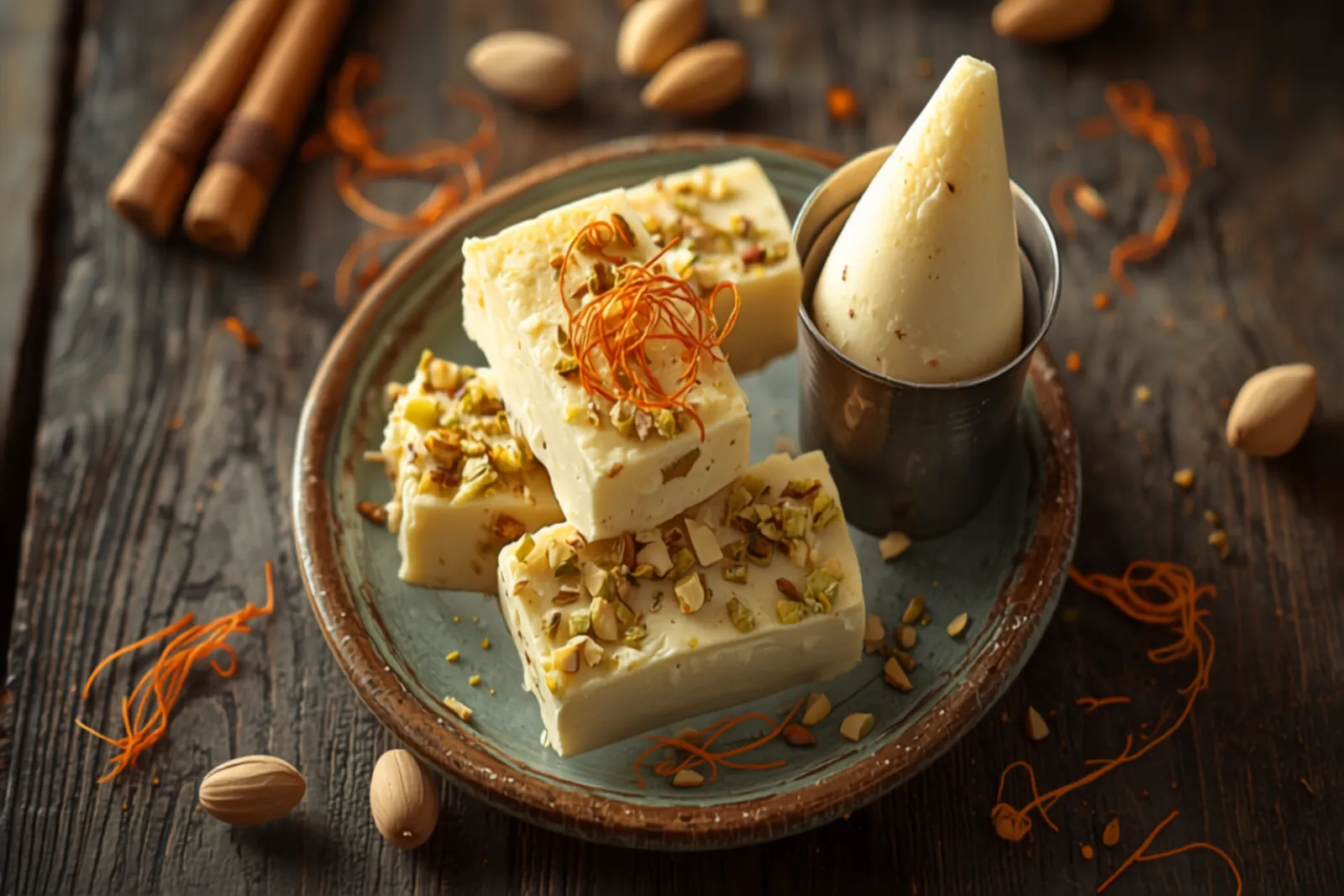
Cultural context
Kulfi dates to the 16th-century Mughal court in Delhi, where cooks boiled milk down to a dense, sweet concentrate, flavoured it with pistachios and saffron, sealed it into conical metal moulds and froze it in pots of ice and saltpetre. It is the ancestor of Indian ice cream — denser, slower-melting and more intensely milky than anything churned.
Malai kulfi is the original Indian frozen dessert, and tasting a good one explains instantly why it never needed an ice-cream machine to beat one. Where Western ice cream is churned light and airy, kulfi is the opposite: milk patiently boiled down to a dense, faintly caramelised concentrate, perfumed with cardamom and saffron, then frozen hard so it melts slowly on the tongue. The result is intensely milky, almost custard-like, and unmistakably its own thing.
A Mughal invention
Kulfi was born in the kitchens of 16th-century Delhi. Mughal cooks were already masters of reducing milk for sweets, and they took that thickened base, flavoured it with pistachios and saffron, packed it into conical metal moulds called kulfi, and froze the sealed cones in earthen pots of ice and saltpetre — a chemical chill brought down from the Himalayas and the Hindu Kush. The technique long predates modern refrigeration, which is exactly why the recipe leans on density rather than churning.
Why the slow reduction matters
The single most important step is patience at the stove. As the milk simmers down to a third of its volume, two things happen: the milk solids concentrate, and the lactose and proteins brown ever so slightly. That gentle caramelisation is the deep, cooked-milk flavour that distinguishes kulfi from plain frozen cream, and removing all that water is what stops the finished kulfi from freezing into a block of ice crystals. A wide, heavy pan and frequent scraping of the sides will get you there without scorching.
No churn, by design
Because kulfi is meant to be firm and slow-melting, you skip the churning entirely — you simply pour the cooled base into moulds and let the freezer do the work. A spoonful of slaked cornflour helps keep the texture smooth, and full-fat milk does the rest. For a cooling spread on a hot afternoon, pair it with a tall glass of badam milk or build the full dessert-shop classic by serving a slice over falooda. For more on India’s sweet traditions, see our guide to Indian festival sweets.
Ingredients
For the milk base
- 1 litre (4 cups) full-fat milk Whole milk only — the fat is what makes kulfi rich rather than icy.
- 2 tbsp milk powder Optional but recommended; it shortcuts some of the reduction and deepens the milky body.
- 1/3 cup sugar Adjust to taste; the reduced milk is already faintly sweet from caramelised lactose.
- 1 tbsp cornflour (cornstarch) Slaked in 2 tbsp cold milk — it keeps the texture creamy and holds back large ice crystals.
- 1 big pinch saffron strands Soaked in 1 tbsp warm milk for 10 minutes to bloom the colour and aroma.
- 2 tbsp pistachios, finely chopped Plus extra to garnish; use unsalted.
- 2 tbsp almonds, finely chopped Blanched and slivered, or skin-on for a rustier texture.
To flavour
- 1/4 tsp green cardamom, freshly ground
Method
Tap a step’s number to check it off as you go.
-
Bring the milk to a boil in a wide, heavy pan, then lower to a steady simmer. Whisk in the milk powder.
Why: A wide pan exposes more surface area so the milk reduces faster and more evenly. Whisking the milk powder in early prevents lumps.
-
Simmer, stirring often and scraping the sides and base, until the milk has reduced to about a third — roughly 35–40 minutes. It should coat the back of a spoon and carry flecks of clotted malai.
Why: Slow reduction concentrates the milk solids and lightly browns the proteins and sugar; this Maillard-and-caramel note is the signature kulfi flavour, and the lost water is what keeps it from freezing icy.
-
Stir in the sugar and the slaked cornflour and cook another 3–4 minutes until slightly thickened.
Why: Adding sugar only after reduction avoids scorching it; the cornflour starch traps water and interrupts ice-crystal growth so the set stays smooth without churning.
-
Take off the heat and stir in the cardamom, saffron milk, pistachios and almonds. Cool to room temperature.
Why: Adding the aromatics off the heat keeps the cardamom and saffron fragrant rather than cooking them flat.
-
Pour into kulfi moulds, small cups or a loaf tin, cover, and freeze at least 6 hours or overnight until rock-solid.
Why: Kulfi is meant to be dense and hard, not soft-scoop. The long, undisturbed freeze is traditional — no churning required.
-
To serve, dip the mould briefly in warm water, unmould, slice thickly and scatter with extra pistachios.
Why: A quick warm dip loosens the kulfi cleanly; slicing rather than scooping shows off the dense, custard-like texture.
A quick, anonymous tap — no review needed.
Variations
- Quick (no long reduction)
Simmer the milk only 15 minutes, then thicken with 1/2 cup khoya (mawa) and 1/4 cup cream. Faster, though slightly less caramelised.
- Mango kulfi
Fold 3/4 cup thick mango purée (Alphonso for the best perfume) into the cooled base before freezing; reduce the sugar a little.
- Kulfi falooda
Serve a slice over cooked falooda sev with rose syrup and basil seeds for the classic dessert-shop treat.
Serving & Storage
Serve straight from the freezer on a hot day, on its own or over falooda noodles with a thread of rose syrup. A few extra pistachios and a saffron strand on top is all the garnish it needs.
Pairs with: Falooda, Rose syrup, Fresh mango, Masala chai.
Storage: Keeps in the freezer, well covered, for up to 1 month. Let it sit 2–3 minutes before slicing so it gives cleanly.
Nutrition
Per serving (1 kulfi)
- Calories
- 220
- Protein
- 7 g
- Carbs
- 22 g
- Fat
- 11 g
- Fiber
- 1 g
- Sugar
- 20 g
- Sodium
- 75 mg
Notable micronutrients: Calcium, Vitamin B12, Phosphorus
Estimated using standard ingredient data. Values vary with brands and substitutions.
Frequently Asked Questions
Why is my kulfi icy instead of creamy?
Two usual culprits: the milk wasn't reduced enough, or low-fat milk was used. The richness and the concentrated solids from a proper reduction are what crowd out water and keep ice crystals small. The slaked cornflour and a spoon of cream also help.
Do I need an ice-cream machine?
No — that's the beauty of kulfi. Because it's meant to be dense and firm rather than light and churned, you simply pour it into moulds and freeze it undisturbed. No machine, no stirring midway.
What can I use if I don't have kulfi moulds?
Small paper cups, a metal loaf tin, popsicle moulds or even an idli plate all work. Cover the surface to limit ice crystals, and slice or unmould once fully set.
What to drink with this
All drinks →Hand-picked pours to match this dish.
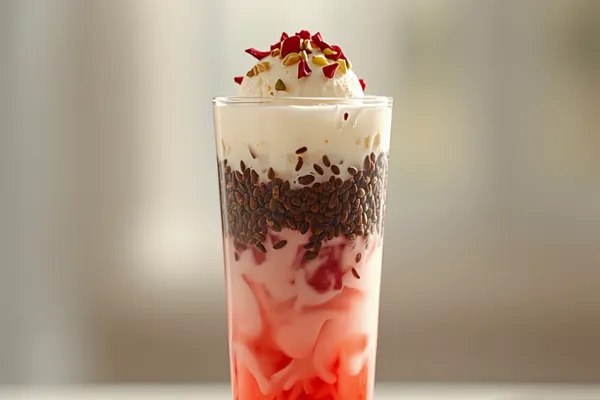
South Asia (Persian roots, beloved across India, Pakistan & beyond) · Indian
Falooda (Rose, Vermicelli & Ice Cream Drink)
Part drink, part dessert: layers of rose syrup, soaked basil seeds, silky vermicelli, chilled milk and a scoop of ice cream. The South Asian showstopper, layered the proper way.
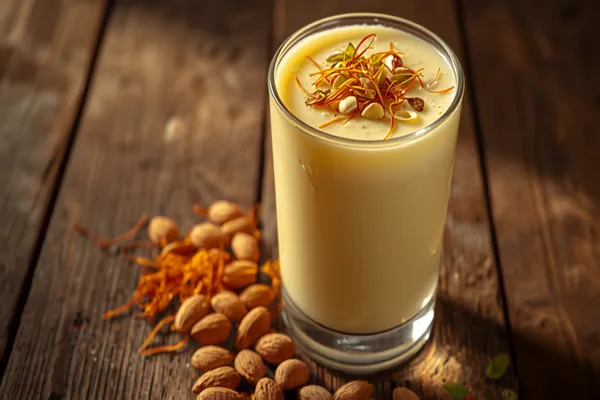
Pan-Indian (North & West India) · Indian
Badam Milk (Saffron Almond Milk)
Milk simmered with a paste of soaked almonds, saffron, cardamom and a whisper of nutmeg — India's rich, fragrant almond drink. Comforting served warm in winter, reviving served chilled in summer, festive any time.

North India (Banaras / Uttar Pradesh, the heart of thandai country) · Indian
Thandai (Spiced Almond & Saffron Milk for Holi)
North India's festival cooler: chilled milk blended with almonds, fennel, cardamom, peppercorn, poppy and saffron. The fragrant, nutty drink of Holi and Maha Shivratri — made from scratch.
From our kitchen community
Ratings & Reviews
My Rating
Tap a star to rate — no sign-in, no form needed.
My Review
0 Ratings
🥣 0 home cooks made it!
Be the first to rate Malai Kulfi (Traditional Indian Frozen Custard).
Related Recipes
South Asia (Persian roots, beloved across India, Pakistan & beyond) · Indian
Falooda (Rose, Vermicelli & Ice Cream Drink)
Part drink, part dessert: layers of rose syrup, soaked basil seeds, silky vermicelli, chilled milk and a scoop of ice cream. The South Asian showstopper, layered the proper way.
Pan-Indian (North & West India) · Indian
Badam Milk (Saffron Almond Milk)
Milk simmered with a paste of soaked almonds, saffron, cardamom and a whisper of nutmeg — India's rich, fragrant almond drink. Comforting served warm in winter, reviving served chilled in summer, festive any time.
North India (Banaras / Uttar Pradesh, the heart of thandai country) · Indian
Thandai (Spiced Almond & Saffron Milk for Holi)
North India's festival cooler: chilled milk blended with almonds, fennel, cardamom, peppercorn, poppy and saffron. The fragrant, nutty drink of Holi and Maha Shivratri — made from scratch.
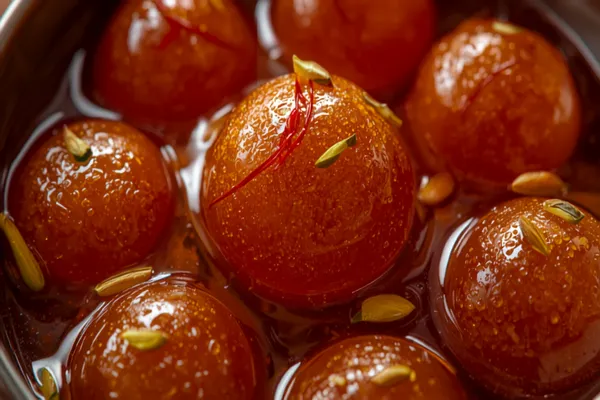
North India / pan-Indian · Indian
Gulab Jamun (Milk Dumplings in Rose-Cardamom Syrup)
The king of Indian sweets: soft khoya dumplings fried to deep gold and soaked in warm rose-and-cardamom syrup until they swell, juicy and melting. The dessert no Diwali or wedding is complete without.
Further reading
- Festival & SeasonalIndian Festival Sweets: From Diwali to EidIn India, no celebration is complete without mithai. A guide to the sweets that define the festival calendar — the Diwali mithai box, the Eid dessert table, and the regional treasures of Bengal and the south — and what makes each one special.
- Cultural Story · North IndiaA Complete Guide to North Indian CookingThe cuisine the world knows best — and understands least. From Punjab's tandoor and dairy to Kashmir's aromatic Wazwan and Awadh's courtly kebabs, a guide to North India's regions, techniques, and where to begin.