North India (Banaras / Uttar Pradesh, the heart of thandai country) · Indian
Thandai (Spiced Almond & Saffron Milk for Holi)
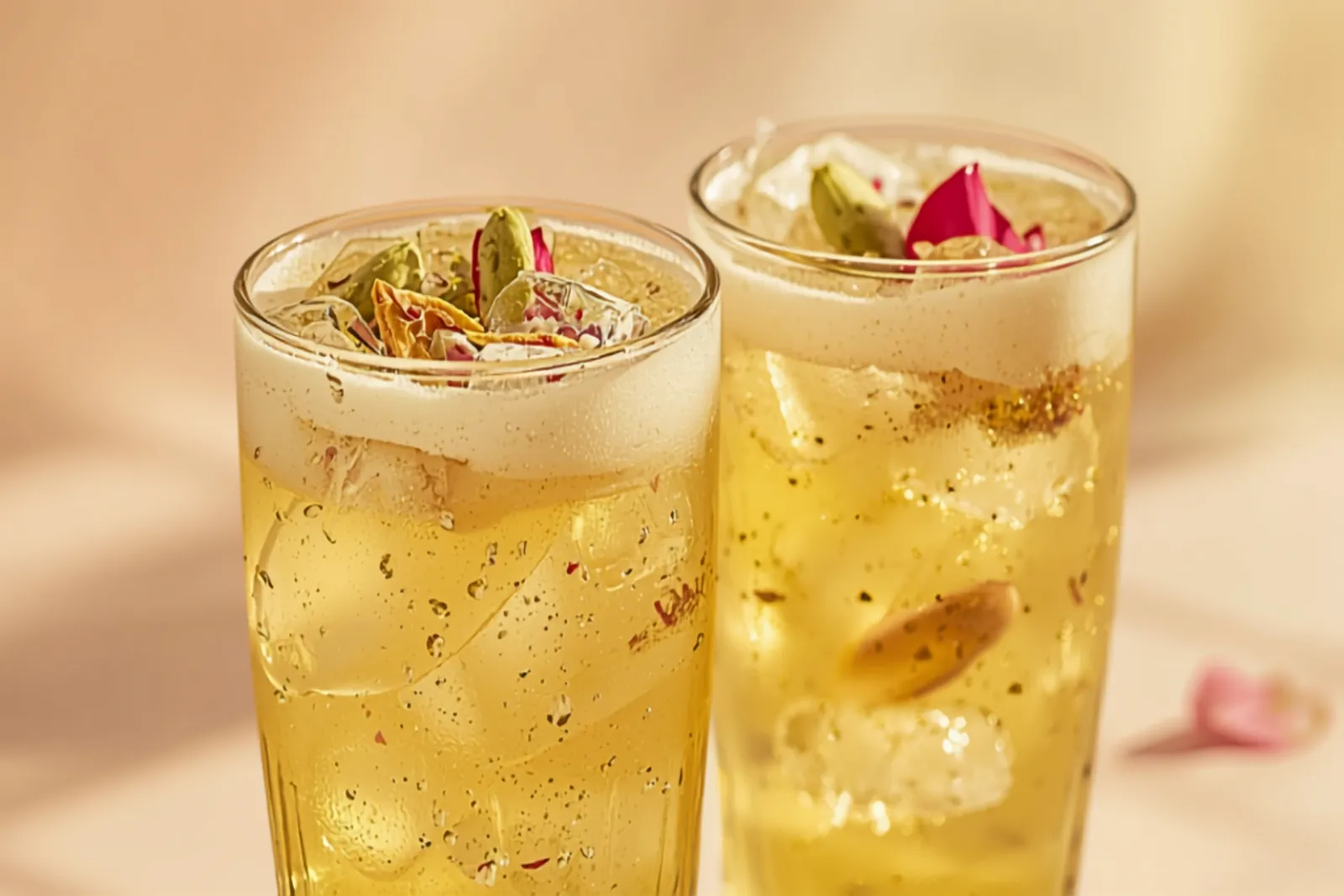
North India's festival cooler: chilled milk blended with almonds, fennel, cardamom, peppercorn, poppy and saffron. The fragrant, nutty drink of Holi and Maha Shivratri — made from scratch.
Published June 21, 2026
Cultural context
Thandai — literally 'that which cools' — is the spiced, nutty milk of North Indian festivals, above all Holi and Maha Shivratri. Banaras (Varanasi) is its spiritual home, where shops grind the almond-and-spice paste fresh. Cooling, fragrant and faintly medicinal, it's a centuries-old drink built to counter the heat of spring; at Holi it's famously the base for the cannabis-infused version, but the classic is simply a glorious spiced milk.
Thandai — ‘that which cools’ — is the spiced, nutty milk of North Indian festivals, above all Holi and Maha Shivratri. Banaras is its spiritual home, where shops grind the almond-and-spice paste fresh. Cooling, fragrant and faintly medicinal, it’s a centuries-old answer to the heat of spring.
Soak, then grind to a fine paste
Soak the almonds, melon seeds, poppy seeds and fennel for a few hours so they grind smooth, not gritty. Then grind them with cardamom, peppercorn and rose into a fine, fragrant paste — the heart of the drink. The smoother the paste, the silkier the thandai.
Bloom the saffron
Steep the saffron in a little warm milk to draw out its colour and aroma before it goes in. It gives thandai its pale gold hue and signature perfume.
Whisk, chill, garnish
Whisk the paste and saffron milk into cold milk with sugar, chill thoroughly, and serve ice-cold over ice with pistachios and rose petals. Make a dry thandai powder ahead and you can whisk up a glass any time. Note: the Holi ‘bhang’ version is cannabis-spiked — this is the classic, non-intoxicating drink. More festive pours in the Drinks guide.
Ingredients
- 20 almonds
- 2 tbsp melon or pumpkin seeds (magaz)
- 1 tbsp poppy seeds (khus khus)
- 1 tbsp fennel seeds (saunf)
- 8 green cardamom pods (seeds only)
- 8 black peppercorns
- 1 tbsp dried rose petals (optional, but classic)
- large pinch saffron
- 750 ml cold whole milk
- 4–5 tbsp sugar, to taste
- chopped pistachios and rose petals, to garnish
Method
Tap a step’s number to check it off as you go.
-
Soak the almonds, melon seeds, poppy seeds and fennel in warm water for at least 2 hours (or overnight). Soak the saffron in a tablespoon of warm milk.
Why: Soaking softens the nuts and seeds so they grind into a smooth paste rather than a gritty one, and blooming the saffron in milk draws out its colour and aroma.
-
Drain the soaked nuts and seeds and grind with the cardamom, peppercorns, rose petals and a little milk to a smooth, fine paste.
Why: Grinding everything together into a fine paste is the heart of thandai — the smoother the paste, the silkier and more aromatic the finished drink.
-
Whisk the paste into the cold milk with the sugar and saffron milk. Chill well, then strain (optional) and serve cold over ice, garnished with pistachios and rose petals.
Why: Resting and chilling lets the spices infuse the milk fully; straining gives a smoother drink, though many leave it textured. Serving it ice-cold is the whole point of a 'cooling' drink.
A quick, anonymous tap — no review needed.
Variations
- Thandai powder (make-ahead)
Dry-grind the nuts and spices into a powder and store it; whisk a few spoons into cold milk any time for instant thandai.
- Vegan
Use chilled almond milk and a plant sweetener; the drink is already nut-and-spice based, so it adapts easily.
- Thandai kulfi / dessert
Freeze the spiced milk into kulfi, or use thandai to flavour cakes and panna cotta — it's a popular festive flavour.
Serving & Storage
Serve ice-cold in tall glasses, topped with slivered pistachios, almonds and rose petals — especially at Holi, alongside festival sweets and savouries.
Pairs with: Gujiya, Holi sweets, Mathri, Festival snacks.
Storage: The spiced milk keeps 2 days chilled; whisk before serving as the paste settles. The dry thandai powder or paste keeps much longer — paste up to a week refrigerated, powder for weeks.
Nutrition
Per serving (1 glass (~220 ml))
- Calories
- 230
- Protein
- 8 g
- Carbs
- 26 g
- Fat
- 11 g
- Fiber
- 2 g
- Sugar
- 23 g
- Sodium
- 70 mg
Notable micronutrients: Calcium, Vitamin E
Estimated using standard ingredient data. Values vary with brands and substitutions.
Frequently Asked Questions
What does thandai taste like?
Cool, creamy and complex — sweet almond and melon-seed richness, the liquorice note of fennel, floral cardamom and rose, and a gentle warm bite from black pepper. It's fragrant and faintly medicinal in the best way, and unmistakably festive.
Is thandai always cannabis-infused?
No. At Holi, a version called 'bhang thandai' is spiked with a cannabis paste, which is where thandai gets some of its reputation — but the traditional, everyday drink is simply spiced almond-saffron milk with no intoxicant at all. This recipe is the classic, non-intoxicating version.
Can I make it ahead for a party?
Yes — make the nut-and-spice paste or a dry thandai powder in advance. Then it's just a matter of whisking it into cold milk with sugar and saffron and chilling. The paste keeps about a week in the fridge; the powder for weeks.
From our kitchen community
Ratings & Reviews
My Rating
Tap a star to rate — no sign-in, no form needed.
My Review
0 Ratings
🥣 0 home cooks made it!
Be the first to rate Thandai (Spiced Almond & Saffron Milk for Holi).
Related Recipes
Punjab / North India (lassi heartland) · Indian
Mango Lassi (Yogurt and Mango Drink)
The creamy, cooling mango-and-yogurt drink of North Indian summers and restaurant menus everywhere. Three ingredients, two minutes, and a little cardamom.
Pan-Indian (the everyday tea of the subcontinent) · Indian
Masala Chai (Spiced Indian Tea)
India's daily ritual in a cup: black tea brewed with milk, sugar and freshly crushed spices. The proper stovetop method, plus how to build your own masala.
South Asia (Persian roots, beloved across India, Pakistan & beyond) · Indian
Falooda (Rose, Vermicelli & Ice Cream Drink)
Part drink, part dessert: layers of rose syrup, soaked basil seeds, silky vermicelli, chilled milk and a scoop of ice cream. The South Asian showstopper, layered the proper way.
North India (Mughal-era Delhi) · Indian
Malai Kulfi (Traditional Indian Frozen Custard)
The original Indian frozen dessert — full-fat milk slow-cooked until thick and caramel-sweet, scented with cardamom, saffron and pistachio, then frozen dense and hard. No churning, no ice-cream machine, just patience.
Further reading
- Cultural Story · InternationalThe Drinks Guide: A World Tour in a GlassA pourer's tour of the whole Drinks collection — world-class cocktails built the right way, the regional drinks that define a place, thoughtful non-alcoholic options and mocktails, and the unique coolers each region customized to its own heat and ritual.
- Ingredient Deep DiveThe Indian Spice Pantry: A Beginner's MapYou don't need a hundred spices to cook Indian food — you need a dozen, and the know-how to use them. A practical guide to the essential Indian spices, what each does, and the techniques (tadka, bhuna, dry-roasting) that unlock them.