South Asia (Persian roots, beloved across India, Pakistan & beyond) · Indian
Falooda (Rose, Vermicelli & Ice Cream Drink)
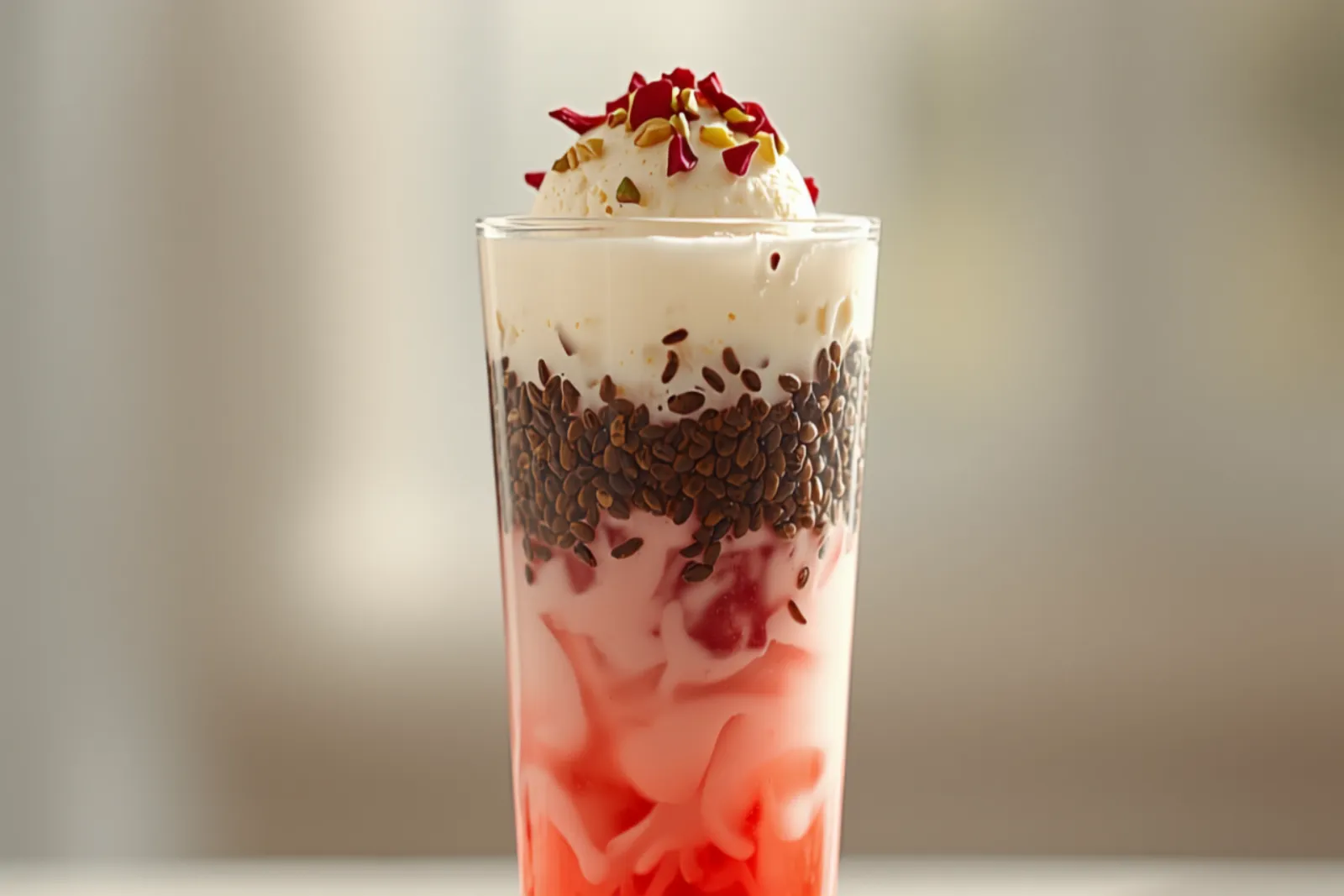
Part drink, part dessert: layers of rose syrup, soaked basil seeds, silky vermicelli, chilled milk and a scoop of ice cream. The South Asian showstopper, layered the proper way.
Published June 21, 2026
Cultural context
Falooda travelled from Persia (where 'faloodeh' is a frozen rose-and-vermicelli dessert) along the Mughal routes into South Asia, where it became a layered, extravagant drink-dessert. Rose syrup, jelly-like soaked basil seeds, soft vermicelli, cold milk and ice cream are stacked in a tall glass — a cooling celebration in itself, served at Eid, weddings and sweltering summer afternoons.
Falooda is part drink, part dessert — layers of rose syrup, jelly-like soaked basil seeds, silky vermicelli, cold milk and a scoop of ice cream, stacked in a tall glass. It travelled from Persia along the Mughal routes into South Asia, where it became this extravagant, cooling showstopper served at Eid, weddings and on the hottest afternoons.
Soak the basil seeds properly
Soak the sabja seeds 15 to 20 minutes until they swell into translucent, jelly-coated pearls. They need to fully hydrate for their signature pop — and so they don’t keep swelling in the glass as you drink.
Cook and chill the vermicelli
Boil the falooda sev until soft, then rinse under cold water to stop the cooking and wash off the starch so the strands stay separate and silky. Chill everything well — a warm falooda is a sad falooda.
Layer for the drama
Build it in a clear glass so every stratum shows: rose syrup, basil seeds, vermicelli, cold rose milk, then a scoop of ice cream and a shower of pistachios and rose petals. Serve with a straw and a long spoon, and stir the layers together as you go. Lovely after biryani at Eid. More in the Drinks guide.
Ingredients
- 2 tbsp basil seeds (sabja / tukmaria) Soaked basil seeds swell into a jelly-coated pearl — don't substitute chia, which behaves differently (though it works in a pinch).
- 1/4 cup falooda sev (fine vermicelli), or cornflour vermicelli
- 4 tbsp rose syrup (Rooh Afza or similar)
- 500 ml cold milk
- 2 scoops vanilla or kulfi ice cream
- to garnish chopped pistachios, almonds, and a few rose petals
- optional soaked tapioca pearls or jelly cubes
Method
Tap a step’s number to check it off as you go.
-
Soak the basil seeds in water for 15–20 minutes until they swell and turn translucent and jelly-like. Drain.
Why: Basil seeds must fully hydrate to develop their signature pop and jelly coating; unsoaked, they'd swell unpleasantly in the glass as you drink.
-
Boil the vermicelli until soft (a few minutes), rinse under cold water, and chill. Mix the rose syrup into the cold milk, or keep them separate to layer.
Why: Rinsing the vermicelli stops the cooking and removes surface starch so it stays separate and silky; chilling everything keeps the assembled falooda cold and the ice cream from melting too fast.
-
Layer in a tall glass: a spoon of rose syrup, then basil seeds, then vermicelli, then pour in the cold (rose) milk. Top with a scoop of ice cream, more syrup, and the nuts and petals.
Why: Layering is the whole drama of falooda — the distinct strata of red syrup, dark seeds, pale vermicelli and white ice cream are meant to be seen through the glass and stirred together as you eat-drink it.
A quick, anonymous tap — no review needed.
Variations
- Vegan
Use chilled almond or oat milk and a dairy-free ice cream or kulfi; the seeds, vermicelli and rose syrup are already plant-based.
- Mango falooda
Layer in mango purée and use mango ice cream for a fruity summer version.
- Kulfi falooda
Top with a slab of kulfi (Indian milk ice cream) instead of a scoop — the classic Indian street version.
Serving & Storage
Serve in a tall, clear glass so the layers show, with a long spoon and a straw — it's eaten and drunk at once. Best on a hot day or as a celebratory treat at Eid or a wedding.
Pairs with: Biryani, Eid feast, Grilled kebabs, As a dessert on its own.
Storage: Assemble to serve — the ice cream melts and the layers blur quickly. You can soak the seeds, cook the vermicelli and chill the rose milk ahead, then build glasses to order.
Nutrition
Per serving (1 glass (~350 ml))
- Calories
- 340
- Protein
- 8 g
- Carbs
- 52 g
- Fat
- 11 g
- Fiber
- 3 g
- Sugar
- 38 g
- Sodium
- 95 mg
Estimated using standard ingredient data. Values vary with brands and substitutions.
Frequently Asked Questions
What are basil seeds and can I use chia instead?
Basil seeds (sabja or tukmaria) swell in water into translucent, jelly-coated pearls with a gentle pop — a signature falooda texture. Chia seeds also swell and work in a pinch, but they're softer and gel more thickly. If you can find sabja, use them.
What is falooda sev?
Fine vermicelli noodles — traditionally made from wheat or cornflour — boiled soft and chilled. They give falooda its silky strands. You can use thin rice vermicelli or even angel-hair pasta cut short if you can't find proper falooda sev.
Is it a drink or a dessert?
Both — that's the charm. It's served in a glass and sipped through a straw, but it's substantial enough to be dessert, with ice cream, vermicelli and seeds eaten with a long spoon. Stir the layers together as you go.
From our kitchen community
Ratings & Reviews
My Rating
Tap a star to rate — no sign-in, no form needed.
My Review
0 Ratings
🥣 0 home cooks made it!
Be the first to rate Falooda (Rose, Vermicelli & Ice Cream Drink).
Related Recipes
Punjab / North India (lassi heartland) · Indian
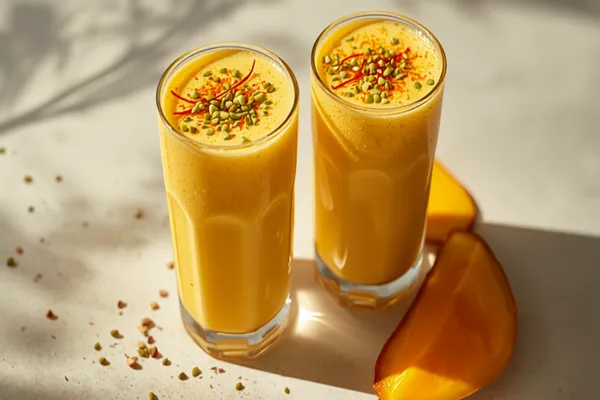
Mango Lassi (Yogurt and Mango Drink)
The creamy, cooling mango-and-yogurt drink of North Indian summers and restaurant menus everywhere. Three ingredients, two minutes, and a little cardamom.
Hyderabad / North India (pan-Muslim South Asia) · Indian
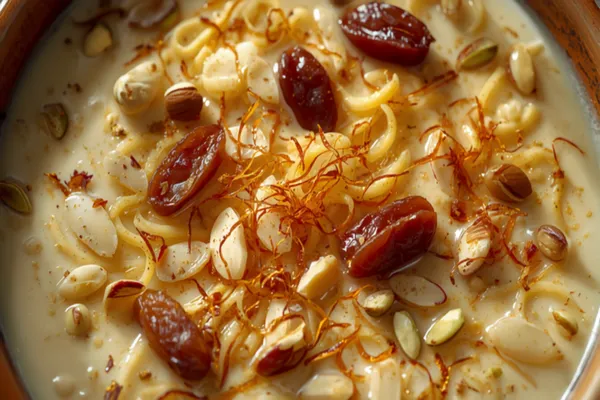
Sheer Khurma (Eid Vermicelli and Date Pudding)
The dessert that defines Eid morning: fine vermicelli toasted in ghee and simmered in milk with dates, nuts, and cardamom into a fragrant, festive pudding. Rich, celebratory, and shared with every visitor.
North India (Banaras / Uttar Pradesh, the heart of thandai country) · Indian
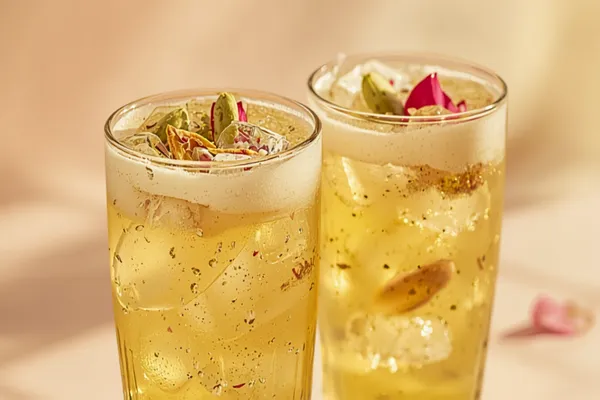
Thandai (Spiced Almond & Saffron Milk for Holi)
North India's festival cooler: chilled milk blended with almonds, fennel, cardamom, peppercorn, poppy and saffron. The fragrant, nutty drink of Holi and Maha Shivratri — made from scratch.
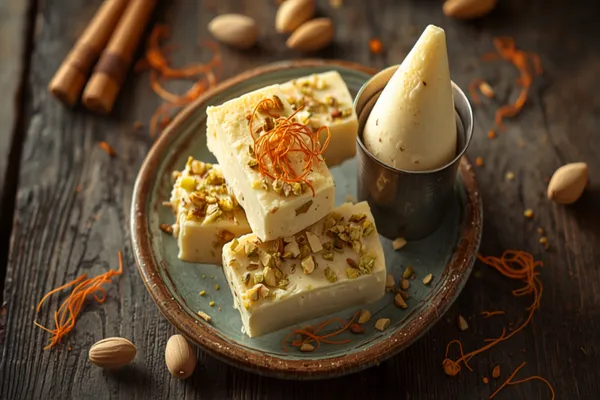
North India (Mughal-era Delhi) · Indian
Malai Kulfi (Traditional Indian Frozen Custard)
The original Indian frozen dessert — full-fat milk slow-cooked until thick and caramel-sweet, scented with cardamom, saffron and pistachio, then frozen dense and hard. No churning, no ice-cream machine, just patience.
Further reading
- Cultural Story · InternationalThe Drinks Guide: A World Tour in a GlassA pourer's tour of the whole Drinks collection — world-class cocktails built the right way, the regional drinks that define a place, thoughtful non-alcoholic options and mocktails, and the unique coolers each region customized to its own heat and ritual.
- Festival & SeasonalIndian Festival Sweets: From Diwali to EidIn India, no celebration is complete without mithai. A guide to the sweets that define the festival calendar — the Diwali mithai box, the Eid dessert table, and the regional treasures of Bengal and the south — and what makes each one special.