Guangzhou and the Pearl River Delta — the yum cha teahouses of Guangdong, and the dim sum halls of Hong Kong that carried them worldwide · Chinese
Char Siu Bao (Cantonese Steamed BBQ Pork Buns)
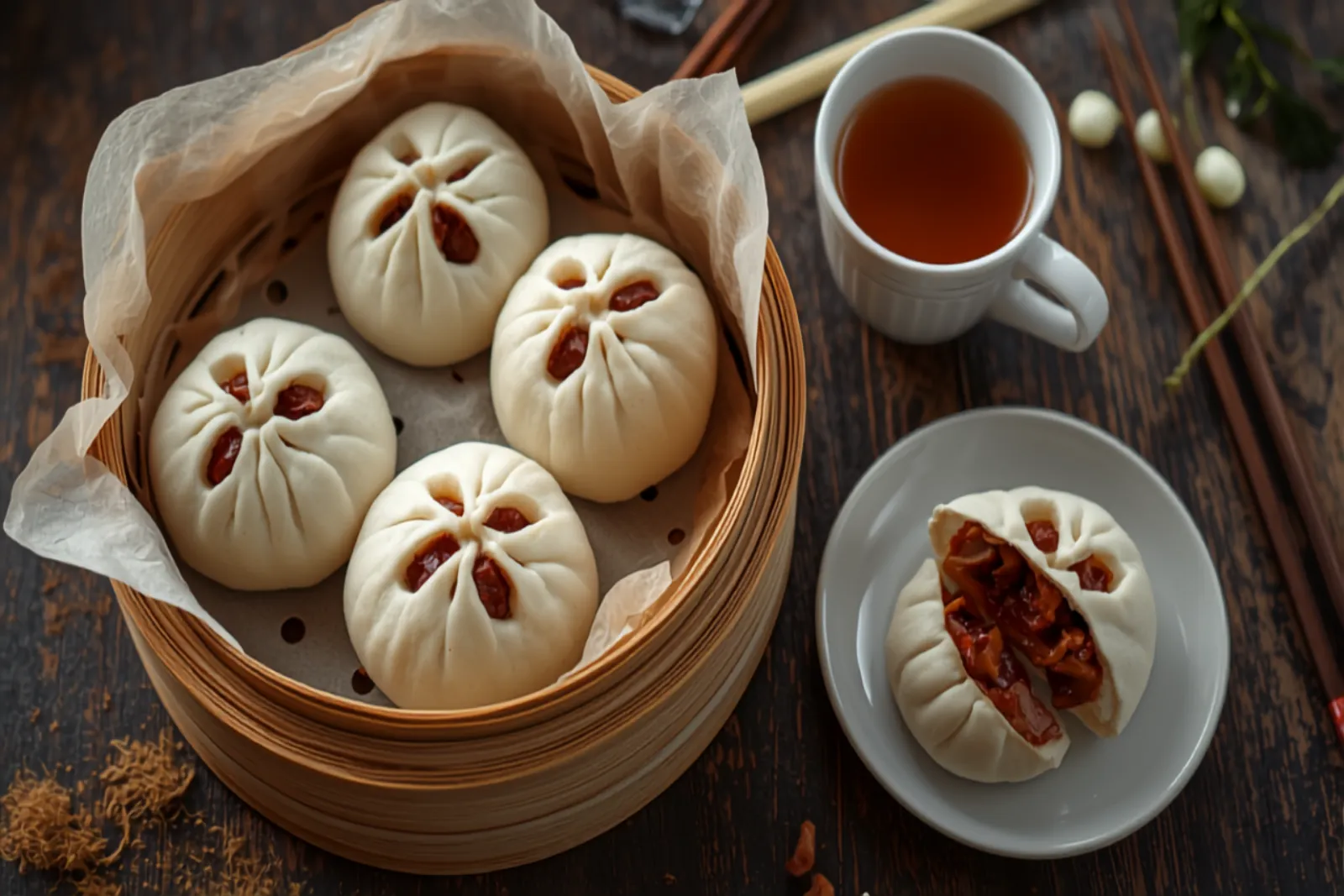
The cloud-white dim sum bun that splits open at the top like a laughing mouth: low-gluten dough steamed around a jellied sauce studded with sweet-savoury char siu. The filling is set firm on purpose — that is the whole trick.
Published September 12, 2026
Cultural context
Char siu bao (叉燒包) is what happens when Cantonese roast-meat culture meets a northern Chinese steamed bun. Guangdong already had char siu — pork 'fork-roasted' over fire until lacquered and sweet — and by the late Qing, teahouses along the Pearl River were chopping the trimmings from the roast-meat window into a thick sauce and wrapping them in dough for yum cha, the morning ritual of tea and small plates. The bun became one of the 'Four Heavenly Kings' of dim sum (早茶四大天王) alongside har gow, siu mai and the egg tart: the four things a Cantonese teahouse is judged on. Its signature is the split top, called 開口笑 — an open-mouthed laugh — and in Guangdong an unopened bun is read as a shop cutting corners. Char siu is woven so deeply into Cantonese speech that the sharpest thing a Hong Kong parent can say to a disappointing child is that they would rather have given birth to a piece of char siu.
Char siu bao are the bun Cantonese teahouses are judged by. Guangdong had been fork-roasting pork over fire for centuries — char siu, lacquered sweet and salty and hung in the roast-meat window — and somewhere in the teahouses of Guangzhou in the late Qing, a cook took the offcuts nobody would sell as a slice, bound them in a thick sauce, and wrapped them in a northern-style steamed bun. By the time yum cha became the Pearl River Delta’s morning ritual, that bun had joined har gow, siu mai and the egg tart as one of the Four Heavenly Kings of dim sum: the four dishes that tell you, within one basket each, whether a kitchen knows what it is doing.
The split is the signature
A good char siu bao arrives open. Cantonese calls it 開口笑 — an open-mouthed laugh — and the three-way tear at the crown is both a texture cue and an honesty signal: it means the dough had enough life left in it to burst, and it lets you see the filling before you commit. In Guangdong a basket of smooth, sealed buns reads as a shop being careful with its flour.
Restaurants guarantee the laugh with ammonium bicarbonate, a leavener that gasses off hard the moment it hits steam and forces the top apart. At home you get most of the way there with three folds at the crown, a proof stopped while there is still rise in reserve, and a steamer already at a rolling boil.
Why the filling is set solid
Everything that goes wrong with this recipe goes wrong at the seam, and the fix is counter-intuitive: the filling should not be a sauce when it meets the dough. Thicken it with starch until it holds a furrow, chill it, and it becomes a soft jelly you can spoon and wrap like any solid ingredient. In the basket it melts back into sauce inside a wrapper that has already set.
A loose, warm filling does the opposite. It soaks the base while you pleat, steams the dough from the inside, and finds the one weak fold to escape through. If you have ever pulled a bun off the parchment and left half its bottom behind, that is the diagnosis.
Cut the pork, don’t mince it
Dice the char siu at about 5 mm. Minced pork disappears into the sauce and leaves you with a sweet brown paste; distinct cubes keep the caramelised edges legible against the soft crumb, which is the contrast the whole dish runs on. Ask the butcher for a piece with some charred edge, or make char siu yourself and cut it from the darkest corner.
Low-gluten flour and the cotton crumb
Northern Chinese buns are meant to be chewy; a Cantonese dim sum bun is meant to be soft enough to pull apart in threads. That difference is mostly flour. Cake or bao flour at 7–8 g protein per 100 g cannot build much gluten, which is exactly the point — the crumb comes out fine, white and cottony. All-purpose flour makes a perfectly good bun that simply tastes like a different regional tradition.
The sugar is doing regional work too. Cantonese bun dough is sweet enough to notice on its own, and against a salty, oyster-sauce-heavy filling that sweetness is the balance, not a flaw.
Steam hard, and don’t peek
Ten minutes at a full boil, lid on. The bun’s whole structure is set during the first few minutes of hard steam, and lifting the lid mid-cook drops the temperature onto a half-set dough — the fastest way to a wrinkled, mottled bun. When the time is up, crack the lid away from your face, count thirty, then carry the basket to the table.
Serve them the way Guangzhou does: hot, in the basket, with tea already poured, next to something crisp. A round of siu mai and a pot of pu-erh makes a yum cha table in two dishes, and there is more on the rest of the world’s great everyday classics in the world classics guide.
Ingredients
For the filling (make first — it must be cold)
- 1 tbsp neutral oil
- 1/2 small onion, finely diced Teahouse kitchens often fry sliced onion to perfume the sauce and fish it out again. Dicing it small and leaving it in is the home-cook version — sweeter, and it helps bulk the filling.
- 150 ml water or unsalted chicken stock
- 2 tbsp oyster sauce
- 1 tbsp char siu sauce or hoisin sauce Lee Kum Kee's char siu sauce is the shop standard. Hoisin is a close stand-in; if you use neither, raise the oyster sauce to 3 tbsp and add an extra 1/2 tsp sugar.
- 1 tsp dark soy sauce For colour more than salt — it takes the sauce from muddy brown to the deep mahogany you see through the split.
- 1 tsp light soy sauce
- 1 1/2 tsp granulated sugar
- 1/2 tsp toasted sesame oil
- 1/4 tsp ground white pepper
- 2 tbsp cornflour (cornstarch) or tapioca starch, slaked in 3 tbsp cold water Tapioca sets glossier and stays clear when reheated; cornflour is easier to find and perfectly good. Either way, stir the slurry again right before it goes in — starch sinks within a minute.
- 300 g char siu (Cantonese barbecue pork), cut into 5 mm dice Make it yourself from our char siu recipe, or buy it from a roast-meat shop and ask for a piece with some caramelised edge on it — the burnt-sugar bits are most of the flavour.
For the dough
- 350 g low-gluten flour — cake flour or Chinese bao flour Look for 7–8 g protein per 100 g on the label. This is the single biggest lever on texture: low protein gives the fine, cotton-soft crumb dim sum buns are known for. Plain all-purpose flour (10–11 g) works but bakes up chewier — see the FAQ.
- 2 tbsp (25 g) caster sugar Cantonese bun dough is frankly sweet — it is the counterweight to a salty, savoury filling, not an accident.
- 2 tsp instant dried yeast
- 2 tsp baking powder Double-acting, and not optional. The yeast builds flavour and structure; the baking powder fires again in the steamer and supplies the late push that opens the top.
- 1 1/2 tbsp neutral oil
- 1/4 tsp fine salt
- 180–190 ml lukewarm water 180 ml for cake or bao flour, closer to 190 ml for all-purpose, which drinks more. The dough should feel soft and satiny but not tacky.
For steaming
- 12 squares baking parchment, about 7 cm across One under each bun. Cantonese shops use them so the buns can be lifted out of the basket without tearing the base.
Method
Tap a step’s number to check it off as you go.
-
Make the filling first. Heat the oil in a small pan over medium heat and fry the diced onion for 3–4 minutes until soft and just golden at the edges.
Why: Browning the onion builds the savoury base the sauce is otherwise missing — there is no long braise here to develop flavour, so it has to come from the pan in the first four minutes.
-
Add the water or stock, oyster sauce, char siu sauce, both soys, sugar, sesame oil and white pepper. Bring to a boil and let it bubble for 30 seconds.
Why: A short boil marries the sauces and drives off the raw edge of the soy. Taste it now: it should be a shade saltier and sweeter than you want, because 300 g of pork is about to dilute it.
-
Turn the heat to its lowest setting, stir the starch slurry again and pour it in, stirring constantly for 30–60 seconds until the sauce turns thick, glossy and almost gluey — it should hold a furrow when you drag the spoon through. Scrape it into a shallow bowl.
Why: This is the step that defines char siu bao. The sauce has to set into a soft jelly, not a gravy: a jelly can be wrapped in dough without soaking it, and then melts back into sauce in the steam. Under-thicken it and the liquid seeps through the base, gluing your bun to the basket and bursting the seam.
-
Fold the diced char siu through the sauce, then cool completely — 30 minutes in the fridge, or make it the day before.
Why: Cold, firm filling is wrappable; warm filling slides and smears, and its steam pre-proves the dough from the inside. Every leaking bun traces back to a filling that went in warm.
-
Make the dough. Whisk the flour, sugar, yeast, baking powder and salt in a bowl, add the oil, then trickle in the water while mixing with chopsticks until no dry flour remains. Bring it together by hand, cover, rest 10 minutes, then knead 2–3 minutes until very smooth. (Or 8 minutes on low in a stand mixer.)
Why: The 10-minute rest lets the flour hydrate fully so the dough smooths out with a fraction of the kneading. You want smooth, not strong — over-developing a low-gluten dough is how you get a chewy bun.
-
Divide the dough into 12 pieces of about 45 g. Keep them covered and roll one at a time into a disc 9–10 cm across, pressing thinner at the rim and leaving the centre noticeably thicker.
Why: The graded disc is deliberate: the thick middle becomes the base that carries a heavy, saucy filling, while the thin rim gathers into pleats without leaving a doughy knot on top.
-
Put 30 g of cold filling in the centre. Gather the rim up around it in pleats, twisting the gathered dough closed at the top — or, for the classic split, pinch the dough shut in three folds and leave a small dimple of unpressed dough at the peak. Sit each bun on a parchment square.
Why: The seal is what decides whether you get a laugh or a leak. Three thicker folds at the crown give the rising dough three fault lines to tear along in the steamer, which is how home cooks fake the crack that restaurants get from ammonium bicarbonate.
-
Arrange the buns in lined steamer baskets with 4–5 cm between them and leave to proof, uncovered, for 30 minutes at warm room temperature, until they look plump and feel noticeably light for their size.
Why: One proof is all this dough needs — the baking powder holds a second charge in reserve. Judge by feel rather than size: these will not double, and an over-proofed bun collapses into a wrinkled shell the moment it leaves the steam.
-
Bring water to a full rolling boil in a wok or wide pan, set the baskets in, cover, and steam over medium-high heat for 10 minutes. Do not lift the lid.
Why: Full steam from the first second is what triggers the oven-spring that splits the top. Peeking drops the temperature and hits a half-set bun with cool air, which is the classic cause of a shrivelled, mottled surface.
-
Lift the lid away from you, wait 30 seconds before removing the baskets, and serve straight away with a pot of hot tea.
Why: That half-minute lets the buns firm up in falling heat rather than deflating in a rush of cold air. And they are at their best within minutes — the crumb tightens as it cools.
A quick, anonymous tap — no review needed.
Variations
- Baked char siu bao (叉燒餐包)
The bakery cousin sold in every Hong Kong panaderia-style cake shop: enrich the dough with an egg and 30 g softened butter, proof the shaped buns until doubled, egg-wash, and bake at 190°C (375°F) for 14–16 minutes, brushing with sugar syrup straight from the oven. Soft, shiny, tan-topped — and it travels far better than the steamed version.
- Chicken char siu bao
Marinate 350 g boneless chicken thigh in char siu marinade, roast, dice and use exactly as above. Chicken gives up less fat, so add an extra teaspoon of sesame oil to the sauce.
- Vegetarian mushroom bao
Swap the pork for 300 g of mixed shiitake and king oyster mushrooms, diced and browned hard in a dry pan first, with vegetarian mushroom stir-fry sauce standing in for the oyster sauce. The browning is essential — mushrooms that stew rather than sear make a flat, watery filling.
- The restaurant crack
If you want the wide three-way burst dim sum halls get, add 1/2 tsp ammonium bicarbonate (臭粉, 'smelly powder', sold in Chinese groceries) with the baking powder. It gasses off violently in the steamer and forces the top apart. It smells sharply of ammonia in the bowl; that dissipates entirely in cooking, but it is a strictly optional trick.
- Whiter buns
For the bleached-white look of a teahouse bun without bleached flour, add 1 tsp white vinegar to the water. It lowers the dough's pH slightly, which keeps the crumb bright rather than ivory. It changes nothing about the taste.
Serving & Storage
Serve them in the basket they steamed in, two or three per person, as part of a yum cha spread rather than a course on their own — the whole architecture of dim sum is a lot of small hot things arriving in sequence with an endlessly refilled pot of tea. Pu-erh is the traditional match in Guangzhou because it is dark and slightly earthy and cuts the sweetness of the filling; jasmine or chrysanthemum are the lighter choices. Eat with fingers or chopsticks, never a knife, and pour tea for the person next to you before your own cup.
Pairs with: Pu-erh or jasmine tea, Siu mai, Hong Kong egg tarts, Blanched choy sum with oyster sauce, Hong Kong milk tea.
Storage: Steamed buns keep 3 days in an airtight container in the fridge and freeze beautifully once cooked — freeze them apart on a tray, then bag for up to 3 months. Reheat by steaming: 3 minutes from chilled, 6 minutes from frozen. Microwaving works in a pinch if you cover the bun with a damp piece of kitchen paper, but it turns the crumb rubbery within a minute of cooling. Raw shaped buns are the one thing not to freeze — the yeast never recovers and they steam up dense. The filling, on the other hand, keeps 4 days chilled and 3 months frozen, so making a double batch of it is the real time-saver.
Nutrition
Per serving (2 buns)
- Calories
- 400
- Protein
- 16 g
- Carbs
- 55 g
- Fat
- 11 g
- Fiber
- 2 g
- Sugar
- 12 g
- Sodium
- 780 mg
Notable micronutrients: Thiamine, Niacin, Selenium, Zinc, Vitamin B12
Estimated using standard ingredient data. Values vary with brands and substitutions.
Frequently Asked Questions
Why didn't my buns split open on top?
A closed bun is not a failed bun — it just tastes the same and looks like a plain baozi. The split comes from gas produced faster than the setting dough can stretch, so three things drive it: a lively second lift (double-acting baking powder, and steam already at a rolling boil when the buns go in), a slightly under-proofed bun with some rise still in reserve, and a crown sealed in three thick folds rather than a tight smooth twist. Dim sum kitchens guarantee it with ammonium bicarbonate, which erupts under heat. Without it you will get a modest, handsome crack rather than a wide three-petal burst, and that is entirely normal at home.
Can I use all-purpose flour instead of cake or bao flour?
Yes, with a known trade-off. All-purpose flour has around 10–11 g protein per 100 g against 7–8 g for cake or bao flour, and that extra gluten makes a bun that is chewier and a little denser — closer to a northern baozi than a Cantonese teahouse bun. Add roughly 10 ml more water, since the higher-protein flour absorbs more, and knead a touch less. If you want to split the difference, replace 50 g of the all-purpose flour with cornflour, which dilutes the gluten and softens the crumb.
Why did my buns come out wrinkled, yellow or collapsed?
Almost always over-proofing or a temperature shock. A bun proofed until it doubles has a structure too weak to hold the sudden expansion of steaming and falls back into a shrivelled skin; so does one hit with cold air because the lid was lifted mid-steam, or removed from the steamer the instant the heat went off. Proof until plump and light, not doubled; steam a full 10 minutes without peeking; crack the lid away from yourself and leave the buns in the falling steam for 30 seconds. Yellow or grey patches are usually condensation dripping off a metal lid — wrap it in a clean tea towel.
Do I have to make my own char siu?
No. Roast-meat shops sell it by weight and the filling is arguably its best use, since the sauce rehydrates any dryness at the edges. If there is no Cantonese butcher near you, our own char siu recipe is an overnight marinade and 40 minutes in the oven, and a single batch makes enough for a plate of rice today and a dozen buns tomorrow. In a real pinch, roast 350 g of diced pork shoulder tossed in char siu sauce at 200°C for 25 minutes — not the same lacquered depth, but it works.
Why does the filling have to be a jelly rather than just a sauce?
Because dough and liquid cannot share a seam. A loose gravy soaks into the wrapper from the moment you fill it, weakening the base until it splits in the basket and welds the bun to the parchment. Setting the sauce with starch and chilling it turns the liquid into a solid you can handle — and in the steamer it melts back, so the bun arrives saucy inside and structurally intact outside. It is the same logic as the aspic in a Shanghai soup dumpling, at a much lower difficulty.
What is the difference between steamed and baked char siu bao?
Same filling, different bun and different meal. The steamed one (叉燒包) is a yum cha dish: white, cotton-textured, eaten hot from a bamboo basket in the morning. The baked one (叉燒餐包) came out of Hong Kong's twentieth-century bakery culture, is enriched with egg and butter, glazed, and sold as an afternoon snack or lunchbox filler. Hong Kongers would not usually think of them as the same food at all.
What to drink with this
All drinks →Hand-picked pours to match this dish.

Hong Kong (cha chaan teng tradition) · Hong Kong
Hong Kong Milk Tea (Silk-Stocking Milk Tea)
Strong black tea pulled through a cloth sieve and softened with evaporated and condensed milk — Hong Kong's smooth, full-bodied café classic. Bolder than English tea, silkier than coffee, hot or over ice.
Japan (the chado tea tradition of Kyoto and Uji, home of Japan's finest matcha) · Japanese
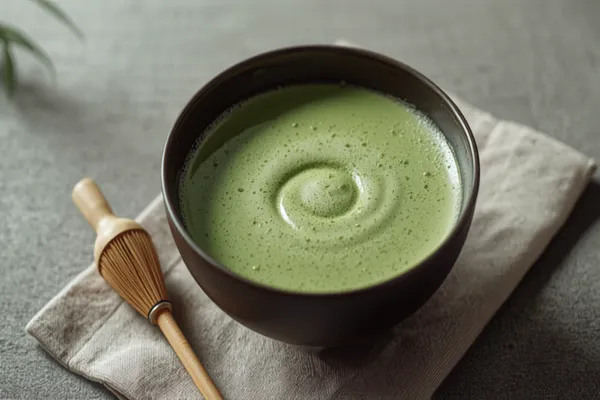
Matcha (Whisked Usucha, Thin Tea)
How to whisk a proper bowl of usucha — thin matcha — with a bamboo chasen: bright, jade-green, frothed to a fine foam, and faintly sweet-bitter. The everyday face of Japan's centuries-old tea tradition, ready in two minutes on a home counter.
Japan (matcha tradition, Uji & Nishio) · Japanese
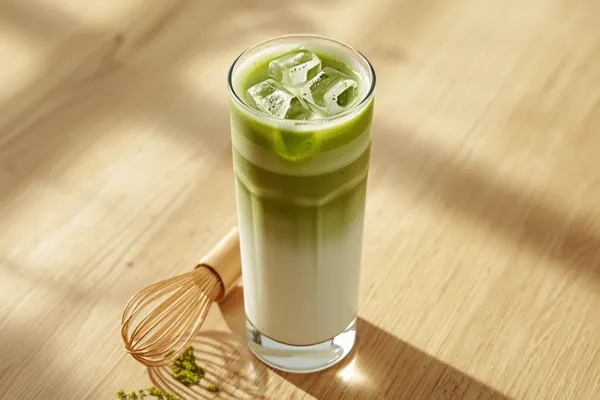
Matcha Latte (Whisked Japanese Green Tea Latte)
Stone-ground Japanese matcha whisked smooth and poured over steamed milk — grassy, sweet and gently caffeinated, with no bitterness when you make it right. A café favourite that's better and cheaper at home.
From our kitchen community
Ratings & Reviews
My Rating
Tap a star to rate — no sign-in, no form needed.
My Review
0 Ratings
🥣 0 home cooks made it!
Be the first to rate Char Siu Bao (Cantonese Steamed BBQ Pork Buns).
Related Recipes
Guangdong (Cantonese) · Chinese
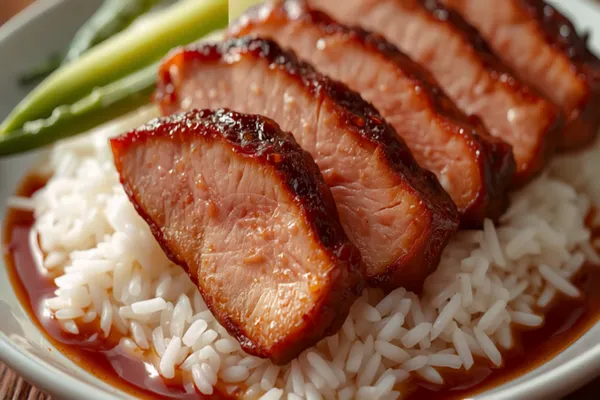
Char Siu (Cantonese Barbecue Pork)
The lacquered red-edged pork that hangs in every Cantonese roast-meat window: pork shoulder marinated in a sweet-savoury glaze of hoisin, soy, honey, and five-spice, then roasted and basted until sticky and caramelised. Easier at home than you'd think.
Guangdong / Cantonese (China) · Chinese
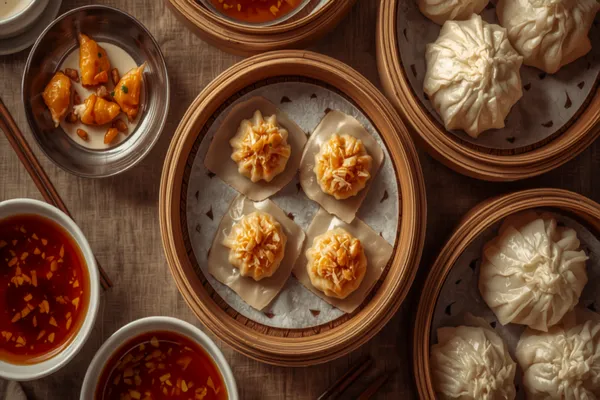
Siu Mai (Cantonese Pork and Shrimp Dumplings)
The open-topped dim sum classic — juicy pork and shrimp filling in a thin wheat wrapper, pleated into a little cup and steamed until plump. The dumpling at the heart of any dim sum spread, easier to make at home than you'd think.
Nanxiang, in Shanghai's western Jiading district — and the teahouse counters around Yu Garden that carried it into the city · Chinese
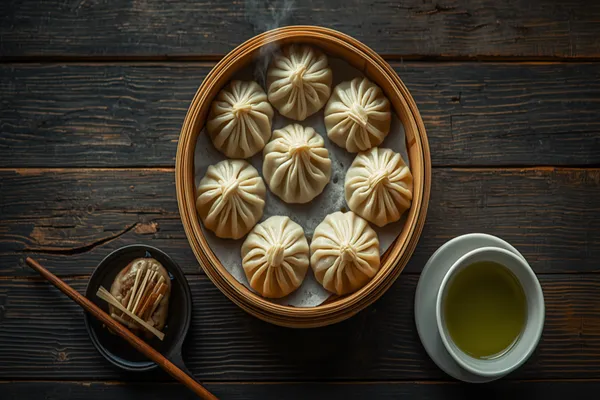
Xiaolongbao (Shanghai Soup Dumplings, the Nanxiang Way)
The dumpling that carries its own soup: chilled pork aspic folded into the filling, sealed inside a thin unleavened wrapper with eighteen pleats, and steamed until the jelly melts back into broth. Every part of the technique exists to protect that liquid.
Hong Kong — the cha chaan teng and bing sutt bakeries of Central, Wan Chai and Kowloon, with roots in 1920s Guangzhou · Hong Kong
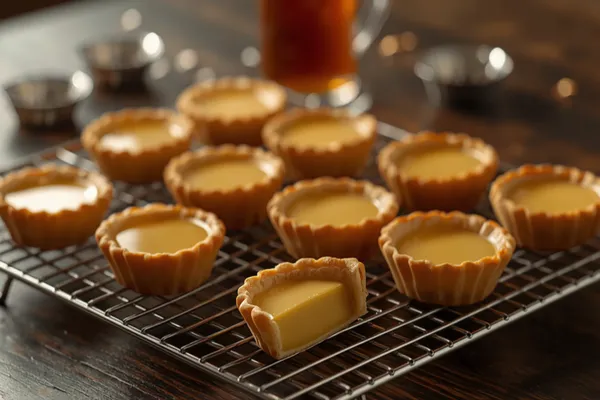
Hong Kong Egg Tarts (Daan Taat)
The glassy, wobble-free custard tart of Hong Kong's cha chaan teng — a short, biscuity butter crust, a filling of whole eggs and evaporated milk strained twice until it sets clear, and a two-stage bake that browns the pastry before the custard ever has a chance to soufflé.
Northern China · Chinese
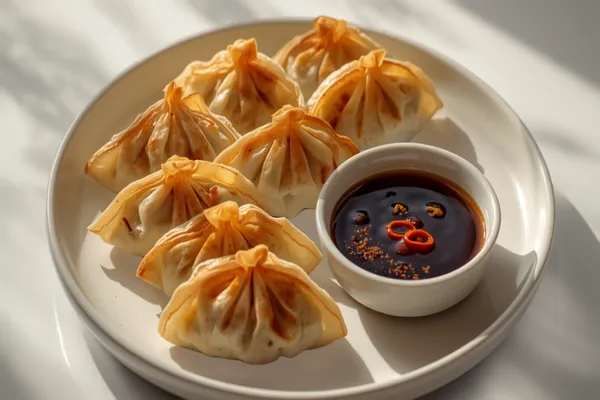
Pork and Chive Potstickers (Jiaozi)
The dumplings at the heart of Chinese celebration: juicy pork-and-chive filling folded into pleated wrappers, then pan-fried crisp on the bottom and steamed soft on top. A hands-on, make-together feast — fold a big batch and freeze the rest.
Shanghai and the lower Yangtze, drawing on the northern wheat belt of Shandong and Henan where the bing tradition began · Chinese
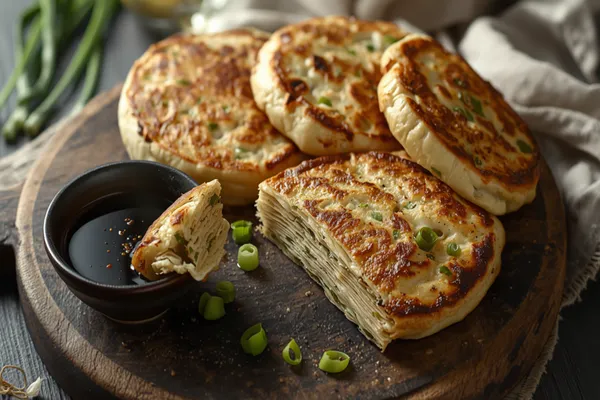
Cong You Bing — Chinese Scallion Pancakes with Shatteringly Flaky Layers
Flour, water, oil and spring onions, laminated like puff pastry and fried until the layers separate into flakes. The two things that decide the outcome are a half-boiling-water dough and an oil roux — not plain oil — between the sheets.
Hong Kong (cha chaan teng tradition) · Hong Kong
Hong Kong Milk Tea (Silk-Stocking Milk Tea)
Strong black tea pulled through a cloth sieve and softened with evaporated and condensed milk — Hong Kong's smooth, full-bodied café classic. Bolder than English tea, silkier than coffee, hot or over ice.