Nanxiang, in Shanghai's western Jiading district — and the teahouse counters around Yu Garden that carried it into the city · Chinese
Xiaolongbao (Shanghai Soup Dumplings, the Nanxiang Way)
The dumpling that carries its own soup: chilled pork aspic folded into the filling, sealed inside a thin unleavened wrapper with eighteen pleats, and steamed until the jelly melts back into broth. Every part of the technique exists to protect that liquid.
Published September 8, 2026
Cultural context
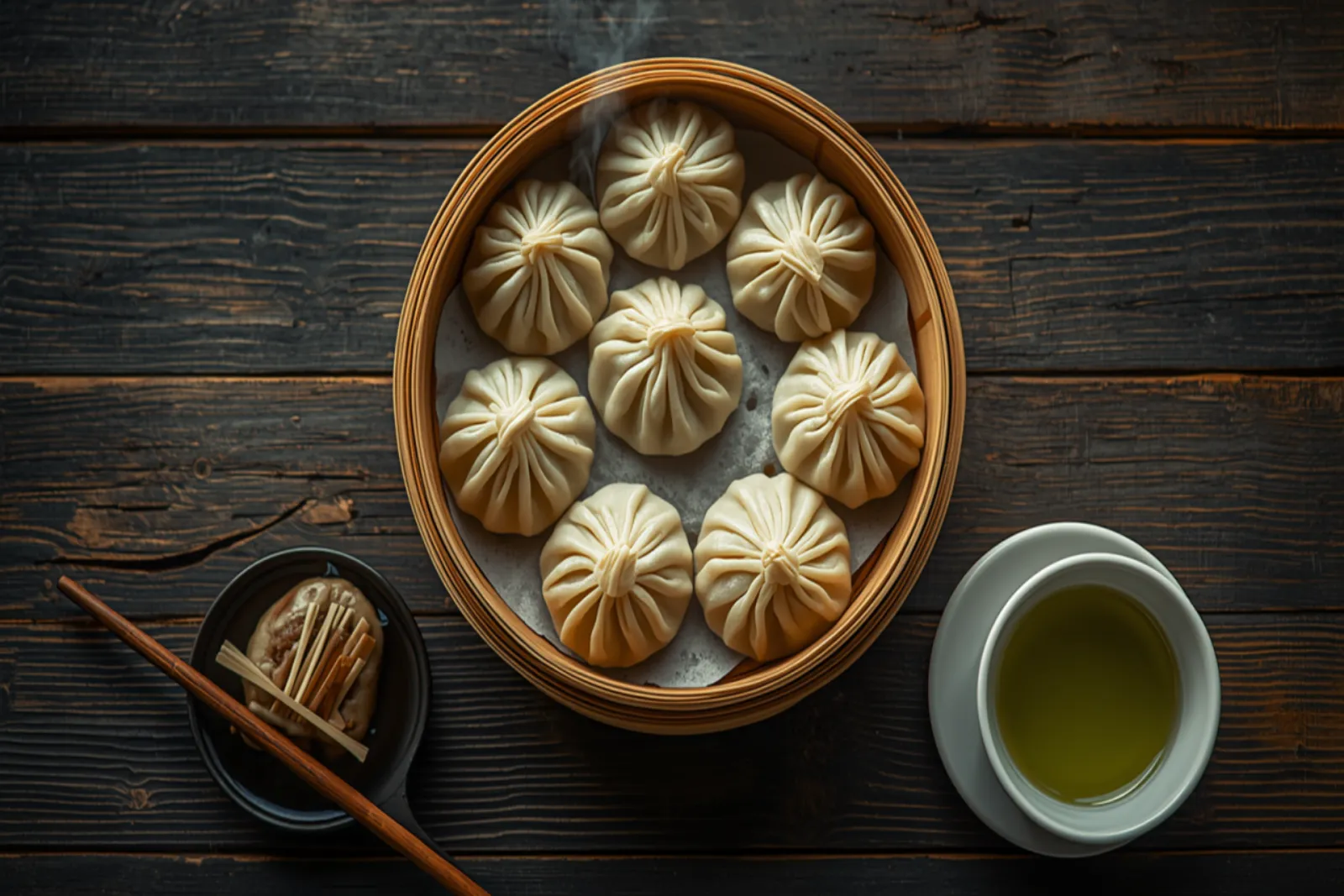
Xiaolongbao are a documented invention with a name attached. In 1871 — the tenth year of the Tongzhi reign — Huang Mingxian, who ran the Rihua Xuan teahouse in the market town of Nanxiang, took the district's ordinary large meat bun and rebuilt it: less leavening, a far thinner skin, more pleats, and, crucially, cubes of set pork aspic mixed into the mince. Steamed, the jelly liquefied and the bun arrived full of soup. He sold it as *Nanxiang da rou mantou*, the big meat bun of Nanxiang. A branch opened by Yu Garden in 1900 as Nanxiang Mantou Dian, the dumpling travelled the length of the Yangtze delta as a *dianxin* — a small eat — and by the late twentieth century Taiwanese and diaspora kitchens had made it one of the most recognisable Chinese foods on earth. The *xiaolong* in the name is not the dumpling at all: it is the small bamboo basket it steams in.
Xiaolongbao are the rare famous dish with a date, a town and an inventor. In 1871, in the market town of Nanxiang on Shanghai’s western edge, a teahouse owner named Huang Mingxian took the ordinary big meat bun everyone sold and rebuilt it around one idea: if the soup were solid when you wrapped it, you could put the soup inside. He set pork stock into a jelly, cubed it, folded it through the mince, and steamed the results in small bamboo baskets — xiaolong, which is what the dumpling is actually named after. What came out was a bun full of broth, and Nanxiang has been busy ever since.
The aspic is the recipe
Everything else here is craft; the aspic is the invention. Pork skin is close to pure collagen, and hours at a bare simmer unwind that collagen into gelatin. Chilled, the stock sets firm enough to cut into cubes. Those cubes go into the cold filling as a solid ingredient — no different, mechanically, from adding diced onion — and only revert to liquid once they are sealed inside a wrapper in a hot steamer.
This is why the two most common failures are both aspic failures. A stock that never set firmly was under-simmered, and a filling folded too warm or too vigorously has already melted before it reaches the dough. Cook the skin until it collapses under a spoon; keep everything cold; fold rather than stir.
Fat, and the case against lean pork
Twenty to twenty-five percent fat in the mince is not a suggestion. The aspic supplies liquid, but fat supplies the body that makes filling and broth read as a single thing rather than a dry pellet swimming in stock. Buy shoulder and have it coarsely minced, or mince it yourself — the pre-packed lean stuff is the wrong tool.
Why the wrapper is thick in the middle
A xiaolongbao wrapper is an unusual piece of engineering: about 1 mm at the rim, closer to 2 mm at the centre. That gradient exists because pleating gathers dough. Sixteen to eighteen pleats stack the edge into a spiral neck, so an evenly rolled circle produces a doughy knot on top and a base worn thin — the exact spot that has to hold roughly 20 g of near-boiling liquid while someone lifts it with chopsticks.
Low hydration matters for the same reason. At about 54% water the dough is stiff, mildly annoying to knead, and strong enough to roll paper-thin without tearing. It is a container before it is a food.
The eighteen pleats, honestly
The number is a shop standard, popularised by Taiwanese chains that trained their cooks to it and weighed every dumpling. It is a useful proxy for skill and a terrible thing to obsess over at home. Twelve even pleats with a fully closed top will hold soup; eighteen ragged ones with a gap will not. Pleat for the seal, and the count arrives on its own after a few dozen.
A five-minute food
Steam only what you will eat immediately, over water already at a full rolling boil, and carry the basket to the table. From the moment it leaves the steam the wrapper begins absorbing broth from the inside, and within a few minutes the thing that made the dumpling remarkable has been reabsorbed into the dough. This is why xiaolongbao are served in the basket they cooked in, why Shanghai eats them as a morning food near the shop that made them, and why the freezer — not the fridge — is where any leftovers belong, raw.
Then eat them properly: onto a spoon, nick the side, drink the broth, dip in black vinegar cut with ginger. For the rest of the Shanghai street table, make cong you bing alongside them, and there is more context on dishes like this in the world classics guide.
Ingredients
For the aspic (make first, ideally the day before)
- 350 g pork skin, in one or two pieces This is the entire trick. Pork skin is almost pure collagen, which breaks down into gelatin and sets the stock into a sliceable jelly. Ask a butcher, or peel it off a piece of belly and freeze the fat for another use.
- 300 g pork neck bones or chicken wings For flavour, not body. The skin supplies the set; the bones supply the taste of actual soup.
- 1.2 litres cold water
- 4 slices fresh ginger
- 2 spring onions, halved
- 2 tbsp Shaoxing wine
- 1/2 tsp fine sea salt
For the filling
- 400 g coarsely minced pork shoulder, about 20–25% fat Fat is not optional. Lean pork gives a dry, crumbly pellet floating in broth instead of a filling that reads as one thing with the soup.
- 60 ml (1/4 cup) spring onion and ginger water Steep 3 tbsp chopped spring onion and 1 tbsp grated ginger in 60 ml warm water for 15 minutes, then squeeze and strain. Adds moisture and aroma without leaving fibrous bits that tear the wrapper.
- 1 1/2 tbsp light soy sauce
- 1 tbsp Shaoxing wine
- 1 tsp granulated sugar Shanghainese cooking is openly a little sweet — this is regional character, not a correction to the salt.
- 1/2 tsp ground white pepper
- 1 tsp toasted sesame oil
- 1/2 tsp fine sea salt
For the wrappers
- 250 g (2 cups) plain all-purpose flour, plus more for dusting Medium-protein flour. Bread flour fights back when you roll it thin; cake flour tears under the weight of the soup.
- 135 ml room-temperature water About 54% hydration. Add the last 10 ml only if the dough will not come together — flours vary.
- 1/4 tsp fine sea salt
To serve
- 4 tbsp Zhenjiang black vinegar
- 1 thumb fresh ginger, cut into fine matchsticks
Method
Tap a step’s number to check it off as you go.
-
Blanch the pork skin and bones: cover with cold water, bring to the boil, boil 3 minutes, then drain and rinse everything under the tap. Scrape any remaining fat off the underside of the skin with a spoon or a blunt knife.
Why: Blanching pulls out the scum and the barnyard note, and scraping the fat matters more than it sounds — leftover fat clouds the stock and makes the aspic greasy rather than clean and savoury.
-
Return the skin and bones to a clean pan with 1.2 litres of cold water, the ginger, spring onions and Shaoxing wine. Bring to a bare simmer and cook, barely bubbling, for 2 1/2 to 3 hours, until the skin is soft enough to fall apart under a spoon and the liquid has reduced by roughly half.
Why: A bare simmer keeps the stock clear; a rolling boil emulsifies the fat into it. Time is what converts collagen into gelatin — undercook it and the stock will never set, which is the single most common reason a batch of xiaolongbao comes out dry.
-
Strain into a shallow container, discarding the solids, and stir in the salt. Cool, then refrigerate at least 4 hours or overnight until firm enough to cut into cubes. Lift off any fat that has set on top.
Why: You want a firm, sliceable jelly. Test it cold: it should hold a clean edge when cut. If it is only loosely set, reduce it further and chill again — or see the gelatin shortcut in the variations.
-
Make the dough while the aspic chills. Mix the flour and salt, add the water gradually, and knead for 8 to 10 minutes until smooth and firm — noticeably stiffer than bread dough. Wrap and rest at least 30 minutes, up to 2 hours.
Why: Low hydration gives a wrapper strong enough to hold liquid without leaking, and the rest lets the gluten relax so it will roll thin instead of springing back.
-
Beat the pork with the soy sauce, wine, sugar, white pepper, salt and sesame oil, then add the spring onion and ginger water in three additions, stirring vigorously in one direction after each until it is fully absorbed and the mince looks tacky and paste-like.
Why: Stirring in one direction aligns the muscle proteins into a network that holds the added liquid. Skip it and the water weeps out during steaming, waterlogging the base of the dumpling.
-
Cut the set aspic into 5 mm cubes — you want about 300 g. Fold them through the cold filling with a spatula, then chill the mixture for at least 30 minutes.
Why: Fold, don't stir: the aspic should stay in distinct cubes. Warm hands or an over-worked filling melt the jelly early, and once it is liquid in the bowl it cannot be wrapped.
-
Divide the dough into 24 pieces of about 16 g. Roll each into a ball, then roll out to a round 8 cm across, rotating as you go and pressing harder at the rim so the edge is about 1 mm and the centre closer to 2 mm.
Why: The graded thickness is the whole engineering problem. Pleating multiplies dough at the top, so a uniform circle gives a doughy knot and a base too thin to survive the weight of the broth.
-
Hold a wrapper in your cupped palm, add a heaped tablespoon of filling, and pleat the edge upward with your thumb and forefinger, turning the dumpling as you go — aim for 16 to 18 pleats — then pinch the gathered top firmly closed and twist off any excess knob of dough.
Why: The pleats are structural, not decorative: gathering the dough into a spiral makes a reinforced neck that takes the strain when you lift a bag of hot liquid with chopsticks. Any gap at all and the soup ends up in the basket.
-
Line a bamboo steamer with cabbage leaves, cut parchment or carrot slices and set the dumplings 2 cm apart. Steam over a full rolling boil for 8 minutes.
Why: They must go into steam that is already at full pressure — a slow ramp-up melts the aspic before the wrapper has set, and it drains out through dough that is still permeable. Eight minutes is enough for a thin skin and a 20 g filling; longer and the wrapper toughens and splits.
-
Serve immediately, in the basket, with a dipping saucer of black vinegar and ginger slivers.
Why: Xiaolongbao have a working life of about five minutes. The wrapper starts absorbing broth from the inside the moment it leaves the steam, and the acidity of Zhenjiang vinegar exists to cut the fat of the aspic — which is why nobody in Shanghai reaches for soy sauce.
A quick, anonymous tap — no review needed.
Variations
- Gelatin shortcut aspic
No pork skin, or no three hours: dissolve 15 g powdered gelatin in 350 ml of strongly flavoured, well-reduced chicken or pork stock, chill until firm, and cube as normal. It sets reliably and tastes good. What it lacks is the faintly sticky, lip-coating body real collagen gives the broth.
- Crab and pork (xiefen xiaolongbao)
The autumn luxury version from Suzhou and Shanghai, made when the hairy crabs are running: replace a quarter of the pork with picked crab meat and stir 2 tbsp of crab roe oil into the filling. Sweeter, richer, and traditionally eaten between October and December.
- Chicken soup dumplings
Use minced chicken thigh with a chicken-and-wing aspic for a lighter, halal-friendly filling. Add an extra teaspoon of sesame oil — chicken carries less fat of its own, and the filling needs it.
- Tangbao (the giant straw version)
The Huaiyang cousin from Yangzhou and Jingjiang: one enormous soup-filled bun per basket, eaten by biting a hole in the top and drinking the broth through a straw before eating the skin. Same filling, one 150 g wrapper, 12 minutes in the steamer.
- Half-leavened Nanxiang style
Some Nanxiang shops still use a barely leavened dough — add 1/4 tsp instant yeast to the flour and rest for 45 minutes. The wrapper is a shade softer and more bun-like, closer to the 1870s original than the paper-thin Taiwanese style most people know.
Serving & Storage
Eat them straight from the basket, in this order: lift the dumpling by the pleated neck onto a spoon, nick the side, drink the broth, then dip the dumpling in black vinegar with ginger and eat it whole. A pot of jasmine or green tea is the standard accompaniment — the tannin cuts the fat and resets the palate between dumplings. In Shanghai they are a breakfast or mid-morning eat, often alongside a bowl of thin noodle soup, not a dinner course.
Pairs with: Zhenjiang black vinegar with ginger slivers, Jasmine or longjing green tea, Cong you bing (scallion pancakes), Chilled cucumber salad with garlic, Hot and sour soup.
Storage: Steamed xiaolongbao do not keep — the wrapper drinks the soup. Freeze them raw instead: set the pleated dumplings apart on a floured tray, freeze until solid, then bag for up to 2 months and steam from frozen for 11 to 12 minutes. The aspic keeps 4 days in the fridge or 3 months frozen, and the filling can be mixed and refrigerated a day ahead. Dough is best used within 4 hours; wrap it tightly or it skins over.
Nutrition
Per serving (6 dumplings)
- Calories
- 470
- Protein
- 20 g
- Carbs
- 42 g
- Fat
- 24 g
- Fiber
- 2 g
- Sugar
- 2 g
- Sodium
- 760 mg
Notable micronutrients: Thiamine, Selenium, Zinc, Vitamin B12, Niacin
Estimated using standard ingredient data. Values vary with brands and substitutions.
Frequently Asked Questions
How does the soup get inside the dumpling?
It is not injected and it is not poured in — it is folded in as a solid. Pork skin simmered for hours releases collagen, which sets the stock into a firm jelly (aspic) when it cools. Cubes of that jelly are mixed into the cold pork filling and wrapped like any other ingredient. In the steamer the jelly melts back into broth, so the dumpling essentially makes its own soup on the way to the table. That inversion — solid before, liquid after — is Huang Mingxian's 1871 idea and still the whole point.
Why do mine leak or collapse in the steamer?
Almost always one of four things. The base of the wrapper was rolled as thin as the edge, so it tore under the weight; the pleats were not pinched fully closed at the top; the dumplings went into a steamer that was not yet at a rolling boil, so the aspic liquefied before the dough set; or they were left standing on the tray, where the filling slowly thaws and soaks through. Roll thicker in the middle, seal hard, and go from bench to full steam quickly.
Do I really need eighteen pleats?
No — sixteen is fine, and twelve tidy ones beat eighteen sloppy ones. The number is a shop standard (Din Tai Fung is famous for holding its cooks to eighteen) rather than a rule of physics. What actually matters is that the pleats are even and the top is closed completely, because the gathered spiral forms the reinforced neck you lift the dumpling by. Pleat count is a proxy for skill, not the source of it.
What is the difference between xiaolongbao and soup dumplings I've had at dim sum?
Xiaolongbao are Shanghainese, from the Jiangnan region: thin unleavened wrapper, pork-and-aspic filling, faintly sweet, eaten with black vinegar and ginger. Cantonese dim sum houses serve them too, but their own repertoire — siu mai, har gow, char siu bao — uses different doughs and no aspic. The other thing sold as a 'soup dumpling' is *sheng jian bao*, the pan-fried Shanghai bun with a thick leavened base, which is a genuinely different animal.
Can I use shop-bought dumpling wrappers?
You can make something edible, but not xiaolongbao. Commercial gyoza and wonton wrappers are uniformly thin and usually contain alkaline salts that make them chewy — they tear at the base under hot liquid and cannot take eighteen pleats without turning into a lump. If the hand-rolling is the barrier, make potstickers with this filling instead and come back to the soup dumpling when you have an afternoon.
How do I eat one without burning my mouth?
Assume the broth is at boiling point, because it is. Lift the dumpling by its pleated top with chopsticks, set it on a soup spoon, bite or nick a small hole in the side, and let the broth run into the spoon for a few seconds before you drink it. Then dip and eat the rest. Putting a whole one straight in your mouth is the classic first-timer's mistake and a genuinely painful one.
What to drink with this
All drinks →Hand-picked pours to match this dish. Alcoholic pairings are for adults of legal drinking age (21+ in the US) — please drink responsibly.
Japan (the chado tea tradition of Kyoto and Uji, home of Japan's finest matcha) · Japanese
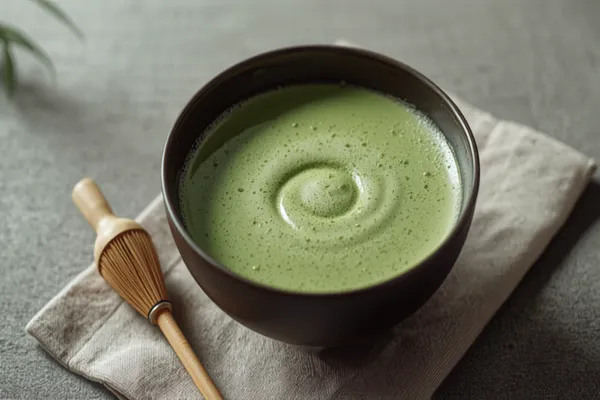
Matcha (Whisked Usucha, Thin Tea)
How to whisk a proper bowl of usucha — thin matcha — with a bamboo chasen: bright, jade-green, frothed to a fine foam, and faintly sweet-bitter. The everyday face of Japan's centuries-old tea tradition, ready in two minutes on a home counter.

Japan (matcha tradition, Uji & Nishio) · Japanese
Matcha Latte (Whisked Japanese Green Tea Latte)
Stone-ground Japanese matcha whisked smooth and poured over steamed milk — grassy, sweet and gently caffeinated, with no bitterness when you make it right. A café favourite that's better and cheaper at home.
 21+
21+ American bars (via Japanese Midori) · Japanese-American
Midori Sour (Melon Liqueur, Lemon & Lime)
The bright-green retro sour: sweet Midori melon liqueur balanced with fresh lemon and lime, lengthened with a splash of soda. A vivid, nostalgic crowd-pleaser — sweet-tart, low-proof and unmistakably '80s.
From our kitchen community
Ratings & Reviews
My Rating
Tap a star to rate — no sign-in, no form needed.
My Review
0 Ratings
🥣 0 home cooks made it!
Be the first to rate Xiaolongbao (Shanghai Soup Dumplings, the Nanxiang Way).
Related Recipes
Guangdong / Cantonese (China) · Chinese
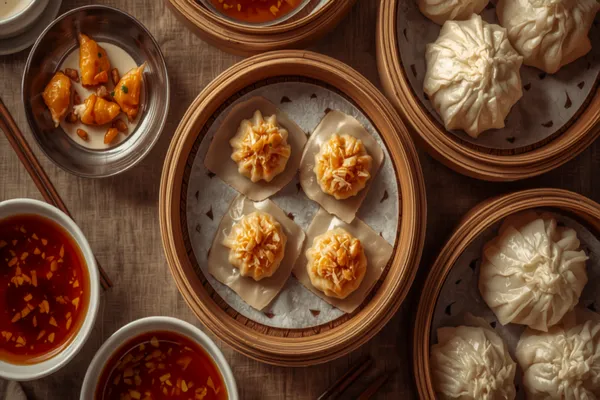
Siu Mai (Cantonese Pork and Shrimp Dumplings)
The open-topped dim sum classic — juicy pork and shrimp filling in a thin wheat wrapper, pleated into a little cup and steamed until plump. The dumpling at the heart of any dim sum spread, easier to make at home than you'd think.
Northern China · Chinese
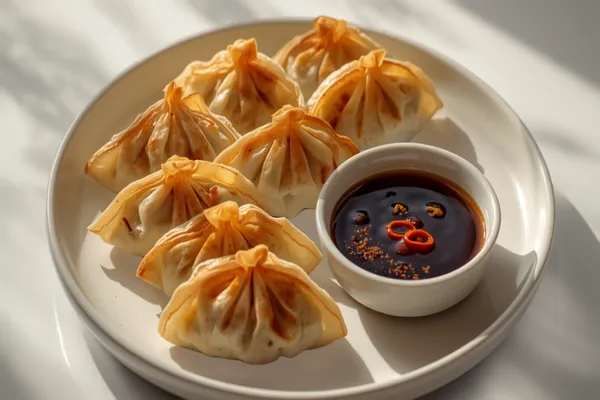
Pork and Chive Potstickers (Jiaozi)
The dumplings at the heart of Chinese celebration: juicy pork-and-chive filling folded into pleated wrappers, then pan-fried crisp on the bottom and steamed soft on top. A hands-on, make-together feast — fold a big batch and freeze the rest.
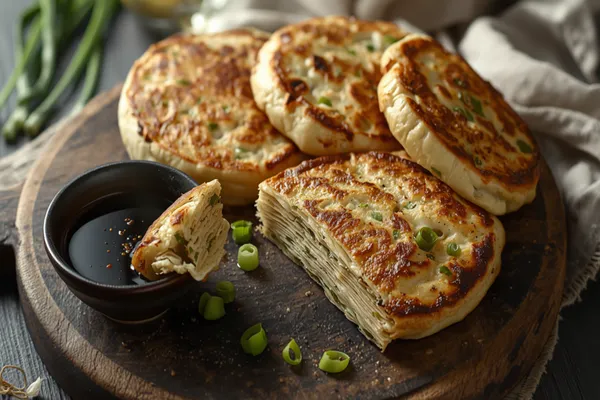
Shanghai and the lower Yangtze, drawing on the northern wheat belt of Shandong and Henan where the bing tradition began · Chinese
Cong You Bing — Chinese Scallion Pancakes with Shatteringly Flaky Layers
Flour, water, oil and spring onions, laminated like puff pastry and fried until the layers separate into flakes. The two things that decide the outcome are a half-boiling-water dough and an oil roux — not plain oil — between the sheets.
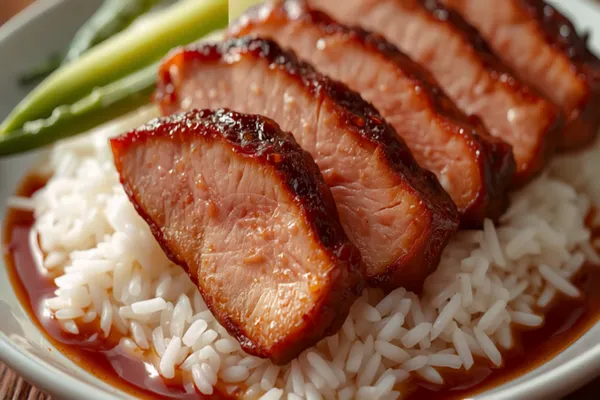
Guangdong (Cantonese) · Chinese
Char Siu (Cantonese Barbecue Pork)
The lacquered red-edged pork that hangs in every Cantonese roast-meat window: pork shoulder marinated in a sweet-savoury glaze of hoisin, soy, honey, and five-spice, then roasted and basted until sticky and caramelised. Easier at home than you'd think.
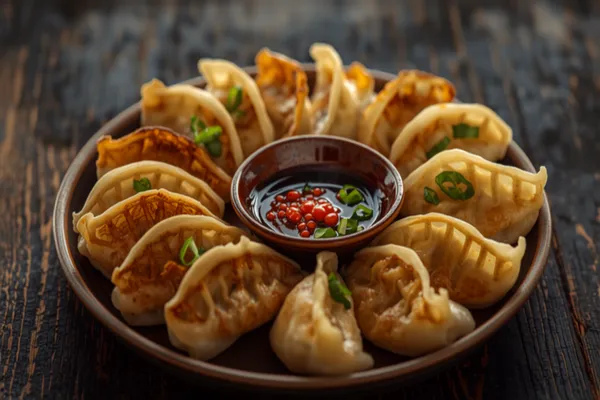
Japan (nationwide; strongly associated with Utsunomiya and Hamamatsu, Japan's dueling gyoza capitals) · Japanese
Gyoza (Japanese Pan-Fried Pork Dumplings)
Yaki-gyoza done properly: juicy pork-and-cabbage dumplings steam-fried into one skillet so they gather a lacy, crackling brown 'wing' underneath. With a bright soy-vinegar dipping sauce and a whole section on pleating.
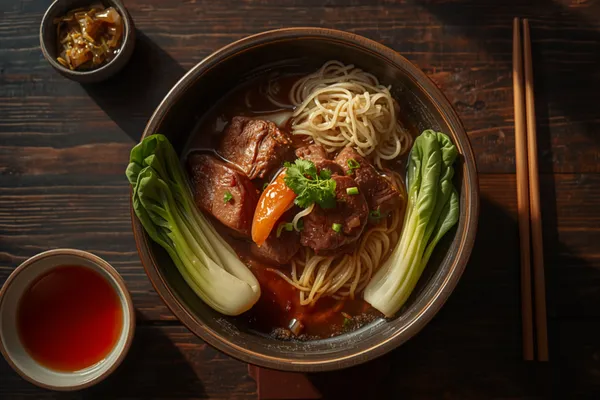
Taiwan — born in the juancun military-dependents' villages around Gangshan in Kaohsiung, perfected in the noodle shops of Taipei · Taiwanese
Taiwanese Beef Noodle Soup — Red-Braised Niu Rou Mian with Shank and Tendon
Taiwan's national bowl: beef shank and tendon braised for three hours in a dark, glossy broth built on fried chilli bean paste, caramelised rock sugar and tomato. The colour comes from frying the doubanjiang in oil, not from soy sauce — and that one step is the whole dish.
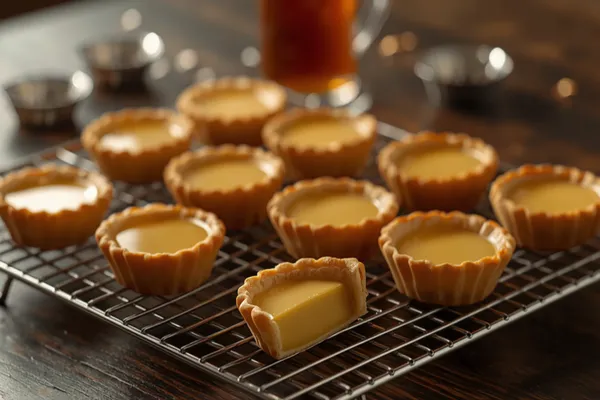
Hong Kong — the cha chaan teng and bing sutt bakeries of Central, Wan Chai and Kowloon, with roots in 1920s Guangzhou · Hong Kong
Hong Kong Egg Tarts (Daan Taat)
The glassy, wobble-free custard tart of Hong Kong's cha chaan teng — a short, biscuity butter crust, a filling of whole eggs and evaporated milk strained twice until it sets clear, and a two-stage bake that browns the pastry before the custard ever has a chance to soufflé.
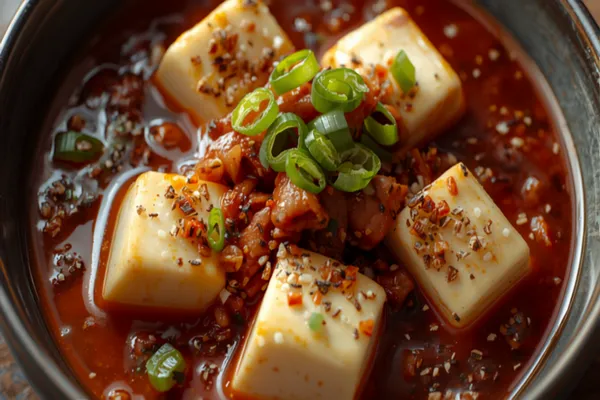
Sichuan · Chinese
Mapo Tofu (Sichuan Tofu in Spicy Bean Sauce)
The great tofu dish of Sichuan: silky cubes of tofu in a fiery, savoury sauce of fermented broad-bean paste and minced pork, finished with the tongue-tingling buzz of ground Sichuan pepper. Ready in 20 minutes and built on a handful of pantry powerhouses.
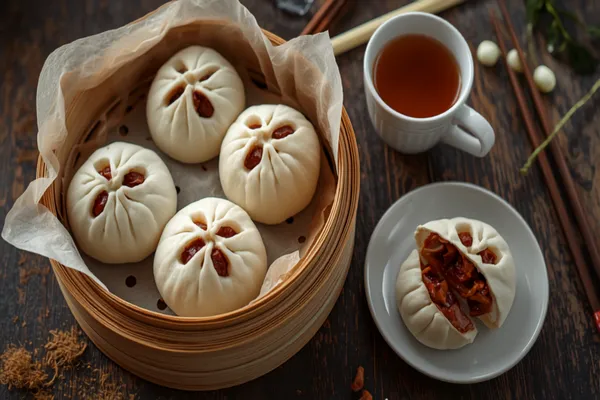
Guangzhou and the Pearl River Delta — the yum cha teahouses of Guangdong, and the dim sum halls of Hong Kong that carried them worldwide · Chinese
Char Siu Bao (Cantonese Steamed BBQ Pork Buns)
The cloud-white dim sum bun that splits open at the top like a laughing mouth: low-gluten dough steamed around a jellied sauce studded with sweet-savoury char siu. The filling is set firm on purpose — that is the whole trick.