Taiwan — born in the juancun military-dependents' villages around Gangshan in Kaohsiung, perfected in the noodle shops of Taipei · Taiwanese
Taiwanese Beef Noodle Soup — Red-Braised Niu Rou Mian with Shank and Tendon
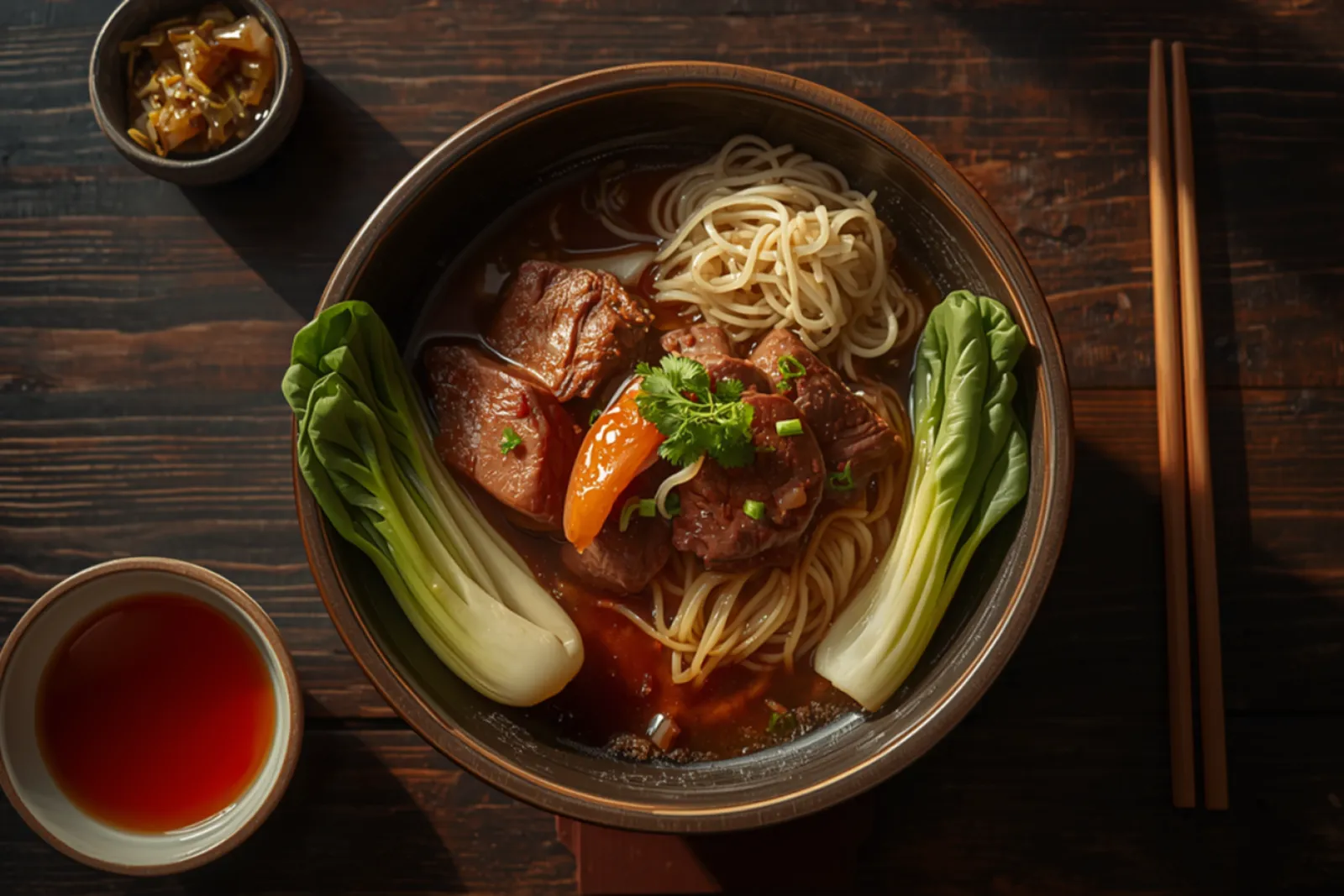
Taiwan's national bowl: beef shank and tendon braised for three hours in a dark, glossy broth built on fried chilli bean paste, caramelised rock sugar and tomato. The colour comes from frying the doubanjiang in oil, not from soy sauce — and that one step is the whole dish.
Published August 30, 2026
Cultural context
Beef noodle soup is Taiwan's de facto national dish, and it is barely seventy-five years old. It was assembled on the island after 1949 by mainland refugees — most often traced to Sichuanese air-force families settled in the *juancun* villages near Gangshan, who fermented their own *doubanjiang* and reworked a Chengdu street dish, 'small-bowl red-broth beef', into a bowl of noodles. That it took hold at all is remarkable: Hoklo and Hakka farming Taiwan had a long-standing taboo against eating beef, since oxen and water buffalo pulled the ploughs, and 1950s vendors remember having to talk customers into their first bowl. Taipei has run an international beef noodle festival since 2005, judged in three categories — *hongshao*, *qingdun* and creative.
Taiwanese beef noodle soup — niu rou mian, 牛肉麵 — is what people mean when they say a country has a bowl. Thick wheat noodles under a broth the colour of dark garnet, chunks of shank that collapse under a chopstick, a slab of tendon gone glassy and springy, greens, a spoonful of pickled mustard stems on top and a slick of chilli oil across the surface. It is sold on every other street in Taipei, judged competitively every October, and argued about constantly. It is also, by the standards of national dishes, extremely young — younger than the aeroplane, younger than sliced bread.
A dish that could only have been invented in Taiwan
For most of Taiwanese history, nobody on the island would have eaten this. Hoklo and Hakka farming families kept a firm taboo against beef: oxen and water buffalo dragged the ploughs and pulled the carts through the wet lowlands, and killing one to eat was regarded as a betrayal of a working companion — a feeling reinforced by Buddhist strands in popular religion. There was an idiom warning that eating beef would damn your soul. The Japanese colonial administration introduced beef-eating after 1895 and it never really took.
What changed was 1949. Hundreds of thousands of Nationalist soldiers and their families arrived from the mainland and were housed in juancun, military dependents’ villages, scattered across the island. Many of the men were northerners with no trade to fall back on when they left the army, and they knew how to make noodles; noodle stalls and dumpling shops proliferated. The most persuasive account of this specific dish, argued by the historian Lu Yao-tung, traces it to Sichuanese air-force families in a juancun near Gangshan, in Kaohsiung, who fermented their own doubanjiang — Gangshan is still Taiwan’s chilli-bean-paste centre, and a factory founded there in 1950 by an air-force veteran is still going — and used it to rework a Chengdu street dish, xiao wan hong tang niu rou, “small-bowl red-broth beef”, into a bowl of noodle soup.
So nothing in it is an invention exactly, and the whole is. Vendors in the 1950s recall having to coax Taiwanese customers into trying beef at all. Within a generation it had become the island’s most recognisable food, and in 2005 Taipei launched an international beef noodle festival to crown the best bowl. The competition judges three categories: hongshao, qingdun, and creative.
Hongshao or qingdun
Those first two are the real division. Hongshao (紅燒), red-braised, is the recipe below and the one the world knows — dark, glossy, soy-and-bean-paste deep, faintly sweet, with oil pooling on the surface and spice layered through it. Qingdun (清燉), clear-simmered, is its opposite: beef bones and salt and a whisper of aromatics, pale as consommé, prized for a clean unhidden beefiness and much harder to make well, because there is nothing to cover a mistake with.
If you want the version that made the dish famous, make the red one. It is also the more forgiving of the two — but only if you get one step right.
The step everybody skips
Fry the doubanjiang.
The colour of a proper bowl does not come from soy sauce. Pour in enough dark soy to turn two litres of broth genuinely red and you will have made something inedibly salty. The colour and a great deal of the aroma come from fermented chilli bean paste, and both are locked in fat-soluble compounds that only release when the paste hits hot oil. Fry it — into a caramel of melted rock sugar, in this recipe, which adds gloss and a bittersweet floor — and within two or three minutes the oil at the edges of the pan runs bright scarlet. That red oil is what disperses through the whole pot. Stir the paste straight into water instead and you get a broth that is brown, flat and salty, which is what most disappointing homemade versions taste like.
Three smaller decisions that also matter
Blanch from cold water. Cover the beef in cold water and bring it up slowly, and blood proteins leach out gradually and coagulate into scum you can throw away. Drop the meat into boiling water and the surface sets, sealing them in, where they show up later as a muddy note under everything.
Never let it boil. Collagen becomes gelatin at a bare simmer given time; muscle fibres wring themselves dry at a hard one. A rolling boil also emulsifies rendered fat into the liquid, which is exactly how broth turns cloudy and greasy and stays that way.
Cook the noodles somewhere else. In their own pot of unsalted water, drained hard. Noodles boiled in the broth shed starch into it and keep drinking it long after they hit the bowl.
Then leave it alone until tomorrow
The best thing you can do to this soup is nothing, overnight, in the fridge. The gelatin sets and re-melts with more body; the fat rises and solidifies so you can take off precisely as much as you want. Nearly every shop in Taipei is ladling out yesterday’s pot. Make it a day ahead and all that’s left at dinner is boiling noodles.
For the other end of the Chinese wheat tradition, cong you bing uses the same flour and none of the patience — and there are more dishes worth a three-hour braise in the world classics guide.
Ingredients
For the beef
- 1.2 kg (2 lb 10 oz) beef shank, ideally the whole muscle with its tendon core (牛腱, niu jian) This is the cut Taiwanese shops mean by *ban jin ban rou*, 'half tendon half meat'. Beef shin, boneless short rib or chuck all work; whatever you use, it must be a hard-working cut laced with connective tissue. Lean stewing steak or brisket flat will give you dry meat and a thin, watery broth.
- 200 g (7 oz) beef tendon, optional but traditional Sold frozen in Chinese supermarkets. It contributes almost no flavour and enormous body — it melts into the broth as gelatin and turns translucent and springy. If you can't find it, add an extra 200 g of shank.
- 4 slices fresh ginger, for the blanching water
- 2 spring onions, halved, for the blanching water
- 2 tbsp Shaoxing rice wine, for the blanching water
For the braise
- 3 tbsp neutral oil — groundnut, rapeseed or sunflower
- 30 g (about 2 tbsp) yellow rock sugar (bing tang), roughly crushed Rock sugar caramelises more slowly and less bitterly than granulated and gives the broth its glossy sheen. Light brown sugar is the closest substitute; use 25 g and watch it more carefully.
- 3 tbsp doubanjiang (fermented chilli bean paste) The single most important ingredient. Pixian doubanjiang from Sichuan is the benchmark; Taiwan's own Gangshan brands are the historically correct choice and are milder and slightly sweeter. Buy the chunky, deep-brick-red kind in a jar or tub, not a thin bottled chilli sauce. Gochujang and miso are not substitutes — they are sweet and smooth where this is salty, funky and coarse.
- 1 tbsp sweet bean paste (tianmianjiang) or hoisin, optional Common in Taipei shops for a rounder, less aggressive broth. Leave it out for a sharper, more Sichuan-leaning bowl.
- 6 cloves garlic, lightly crushed
- 40 g (a thumb) fresh ginger, sliced into coins
- 4 spring onions, cut into 5 cm lengths
- 1 medium onion, quartered
- 2 ripe tomatoes, quartered The most reliable marker of a Taiwanese bowl rather than a mainland one. They melt away completely; what stays behind is glutamate and a low acidity that keeps three hours of braised beef from turning heavy.
- 100 ml (1/3 cup plus 1 tbsp) Shaoxing rice wine
- 80 ml (1/3 cup) light soy sauce
- 1 tbsp dark soy sauce For colour depth, not saltiness. Add it at the end of the braise if your broth already looks dark enough.
- 2 litres (8 cups) water or unsalted beef stock Water is genuinely fine — the shank and tendon make their own stock. Use beef bone broth if you have it and you'll get a heavier, more restaurant-like bowl.
For the spice bundle
- 3 star anise
- 1 stick (about 7 cm) cassia bark or cinnamon
- 2 bay leaves
- 1 tsp Sichuan peppercorns Use fewer if you dislike the numbing tingle; the Taiwanese bowl is warm rather than *málà*, so this is a background note, not the point.
- 1 tsp fennel seeds
- 1 black cardamom pod, cracked — optional Smoky and camphorous; a little goes a long way. Green cardamom is not a substitute.
- 3–6 dried red chillies, snapped in half
To serve
- 600–700 g (1 lb 5 oz) fresh thick wheat noodles — knife-cut (dao xiao mian) or hand-pulled (la mian) You want something substantial enough to stand up to the broth. Dried udon or thick Chinese wheat noodles are the best supermarket stand-ins; thin ramen or egg noodles go slack. Allow 150–175 g fresh per person.
- 4 heads baby bok choy or other Asian greens, halved
- 4 tbsp suancai (Taiwanese pickled mustard greens), rinsed and chopped Not a garnish. The salty-sour crunch is the built-in counterweight to a rich broth, and a shop that doesn't put a bowl of it on the table isn't taken seriously.
- 2 spring onions, finely sliced
- a small handful coriander leaves, roughly chopped
- to taste chilli oil or chilli crisp
Method
Tap a step’s number to check it off as you go.
-
Cut the shank into large chunks about 5 cm across; leave the tendon whole for now. Put the meat and tendon in a large pot, cover with cold water by 5 cm, add the ginger slices, halved spring onions and 2 tbsp Shaoxing wine, and bring slowly to the boil. Grey-brown scum will rise steadily. Boil for 3–4 minutes, then drain the lot into a colander and rinse every piece under warm running water. Wash the pot out too.
Why: Starting in COLD water is the whole point of this step. Water-soluble blood proteins leach out of the meat gradually as the temperature climbs and coagulate into scum you can pour away; drop the beef into already-boiling water and the surface proteins set instantly, sealing those compounds inside, where they end up as the muddy, faintly livery note that separates a home broth from a shop one. Rinse in WARM water, not cold — cold water seizes the meat and makes the coagulated scum cling.
-
Tie the star anise, cassia, bay, Sichuan peppercorns, fennel, black cardamom and dried chillies into a square of muslin, or use a tea ball or a disposable spice bag.
Why: Three hours is long enough for star anise and cassia to go from aromatic to medicinal, and for peppercorns to shed a gritty sediment. Bagging them means you can taste at the ninety-minute mark and simply lift the bundle out if the spicing has gone far enough — a decision you cannot unmake once the spices are loose in the pot.
-
Wipe the pot dry and set it over a medium-low heat with 3 tbsp oil and the crushed rock sugar. Let the sugar melt into the oil without stirring much, swirling the pan, until it turns the colour of amber and just begins to smell faintly toasty — 3–5 minutes. Do not let it go dark brown.
Why: Caramelising the sugar first is what gives a red-braise its lacquered gloss and a deep, bittersweet backbone rather than plain sweetness. Sugar caramelises around 170°C and turns acrid not far above that, which is why this happens on a moderate heat and why the next ingredient goes in the moment the colour is right — it stops the caramel dead.
-
Add the doubanjiang (and the sweet bean paste, if using) straight into the caramel and fry, stirring, for 2–3 minutes, until the oil separates out and runs bright red at the edges of the pan. Then add the garlic, ginger, spring onion lengths and quartered onion and fry for another 2–3 minutes until fragrant.
Why: This is the step that makes the dish, and it is the one most home versions skip. The colour and much of the aroma of doubanjiang live in fat-soluble compounds bound up in the paste; frying it in hot oil releases them so they can disperse through two litres of liquid. Stir it raw into water and you get a broth that is salty and dull brown. Fry it properly and you get *hongshao* — red-braised — with the oil visibly stained scarlet before a drop of water goes in. This is also, not incidentally, the taste that Sichuanese families in Kaohsiung were chasing when they started fermenting their own bean paste in the 1950s.
-
Return the blanched beef and tendon to the pot and turn it in the paste for a minute so every piece is coated. Add the tomatoes, pour in the 100 ml Shaoxing wine and let it bubble hard for 30 seconds, then add the light soy, the spice bag and 2 litres of water — enough to cover the meat by 3 cm.
Why: The wine goes in on a hot pan and alone, before the water, so the alcohol boils off and takes the last of the raw-beef smell with it while carrying wine-soluble aromatics into the braise. Add it with the water and it simply dilutes. The tomatoes go in now rather than later because they need the full three hours to collapse entirely — you should not be able to find them at the end.
-
Bring to a boil, skim any last foam, then drop the heat until the surface is barely moving — an occasional lazy bubble, no more. Cover with the lid slightly ajar and cook for 2 1/2 to 3 hours, until a chopstick slides through the beef with no resistance and the tendon is translucent and wobbly. Taste at 90 minutes and lift out the spice bag if the aroma is already strong.
Why: The temperature is the difference between shredded meat in a greasy broth and tender meat in a clear one. Collagen converts to gelatin steadily between about 70 and 95°C, but muscle fibres contract and wring out their moisture the hotter they get — so a bare simmer buys the collagen time while the meat is still holding water. A rolling boil also smashes rendered fat into droplets that emulsify into the liquid and will not skim off, which is exactly how a broth turns cloudy and heavy. Low and slow is not a suggestion here.
-
Lift out the beef and tendon with a slotted spoon and set aside. Strain the broth through a sieve, pressing the solids gently, and discard them. Return the broth to the pot, taste, and adjust: dark soy for colour, a splash more light soy or a pinch of salt for seasoning, a little more rock sugar if it tastes sharp. Slice the tendon thickly and cut the beef into generous bite-sized pieces, then return both to the broth to keep warm.
Why: Season only now, at the end. Three hours of evaporation concentrates everything, so a broth balanced at the start will be aggressively salty by the finish — and doubanjiang and soy sauce are both already salt-heavy. Taste it against a spoonful of plain noodle, not on its own: broth that seems perfect straight from the ladle usually reads flat once it's diluted by 175 g of unsalted wheat.
-
IDEALLY, stop here. Cool the pot and refrigerate overnight. The next day, lift off the solidified fat cap — leave a couple of spoonfuls in for richness — and reheat gently.
Why: Two things happen overnight that cannot be hurried. The gelatin sets and then re-melts into a broth with noticeably more body; and the fat rises and solidifies, so you can remove exactly as much as you want instead of chasing an oil slick around with a ladle. Almost every serious shop in Taipei is serving you yesterday's braise.
-
Bring a large pot of unsalted water to a rolling boil. Blanch the bok choy for 60–90 seconds and lift it out. Then cook the noodles according to the packet — fresh thick wheat noodles usually take 3–4 minutes — and drain them very well, shaking the colander hard.
Why: Never cook noodles in the broth, however tempting the extra washing-up makes it. They shed starch that turns three hours of work gluey and dull, and they go on drinking the liquid until the bowl is more porridge than soup. Unsalted water because the broth carries all the salt this dish needs. And drain them thoroughly — a colander's worth of clinging water is enough to noticeably thin four bowls.
-
Divide the noodles between four deep, wide bowls. Ladle over the hot broth — it should come most of the way up the noodles, not drown them — and arrange beef, tendon and greens on top. Finish each bowl with a spoonful of chopped suancai, a scatter of spring onion and coriander, and chilli oil to taste. Eat immediately.
Why: The pickled mustard greens go on last and go on cold, on purpose. Their whole job is contrast — salt and sour and crunch against a broth that has been getting deeper and rounder for three hours — and stirring them into the pot to warm through would dissolve exactly the sharpness that makes a rich bowl keep tasting good to the bottom.
A quick, anonymous tap — no review needed.
Variations
- Qingdun (清燉) — the clear-broth bowl
The other half of the Taipei festival, and a completely different dish. Skip the caramel, the doubanjiang and the soy entirely. Simmer the blanched shank with beef bones, onion, ginger, spring onion, a few white peppercorns and a much gentler spice bag for four hours, season with salt alone, and serve pale and clean with plenty of white pepper and coriander. Delicate rather than bold, and far less forgiving — there is nothing to hide behind.
- Half tendon, half meat (半筋半肉)
The default order in Taiwan and worth asking your butcher for. Use equal weights of shank and tendon so every bowl gets both the fibrous, gelatinous bite of the tendon and the fall-apart meat. Some shops will also sell you *quan jin* — all tendon — which is the connoisseur's bowl.
- Pressure cooker or Instant Pot
Do the blanching, the caramel and the doubanjiang frying exactly as written — none of that is optional, and none of it works under pressure. Then seal and cook on high for 35 minutes with a natural release, using 1.5 litres of water instead of 2 since nothing evaporates. The texture is very good; the broth is marginally less layered than a three-hour pot.
- Extra-spicy (辣)
Add 2 tbsp of Sichuan chilli oil with its sediment to the pot in the last twenty minutes, double the dried chillies, and put a jar of chilli crisp on the table. Resist the urge to add more doubanjiang for heat — past about 4 tbsp it makes the broth salty long before it makes it hot.
- Tomato-forward (番茄牛肉麵)
A popular modern Taipei style. Double the tomatoes to four, add a tablespoon of tomato paste with the doubanjiang, and hold back a quartered tomato to add in the last twenty minutes so some of it survives as fruit. Brighter and lighter, and a good introduction for anyone who finds the classic bowl heavy.
- Braised beef without the soup (紅燒牛肉)
The same braise, reduced. Lift the meat out at three hours, boil the strained liquid down to a syrupy glaze and turn the beef through it. Serve with rice and greens — this is what Taiwanese households do with the leftovers, and it is arguably better than the soup.
Serving & Storage
Serve in bowls deep enough to hold plenty of broth, with a spoon as well as chopsticks — half the pleasure is the soup itself. In Taiwan the accompaniments matter as much as the bowl: a small dish of *suancai*, a jar of chilli oil, and cold *xiao cai* side plates from the counter fridge — sliced braised beef shank, marinated seaweed, smashed cucumber with garlic, dried tofu simmered in soy. Nothing more elaborate is wanted. If you want a second hot dish, make it something crisp and dry rather than another rich one.
Pairs with: Suancai (pickled mustard greens), Smashed cucumber salad with garlic, Cold braised beef shank slices, Marinated dried tofu, Chilli crisp, Cong you bing (scallion pancakes), Cold Taiwan Beer or barley tea.
Storage: This is a dish that improves. The strained broth and beef keep 4 days in the fridge, stored together, and genuinely taste better on day two and three as the spice settles and the gelatin firms. Freeze broth and meat together for up to 3 months; freeze them WITHOUT noodles or greens, which turn to mush. Reheat gently on the hob rather than in a microwave, which boils unevenly and toughens the beef. Cook noodles and blanch greens fresh for every bowl — five minutes' work, and the difference between a good bowl and a sad one.
Nutrition
Per serving (1 large bowl (a quarter of the recipe))
- Calories
- 715
- Protein
- 48 g
- Carbs
- 72 g
- Fat
- 24 g
- Fiber
- 5 g
- Sugar
- 9 g
- Sodium
- 1850 mg
Notable micronutrients: Iron, Zinc, Vitamin B12, Niacin, Selenium, Vitamin K
Estimated using standard ingredient data. Values vary with brands and substitutions.
Frequently Asked Questions
Is beef noodle soup Chinese or Taiwanese?
Both parts of that question have honest answers, and the interesting bit is that they don't cancel out. Every component is Chinese: wheat noodles, red-braising, *doubanjiang* from Sichuan, the star-anise-and-cassia spice profile of the north. But the bowl itself was assembled in Taiwan after 1949, by mainland refugees using what the island had, and no equivalent dish existed on the mainland to be copied — the closest ancestor, a Chengdu street dish called *xiao wan hong tang niu rou*, is a small bowl of red-broth beef, not a bowl of noodles. So the fairest description is that it is a Chinese dish invented in Taiwan, which is also a reasonable description of a great deal of modern Taiwanese culture. It is not, incidentally, the same thing as Lanzhou beef noodles — see below.
What's the difference between this and Lanzhou beef noodles?
They are unrelated dishes that share a translation. Lanzhou *lamian* is a Hui Muslim speciality from Gansu in China's north-west, considerably older, built on a clear, pale broth of beef bones and warm spices, served with hand-pulled noodles, thin slices of beef, white radish, coriander and a spoon of chilli oil floated on top. It is halal by definition and contains no soy sauce, no bean paste and no braising. Taiwanese *hongshao niu rou mian* is dark, red, sweet-savoury and built on fried chilli bean paste. If anything, Taiwan's *qingdun* clear-broth style is the nearer cousin — and even that is a separate tradition.
Can I substitute gochujang, miso or sriracha for the doubanjiang?
No, and this is the one ingredient genuinely worth a trip. Doubanjiang is fermented broad beans and chillies aged with salt for months or years — savoury, funky, coarse and very salty, with almost no sweetness. Gochujang is sweet, smooth and rice-based; miso is sweet and lacks chilli entirely; sriracha is a vinegared fresh-chilli sauce with nothing fermented about it. Any of them will produce a perfectly nice beef noodle soup, but none of them will produce this one — the flavour, and the colour when the paste is fried in oil, both come from the fermentation. Look for Pixian doubanjiang in a Chinese supermarket or online; a tub lasts months in the fridge and makes [mapo tofu](/recipes/mapo-tofu) too.
My broth came out cloudy and greasy. What went wrong?
Almost certainly the heat. A rolling boil shears rendered fat into tiny droplets that emulsify into the liquid, where they will not skim off — that is what cloudy is. Keep the surface at a bare tremble with a bubble breaking now and then. The second likely culprit is a skipped or rushed blanch: proteins that should have been poured away in step one end up as suspended sediment. It is fixable, up to a point — chill the broth completely, lift off the solid fat cap, and reheat gently without stirring.
Do I have to use tendon? It sounds intimidating.
You don't, but it is easier than it sounds and it is what makes the broth cling to the noodles. Frozen beef tendon is sold in most Chinese supermarkets, needs no preparation beyond thawing and blanching with the rest of the meat, and after three hours has turned translucent, springy and mild — it tastes mostly of the braise. If you skip it, use a shank with a good marbled seam of connective tissue running through it and accept a slightly lighter broth, or add a piece of oxtail for a similar effect.
Can I make it ahead for a dinner party?
You should. Make the braise up to three days in advance and refrigerate it — the flavour deepens and the fat cap lifts straight off the top, which is far easier than skimming a hot pot. On the day, reheat the broth and beef gently while a pot of water comes to the boil, then cook noodles and blanch greens to order. Assembly takes about five minutes and the bowls have to be eaten immediately, so the only real rule is that everyone sits down first.
What to drink with this
All drinks →Hand-picked pours to match this dish.
Taichung, Taiwan · Taiwanese
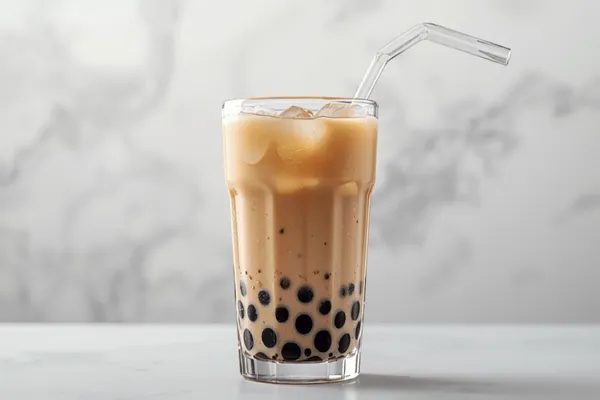
Bubble Tea (Taiwanese Boba Milk Tea)
Strong black tea, milk and chewy tapioca pearls over ice — Taiwan's gift to the world. Make the springy boba and the brown-sugar syrup from scratch and the homemade version beats the shop, for a fraction of the price.
Pan-Indian (the everyday tea of the subcontinent) · Indian
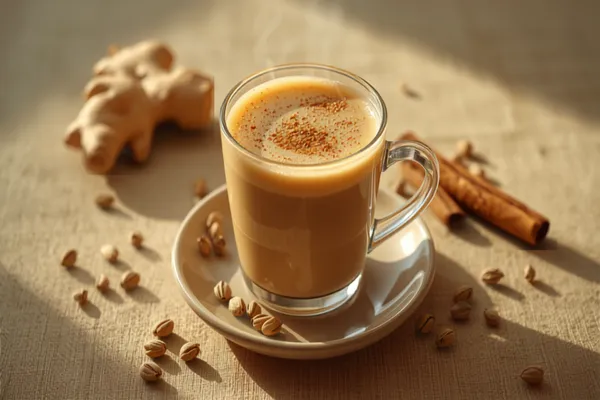
Masala Chai (Spiced Indian Tea)
India's daily ritual in a cup: black tea brewed with milk, sugar and freshly crushed spices. The proper stovetop method, plus how to build your own masala.
Mexico (agua fresca tradition) · Mexican
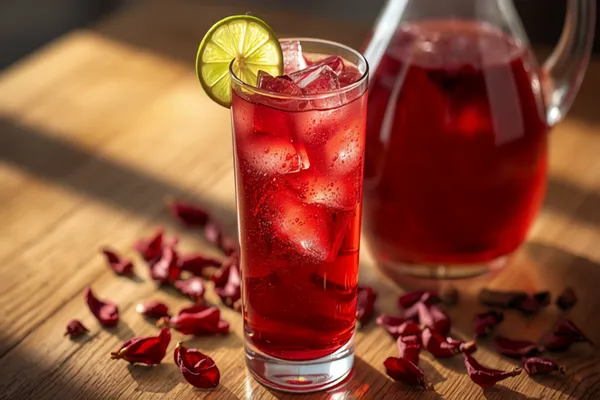
Agua de Jamaica (Hibiscus Iced Tea)
Mexico's ruby-red hibiscus cooler: dried jamaica flowers steeped, sweetened and chilled into a tart, refreshing agua fresca. The right steep, how to control the tartness, and why it's so good for you.
From our kitchen community
Ratings & Reviews
My Rating
Tap a star to rate — no sign-in, no form needed.
My Review
0 Ratings
🥣 0 home cooks made it!
Be the first to rate Taiwanese Beef Noodle Soup — Red-Braised Niu Rou Mian with Shank and Tendon.
Related Recipes
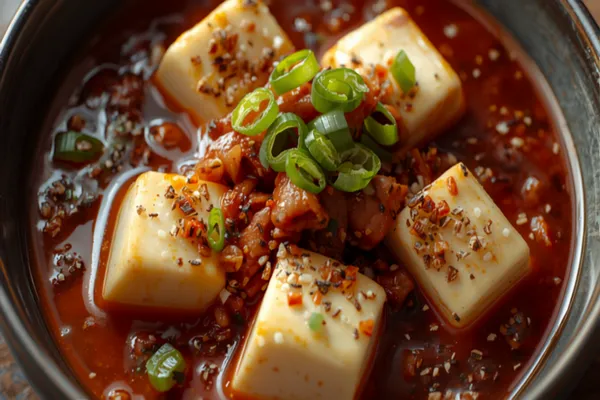
Sichuan · Chinese
Mapo Tofu (Sichuan Tofu in Spicy Bean Sauce)
The great tofu dish of Sichuan: silky cubes of tofu in a fiery, savoury sauce of fermented broad-bean paste and minced pork, finished with the tongue-tingling buzz of ground Sichuan pepper. Ready in 20 minutes and built on a handful of pantry powerhouses.
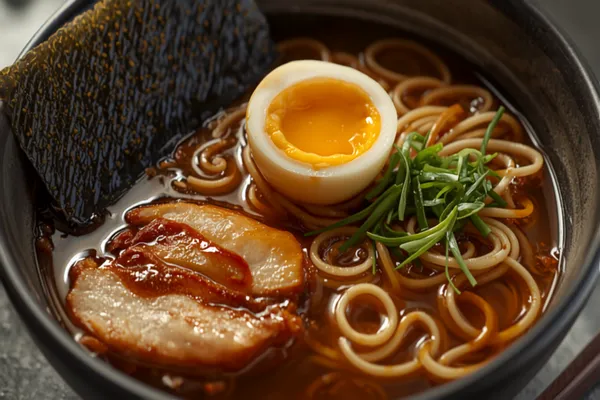
Tokyo, Japan · Japanese
Tokyo Shoyu Ramen (Soy Sauce Ramen)
The classic Tokyo bowl: springy noodles in a clear, soy-seasoned chicken broth, topped with marinated egg, chashu pork, and spring onion. A weekend project broken into make-ahead parts that come together into a restaurant-worthy bowl.
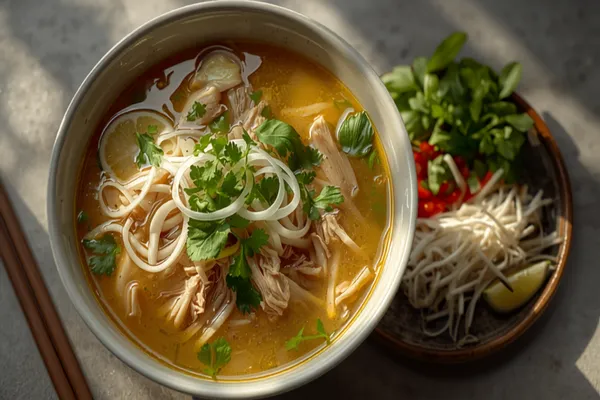
Hanoi, Northern Vietnam / Southeast Asia · Vietnamese
Phở Gà (Vietnamese Chicken Noodle Soup)
The lighter, faster sibling of beef phở: a clear, aromatic chicken broth perfumed with charred ginger, onion, and toasted spice, ladled over rice noodles and poached chicken, finished at the table with herbs, lime, and chili. Restorative and clean, in about two hours.
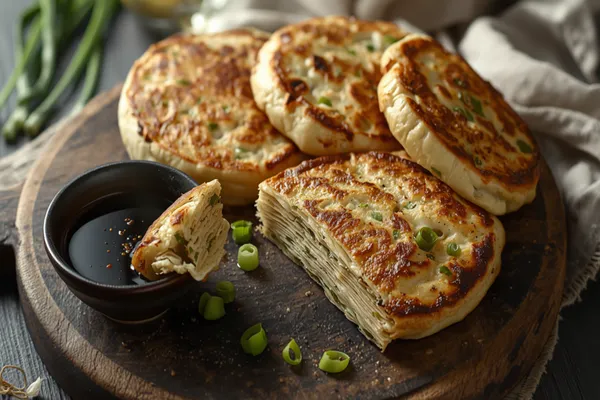
Shanghai and the lower Yangtze, drawing on the northern wheat belt of Shandong and Henan where the bing tradition began · Chinese
Cong You Bing — Chinese Scallion Pancakes with Shatteringly Flaky Layers
Flour, water, oil and spring onions, laminated like puff pastry and fried until the layers separate into flakes. The two things that decide the outcome are a half-boiling-water dough and an oil roux — not plain oil — between the sheets.
Korea — the kimjang tradition, from mild Pyongyang-style kimchi in the north to the seafood-heavy kimchi of Jeolla in the south · Korean
Baechu-Kimchi (Traditional Napa Cabbage Kimchi)
Korea's defining side dish, made the whole-leaf way: napa cabbage brined until it bends, packed leaf by leaf with a gochugaru paste of garlic, ginger, fish sauce and salted shrimp, then left to sour into something deep, fizzy and alive.