Hanoi, Northern Vietnam / Southeast Asia · Vietnamese
Phở Gà (Vietnamese Chicken Noodle Soup)
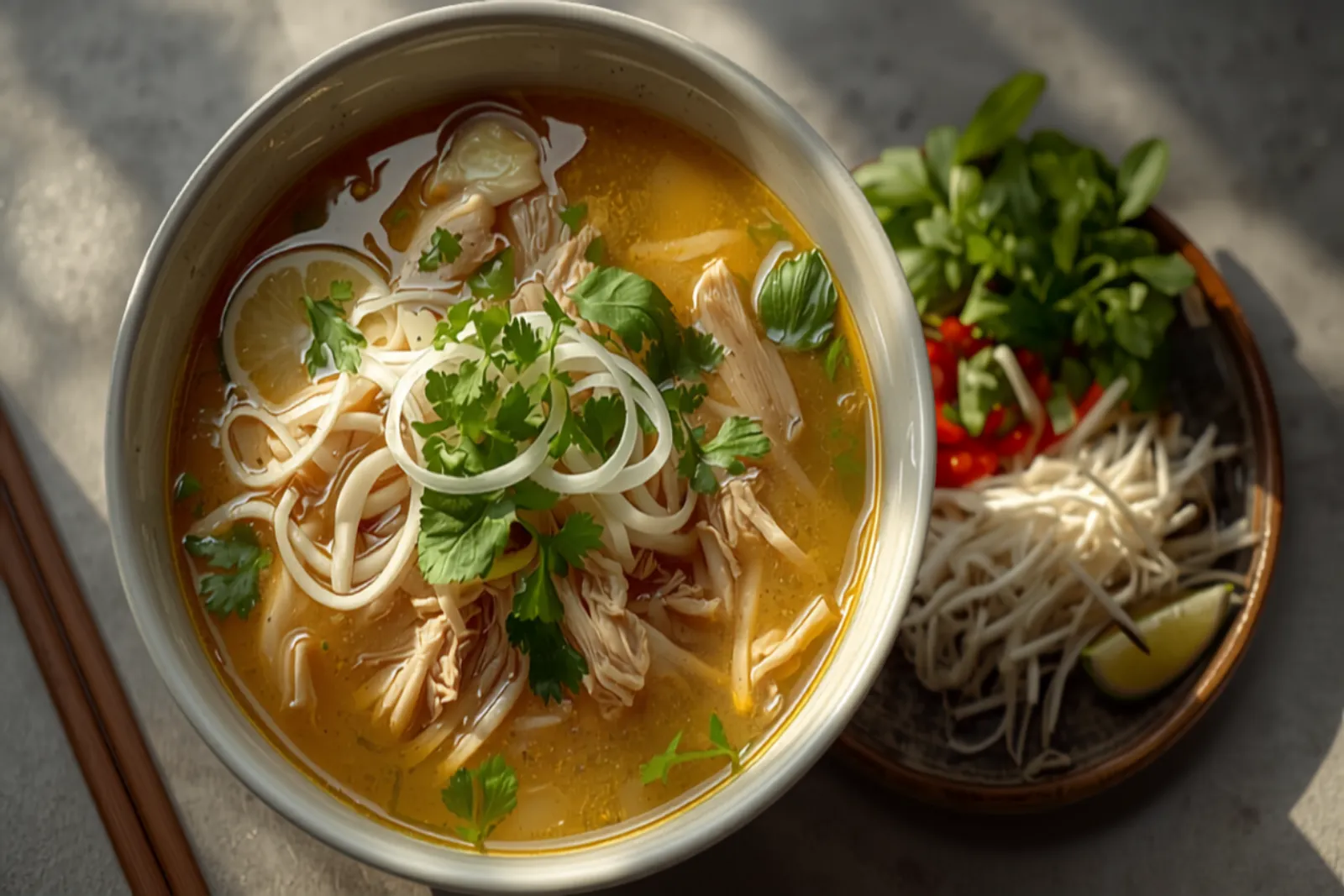
The lighter, faster sibling of beef phở: a clear, aromatic chicken broth perfumed with charred ginger, onion, and toasted spice, ladled over rice noodles and poached chicken, finished at the table with herbs, lime, and chili. Restorative and clean, in about two hours.
Published June 20, 2026
Cultural context
Phở is Vietnam's national dish and a northern invention; phở gà, the chicken version, took hold in Hanoi in the 1930s–40s during periods when beef was scarce, and never lost its place. Northern phở is defined by clarity and restraint — a clean, almost austere broth, fewer garnishes than the herb-piled southern style — and phở gà is its most delicate expression.
Phở gà is the bowl to make when beef phở feels like too much project. It’s the chicken version — lighter, faster, and in many Vietnamese homes the more everyday of the two — but no less considered. A clear, gold broth scented with charred ginger and onion and a restrained hand of warm spice, ladled over rice noodles and poached chicken, then finished by each eater with herbs, lime, and chili. It tastes like convalescence and comfort at once.
Clarity is the northern ideal
Phở is a northern dish, and the northern style prizes a clean, almost austere broth — clarity over richness, restraint over a pile of garnishes. That clarity is entirely about technique: start the chicken in cold water, bring it up slowly, skim the foam obsessively in the first twenty minutes, and never let the pot reach a hard boil. A rolling boil emulsifies fat and scum into the liquid and clouds it. A lazy simmer keeps it bright.
Char, then toast
Two small steps give phở its character. First, char the ginger and onion black-spotted over a flame and rinse them — this is the smoky-sweet backbone of the broth. Second, toast the star anise, cinnamon, cloves, and coriander, then tie them in a bundle so you can pull them before they turn the broth medicinal. Both take five minutes and make the difference between phở and plain chicken soup.
The bowl is finished at the table
Northern phở comes nearly naked — broth, noodles, chicken, a little onion and herb — and the eater does the rest: a squeeze of lime, a few torn basil leaves, a slice of chili, maybe a dot of sriracha. Cook the noodles fresh for each bowl (never store them in broth), ladle the scalding broth over to gently cook the raw onion, and serve the herb plate alongside. It’s a bowl that rewards a slow afternoon at the stove.
More from the region: silky Hainanese chicken rice, or read the cook’s map of Southeast Asia.
Ingredients
For the broth
- 1 whole (about 1.6 kg) chicken A good free-range bird makes a clearer, more flavourful broth. You'll poach it whole and shred the meat for serving.
- 2 thumbs fresh ginger Unpeeled, halved lengthwise and charred.
- 2 large yellow onions Halved and charred until blackened in spots.
- 3–4 whole star anise
- 1 stick cinnamon (cassia)
- 3 whole cloves
- 1 tsp coriander seed
- 1 tbsp rock sugar (or 2 tsp regular sugar)
- 2–3 tbsp fish sauce, plus salt to taste
To serve
- 400 g dried flat rice noodles (bánh phở) The medium width; soak and cook per the packet just before serving.
- thinly sliced onion, scallion, and cilantro
To serve (the herb plate)
- Thai basil, sawtooth coriander (ngò gai), bean sprouts, lime wedges, sliced bird's eye chili, and hoisin/sriracha
Method
Tap a step’s number to check it off as you go.
-
Char the ginger and onions directly over a flame or under a hot grill until blackened in patches, then rinse off the loose char.
Why: Charring is the step that gives phở its signature smoky-sweet backbone. Rinsing keeps stray burnt bits from clouding the broth — clarity is the whole point of northern phở.
-
Toast the star anise, cinnamon, cloves, and coriander seed in a dry pan for a minute until fragrant, then tie them in a small cloth or place in a tea infuser.
Why: Toasting wakes up the spices' oils; containing them means you can pull the spice at the right moment and keep the broth from turning medicinal or murky.
-
Put the whole chicken in a large pot, cover with cold water, and bring slowly to a bare simmer, skimming off every bit of foam that rises.
Why: Starting in cold water and never letting it boil hard draws impurities to the surface as removable foam instead of emulsifying them into a cloudy broth.
-
Add the charred aromatics, spice bundle, rock sugar, and a tablespoon of salt. Simmer gently — never a rolling boil — for about 20 minutes, then lift out the chicken once cooked through and plunge it into iced water.
Why: A gentle simmer keeps the broth clear and the meat tender; the ice bath stops the cooking and firms the skin so the meat shreds cleanly and stays juicy.
-
Return the carcass and bones to the pot and simmer the broth another 60–75 minutes. Pull the spice bundle after 30–40 minutes. Finish with fish sauce and salt to taste.
Why: The meat cooks in 20 minutes but the broth needs an hour-plus on the bones for body. Removing the spice early prevents over-extraction; seasoning at the end lets you balance precisely.
-
To serve, cook the rice noodles, divide among bowls, top with shredded chicken, sliced onion, scallion, and cilantro, and ladle over the strained, scalding broth. Serve the herb plate, lime, and chili alongside.
Why: Phở is assembled à la minute and finished by each eater — the boiling broth gently cooks the onion and warms the herbs, and the lime and chili are added to taste so the bowl stays personal.
A quick, anonymous tap — no review needed.
Variations
- Quick weeknight phở gà
Use bone-in chicken thighs and a litre of good chicken stock; you'll have a credible bowl in 45 minutes, if not the depth of the full version. Still char the ginger and onion.
- Pressure cooker
After charring and skimming, pressure-cook the bones and aromatics for 30 minutes for a deeply flavoured broth in a fraction of the time. Poach the meat separately so it doesn't overcook.
- Extra-rich
Add a few chicken feet to the broth for natural gelatin and body — a Hanoi trick for a broth with more backbone and a glossier mouthfeel.
Serving & Storage
Serve scalding hot, with the herb plate, lime, and chili on the side so each person dresses their own bowl. Northern purists add little more than a squeeze of lime; do as you like.
Pairs with: Vietnamese herb plate, Lime and bird's eye chili, Quẩy (fried dough sticks), Vietnamese iced tea.
Storage: Store the broth and toppings separately for up to 3 days; the broth freezes beautifully for 3 months. Never store noodles in broth — they turn to mush. Cook noodles fresh for each serving.
Nutrition
Per serving (1 large bowl)
- Calories
- 480
- Protein
- 34 g
- Carbs
- 58 g
- Fat
- 11 g
- Fiber
- 3 g
- Sugar
- 6 g
- Sodium
- 1450 mg
Notable micronutrients: Niacin, Selenium, Vitamin B6
Estimated using standard ingredient data. Values vary with brands and substitutions.
Frequently Asked Questions
What's the difference between pho ga and beef pho (pho bo)?
Phở bò is built on beef bones and brisket and is richer and more robust; phở gà uses chicken for a lighter, cleaner, faster broth. The aromatic backbone — charred ginger and onion, star anise, cinnamon — is shared. Phở gà needs far less simmering and is the easier place to start.
Why is my pho broth cloudy?
Almost always because it boiled too hard. Bring it up slowly, skim the foam diligently in the first 20 minutes, and hold it at a bare, lazy simmer the whole time. Rinsing the charred aromatics and starting the chicken in cold water also keep it clear.
Do I have to char the ginger and onion?
It's the most important flavour step, so yes if you can. Charring over a gas flame, under a broiler, or in a dry cast-iron pan adds the smoky-sweet depth that makes broth taste like phở rather than plain chicken soup. Don't skip it.
What to drink with this
All drinks →Hand-picked pours to match this dish. Alcoholic pairings are for adults of legal drinking age (21+ in the US) — please drink responsibly.
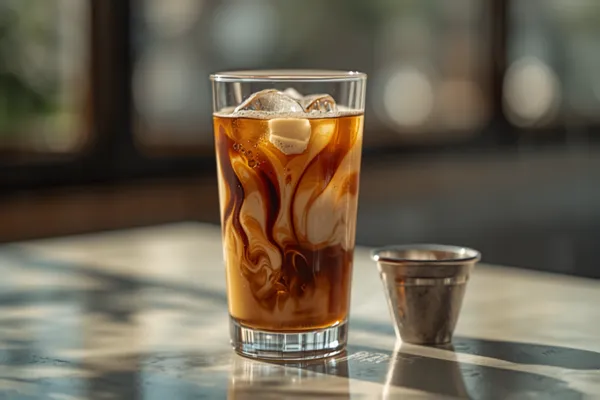
Vietnam (Saigon coffee culture) · Vietnamese
Vietnamese Iced Coffee (Cà Phê Sữa Đá)
Strong dark-roast coffee dripped through a phin over sweetened condensed milk, then poured over ice. Vietnam's bold, sweet, jolting iced coffee — and how to make it without special gear.
 21+
21+ Kuala Lumpur, Malaysia · Malaysian
Jungle Bird (Dark Rum, Campari & Pineapple)
The tiki drink with a bitter backbone: dark rum and Campari shaken with fresh pineapple and lime. Tropical and lush but grown-up and dry — the 1970s Malaysian classic that bridges tiki and the aperitivo world.
 21+
21+ Singapore (the Raffles Hotel Long Bar) · Singaporean
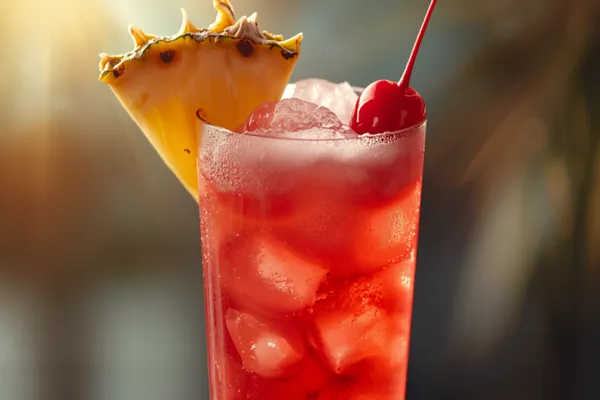
Singapore Sling (The Raffles Hotel Classic)
The tropical gin classic born at Raffles Hotel: gin, cherry liqueur, Bénédictine, citrus and pineapple, shaken into a frothy, ruby long drink. The full original build, not the sugary shortcut.
From our kitchen community
Ratings & Reviews
My Rating
Tap a star to rate — no sign-in, no form needed.
My Review
0 Ratings
🥣 0 home cooks made it!
Be the first to rate Phở Gà (Vietnamese Chicken Noodle Soup).
Related Recipes
Central Thailand / Southeast Asia · Thai
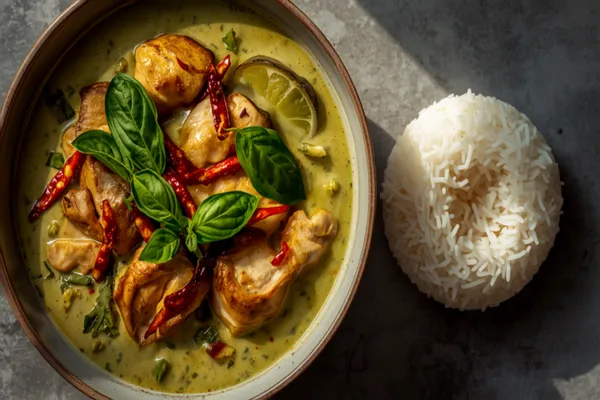
Thai Green Curry (Gaeng Keow Wan Gai)
Thailand's fragrant green curry, built the way it's meant to be: a fresh pounded paste bloomed in cracked coconut cream, chicken and Thai eggplant simmered to silk, finished with fish sauce, palm sugar, and a fistful of basil. Hot, sweet, herbal, and ready in under an hour.
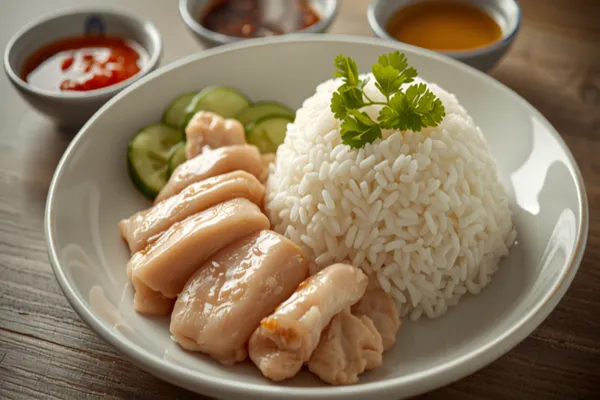
Singapore & Malaysia (Hainanese diaspora) / Southeast Asia · Singaporean & Malaysian
Hainanese Chicken Rice
The hawker-stall masterpiece of Singapore and Malaysia: a whole chicken gently poached to silky tenderness, rice cooked in the schmaltz-rich broth, served with a trio of sauces. Deceptively plain, ruthlessly precise, and one of the world's great comfort dishes.
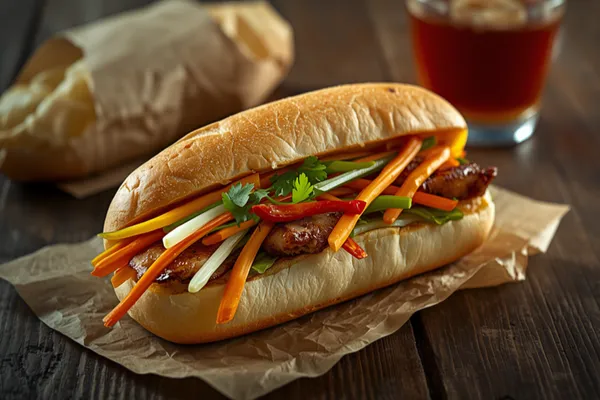
Saigon (Ho Chi Minh City), southern Vietnam · Vietnamese
Bánh Mì Thịt Nướng (Vietnamese Grilled Pork Sandwich)
Saigon's great street sandwich — lemongrass-marinated pork charred over high heat, packed into an airy Vietnamese baguette with pâté, mayonnaise, đồ chua pickles, cucumber and coriander. Crisp, sour, sweet and smoky in the same bite.
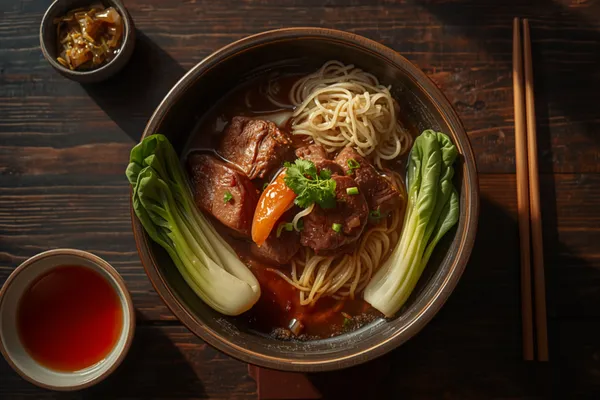
Taiwan — born in the juancun military-dependents' villages around Gangshan in Kaohsiung, perfected in the noodle shops of Taipei · Taiwanese
Taiwanese Beef Noodle Soup — Red-Braised Niu Rou Mian with Shank and Tendon
Taiwan's national bowl: beef shank and tendon braised for three hours in a dark, glossy broth built on fried chilli bean paste, caramelised rock sugar and tomato. The colour comes from frying the doubanjiang in oil, not from soy sauce — and that one step is the whole dish.
Further reading
- Cultural Story · Southeast AsiaA Cook's Map of Southeast AsiaSoutheast Asia isn't one cuisine but a dozen, bound loosely by rice, fish sauce, fresh herbs, and the pounded paste. A guide to how Thai, Vietnamese, Indonesian, Filipino, Malaysian, and Singaporean cooking differ, what they share, and where to start cooking.
- Cultural Story · InternationalWorld Classics: A Cook's Tour Beyond IndiaTable & Traditions is India-first, but the world has a place at this table too. A guide to our curated international slice — the European, East Asian, Southeast Asian, Middle Eastern and North African, and American dishes worth cooking, and where to begin with each.