Saigon (Ho Chi Minh City), southern Vietnam · Vietnamese
Bánh Mì Thịt Nướng (Vietnamese Grilled Pork Sandwich)
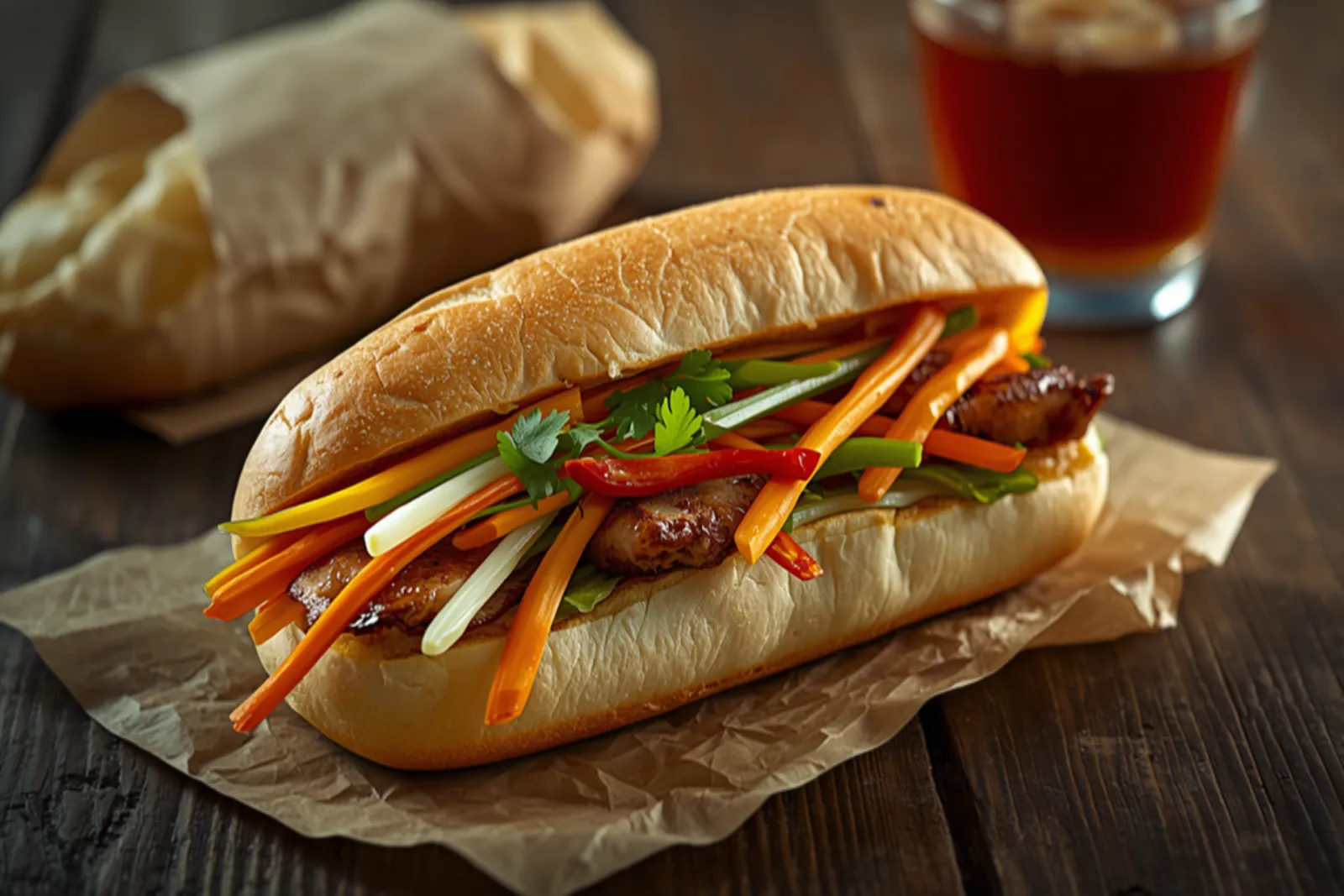
Saigon's great street sandwich — lemongrass-marinated pork charred over high heat, packed into an airy Vietnamese baguette with pâté, mayonnaise, đồ chua pickles, cucumber and coriander. Crisp, sour, sweet and smoky in the same bite.
Published August 15, 2026
Cultural context
Bánh mì is what happened when the French baguette landed in Vietnam and Vietnamese bakers rebuilt it — lighter, thinner-crusted, often cut with rice flour — then filled it with their own pantry. The sandwich as the world knows it took shape in Saigon in the 1950s, and southern versions still run sweeter and more generously garnished than northern ones. 'Bánh mì' properly means the bread itself; the fillings are named after it, and thịt nướng — grilled pork — is one of dozens.
Bánh mì is the most literal sandwich in the world: the name simply means “bread”. Everything else — the grilled pork, the pâté, the pickles, the fistful of coriander — is a modifier, which is why a Saigon cart advertises bánh mì thịt nướng, bánh mì xíu mại, bánh mì chả cá on the same painted board. The bread came first, and the bread is the reason the whole thing works.
The French brought the baguette to Vietnam after 1858, and for decades it stayed a colonial food: expensive, wheat-heavy, eaten with butter by people who could afford it. What made it Vietnamese was the rebuild. Vietnamese bakers lightened the dough — often with rice flour — and baked it hard and fast in steam-filled ovens until it came out with a crust like a shell and an inside that was mostly air. Then, in the Saigon of the 1950s, someone thought to split it and fill it: pâté and mayonnaise from the French pantry, fish sauce and pickled daikon and herbs from the Vietnamese one. The sandwich travelled north and then overseas with the diaspora, and southern versions — sweeter, more heavily garnished — are the ones most of the world has met.
The four things that make it work
A good bánh mì is an argument between textures and tastes, held together by one piece of bread. Rich: pâté and mayonnaise, both fatty, both spread against the crumb. Sharp: đồ chua, the carrot-and-daikon pickle, sweet-sour and crunchy. Savoury and smoky: the grilled pork, lacquered at the edges. Fresh and hot: cucumber, whole coriander sprigs, raw chilli.
Pull any one of those out and the sandwich sags. This is worth knowing before you start substituting, because every element is doing a specific job — the mayonnaise is not decoration, it is the waterproofing between the wet filling and the crumb.
Char, not doneness
Thịt nướng means grilled meat, and the technique is unambiguous: slice the pork thin, marinate it in lemongrass, fish sauce, garlic and honey, and cook it over the hottest heat you have until the edges blacken. Thin pork is cooked through long before it colours, so the entire game is surface area. Shake the marinade off before the meat hits the grate — pooled liquid steams the pork and its sugar scorches instead of caramelising — and chop the slices after they come off the heat, so the interiors stay juicy and the edges stay ragged.
Shoulder is the right cut. It has enough intramuscular fat to survive a hard sear, and a few slices of belly mixed in will improve the whole batch. Loin will disappoint you.
Đồ chua, and why you salt first
The pickle takes ten minutes and lasts a month, which makes it the highest-return thing in this recipe. Cut the carrot and daikon into matchsticks, toss them with salt and a spoonful of sugar, and wait a quarter of an hour before rinsing and brining. That first salting draws out water so the vinegar brine is not diluted on contact, and it collapses the vegetables just enough that they bend rather than snap — which sounds like a nicety until you bite a sandwich full of rigid sticks and watch the filling shoot out the far end.
Make more than you need. It keeps for weeks and gets better for the first one.
Warm the bread
Five minutes in a hot oven, then split it hinged so the sandwich holds together. If your roll is on the dense side, pull a little crumb out of the top half. This single step is the difference between something that tastes like a bánh mì and something that tastes like a cold sandwich with Vietnamese ingredients in it.
Then eat it immediately. The crust starts softening the moment the filling goes in, and a bánh mì eaten fifteen minutes late is a genuinely different, lesser object.
For more of the region’s balance of hot, sour, salty and sweet, try Vietnam’s phở gà or the Philippines’ chicken adobo — and the Southeast Asian cooking guide maps the wider table.
Ingredients
For the đồ chua (pickled carrot & daikon)
- 150 g (1 large) carrot, cut into matchsticks
- 150 g daikon radish, cut into matchsticks Roughly equal weights is the Saigon default. Daikon smells assertively sulphurous raw — that fades entirely in the brine.
- 1 tsp fine salt
- 100 g (1/2 cup) granulated sugar
- 120 ml (1/2 cup) distilled white or rice vinegar
- 240 ml (1 cup) warm water
For the grilled pork
- 600 g (1 1/4 lb) pork shoulder or pork belly, sliced 5 mm thick Shoulder (vai) is the workhorse; a strip of belly among it makes the whole plate taste better. Loin is too lean — it dries out before it colours.
- 3 stalks lemongrass, tough outer layers removed, tender core very finely minced Only the pale bottom 10 cm is worth using. Mince it far finer than feels necessary — lemongrass fibre does not soften on the grill.
- 4 cloves garlic, minced
- 2 shallots, minced
- 2 tbsp fish sauce (nước mắm) Use a first-press anchovy sauce if you can find one; it is the sandwich's backbone of salt and savour.
- 1 1/2 tbsp oyster sauce
- 2 tbsp honey or light brown sugar
- 1 tbsp neutral oil
- 1/2 tsp Chinese five-spice powder A southern Vietnamese habit inherited from Chinese-Vietnamese kitchens. Half a teaspoon perfumes; a whole one takes over.
- 1/2 tsp freshly ground black pepper
- 1 tsp toasted sesame oil
To assemble
- 4 Vietnamese baguettes (bánh mì rolls), about 20 cm each The genuine article is feather-light with a crust that shatters. A soft French demi-baguette is the closest supermarket stand-in; a dense sourdough bâtard is not — it fights the filling.
- 4 tbsp pork liver pâté A coarse country pâté or even a smooth chicken-liver parfait works. It is not optional in Saigon.
- 4 tbsp mayonnaise Vietnamese shops make their own with extra egg yolk, closer to a loose aioli. Kewpie is a good shortcut.
- 1 cucumber, cut into long thin spears
- 1 large bunch coriander (cilantro), stems included
- 1–2 bird's eye chillies, thinly sliced
- To taste Maggi Seasoning or light soy sauce A few drops shaken directly onto the bread. Maggi arrived with the French and stayed — it is on the counter of nearly every bánh mì cart in the country.
Method
Tap a step’s number to check it off as you go.
-
Toss the carrot and daikon matchsticks with the salt and 1 tablespoon of the sugar. Leave for 15 minutes, then squeeze out the liquid and rinse briefly. Dissolve the remaining sugar and the vinegar in the warm water, pour over the vegetables and leave at least 1 hour.
Why: Salting first draws out water so the brine is not diluted, and — more importantly — it breaks down the daikon's cell walls just enough that the sticks bend instead of snapping. A pickle that stays rigid pushes the filling out of the sandwich as you bite.
-
Firm the pork in the freezer for 20 minutes, then slice it against the grain into pieces about 5 mm thick.
Why: Thin slices give you the maximum ratio of charred edge to interior, which is the whole flavour argument of thịt nướng — thick chops blacken outside and stay bland in the middle. Chilling the meat until it is stiff at the edges is the only reliable way to cut it that thin by hand.
-
Combine the lemongrass, garlic, shallots, fish sauce, oyster sauce, honey, oil, five-spice, pepper and sesame oil. Add the sliced pork and mix with your hands until every piece is coated. Cover and refrigerate for at least 4 hours, ideally overnight.
Why: Fish sauce is a brine as much as a seasoning: its salt drives moisture into the muscle so the pork stays juicy under fierce heat. The sugar is doing separate work — it will caramelise later, and it needs time on the surface to get there.
-
Heat a charcoal grill, ridged grill pan or the broiler as hot as it will go. Lay the pork out in a single layer, shaking off excess marinade, and cook 2–3 minutes a side until the edges are blackened in places and the surface is glossy and lacquered.
Why: You are chasing char, not doneness — thin pork is cooked through long before it colours. Shaking off the marinade matters: pooled liquid steams the meat instead of letting it sear, and the sugar in it will scorch bitter rather than caramelise.
-
Rest the pork for 5 minutes, then chop it roughly into bite-sized pieces on the board, juices and all.
Why: Chopping after grilling — rather than grilling pre-cut pieces — keeps the interior moist and gives you the ragged, uneven edges that catch mayonnaise. The board juices go back into the pile.
-
Warm the baguettes for 4–5 minutes in a hot oven, then split them lengthways, hinged rather than cut through. Pull out a little of the soft crumb from the top half if the roll is dense.
Why: Re-crisping is the step most home versions skip and the one that most defines the sandwich. Hollowing slightly makes room for filling without turning the bread into the dominant texture.
-
Spread pâté on the bottom half and mayonnaise on the top. Shake a few drops of Maggi onto the bread.
Why: The fats go against the bread on purpose — they form a barrier that keeps the pickle brine and pork juices from soaking the crumb in the ten minutes between assembly and eating.
-
Fill with the chopped pork, a generous handful of drained đồ chua, cucumber spears, whole sprigs of coriander and sliced chilli. Press the sandwich closed firmly and eat straight away.
Why: Pressing compacts the layers so each bite crosses all of them; a loosely packed bánh mì delivers its components one at a time. And the clock starts as soon as it is closed — the crust softens within about fifteen minutes.
A quick, anonymous tap — no review needed.
Variations
- Bánh mì gà nướng (grilled chicken)
Swap the pork for boneless chicken thigh, sliced to the same thickness. The marinade works unchanged; give it an extra minute a side.
- Bánh mì chay (vegetarian)
Grill thick planks of pressed tofu or king oyster mushrooms in the same marinade with soy sauce in place of the fish and oyster sauces. Use a mushroom pâté and vegan mayonnaise — the pickles, herbs and bread carry the sandwich regardless.
- Bánh mì đặc biệt (the 'special')
The cold-cut classic: Vietnamese ham (chả lụa), headcheese and a slick of pâté instead of grilled meat. No cooking at all, and the version most Saigon carts sell most of.
- Bánh mì xíu mại
Pork meatballs simmered in a light tomato sauce, spooned in with a little of the sauce. A Đà Lạt speciality and the softest, most comforting member of the family.
- Rice bowl (bún thịt nướng)
Skip the bread entirely. Serve the same grilled pork over cold rice vermicelli with the đồ chua, herbs, peanuts and a bowl of nước chấm to pour over. Same marinade, different meal.
Serving & Storage
Eat it standing up, within minutes of assembly, wrapped in paper. A Vietnamese iced coffee or a glass of cold beer is the standard companion; a small dish of extra đồ chua and sliced chilli on the table lets people top up as they go.
Pairs with: Vietnamese iced coffee (cà phê sữa đá), Cold lager, Extra đồ chua, Sriracha or chilli sauce, Fresh lime wedges.
Storage: Assembled bánh mì does not keep — the crust goes soft in about fifteen minutes and soggy within the hour. Store the parts instead: đồ chua keeps 3–4 weeks refrigerated in its brine and improves for the first week; marinated raw pork holds 2 days in the fridge or 2 months frozen; grilled pork keeps 3 days and reheats well in a hot dry pan. Bread is best bought or baked the same day, but a stale roll revives with 5 minutes in a hot oven.
Nutrition
Per serving (1 sandwich)
- Calories
- 610
- Protein
- 34 g
- Carbs
- 58 g
- Fat
- 26 g
- Fiber
- 4 g
- Sugar
- 14 g
- Sodium
- 1280 mg
Notable micronutrients: Vitamin A, Vitamin C, Iron, Thiamine, Vitamin B12, Selenium
Estimated using standard ingredient data. Values vary with brands and substitutions.
Frequently Asked Questions
Why is Vietnamese bread so much lighter than a French baguette?
Because Vietnamese bakers rebuilt it for the climate and the job. The dough is often cut with rice flour or a dough improver, baked fast in a very hot, steamy oven, which produces a paper-thin crust and a large open crumb full of air. The result weighs a fraction of a French baguette of the same size — essential when the bread is a container for wet fillings rather than something eaten alongside them. A dense, chewy artisan loaf will make a bánh mì you have to fight.
Do I really need the pâté?
In Saigon it is not treated as optional — the liver's mineral, fatty richness is what the pickles and herbs are cutting against, and without it the sandwich tastes oddly one-dimensional. If liver is genuinely not for you, a mushroom pâté gets you a good part of the way; simply leaving it out does not.
Can I make this without a grill?
Yes. A ridged cast-iron grill pan over high heat or the oven broiler with the rack close to the element both work — the goal is a surface hot enough to blacken the edges before the thin pork overcooks. Charcoal adds smoke you cannot replicate indoors, so if you are using a pan, err on the side of leaving the pork alone longer for more colour.
How long should the đồ chua pickle?
One hour is enough to eat, but it is noticeably better after a day and best in the first week, by which point the daikon has gone translucent and lost its raw bite. It keeps three to four weeks in the fridge. Make a big jar — it is good in rice bowls, with grilled meat, and straight from the jar.
Is bánh mì Vietnamese or French?
Both, and that is the point. The bread and the pâté, mayonnaise and Maggi all arrived with French colonisation; the fish sauce, herbs, chilli and pickles are entirely Vietnamese, as is the lighter, rice-flour-inflected loaf that Vietnamese bakers developed from the imported original. The sandwich as a complete idea is Vietnamese — assembled in Saigon in the 1950s out of what colonialism left behind.
What is Maggi Seasoning, and can I skip it?
A hydrolysed-wheat seasoning sauce, savoury and slightly beefy, that came to Vietnam with the French and became a fixture on bánh mì carts. A few drops on the bread add a low, roasted savouriness that soy sauce approximates but does not match. Light soy is a fine substitute; leaving it out entirely just makes the sandwich a little quieter.
What to drink with this
All drinks →Hand-picked pours to match this dish. Alcoholic pairings are for adults of legal drinking age (21+ in the US) — please drink responsibly.
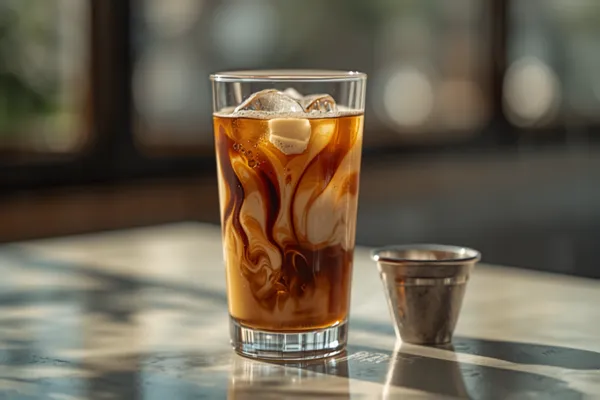
Vietnam (Saigon coffee culture) · Vietnamese
Vietnamese Iced Coffee (Cà Phê Sữa Đá)
Strong dark-roast coffee dripped through a phin over sweetened condensed milk, then poured over ice. Vietnam's bold, sweet, jolting iced coffee — and how to make it without special gear.
 21+
21+ Kuala Lumpur, Malaysia · Malaysian
Jungle Bird (Dark Rum, Campari & Pineapple)
The tiki drink with a bitter backbone: dark rum and Campari shaken with fresh pineapple and lime. Tropical and lush but grown-up and dry — the 1970s Malaysian classic that bridges tiki and the aperitivo world.
 21+
21+ Singapore (the Raffles Hotel Long Bar) · Singaporean
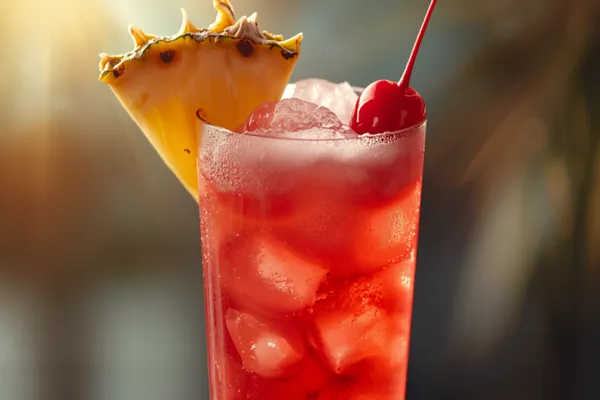
Singapore Sling (The Raffles Hotel Classic)
The tropical gin classic born at Raffles Hotel: gin, cherry liqueur, Bénédictine, citrus and pineapple, shaken into a frothy, ruby long drink. The full original build, not the sugary shortcut.
From our kitchen community
Ratings & Reviews
My Rating
Tap a star to rate — no sign-in, no form needed.
My Review
0 Ratings
🥣 0 home cooks made it!
Be the first to rate Bánh Mì Thịt Nướng (Vietnamese Grilled Pork Sandwich).
Related Recipes
Hanoi, Northern Vietnam / Southeast Asia · Vietnamese
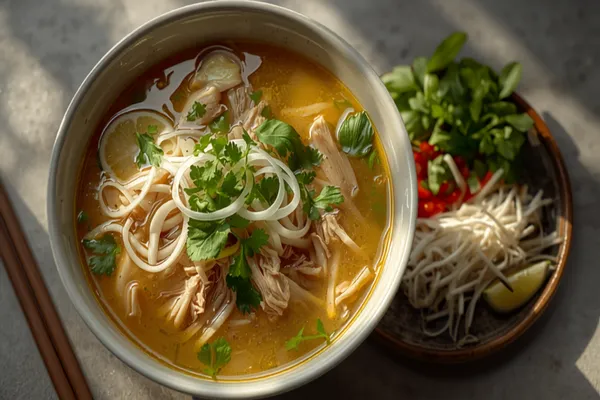
Phở Gà (Vietnamese Chicken Noodle Soup)
The lighter, faster sibling of beef phở: a clear, aromatic chicken broth perfumed with charred ginger, onion, and toasted spice, ladled over rice noodles and poached chicken, finished at the table with herbs, lime, and chili. Restorative and clean, in about two hours.
Vietnam (Saigon coffee culture) · Vietnamese
Vietnamese Iced Coffee (Cà Phê Sữa Đá)
Strong dark-roast coffee dripped through a phin over sweetened condensed milk, then poured over ice. Vietnam's bold, sweet, jolting iced coffee — and how to make it without special gear.
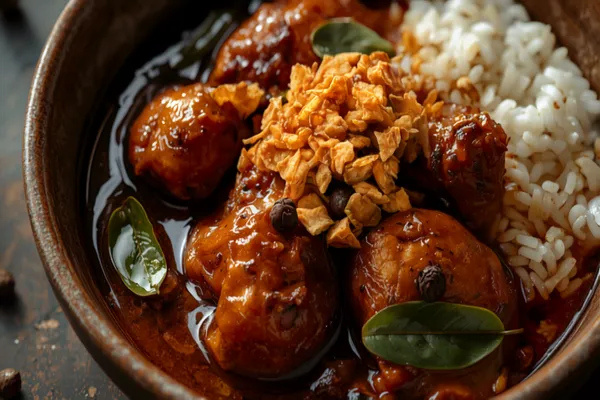
Philippines (nationwide) / Southeast Asia · Filipino
Chicken Adobo (Adobong Manok)
The Philippines' unofficial national dish and the easiest great dinner you'll learn: chicken braised in vinegar, soy, garlic, bay, and peppercorns until tangy, savoury, and tender, then reduced to a glossy glaze. Five pantry ingredients, one pot, endlessly variable.
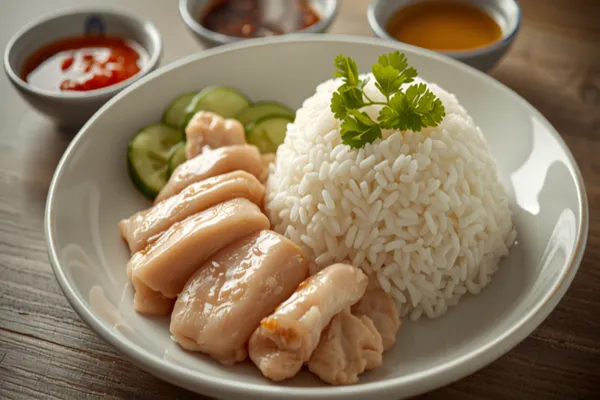
Singapore & Malaysia (Hainanese diaspora) / Southeast Asia · Singaporean & Malaysian
Hainanese Chicken Rice
The hawker-stall masterpiece of Singapore and Malaysia: a whole chicken gently poached to silky tenderness, rice cooked in the schmaltz-rich broth, served with a trio of sauces. Deceptively plain, ruthlessly precise, and one of the world's great comfort dishes.
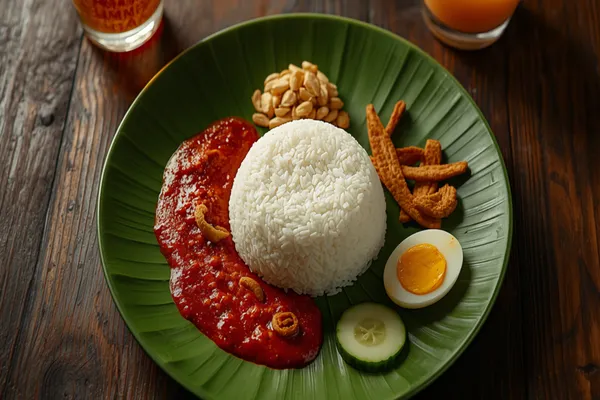
The Malay Peninsula — the Straits of Malacca coast, from Malacca and Kuala Lumpur north to Penang · Malaysian
Nasi Lemak (Malaysian Coconut Rice with Sambal Ikan Bilis)
Malaysia's national breakfast: jasmine rice steamed in coconut milk with pandan, ginger and lemongrass, banked against a dark sambal tumis fried until the oil splits, with crisp anchovies, roasted peanuts, cucumber and a boiled egg.
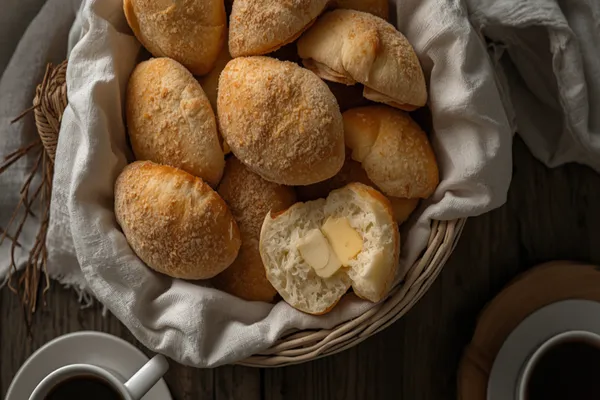
The Philippines — Manila's panaderia belt, with roots in the Spanish-era bakeries of Intramuros and Pampanga · Filipino
Pandesal (Filipino Breakfast Rolls with a Breadcrumb Crust)
The Philippines' morning bread: soft, faintly sweet yeasted rolls rolled in fine breadcrumbs, cut from a log and baked cut-side up so they tear open in feathery layers. Best eaten hot from the panaderia bag, dunked in coffee.
Further reading
- Cultural Story · Southeast AsiaA Cook's Map of Southeast AsiaSoutheast Asia isn't one cuisine but a dozen, bound loosely by rice, fish sauce, fresh herbs, and the pounded paste. A guide to how Thai, Vietnamese, Indonesian, Filipino, Malaysian, and Singaporean cooking differ, what they share, and where to start cooking.
- Cultural Story · InternationalWorld Classics: A Cook's Tour Beyond IndiaTable & Traditions is India-first, but the world has a place at this table too. A guide to our curated international slice — the European, East Asian, Southeast Asian, Middle Eastern and North African, and American dishes worth cooking, and where to begin with each.