Singapore & Malaysia (Hainanese diaspora) / Southeast Asia · Singaporean & Malaysian
Hainanese Chicken Rice
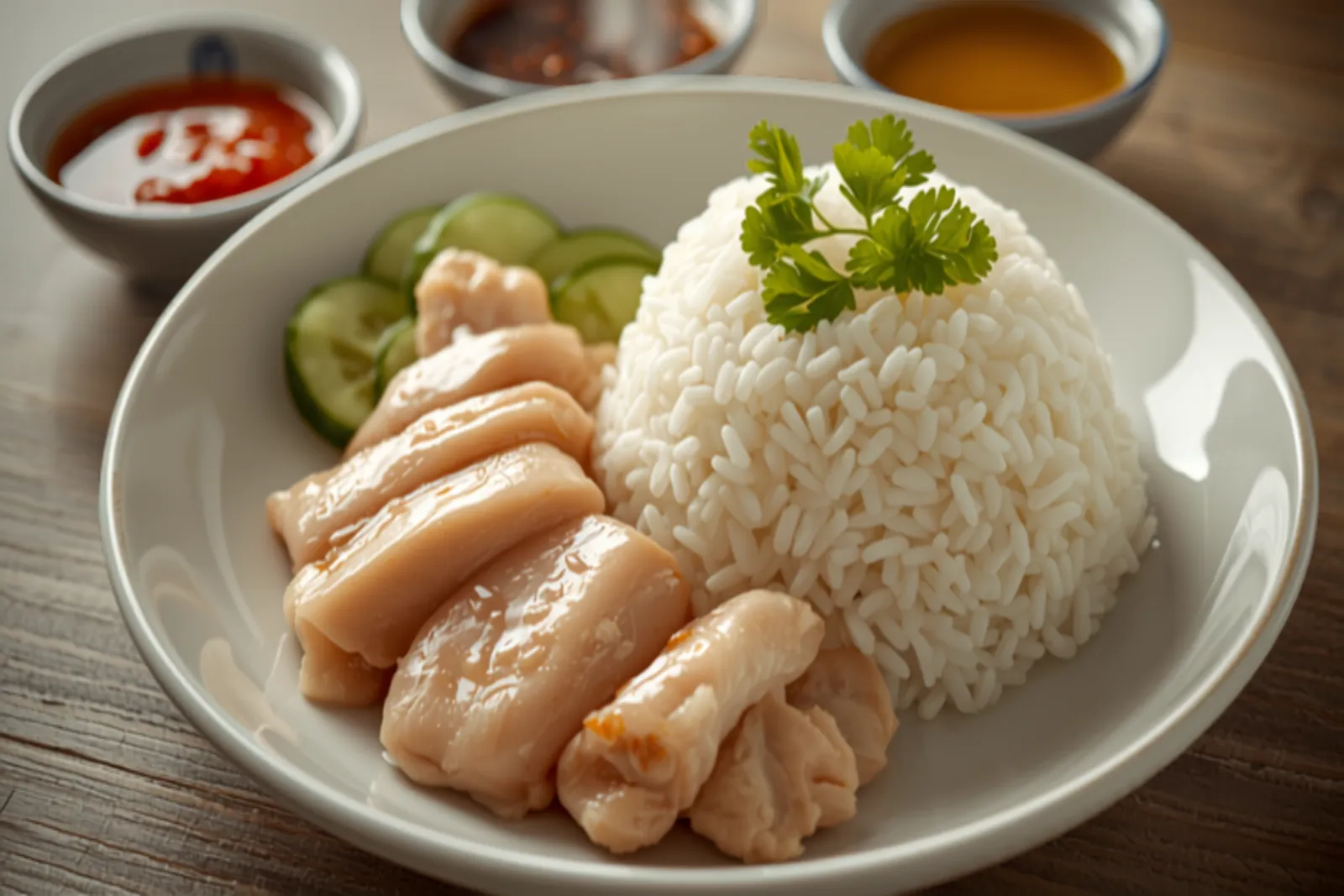
The hawker-stall masterpiece of Singapore and Malaysia: a whole chicken gently poached to silky tenderness, rice cooked in the schmaltz-rich broth, served with a trio of sauces. Deceptively plain, ruthlessly precise, and one of the world's great comfort dishes.
Published June 20, 2026
Cultural context
Brought by Hainanese immigrants from southern China and refined in the hawker centres of Singapore, Malaysia, and beyond, chicken rice became a defining dish of both nations — so beloved that Singapore claims it as a national dish. Its genius is thrift made luxurious: one chicken yields poached meat, a fragrant oil-slicked rice cooked in its broth, and a clear soup, the whole bird turned into a complete, balanced meal.
Hainanese chicken rice looks, on the plate, like the plainest thing in the world: pale poached chicken, a mound of rice, a few slices of cucumber. That plainness is a trap. It is one of the most exacting dishes in Southeast Asia — a hawker-stall benchmark by which Singaporean and Malaysian cooks are quietly judged — and getting it right is about temperature, thrift, and three small sauces.
Poach, don’t boil
The chicken is the test. It’s poached whole in barely-trembling water — brought to a boil, then left to cook in the residual heat off the flame — so the meat sets silky and just-done and the skin stays smooth and glossy. The moment the water rolls, you’ve lost it: the flesh tightens and the skin tears. Then the bird goes into an ice bath, which stops the cooking dead and gives the skin its signature cool, faintly gelatinous set. Tender meat and smooth skin are the whole game, and both come from restraint.
The rice is the point
If the chicken is the test, the rice is the reward. One bird gives you everything: trim the cavity fat and render it to schmaltz, fry garlic and ginger in it, toast the rice until each grain glistens, then cook it in the poaching broth with a knot of pandan. Rice cooked in broth instead of water is the line between “chicken rice” and “rice next to chicken.” Cook it any other way and you’ve missed the dish.
Finished by its sauces
The plate is a deliberately blank canvas brought to life by a trio: a bright, fiery chili-garlic-lime sauce; a pungent ginger-and-scallion oil; and dark, sweet soy. They aren’t condiments so much as the dish’s seasoning, dabbed a little at a time so each bite is slightly different. With a bowl of the clear poaching broth alongside, the whole thrifty, precise, deeply comforting meal comes together — one chicken, nothing wasted.
More poached and braised comfort from the region: phở gà and chicken adobo. Or read the cook’s map of Southeast Asia.
Ingredients
For the chicken
- 1 whole (about 1.5 kg) chicken A good-quality bird; free-range has more flavour. It should be at room temperature before poaching.
- 4 thumbs ginger Smashed; some goes inside the cavity, some in the poaching water.
- 4 scallions Knotted; for the cavity and the pot.
- 2 tbsp salt Rubbed over the bird to season and firm the skin.
For the rice
- 2 cups long-grain rice (jasmine) Rinsed until the water runs clear, then drained well.
- 3 tbsp rendered chicken fat (schmaltz) or oil Trim the fat from the cavity and render it; this is what makes the rice taste of chicken.
- 4 cloves garlic, plus 1 thumb ginger, minced
- 2 cups the chicken poaching broth Cook the rice in the broth, not water — the single most important step for flavour.
- 2 pandan leaves (optional) Knotted; adds a grassy-vanilla aroma. Omit if unavailable.
For the chili sauce
- red chilies, garlic, ginger, lime juice, sugar, and a little broth, blended
To serve
- dark soy sauce, grated-ginger-and-scallion oil, sliced cucumber, and cilantro
Method
Tap a step’s number to check it off as you go.
-
Rub the chicken all over with salt, rinse, then stuff the cavity with smashed ginger and knotted scallions. Bring a deep pot of water (enough to submerge the bird) with more ginger and scallion to a boil.
Why: Salting firms and seasons the skin; the aromatics in the cavity perfume the meat from inside as it poaches.
-
Lower the chicken into the boiling water, return to a bare simmer, then cover and turn off the heat. Let it sit, fully submerged, for 40–45 minutes (longer for a bigger bird).
Why: Poaching in residual heat — never a rolling boil — is the secret to silky, just-set meat. A boil would toughen the flesh and tear the skin; gentle heat leaves it tender with a faint gloss at the bone.
-
Lift the chicken out and plunge it into a large bowl of iced water for 5–10 minutes, then rub the skin with a little sesame oil. Reserve the poaching broth.
Why: The ice bath stops the cooking instantly and, by shocking the skin, gives chicken rice its signature smooth, gelatinous, cool-set skin. The oil rub adds sheen and aroma.
-
For the rice: fry the minced garlic and ginger in the rendered chicken fat until fragrant, add the drained rice and toast 2–3 minutes, then cook it in the reserved broth (with pandan) as you would normally — by absorption.
Why: Toasting the rice in schmaltz coats each grain so it cooks up separate and glossy; cooking it in broth rather than water is what makes chicken rice taste of chicken rather than just rice.
-
Make the sauces: blend the chili sauce ingredients to a bright, hot-sour purée; mince ginger and scallion and pour hot oil over them with a pinch of salt; have dark soy ready.
Why: Chicken rice is a plain canvas finished by its sauces — the fiery chili, the pungent ginger-scallion oil, the dark soy. They're not optional; they're the dish's flavour.
-
Chop the cooled chicken into pieces, arrange over or beside the rice with cucumber and cilantro, and serve with the three sauces and a bowl of the hot broth.
Why: Serving the meat cool against warm rice is traditional and deliberate — the contrast, plus the trio of sauces and a sip of clear broth, is the complete, balanced meal the dish was built to be.
A quick, anonymous tap — no review needed.
Variations
- Roasted chicken rice
Use roasted or soy-braised chicken instead of poached for a richer, crisper version (a popular Malaysian style). The rice and sauces stay the same.
- Weeknight (chicken parts)
Poach bone-in thighs and a few wings instead of a whole bird — far faster, and the broth is still rich enough to cook the rice and make soup.
- Rice-cooker rice
Toast the rice in schmaltz on the stove, then transfer to a rice cooker with the broth and pandan. Foolproof, and frees the hob for the sauces.
Serving & Storage
Serve the cool poached chicken with the warm fragrant rice, cucumber, cilantro, all three sauces, and a small bowl of the clear poaching broth (often with a few greens) on the side. Eat with a little of each sauce per bite.
Pairs with: Clear chicken broth, Sliced cucumber, Chili-garlic-lime sauce, Ginger-scallion oil.
Storage: Best fresh, but components keep 2–3 days separately. Refrigerate the chicken and rice apart; the broth freezes well. Reheat rice with a splash of broth; the chicken is traditionally eaten cool or at room temperature.
Nutrition
Per serving (1 plate with rice)
- Calories
- 650
- Protein
- 40 g
- Carbs
- 62 g
- Fat
- 26 g
- Fiber
- 2 g
- Sugar
- 2 g
- Sodium
- 1100 mg
Notable micronutrients: Niacin, Selenium, Vitamin B6
Estimated using standard ingredient data. Values vary with brands and substitutions.
Frequently Asked Questions
Why is my poached chicken tough?
Almost always because the water boiled. The whole technique is gentle: bring the water to a boil, slip the bird in, return to a bare simmer, then turn off the heat and let it poach in residual warmth for 40-plus minutes. A rolling boil toughens the meat and tears the skin. Patience and low heat give you silk.
Do I really need to cook the rice in the broth?
Yes — it's the heart of the dish. Rice cooked in plain water is just rice; rice toasted in chicken fat and simmered in the poaching broth is what makes 'chicken rice' taste of chicken. If you remember only one step, remember this one.
What's the ice bath for?
Plunging the just-poached chicken into iced water stops the cooking instantly so the meat stays tender, and shocks the skin into the smooth, cool, slightly gelatinous texture that's a hallmark of good Hainanese chicken rice. It's a small step with a big payoff.
What to drink with this
All drinks →Hand-picked pours to match this dish. Alcoholic pairings are for adults of legal drinking age (21+ in the US) — please drink responsibly.
 21+
21+ Singapore (the Raffles Hotel Long Bar) · Singaporean
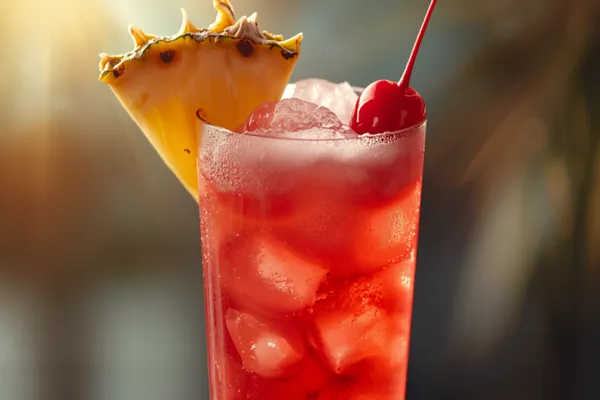
Singapore Sling (The Raffles Hotel Classic)
The tropical gin classic born at Raffles Hotel: gin, cherry liqueur, Bénédictine, citrus and pineapple, shaken into a frothy, ruby long drink. The full original build, not the sugary shortcut.
 21+
21+ Kuala Lumpur, Malaysia · Malaysian
Jungle Bird (Dark Rum, Campari & Pineapple)
The tiki drink with a bitter backbone: dark rum and Campari shaken with fresh pineapple and lime. Tropical and lush but grown-up and dry — the 1970s Malaysian classic that bridges tiki and the aperitivo world.
Thailand (street and market drink) · Thai
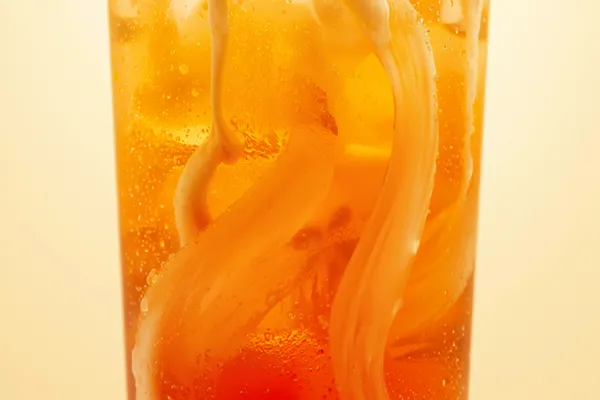
Thai Iced Tea (Cha Yen)
The bright-orange, creamy-sweet Thai street drink: strong spiced black tea sweetened with condensed milk and poured over ice with a float of cream. How to brew it strong and why it's so orange.
From our kitchen community
Ratings & Reviews
My Rating
Tap a star to rate — no sign-in, no form needed.
My Review
0 Ratings
🥣 0 home cooks made it!
Be the first to rate Hainanese Chicken Rice.
Related Recipes
Hanoi, Northern Vietnam / Southeast Asia · Vietnamese
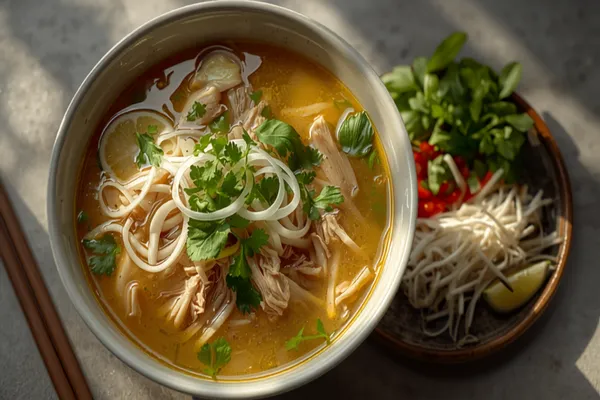
Phở Gà (Vietnamese Chicken Noodle Soup)
The lighter, faster sibling of beef phở: a clear, aromatic chicken broth perfumed with charred ginger, onion, and toasted spice, ladled over rice noodles and poached chicken, finished at the table with herbs, lime, and chili. Restorative and clean, in about two hours.
Philippines (nationwide) / Southeast Asia · Filipino
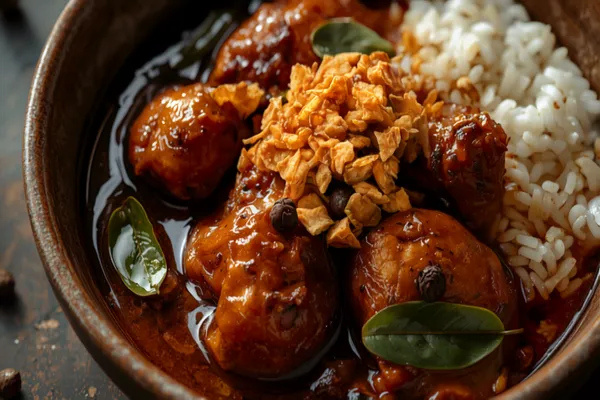
Chicken Adobo (Adobong Manok)
The Philippines' unofficial national dish and the easiest great dinner you'll learn: chicken braised in vinegar, soy, garlic, bay, and peppercorns until tangy, savoury, and tender, then reduced to a glossy glaze. Five pantry ingredients, one pot, endlessly variable.
Saigon (Ho Chi Minh City), southern Vietnam · Vietnamese
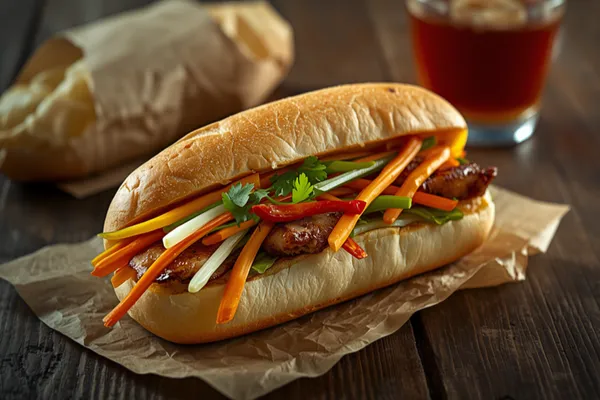
Bánh Mì Thịt Nướng (Vietnamese Grilled Pork Sandwich)
Saigon's great street sandwich — lemongrass-marinated pork charred over high heat, packed into an airy Vietnamese baguette with pâté, mayonnaise, đồ chua pickles, cucumber and coriander. Crisp, sour, sweet and smoky in the same bite.
The Malay Peninsula — the Straits of Malacca coast, from Malacca and Kuala Lumpur north to Penang · Malaysian
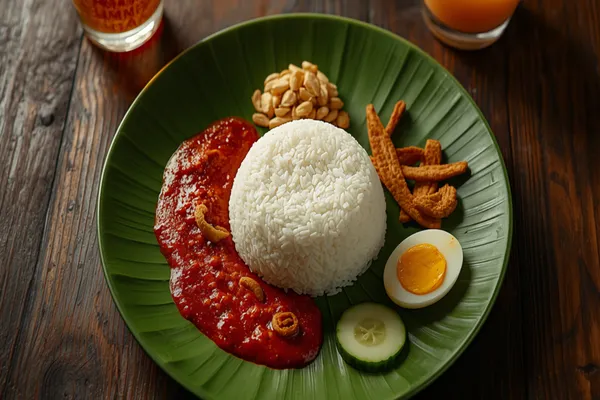
Nasi Lemak (Malaysian Coconut Rice with Sambal Ikan Bilis)
Malaysia's national breakfast: jasmine rice steamed in coconut milk with pandan, ginger and lemongrass, banked against a dark sambal tumis fried until the oil splits, with crisp anchovies, roasted peanuts, cucumber and a boiled egg.
Java — the Sundanese west and Betawi Jakarta, where the dish took its familiar form · Indonesian
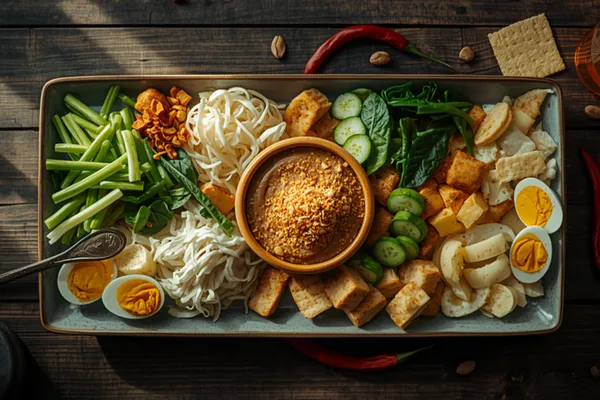
Gado-Gado (Indonesian Vegetable Plate with Bumbu Kacang)
Indonesia's national salad: blanched cabbage, long beans, bean sprouts and water spinach with potato, fried tofu and tempeh, boiled egg and lontong, under a ground sauce of fried peanuts, palm sugar, tamarind and chilli.
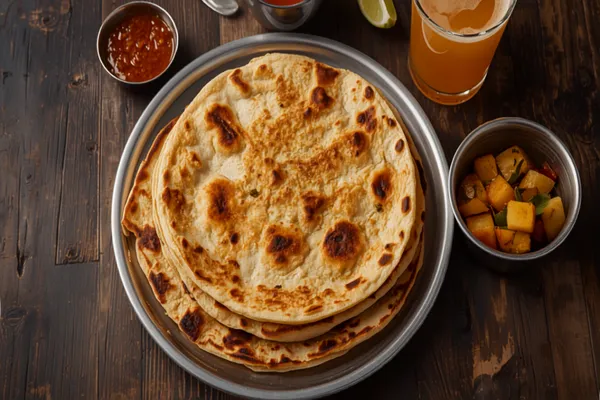
Peninsular Malaysia — the mamak stalls of Penang, Kuala Lumpur and the Klang Valley, with the same bread sold across the causeway in Singapore as roti prata · Malaysian
Roti Canai (Malaysian Mamak Flatbread with Kuah Dhal)
The flaky, layered flatbread of Malaysia's mamak stalls: a soft enriched dough rested overnight, stretched translucent and coiled, griddled in ghee until it shatters, then clapped between the palms to open its layers — served with a thin, fragrant kuah dhal.
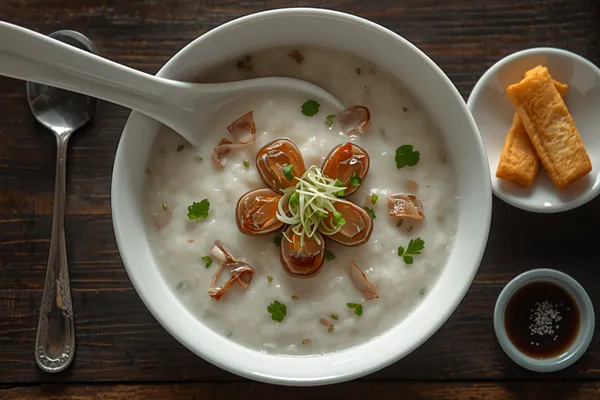
Guangdong and the Pearl River Delta — the congee shops of Guangzhou, Shunde and Hong Kong, within a rice-porridge tradition shared across China and much of Asia · Chinese
Congee with Century Egg and Pork (皮蛋瘦肉粥)
The Cantonese breakfast bowl the rest of the world learned to love: rice simmered in twelve times its weight in water until the grains vanish into something silky and savoury, finished with century egg, slippery pork and a snowfall of ginger and spring onion.
Further reading
- Cultural Story · Southeast AsiaA Cook's Map of Southeast AsiaSoutheast Asia isn't one cuisine but a dozen, bound loosely by rice, fish sauce, fresh herbs, and the pounded paste. A guide to how Thai, Vietnamese, Indonesian, Filipino, Malaysian, and Singaporean cooking differ, what they share, and where to start cooking.
- Cultural Story · InternationalWorld Classics: A Cook's Tour Beyond IndiaTable & Traditions is India-first, but the world has a place at this table too. A guide to our curated international slice — the European, East Asian, Southeast Asian, Middle Eastern and North African, and American dishes worth cooking, and where to begin with each.