Java and across the archipelago — a street, warung and breakfast-table staple from Jakarta to Surabaya · Indonesian
Nasi Goreng (Indonesian Fried Rice with Sweet Soy and Sambal)
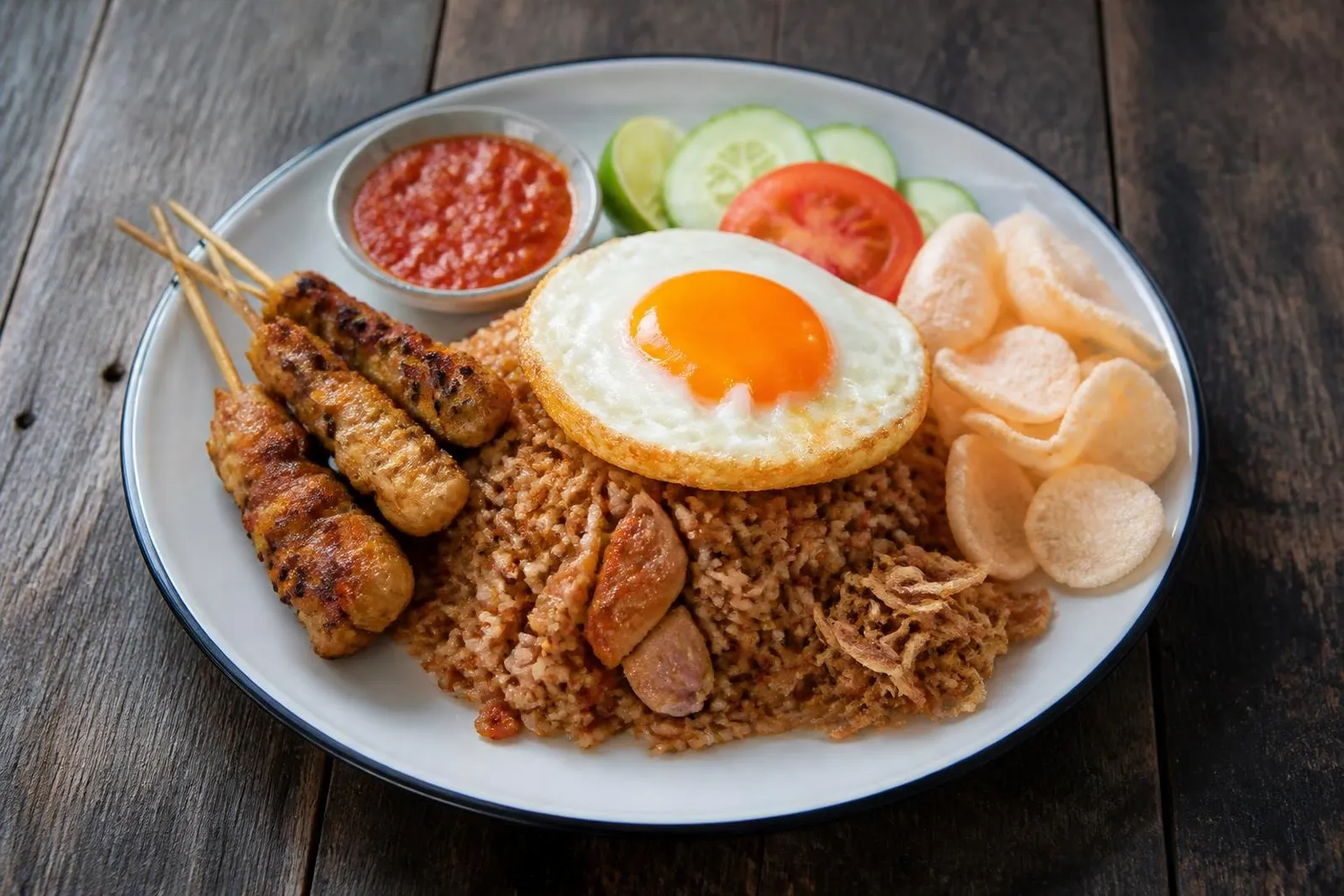
Indonesia's most-eaten dish: day-old rice stir-fried in a ground paste of shallot, garlic, chilli and toasted shrimp paste, glossed with kecap manis and crowned with a crisp-edged fried egg, prawn crackers and fried shallots.
Published October 18, 2026
Cultural context
Nasi goreng literally means 'fried rice', and Indonesia's Tourism Ministry named it one of five national dishes in 2018. Its roots are shared rather than singular: stir-frying in a wok came with Chinese traders and settlers, but the dish took its Indonesian shape from the older habit of never wasting yesterday's rice — fried at dawn with a ground bumbu of shallot, garlic, chilli and terasi (fermented shrimp paste) and, from the colonial era, darkened with kecap manis. It is eaten at breakfast, from midnight street carts and in five-star hotels alike, and neighbouring Malaysia, Singapore and Brunei cook their own fried-rice traditions rather than borrowing Indonesia's.
Nasi goreng is the dish Indonesia eats for breakfast, lunch and at midnight from a roadside cart — day-old rice fried in a fragrant paste of shallot, garlic, chilli and toasted shrimp paste, lacquered mahogany with sweet soy and topped with a fried egg whose crisp edges shatter against the soft yolk. Named among Indonesia’s five national dishes in 2018, it began, like so much good home cooking, as a way not to waste yesterday’s rice.
Where nasi goreng comes from
Stir-frying in a wok came to the archipelago with Chinese traders and settlers over several centuries, and it is the obvious technical ancestor. But nasi goreng is not simply Chinese fried rice in a new place. Indonesian households had long reheated leftover rice in the morning, and what they added was local: a ground bumbu of shallot, garlic and chilli, a spoonful of terasi (fermented shrimp paste) for depth, and — later — the dark, palm-sugar sweetness of kecap manis. The same fried-rice idea lives on across the Malay world, with Malaysia, Singapore and Brunei each cooking their own versions, so this is best understood as a shared regional tradition with a distinctly Javanese-Indonesian classic at its centre.
The rice matters most
Use cold, day-old rice. Chilled rice has lost surface moisture and its starch has firmed, so the grains stay separate and fry instead of steaming into porridge. Break it up with your fingers before it touches the wok, and keep the pan hot and uncrowded so the grains can toast.
Fry the bumbu until it smells sweet
The paste is where the flavour is built. Cook it for a full 3–4 minutes until it darkens, the oil separates and the raw onion smell turns sweet and savoury. Toasting the terasi first turns its blunt, fishy smell into something nutty and rich.
Kecap manis, applied to hot metal
Pour the kecap manis down the side of the wok so it sizzles and caramelises before you toss it through. That fleeting contact with hot steel gives the smoky, slightly burnt-sweet edge that separates real nasi goreng from rice that has simply been dyed brown.
How to serve it
Top each plate with a sunny-side-up egg with lacy, brown edges, then add sliced cucumber and tomato for cool crunch, krupuk for snap, and fried shallots on top. Put sambal and lime on the table. Serve at once — the crackers and egg are at their best in the first few minutes.
Next, try another Indonesian classic, Gado-Gado, or the deeply slow-cooked Beef Rendang. More dishes from the region in the Southeast Asian cooking guide.
Ingredients
For the bumbu (spice paste)
- 5 shallots, roughly chopped Bawang merah. Indonesian shallots are small and pink-purple; any banana or French shallot works. They carry the sweet, savoury base of the whole dish.
- 3 cloves garlic
- 2–5 red chillies (cabai merah), to taste Long red chillies give colour and a rounded heat; add bird's eye (cabai rawit) if you want it sharp. Seed them for a milder plate.
- 1 tsp terasi (fermented shrimp paste), toasted The smell is blunt in the packet and transformed in the wok — it is what makes nasi goreng taste like nasi goreng rather than soy-sauce rice. Toast it in foil first. Omit for a vegetarian plate and add 1 tsp of miso or tauco.
- 2 tbsp neutral oil
For the rice
- 600 g (about 4 cups) cooked white rice, cold, from about 270 g (1 1/3 cups) raw jasmine rice Make it a day ahead, spread out and refrigerated uncovered, or cook it 2 hours ahead and cool on a tray. Fresh, steaming rice turns to porridge in the wok.
- 3 tbsp kecap manis (Indonesian sweet soy sauce) Thick as syrup and sweetened with palm sugar — it is not interchangeable with ordinary soy. In a pinch, simmer 2 tbsp soy sauce with 1 tbsp dark brown sugar until syrupy.
- 1 tbsp light soy sauce, plus salt to taste
- 200 g chicken thigh, cut into small dice (or 150 g peeled prawns)
- 2 tbsp neutral oil, for the wok
- 2 spring onions, sliced
- 1 handful bean sprouts or sliced greens (optional)
To serve
- 4 eggs, fried sunny-side-up in a little hot oil until the edges are lacy and crisp
- To taste sliced cucumber and tomato The cool, watery crunch is part of the plate, not decoration.
- A handful krupuk (prawn crackers)
- 2 tbsp bawang goreng (crisp fried shallots)
- To taste sambal oelek or sambal terasi, and lime wedges
Method
Tap a step’s number to check it off as you go.
-
Break up the cold rice with your fingers or a fork until no clumps remain. Set aside.
Why: Refrigerated rice loses surface moisture and its starch firms up (retrogradation), so each grain stays separate and can fry rather than steam. Clumps cook unevenly and smear into a paste once the soy goes in.
-
Wrap the terasi in foil and toast in a dry pan for about 2 minutes a side, until dry and fragrant. Pound or blitz it with the shallots, garlic and chillies to a coarse paste.
Why: Raw shrimp paste tastes flatly fishy; heat drives off water and turns it nutty and deeply savoury. Grinding the aromatics together releases their juices, which fry in the oil far more evenly than chopped pieces would.
-
Heat 2 tbsp oil in a wok or large non-stick pan over medium heat. Fry the paste, stirring, for 3–4 minutes until it darkens, the raw smell is gone and the oil separates at the edges.
Why: This is the flavour step. The bumbu has to cook out until the water evaporates and the shallot sugars start to brown (the Indonesian term is 'tumis sampai harum'); under-fried paste leaves a raw, sharp onion note that no amount of soy sauce will cover.
-
Push the paste aside, turn the heat to high and add the diced chicken (or prawns). Stir-fry 2–3 minutes until just cooked through.
Why: Cooking the protein in the bumbu's flavoured oil seasons it directly, and high heat sears it before it can release water that would later steam the rice.
-
Add the rice and spread it across the wok. Stir-fry and toss for 3–4 minutes, pressing any lumps against the side, until the grains are hot, dry and bouncing.
Why: High heat evaporates surface moisture so the grains toast lightly instead of absorbing it. Do not crowd the wok — cook in two batches if it is smaller than a 30 cm pan, or the temperature drops and the rice steams.
-
Drizzle the kecap manis down the side of the wok where it hits the hot metal, then add the light soy. Toss for 1–2 minutes until every grain is evenly mahogany. Taste and add salt if needed.
Why: Palm-sugar kecap manis caramelises on contact with hot steel, giving the smoky, slightly burnt-sweet edge that is the dish's signature. Adding it to wet, cool rice instead would just stain it brown without any caramelisation.
-
Fold in the spring onions and bean sprouts for the last 20 seconds, then take off the heat. Fry the eggs in a separate pan in hot oil, spooning the oil over the whites, until the edges are brown and lacy but the yolk is still runny.
Why: Vegetables go in last so they stay crisp. The sunny-side-up egg is not an afterthought — the yolk becomes a sauce for the rice, and the crisp edge gives the textural contrast that makes each mouthful interesting.
-
Pile the rice onto plates, top each with an egg, and arrange the cucumber, tomato and krupuk alongside. Scatter with fried shallots and serve with sambal and lime.
Why: Serve immediately: krupuk lose their snap within minutes of meeting steam, and the rice is at its best hot and slightly smoky. The sambal and lime let each person tune the heat and brightness to cut the richness.
A quick, anonymous tap — no review needed.
Variations
- Nasi goreng kampung (village style)
Replace the chicken with dried salted fish (ikan asin) or anchovies and add kangkung (water spinach) or long beans. Sold at street stalls across Java — pungent, rustic and very savoury.
- Nasi goreng seafood
Use prawns, squid and a few fish balls instead of chicken. Fry the squid for no more than 60 seconds, or it turns rubbery.
- Nasi goreng pete or ayam
Add stinky beans (petai) for a bitter, sulphurous punch popular in Sumatra, or keep to plain chicken for a family-friendly version.
- Vegetarian
Skip the terasi and the chicken; add 1 tsp miso or tauco to the paste and fry cubes of tempeh or firm tofu until crisp, then fold them through.
- Gluten-free
Standard kecap manis is made with wheat. Use a gluten-free tamari simmered with palm sugar to a syrup, and check the sambal and krupuk labels.
Serving & Storage
Serve in the Indonesian way — rice with a fried egg, cucumber and tomato slices, krupuk and sambal on the side. Chicken satay makes it a feast. Es teh manis (sweet iced tea) is the usual drink.
Pairs with: Chicken satay, Es teh manis (sweet iced tea), Acar (quick pickled cucumber and carrot), Sambal terasi, Krupuk udang.
Storage: Best eaten at once. Leftovers keep up to 1 day in the fridge in a sealed container; reheat in a hot, lightly oiled wok with a splash of water. Do not keep cooked rice at room temperature for more than an hour — cool it quickly. The bumbu paste (before frying) keeps 5 days in the fridge or 2 months frozen in ice-cube portions.
Nutrition
Per serving (1 plate (about 350 g) with a fried egg)
- Calories
- 620
- Protein
- 28 g
- Carbs
- 72 g
- Fat
- 23 g
- Fiber
- 3 g
- Sugar
- 9 g
- Sodium
- 1050 mg
Notable micronutrients: Selenium, Vitamin B12, Iron, Phosphorus, Niacin
Estimated using standard ingredient data. Values vary with brands and substitutions.
Frequently Asked Questions
Why does nasi goreng need cold, day-old rice?
Freshly cooked rice is full of moisture and its starch is soft and sticky, so it clumps and steams into a mush in the wok. After several hours in the fridge, surface moisture evaporates and the starch firms up, which lets each grain separate and brown. If you have to use fresh rice, spread it on a tray and chill it in the fridge for at least an hour, or even freeze it for 20 minutes.
What is kecap manis and can I substitute it?
Kecap manis is an Indonesian sweet soy sauce thickened with palm sugar and sometimes star anise or garlic. It gives nasi goreng its dark colour and caramel-smoky sweetness. It is sold in most Asian grocers and many supermarkets. The best substitute is 2 tablespoons soy sauce simmered with 1 tablespoon dark brown sugar (or palm sugar) until syrupy; using soy sauce alone makes a saltier, paler, flatter dish.
What is the difference between nasi goreng and Chinese fried rice?
Both are stir-fried rice, and the technique clearly shares ancestry through Chinese migration and trade across Southeast Asia. But Indonesian nasi goreng is built on a ground bumbu of shallot, garlic, chilli and terasi, finished with sweet kecap manis, and served with a fried egg, krupuk and sambal. Cantonese-style fried rice is typically lighter, seasoned with salt and light soy, and uses scrambled egg tossed through the rice.
Is nasi goreng Indonesian or Malaysian?
Both countries — and Singapore and Brunei — have their own fried-rice traditions, and the Malay-speaking world shares much of this food culture. Indonesia's government names nasi goreng among its five national dishes, and the kecap-manis-and-bumbu version described here is the Indonesian standard. Malaysia's nasi goreng kampung, nasi goreng pattaya and others are distinct local dishes, so it is more accurate to speak of related regional traditions than a single owner.
Can I make it without terasi?
Yes, though you lose some depth. Replace terasi with 1 teaspoon of miso, tauco (fermented soybean paste) or a few anchovy fillets mashed into the paste. For a fully vegetarian version, use miso or tauco, which add the same savoury, fermented base note.
What to drink with this
All drinks →Hand-picked pours to match this dish. Alcoholic pairings are for adults of legal drinking age (21+ in the US) — please drink responsibly.
 21+
Kuala Lumpur, Malaysia · Malaysian
Jungle Bird (Dark Rum, Campari & Pineapple)
The tiki drink with a bitter backbone: dark rum and Campari shaken with fresh pineapple and lime. Tropical and lush but grown-up and dry — the 1970s Malaysian classic that bridges tiki and the aperitivo world.
 21+
Singapore (the Raffles Hotel Long Bar) · Singaporean
Singapore Sling (The Raffles Hotel Classic)
The tropical gin classic born at Raffles Hotel: gin, cherry liqueur, Bénédictine, citrus and pineapple, shaken into a frothy, ruby long drink. The full original build, not the sugary shortcut.

Thailand (street and market drink) · Thai
Thai Iced Tea (Cha Yen)
The bright-orange, creamy-sweet Thai street drink: strong spiced black tea sweetened with condensed milk and poured over ice with a float of cream. How to brew it strong and why it's so orange.
From our kitchen community
Ratings & Reviews
My Rating
Tap a star to rate — no sign-in, no form needed.
My Review
0 Ratings
🥣 0 home cooks made it!
Be the first to rate Nasi Goreng (Indonesian Fried Rice with Sweet Soy and Sambal).
Related Recipes
Java — the Sundanese west and Betawi Jakarta, where the dish took its familiar form · Indonesian
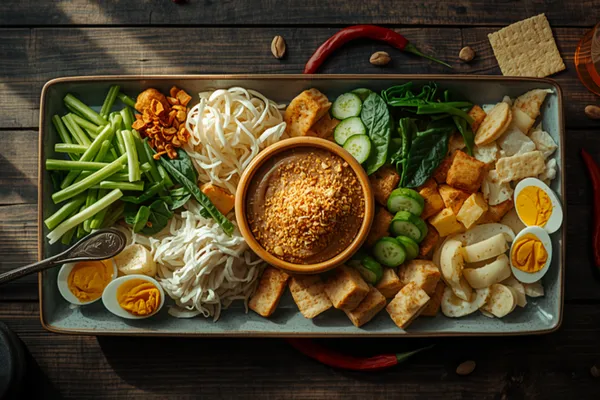
Gado-Gado (Indonesian Vegetable Plate with Bumbu Kacang)
Indonesia's national salad: blanched cabbage, long beans, bean sprouts and water spinach with potato, fried tofu and tempeh, boiled egg and lontong, under a ground sauce of fried peanuts, palm sugar, tamarind and chilli.
West Sumatra (Minangkabau) / Southeast Asia · Indonesian
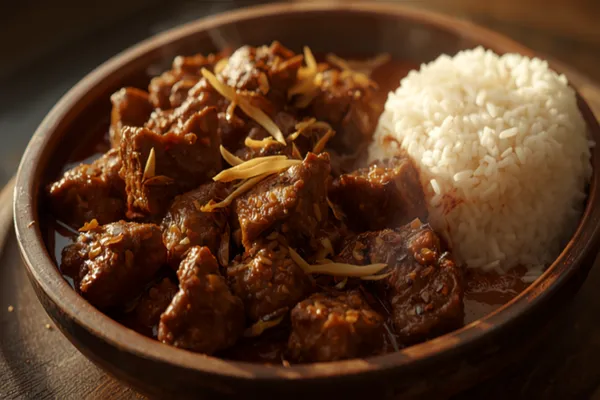
Beef Rendang (Rendang Daging)
The Minangkabau slow-cooked dry curry of West Sumatra: beef simmered for hours in coconut milk and a pounded spice paste until the liquid renders away and the meat turns dark, glossy, and meltingly tender. Patience is the only difficult ingredient.
The Malay Peninsula — the Straits of Malacca coast, from Malacca and Kuala Lumpur north to Penang · Malaysian
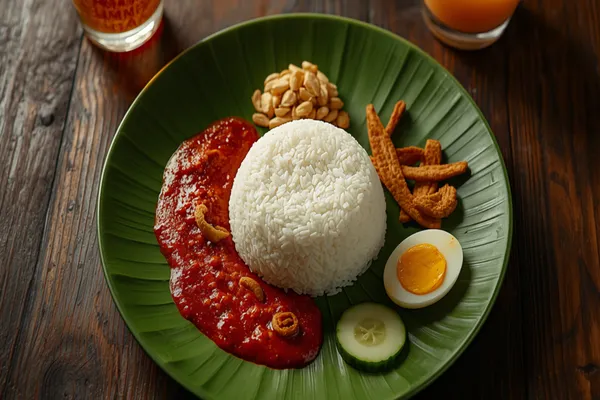
Nasi Lemak (Malaysian Coconut Rice with Sambal Ikan Bilis)
Malaysia's national breakfast: jasmine rice steamed in coconut milk with pandan, ginger and lemongrass, banked against a dark sambal tumis fried until the oil splits, with crisp anchovies, roasted peanuts, cucumber and a boiled egg.
Singapore & Malaysia (Hainanese diaspora) / Southeast Asia · Singaporean & Malaysian
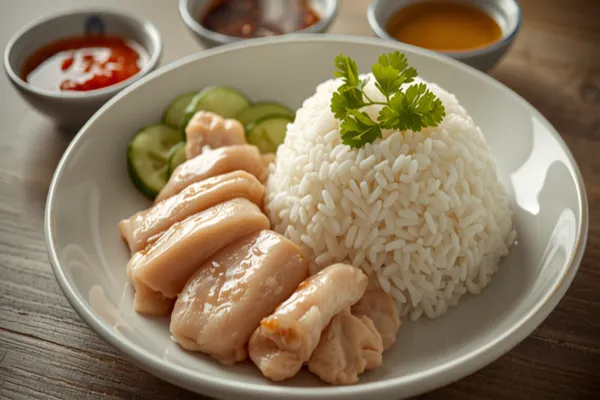
Hainanese Chicken Rice
The hawker-stall masterpiece of Singapore and Malaysia: a whole chicken gently poached to silky tenderness, rice cooked in the schmaltz-rich broth, served with a trio of sauces. Deceptively plain, ruthlessly precise, and one of the world's great comfort dishes.
Central Thailand / Southeast Asia · Thai
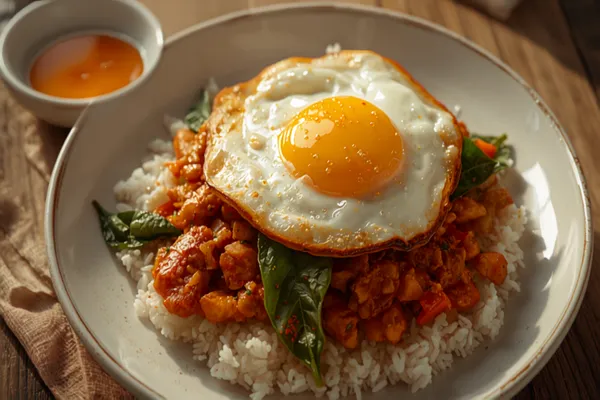
Pad Krapow Gai (Thai Basil Chicken)
The Thai street-food default and the country's unofficial fast food: minced chicken stir-fried hard with garlic and chili, seasoned with three sauces, and finished with a fistful of holy basil. Served over rice with a crisp-edged fried egg, it's dinner in fifteen minutes.
Further reading
- Cultural Story · Southeast AsiaA Cook's Map of Southeast AsiaSoutheast Asia isn't one cuisine but a dozen, bound loosely by rice, fish sauce, fresh herbs, and the pounded paste. A guide to how Thai, Vietnamese, Indonesian, Filipino, Malaysian, and Singaporean cooking differ, what they share, and where to start cooking.
- Cultural Story · InternationalWorld Classics: A Cook's Tour Beyond IndiaTable & Traditions is India-first, but the world has a place at this table too. A guide to our curated international slice — the European, East Asian, Southeast Asian, Middle Eastern and North African, and American dishes worth cooking, and where to begin with each.