Central Thailand / Southeast Asia · Thai
Thai Green Curry (Gaeng Keow Wan Gai)
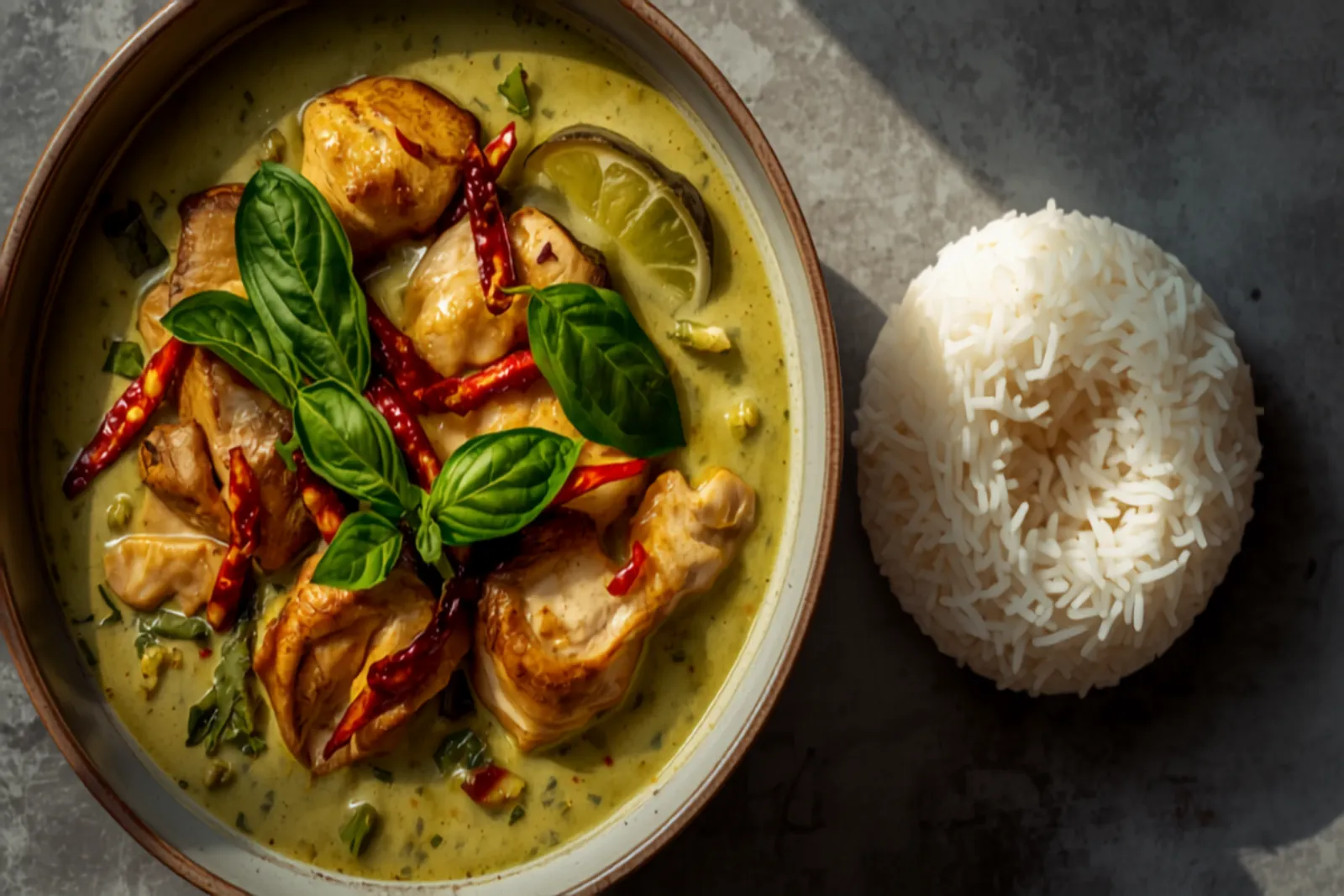
Thailand's fragrant green curry, built the way it's meant to be: a fresh pounded paste bloomed in cracked coconut cream, chicken and Thai eggplant simmered to silk, finished with fish sauce, palm sugar, and a fistful of basil. Hot, sweet, herbal, and ready in under an hour.
Published June 20, 2026
Cultural context
Gaeng keow wan — literally 'sweet green curry,' the 'sweet' describing the colour, not the heat — is a Central Thai curry of the royal-and-street kind: refined enough for a palace table, common enough for a roadside cart. Its green comes from fresh green chilies pounded with galangal, lemongrass, kaffir lime, and coriander root, a paste that announces Thai cooking the moment it hits hot coconut cream.
There is a version of Thai green curry that arrives the colour of a highlighter, sweet as dessert, and thickened to a paste. And then there is the real thing — gaeng keow wan, a soft sage-green, coconut-rich, fiercely fragrant curry that is one of the great achievements of Central Thai cooking. The gap between the two comes down almost entirely to the paste and one technique.
The paste is the dish
A Thai curry is only as good as its prik gaeng — the pounded paste of fresh green chilies, lemongrass, galangal, garlic, shallots, coriander root, kaffir lime, and shrimp paste. You can blend it, and on a weeknight you might, but a stone mortar genuinely makes a better curry: pounding ruptures the cell walls and drives out the aromatic oils in a way blender blades, which bruise and heat the herbs, never quite match. Build it in order — toughest, most fibrous aromatics first — and you’ll end up with something smooth and electric. If you buy a paste instead, buy a Thai brand; it’s no shame, and it’s how plenty of Thai cooks work too.
Crack the cream, then bloom the paste
The single step that separates a Thai curry from a coconut stew is cracking the cream. Scoop the thick cream off the top of an un-shaken can, simmer it until it splits and a sheen of coconut oil rises, then fry the paste in that oil until it darkens and the whole kitchen smells of it. This blooming toasts the spices and tames the raw garlic and shallot. Skip it — dump everything in cold — and the curry will taste flat and faintly raw no matter how long it simmers.
Season last, by taste
Thai cooking is balanced at the very end and entirely by tongue: fish sauce for salt, palm sugar for roundness, the chilies for heat, the basil and lime leaves for perfume. There is no fixed ratio, because chilies, fish sauce, and palm sugar all vary. Taste, adjust, taste again, until it sings across salty-sweet-hot-herbal. Then the basil goes in off the heat, and you eat it straightaway over jasmine rice.
Hungry for more? Try the fast, fiery pad krapow gai, or read our cook’s map of Southeast Asia.
Ingredients
For the green curry paste
- 8–12 fresh green Thai chilies Adjust for heat; the curry should bite. Long green chilies add bulk and colour without as much fire.
- 2 stalks lemongrass Tender lower third only, thinly sliced — pounds much smoother.
- 1 thumb galangal Not ginger; galangal is sharper and more piney, and it's what makes the paste taste Thai.
- 5 cloves garlic
- 3 small shallots
- 1 tbsp coriander roots or stems The roots are traditional and intensely fragrant; the lower stems are a fine substitute.
- 1 tsp shrimp paste (gapi) Toast it briefly for depth. Omit for a vegetarian paste and add a pinch of salt instead.
- 1 tsp each toasted coriander seed and cumin seed, ground
- zest of 1 kaffir lime, plus a pinch of white peppercorns and salt
For the curry
- 1 can (400 ml) full-fat coconut milk Don't shake the can — you want to scoop the thick cream off the top to fry the paste.
- 500 g boneless chicken thigh Thigh stays succulent; cut into bite-size slices.
- 6–8 Thai apple eggplants and/or pea eggplants Quartered. Regular eggplant works; add it earlier as it takes longer to soften.
- 5–6 kaffir lime leaves Torn, central rib removed, so they release their oils.
To season and finish
- 2–3 tbsp fish sauce
- 1–2 tbsp palm sugar Shaved from a block, or light brown sugar.
- a large handful of Thai sweet basil (horapha) and a few red chilies, slivered
Method
Tap a step’s number to check it off as you go.
-
Make the paste: pound the chilies and salt in a mortar first, then work in the lemongrass, galangal, garlic, shallots, coriander root, kaffir zest, and ground spices, one at a time, until smooth. Pound in the shrimp paste last.
Why: Adding ingredients in order of toughness — fibrous aromatics before soft ones — lets each break down fully. A pounded paste releases far more fragrance than a blended one, which bruises rather than crushes.
-
Scoop the thick coconut cream from the top of the can into a wide pan over medium heat and let it simmer until it splits and the oil glistens at the edges, 4–6 minutes.
Why: 'Cracking' the cream gives you a pool of fragrant coconut oil to fry the paste in — this blooming step is the soul of a Thai curry, not an optional flourish.
-
Add the green curry paste and fry in the cracked cream, stirring constantly, for 3–4 minutes until deeply fragrant and a shade darker.
Why: Frying cooks out the raw allium edge and toasts the spices, deepening the paste from sharp to round. You'll smell the moment it's ready.
-
Add the chicken and stir to coat, cooking 2–3 minutes until it turns opaque at the edges.
Why: Sealing the chicken in the paste-rich oil layers flavour into the meat before any liquid dilutes it.
-
Pour in the rest of the coconut milk plus a splash of water, add the eggplant and torn lime leaves, and simmer gently for 10–12 minutes until the chicken is cooked and the eggplant is tender.
Why: A gentle simmer keeps the coconut milk from breaking into a greasy curdle and lets the eggplant drink up the curry.
-
Season with fish sauce and palm sugar, tasting as you go, until it's salty, lightly sweet, and rounded. Stir in the basil and slivered chilies, cut the heat, and serve over jasmine rice.
Why: Thai seasoning is balanced at the end, by taste, never by formula — the dish should hum across salty, sweet, herbal, and hot. Basil goes in off the heat so it wilts without losing its anise perfume.
A quick, anonymous tap — no review needed.
Variations
- Vegetarian / Vegan
Leave the shrimp paste out of the paste (add a little extra salt) and swap fish sauce for light soy or a vegan fish sauce. Use firm tofu, bamboo shoots, and Thai eggplant in place of chicken.
- Shortcut (store-bought paste)
A good Thai-brand green curry paste (Maesri, Mae Ploy) makes this a 25-minute dinner. Still crack the coconut cream and fry the paste — that step is non-negotiable.
- Seafood
Swap chicken for prawns and firm white fish, added in the last 5 minutes so they don't overcook. A few mussels are excellent here too.
Serving & Storage
Serve in a shallow bowl over jasmine rice, or with rice noodles (khanom jeen) for a classic lunch. A plate of raw vegetables and a fried egg on the side make it a full Thai meal.
Pairs with: Jasmine rice, Khanom jeen rice noodles, Fried egg, Som tam (green papaya salad).
Storage: Keeps 3 days refrigerated and the flavour deepens overnight. Reheat gently so the coconut milk doesn't split; add the fresh basil only after reheating. Freezes well before the basil goes in.
Nutrition
Per serving (1 bowl with rice)
- Calories
- 560
- Protein
- 29 g
- Carbs
- 18 g
- Fat
- 41 g
- Fiber
- 4 g
- Sugar
- 8 g
- Sodium
- 1090 mg
Notable micronutrients: Vitamin A, Vitamin C, Manganese
Estimated using standard ingredient data. Values vary with brands and substitutions.
Frequently Asked Questions
Why is my green curry not green?
Authentic gaeng keow wan is a soft sage-green, not the bright emerald of restaurant versions (which often add food colouring or extra herbs). The colour also dulls as the paste fries and simmers — that's normal. For a greener pot, blend a handful of basil or coriander into the paste.
Can I use ginger instead of galangal?
You can in a pinch, but it changes the flavour noticeably — ginger is warmer and sweeter, galangal is sharp, citrusy, and almost medicinal. Galangal is what makes the curry taste distinctly Thai rather than generically Asian. Frozen or dried galangal is a better substitute than fresh ginger.
My coconut milk won't 'crack' — what went wrong?
Low-fat or stabilised coconut milks won't separate. Use a full-fat can with no added emulsifiers, don't shake it, and scoop only the thick cream from the top. If it still won't split, add a tablespoon of coconut oil and proceed — the paste will fry just fine.
What to drink with this
All drinks →Hand-picked pours to match this dish. Alcoholic pairings are for adults of legal drinking age (21+ in the US) — please drink responsibly.
Thailand (street and market drink) · Thai
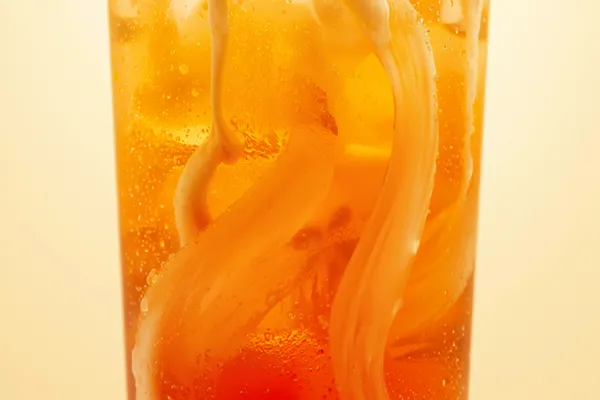
Thai Iced Tea (Cha Yen)
The bright-orange, creamy-sweet Thai street drink: strong spiced black tea sweetened with condensed milk and poured over ice with a float of cream. How to brew it strong and why it's so orange.
 21+
21+ Kuala Lumpur, Malaysia · Malaysian
Jungle Bird (Dark Rum, Campari & Pineapple)
The tiki drink with a bitter backbone: dark rum and Campari shaken with fresh pineapple and lime. Tropical and lush but grown-up and dry — the 1970s Malaysian classic that bridges tiki and the aperitivo world.
 21+
21+ Singapore (the Raffles Hotel Long Bar) · Singaporean
Singapore Sling (The Raffles Hotel Classic)
The tropical gin classic born at Raffles Hotel: gin, cherry liqueur, Bénédictine, citrus and pineapple, shaken into a frothy, ruby long drink. The full original build, not the sugary shortcut.
From our kitchen community
Ratings & Reviews
My Rating
Tap a star to rate — no sign-in, no form needed.
My Review
0 Ratings
🥣 0 home cooks made it!
Be the first to rate Thai Green Curry (Gaeng Keow Wan Gai).
Related Recipes
Central Thailand / Southeast Asia · Thai
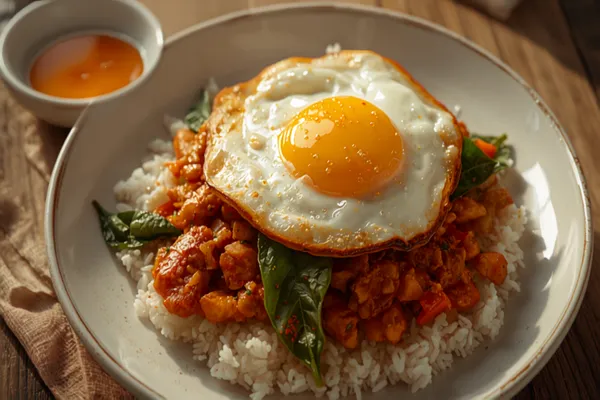
Pad Krapow Gai (Thai Basil Chicken)
The Thai street-food default and the country's unofficial fast food: minced chicken stir-fried hard with garlic and chili, seasoned with three sauces, and finished with a fistful of holy basil. Served over rice with a crisp-edged fried egg, it's dinner in fifteen minutes.
Hanoi, Northern Vietnam / Southeast Asia · Vietnamese
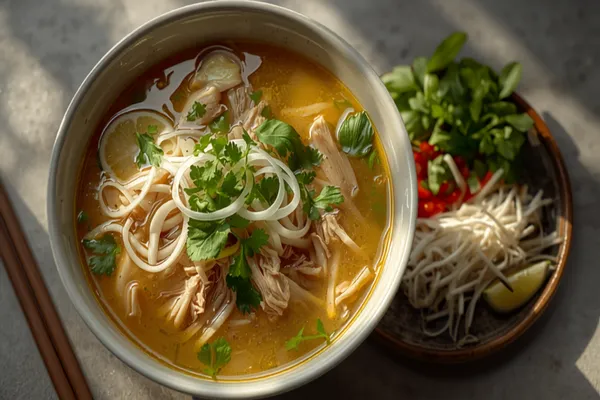
Phở Gà (Vietnamese Chicken Noodle Soup)
The lighter, faster sibling of beef phở: a clear, aromatic chicken broth perfumed with charred ginger, onion, and toasted spice, ladled over rice noodles and poached chicken, finished at the table with herbs, lime, and chili. Restorative and clean, in about two hours.
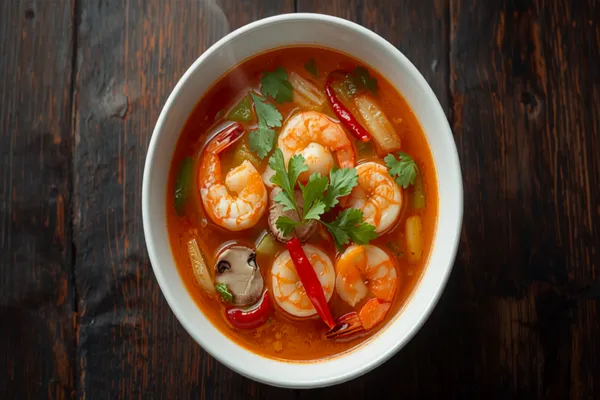
Central Thailand (Chao Phraya River basin) · Thai
Tom Yum Goong (Thai Hot and Sour Shrimp Soup)
Thailand's most famous soup — a fiercely aromatic broth of lemongrass, galangal and makrut lime, sharpened with lime juice and loaded with plump shrimp. Ready in about 35 minutes and brighter than anything a takeout container can hold.
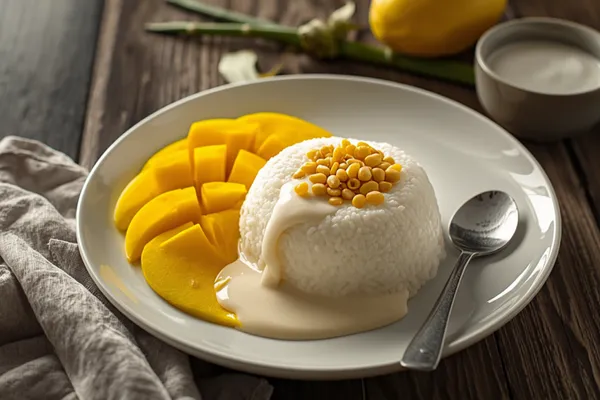
Central Thailand — the coconut-and-mango belt of the Chao Phraya plain, from Bangkok's dessert shophouses out to the orchards of Chachoengsao and Nakhon Pathom · Thai
Mango Sticky Rice (Khao Niao Mamuang)
Thailand's hot-season dessert: glutinous rice steamed over water, then soaked while hot in sweet-salty coconut cream until every grain swells glossy, served with a ripe nam dok mai mango and a spoonful of salted coconut sauce over the top.
Further reading
- Cultural Story · Southeast AsiaA Cook's Map of Southeast AsiaSoutheast Asia isn't one cuisine but a dozen, bound loosely by rice, fish sauce, fresh herbs, and the pounded paste. A guide to how Thai, Vietnamese, Indonesian, Filipino, Malaysian, and Singaporean cooking differ, what they share, and where to start cooking.
- Cultural Story · InternationalWorld Classics: A Cook's Tour Beyond IndiaTable & Traditions is India-first, but the world has a place at this table too. A guide to our curated international slice — the European, East Asian, Southeast Asian, Middle Eastern and North African, and American dishes worth cooking, and where to begin with each.