Central Thailand (Chao Phraya River basin) · Thai
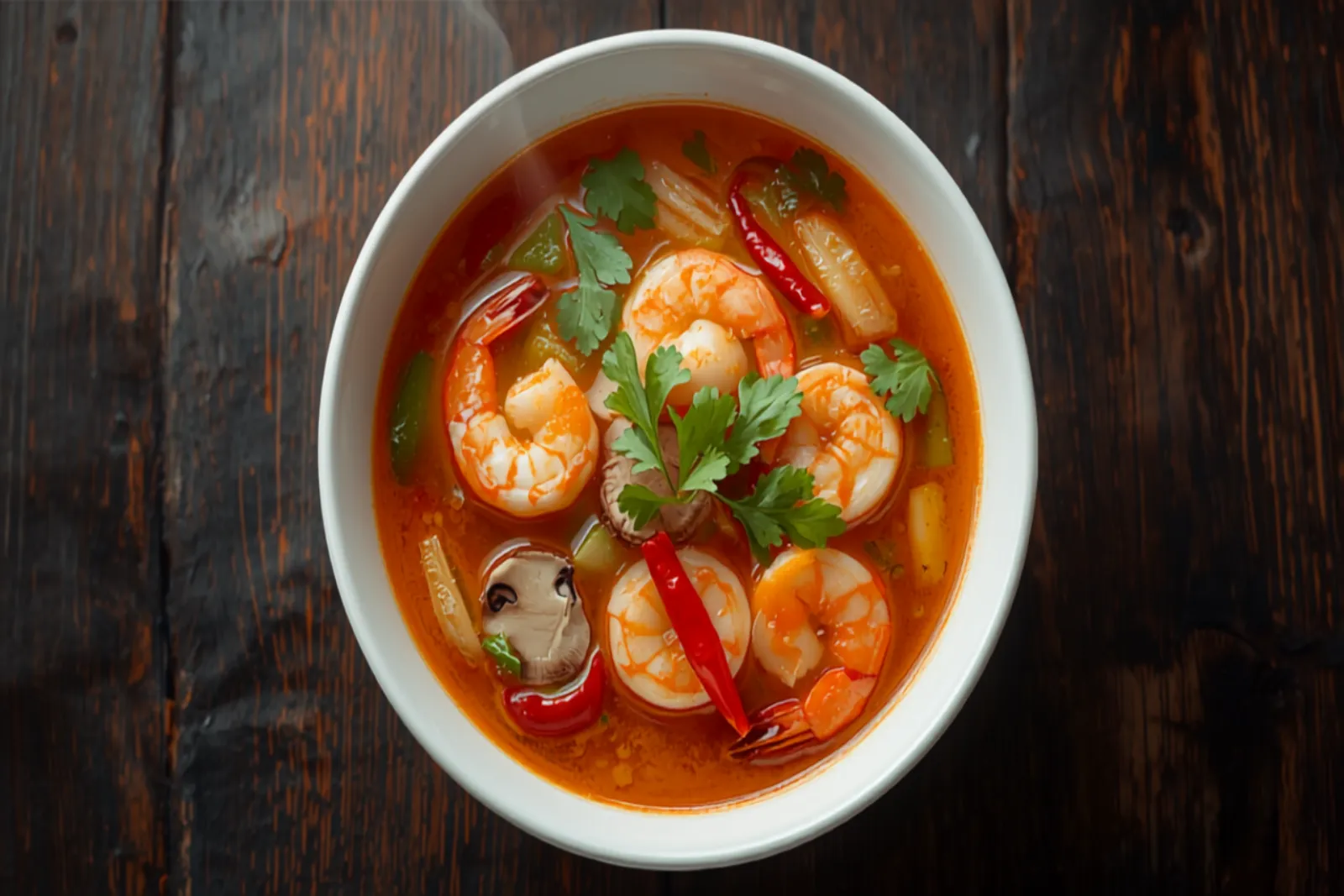
Tom Yum Goong (Thai Hot and Sour Shrimp Soup)
Thailand's most famous soup — a fiercely aromatic broth of lemongrass, galangal and makrut lime, sharpened with lime juice and loaded with plump shrimp. Ready in about 35 minutes and brighter than anything a takeout container can hold.
Published July 9, 2026
Cultural context
Tom yum — 'tom' to boil, 'yum' the hot-sour-salty flavour balance — grew out of Central Thailand's Chao Phraya basin, where freshwater prawns were abundant. The shrimp version, tom yum goong, became the country's culinary calling card as Thai restaurants spread worldwide in the late 20th century.
Tom yum goong is Thailand’s flavour thesis in a bowl: hot, sour, salty and fragrant all at once, with nothing rich to hide behind. Born in Central Thailand’s Chao Phraya River basin — where freshwater prawns once ran thick enough to make them everyday food — this hot and sour shrimp soup became the country’s global calling card as Thai kitchens spread around the world. The good news is that the restaurant version is not a trick. It’s a 35-minute soup with one honest shortcut refused: the stock comes from the shrimp shells you were about to throw away.
The tom yum trinity
Three aromatics make tom yum smell like tom yum: lemongrass, galangal and makrut lime leaves. They’re simmered whole — smashed, sliced and torn, never blended — so they perfume the broth and stay out of the spoon. Galangal is the one people are tempted to swap for ginger; don’t. Its resinous, almost piney sharpness is the soup’s signature, and frozen galangal from any Asian grocery works beautifully. (Fair warning to guests: the lemongrass and galangal pieces are bones of the dish, not bites of it.)
Nam prik pao, the missing depth
The ingredient most home versions skip is nam prik pao, Thailand’s roasted chili paste — chilies, garlic and shallots charred and pounded with tamarind and palm sugar. Two spoonfuls dissolve into the broth and turn it glossy, smoky and sunset-orange. Without it you have a decent herbal shrimp soup; with it you have tom yum goong.
Lime goes in last, off the heat
Every step in this soup points toward the final one: the lime juice is stirred in only after the pot leaves the flame. Boiled lime turns dull and faintly bitter; added off the heat it stays electric, which is exactly what a soup built on brightness needs. Taste at the end and tune the triangle — fish sauce for salt, lime for sour, chilies already doing their work.
If tom yum lights you up, keep going with a Thai green curry or the street-stall classic pad krapow gai, and read more in our Southeast Asian cooking guide.
Ingredients
For the broth
- 500 g (about 1 lb) large shrimp, shell-on Head-on if you can find them — the heads and shells make the stock. Peel, keep every shell, and devein the meat.
- 5 cups water or light chicken stock
- 3 stalks lemongrass Bottom two-thirds only, cut into 2-inch pieces and smashed. Skip powdered lemongrass — the aroma is flat and it leaves sediment.
- 10–12 thin slices galangal Fresh or frozen. Don't substitute ginger — galangal's piney, resinous sharpness is the smell of tom yum.
- 6 makrut lime leaves Torn in half to release their oils; stem removed.
For the soup
- 200 g oyster or straw mushrooms Torn or halved. Straw mushrooms are traditional; oyster mushrooms are the best fresh stand-in.
- 3–6 Thai bird's eye chilies Smashed, not chopped, so they perfume the broth without turning it molten. Scale to your heat tolerance.
- 2 tbsp nam prik pao (Thai roasted chili paste) The sweet-smoky paste that gives the broth its depth and reddish sheen. Pantai and Maepranom are reliable jars.
- 3 tbsp fish sauce
- 4–5 tbsp fresh lime juice From about 3 limes. Bottled juice will hollow out the whole dish.
- 2 roma tomatoes, cut into wedges Optional but common; they add gentle sweetness and colour.
To finish
- A handful cilantro, roughly chopped
Method
Tap a step’s number to check it off as you go.
-
Peel and devein the shrimp, keeping the shells and heads. Simmer the shells in the water over medium heat for 10 minutes, pressing the heads with a spoon, then strain and return the stock to the pot.
Why: The shells and heads carry most of a shrimp's flavour. This ten-minute stock is what separates a restaurant-depth tom yum from a watery one.
-
Bring the stock to a boil and add the smashed lemongrass, galangal slices and torn lime leaves. Simmer for 5 minutes.
Why: Bruising and simmering — not blending — releases the aromatics' oils while keeping the broth clear. These three herbs are the non-negotiable tom yum trinity.
-
Add the mushrooms, tomatoes and smashed chilies and simmer 3–4 minutes until the mushrooms are tender.
-
Stir in the nam prik pao and fish sauce until the paste dissolves and the broth turns a glossy sunset orange.
Why: Nam prik pao is the ingredient most Western versions skip — its roasted chilies, garlic and shallots give the broth its signature depth and slick of red oil.
-
Drop in the shrimp and cook just 1–2 minutes, until they curl and turn pink. Kill the heat immediately.
Why: Shrimp overcook in the time it takes to find a ladle. Residual heat finishes them perfectly.
-
Off the heat, stir in the lime juice, taste, and adjust — more fish sauce for salt, more lime for brightness. Serve scattered with cilantro.
Why: Lime juice boiled in the pot goes dull and bitter. Adding it off the heat is the single most important move in tom yum — it keeps the soup tasting alive.
A quick, anonymous tap — no review needed.
Variations
- Creamy (nam khon)
Stir in 1/2 cup evaporated milk (not coconut milk — that's a different soup) with the nam prik pao for the cloudy, richer Bangkok-style version.
- Tom yum talay
Swap in a mix of squid, mussels and firm white fish with the shrimp for the seafood-house version.
- Vegetarian
Use vegetable stock, extra mushrooms and firm tofu; season with soy sauce and a vegetarian chili paste in place of fish sauce and nam prik pao.
Serving & Storage
Serve steaming hot with jasmine rice on the side — spoon the broth over the rice as you go — or as the fiery opener to a Thai spread.
Pairs with: Jasmine rice, Pad krapow gai, Thai iced tea, Pad pak ruam.
Storage: The broth keeps 2 days refrigerated, but store the shrimp separately and add the lime juice fresh on reheating — both fade fast. Not freezer-friendly.
Nutrition
Per serving (1 bowl (about 350 ml))
- Calories
- 165
- Protein
- 21 g
- Carbs
- 9 g
- Fat
- 5 g
- Fiber
- 2 g
- Sugar
- 4 g
- Sodium
- 1150 mg
Notable micronutrients: Selenium, Vitamin B12, Vitamin C, Iodine
Estimated using standard ingredient data. Values vary with brands and substitutions.
Frequently Asked Questions
What's the difference between tom yum nam sai and nam khon?
Nam sai is the clear, older style — just the aromatic broth. Nam khon adds evaporated milk and extra nam prik pao for a creamy, orange-hued version popular in Bangkok. This recipe makes nam sai; the creamy variation takes one extra step.
Can I substitute ginger for galangal?
No — they look related but taste nothing alike. Galangal is piney, citrusy and sharp, and it's half the aroma of tom yum. Most Asian groceries sell it fresh or frozen; frozen works perfectly in soup.
Is tom yum goong healthy?
The clear nam sai version is one of the lightest famous dishes in the world — about 165 calories a bowl, high in protein, with most of its sodium coming from fish sauce. The creamy nam khon version adds a modest amount of fat from evaporated milk.
What to drink with this
All drinks →Hand-picked pours to match this dish. Alcoholic pairings are for adults of legal drinking age (21+ in the US) — please drink responsibly.

Thailand (street and market drink) · Thai
Thai Iced Tea (Cha Yen)
The bright-orange, creamy-sweet Thai street drink: strong spiced black tea sweetened with condensed milk and poured over ice with a float of cream. How to brew it strong and why it's so orange.
 21+
21+ Kuala Lumpur, Malaysia · Malaysian
Jungle Bird (Dark Rum, Campari & Pineapple)
The tiki drink with a bitter backbone: dark rum and Campari shaken with fresh pineapple and lime. Tropical and lush but grown-up and dry — the 1970s Malaysian classic that bridges tiki and the aperitivo world.
 21+
21+ Singapore (the Raffles Hotel Long Bar) · Singaporean
Singapore Sling (The Raffles Hotel Classic)
The tropical gin classic born at Raffles Hotel: gin, cherry liqueur, Bénédictine, citrus and pineapple, shaken into a frothy, ruby long drink. The full original build, not the sugary shortcut.
From our kitchen community
Ratings & Reviews
My Rating
Tap a star to rate — no sign-in, no form needed.
My Review
0 Ratings
🥣 0 home cooks made it!
Be the first to rate Tom Yum Goong (Thai Hot and Sour Shrimp Soup).
Related Recipes
Central Thailand / Southeast Asia · Thai
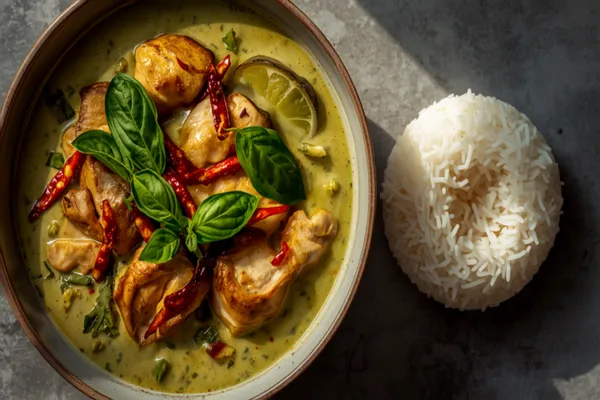
Thai Green Curry (Gaeng Keow Wan Gai)
Thailand's fragrant green curry, built the way it's meant to be: a fresh pounded paste bloomed in cracked coconut cream, chicken and Thai eggplant simmered to silk, finished with fish sauce, palm sugar, and a fistful of basil. Hot, sweet, herbal, and ready in under an hour.
Thailand · Thai
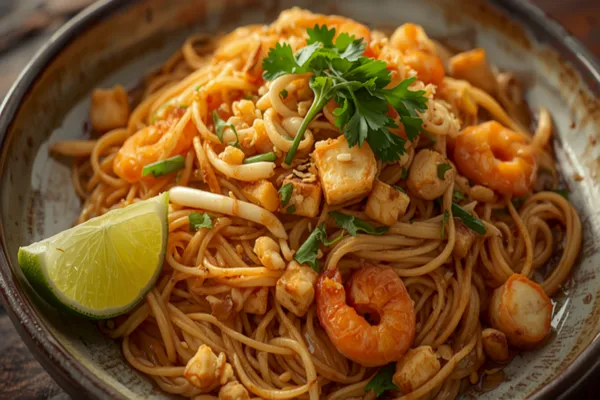
Pad Thai (Thai Stir-Fried Rice Noodles)
Thailand's most famous noodle dish — rice noodles tossed in a sweet-sour-salty tamarind sauce with prawns, tofu, egg, and crunchy beansprouts, finished with crushed peanuts and a squeeze of lime. A fast, balanced wok classic.
Central Thailand / Southeast Asia · Thai
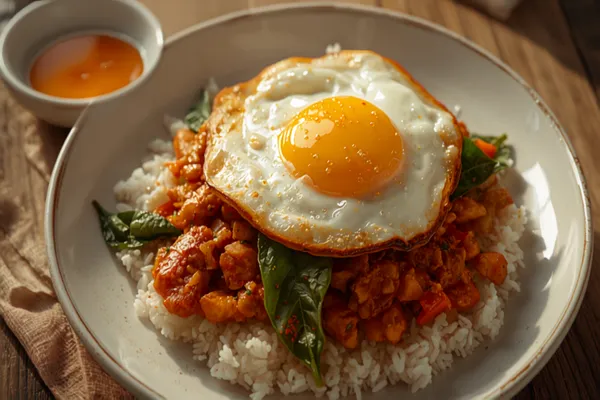
Pad Krapow Gai (Thai Basil Chicken)
The Thai street-food default and the country's unofficial fast food: minced chicken stir-fried hard with garlic and chili, seasoned with three sauces, and finished with a fistful of holy basil. Served over rice with a crisp-edged fried egg, it's dinner in fifteen minutes.
Thailand (street and market drink) · Thai
Thai Iced Tea (Cha Yen)
The bright-orange, creamy-sweet Thai street drink: strong spiced black tea sweetened with condensed milk and poured over ice with a float of cream. How to brew it strong and why it's so orange.
Further reading
- Cultural Story · Southeast AsiaA Cook's Map of Southeast AsiaSoutheast Asia isn't one cuisine but a dozen, bound loosely by rice, fish sauce, fresh herbs, and the pounded paste. A guide to how Thai, Vietnamese, Indonesian, Filipino, Malaysian, and Singaporean cooking differ, what they share, and where to start cooking.
- Cultural Story · InternationalWorld Classics: A Cook's Tour Beyond IndiaTable & Traditions is India-first, but the world has a place at this table too. A guide to our curated international slice — the European, East Asian, Southeast Asian, Middle Eastern and North African, and American dishes worth cooking, and where to begin with each.