Central Thailand — the coconut-and-mango belt of the Chao Phraya plain, from Bangkok's dessert shophouses out to the orchards of Chachoengsao and Nakhon Pathom · Thai
Mango Sticky Rice (Khao Niao Mamuang)
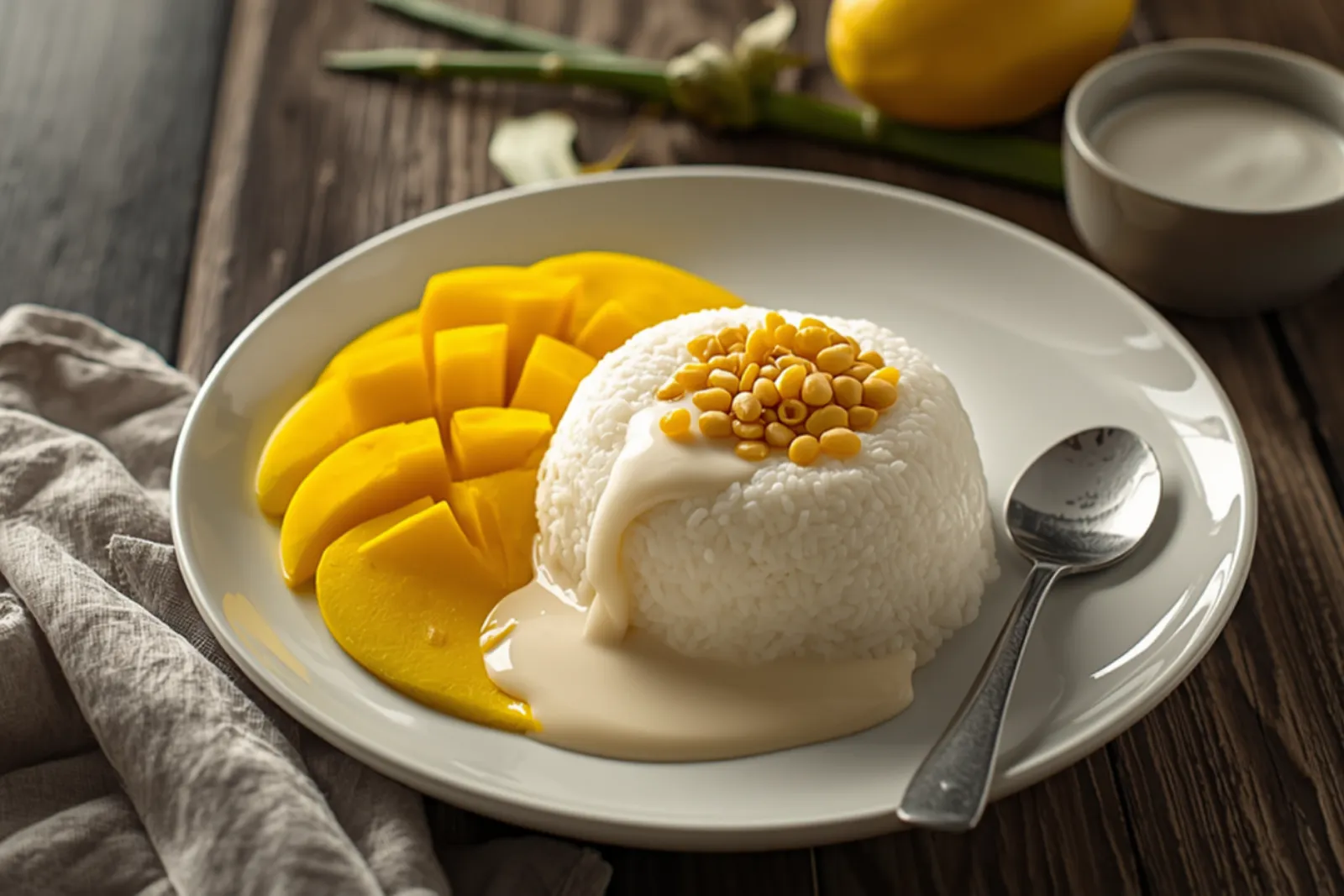
Thailand's hot-season dessert: glutinous rice steamed over water, then soaked while hot in sweet-salty coconut cream until every grain swells glossy, served with a ripe nam dok mai mango and a spoonful of salted coconut sauce over the top.
Published September 17, 2026
Cultural context
Khao niao mamuang is Thailand's best-known dessert, but the form it takes is specifically Central Thai: khao niao mun, glutinous rice enriched with coconut, a technique recorded in the Rattanakosin court kitchens and paired with ripe mango at least as far back as the reign of King Chulalongkorn. The glutinous rice itself belongs to a much older and much wider world — it is the daily staple of Laos and Thailand's north-east, where it is eaten plain, by hand, with no coconut at all. Sticky rice with ripe mango in season is common across the region under other names, from Cambodian bai damnoep svay toum to Malaysian pulut mangga and the Visayan puto maya, and no single country invented the pairing.
Mango sticky rice arrives in Thailand with the heat. From late March through May, when the hot season has flattened Bangkok and the nam dok mai mangoes come down from the orchards in Chachoengsao and Nakhon Pathom, dessert stalls stack them in pyramids and sell khao niao mamuang by the polystyrene boxful: a dome of white coconut rice, half a mango fanned beside it, salted coconut cream spooned over the top, a pinch of crisp yellow mung beans. It is the country’s most famous sweet, and it is emphatically seasonal — ask for it in November and you will get a shrug and a lesser mango.
The dish is three components, none of them difficult, and all of the skill is in restraint. The rice must be steamed rather than boiled. The coconut milk must go in while the grains are hot enough to drink it. The sauce on top must be salty. Get those three right and the rest is slicing fruit.
What is actually Thai about it
Sticky rice is much older and much bigger than this dessert. Glutinous rice is the daily staple of Laos and of Thailand’s north-east, where it is steamed in a conical bamboo basket, kept in a lidded kratip, and eaten plain with the fingers — rolled into a ball, dented with the thumb, used to pick up grilled meat or som tam. No coconut, no sugar. That is sticky rice as most of the people who grow it actually eat it.
What Central Thailand added was khao niao mun: glutinous rice enriched with coconut milk and sugar, a preparation from the coconut-rich plain around Bangkok and one that is documented in the Rattanakosin court kitchens, eaten alongside ripe mango by the reign of King Chulalongkorn. So the pairing of sticky rice with seasonal mango is regional and ancient and shared — it appears as bai damnoep svay toum in Cambodia, pulut mangga in Kelantan, puto maya in the Visayas — while the specific, famous, plated version with its salted cream and its fanned nam dok mai is Bangkok’s. In April 2022 that version went abruptly global when the rapper Milli ate a bowl of it on stage at Coachella; Thai mango exports and Google searches spiked within days.
The three things that decide the dish
Steam the rice — and soak it first
Glutinous rice is almost pure amylopectin, the branched starch that makes cooked grains cling to each other. Submerge it in a pan of water and that starch leaches out and the grains collapse into porridge. Steam it and each grain gelatinises in place, staying whole and springy.
But steam adds no water, which makes the soak non-negotiable: whatever hydration the grain has when it goes into the basket is all it is ever going to get. Four hours is the floor, overnight is better, and no amount of extra steaming rescues an unsoaked batch — you simply get a hard chalky core inside a gummy outside. Turn the mass over once halfway through the steam, because the bottom layer sits closest to the water and cooks faster than the top.
Pour the coconut milk over hot rice, then wait
Khao niao mun is an absorption step, not a cooking one. Freshly steamed grains are hot and open and will pull sweetened coconut milk right into their centres; the same rice twenty minutes later, cooled and set, only gets a coating, and you end up with wet rice sitting in a puddle rather than rice that tastes of coconut all the way down.
Warm the coconut milk gently with the sugar, salt and a knotted pandan leaf — enough to dissolve the sugar, never enough to boil, because boiled coconut milk splits and a split sauce will not absorb evenly. Then fold it through, cover, and leave it alone for twenty minutes. Folding, not stirring: sticky rice mashes into paste under an enthusiastic spoon.
Make the topping salty
The single most common fault in a home version is a sweet sauce on top of sweet rice next to sweet fruit. The street-stall rat na kati is a savoury sauce — coconut cream, a decisive half-teaspoon of salt, barely any sugar, thickened with a little rice flour so that it sits on the rice in a ribbon instead of fleeing to the edge of the plate. That salt is what makes the mango taste more intensely of mango. It is the same contrast instinct that runs through the savoury Thai table, where nothing is allowed to be only one thing.
Warm rice, cold fruit
Serve it soon, and serve it warm. Coconut sticky rice starts to retrograde in the fridge — the starch recrystallises and the grains go dry and crumbly within hours — which is why chilled supermarket mango sticky rice is such a disappointment compared to a box handed over at a stall. If you have leftovers, leave them covered at room temperature and steam them for two or three minutes to bring them back.
The mango, on the other hand, should be cold, cut at the last minute, and properly ripe: fragrant at the stem, giving slightly under the thumb. The warm-against-cool contrast is half the pleasure of the dish.
For the wider context of how coconut, rice and the pounded paste organise this whole part of the world, the Southeast Asian cooking guide is the place to start — and if you want to see the savoury side of the same coconut-rice logic, nasi lemak cooks the grain in coconut milk and sends it in exactly the opposite direction. A plate of pad Thai first and this afterwards is about as complete a Bangkok street meal as you can build at home.
Ingredients
For the rice
- 300 g (1 1/2 cups) Thai white glutinous rice (khao niao) Sold as sticky rice, sweet rice or glutinous rice — short, chalky-opaque grains. It contains no gluten at all; the name describes the starch. Jasmine rice, sushi rice and arborio are not substitutes: none of them has the near-zero amylose content that makes the cooked grain cling.
- 250 ml (1 cup) coconut milk, full-fat A good canned coconut milk with 17–22% fat is fine here. If you can buy fresh, use the thin milk (hang kati) for the rice and save the thick cream for the topping.
- 90 g (7 tbsp) white sugar White, not palm, for the classic Bangkok version — palm sugar tastes wonderful but stains the rice beige, and the point of the dish is a snow-white mound against orange mango. Palm sugar is standard in the southern and Lao-leaning versions.
- 3/4 tsp fine sea salt More than feels right for a dessert. Salt is doing structural work here, not seasoning.
- 1 pandan leaf, knotted (optional) Bai toey. Fresh or frozen, from any Asian grocer. It gives the grassy-vanilla note that makes a Thai dessert smell Thai; extract is a poor stand-in and usually tastes of nothing but sugar.
For the salted coconut topping (rat na kati)
- 150 ml (2/3 cup) coconut cream The thick cream, not milk — scoop it off the top of an unshaken can. This is a savoury sauce, and it needs the fat to read as rich rather than watery.
- 1/2 tsp fine sea salt
- 1 tsp sugar Just enough to round the salt off. The topping should taste faintly savoury next to the sweet rice, never sweet in its own right.
- 1 1/2 tsp rice flour Or tapioca starch. It thickens the cream just enough to sit on the rice in a ribbon instead of running to the edge of the plate.
To serve
- 2 large (about 700 g) ripe mangoes, ideally nam dok mai or ok rong Nam dok mai — 'flower nectar' — is the slim, yellow, fibreless Thai mango sold in most Asian grocers from March to June; ok rong is smaller, paler and more intensely perfumed. Failing those, an Ataulfo/honey mango is the closest widely available match. Avoid stringy, mildly sweet supermarket Tommy Atkins: the fruit is half the dish.
- 2 tbsp split yellow mung beans, or white sesame seeds Toasted until crisp and golden. The Bangkok street version almost always has them; they are the only crunch on the plate.
Method
Tap a step’s number to check it off as you go.
-
Rinse the glutinous rice in several changes of cold water until the water runs nearly clear, then cover it generously with cold water and leave it to soak for at least 4 hours, or overnight.
Why: The soak is not optional and cannot be shortened by heat. Glutinous rice is steamed, not boiled, so the only water the grain ever gets is what it absorbs now — an unsoaked grain steams to a hard, chalky centre in a gummy shell no matter how long you leave it. Rinsing first sheds loose surface starch that would otherwise glue the batch into a single brick.
-
Drain the rice well and spread it in a steamer lined with muslin or a clean tea towel, or in a traditional conical bamboo basket (huat) set over a pot. Cover and steam over vigorously boiling water for 20–25 minutes, turning the whole mass over once at the halfway mark, until the grains are translucent, tender and springy with no chalky core.
Why: Steam rather than water is the whole method: submerged in a pan, glutinous rice releases its starch into the cooking liquid and collapses into porridge. Turning it halfway matters because steam rises — the bottom layer cooks faster than the top, and a batch left undisturbed comes out half done. Look for translucency, which is the visual signal that the starch granules have gelatinised all the way through.
-
While the rice steams, warm the 250 ml coconut milk with the sugar, salt and the knotted pandan leaf in a small pan over low heat, stirring until the sugar has fully dissolved. Do not let it boil. Take out the pandan.
Why: Heat is only there to dissolve the sugar and draw the pandan's aroma out. Boiling coconut milk splits it — the fat separates into visible beads and the sauce turns grainy — and once split it will never soak into rice as one smooth liquid.
-
Tip the just-steamed rice, still very hot, into a bowl and pour over about three-quarters of the warm coconut mixture. Fold it through gently with a spatula, then cover tightly and leave it to stand for 20–30 minutes, folding once more halfway through. Add the rest of the coconut mixture only if the rice still looks dry.
Why: This is khao niao mun, the step that makes the dish, and it works on absorption rather than cooking. Hot, freshly steamed grains are still open and thirsty and will drink the coconut milk straight into their centres; let the rice cool first and the liquid simply coats the outside, giving you wet rice sitting in a puddle instead of rice that is sweet all the way through. Folding rather than stirring keeps the grains whole — sticky rice mashes very easily — and the covered rest lets the absorption finish evenly. The rice should end up glossy and just holding together, never soupy.
-
Make the topping: whisk the rice flour into the 150 ml coconut cream until no lumps remain, add the salt and sugar, and cook over low heat, stirring constantly, for 2–3 minutes until it just thickens enough to coat the back of a spoon. Cool to room temperature.
Why: A little starch is what lets the sauce sit in a ribbon on top of the rice instead of running off it — the classic street-stall version is noticeably thicker than pouring cream. Keeping it below a simmer again prevents the coconut fat from splitting, and the salt is deliberate and assertive: this sauce is the savoury counterweight that stops a plate of sweet rice and sweet mango from being one flat note.
-
Toast the split mung beans in a dry pan over medium-low heat, shaking often, for 4–6 minutes until golden and audibly crisp. Cool them on a plate.
Why: They soften within minutes of touching anything wet, so they go on at the last second. Toast them low and slow — mung beans go from pale to burnt in about fifteen seconds at high heat.
-
Peel the mangoes and cut down either side of the flat stone to take off two cheeks. Slice each cheek lengthways into 4–5 thick slices, or score the flesh in a cross-hatch and scoop it out in cubes.
Why: Cut the fruit at the last possible moment. Sliced mango starts weeping sugary juice immediately, and that juice thins the coconut topping and makes the rice sodden. Thick slices also hold their shape against the warm rice where thin ones slump.
-
Mould a mound of the coconut rice onto each plate — a small bowl or ramekin pressed lightly and inverted gives the classic dome — lay the mango alongside, spoon the salted coconut sauce over the rice, and scatter with the toasted mung beans. Serve while the rice is still warm.
Why: Warm rice against cool fruit is the contrast the whole dessert is built on, and it is the thing that gets lost when mango sticky rice is served cold out of a fridge. The sauce goes over the rice, not the mango: the fruit is already sweet and perfumed, and the salted cream is there to season the starch.
A quick, anonymous tap — no review needed.
Variations
- Black sticky rice (khao niao dam)
Swap a third of the white glutinous rice for black glutinous rice and soak them together overnight. The result is deep purple, chewier, and nuttier, with a faint minerality that plays against the mango. Black rice needs a longer steam — 30–35 minutes — so give the mixed batch the longer time.
- Pandan-green rice
Blend a few pandan leaves with the coconut milk and strain before warming it. The rice turns pale jade and the grassy-vanilla aroma comes through far more strongly than it does from a knotted leaf. Common in the south and in Malaysian pulut.
- Durian, banana or jackfruit
Khao niao mun is a base, not a one-fruit dessert. Thai stalls serve it with ripe durian (khao niao thurian), sweetened jackfruit, or with steamed banana wrapped and cooked inside it as khao tom mat. Any intensely perfumed, soft tropical fruit works on the same logic as mango.
- Lao and Isan style
Plain sticky rice, steamed in a bamboo huat and eaten with the fingers, with mango on the side and nothing but a spoonful of lightly salted coconut cream and toasted sesame. No sweetened rice at all. Lighter, and closer to how sticky rice is actually eaten across the Mekong every day.
- Lower-sugar
Drop the sugar in the rice to 50 g and lean harder on a genuinely ripe mango for the sweetness. Do not cut the salt to match — the salt is what keeps the dish tasting like something rather than like plain rice.
Serving & Storage
Serve within an hour of making it, while the rice is still warm and the mango still cold from the last hour in the fridge — that temperature gap is the point, and it is exactly what is missing from the chilled version sold in supermarket plastic. In Thailand it is eaten as a mid-afternoon sweet more often than as a post-dinner dessert, usually with nothing but water or a glass of iced tea. Give each person a spoon, not a fork.
Pairs with: Thai iced tea (cha yen), Jasmine tea, Young coconut water, Thai green curry, Tom yum goong.
Storage: This is a dish to eat the day it is made. Coconut sticky rice hardens in the fridge as its starch retrogrades — the grains go dry and crumbly within a few hours at cold temperatures — so keep any leftover rice covered at room temperature for up to a day and revive it with 2–3 minutes of steaming, which softens it back almost completely. If you must refrigerate, steam it hard to bring it back. The salted coconut topping keeps 3 days refrigerated and just needs a whisk and a gentle warm-through. Never store the mango cut or the rice already sauced: both go watery inside an hour.
Nutrition
Per serving (1 plate — about 150 g coconut sticky rice, half a mango, sauce and mung beans)
- Calories
- 480
- Protein
- 6 g
- Carbs
- 82 g
- Fat
- 15 g
- Fiber
- 3 g
- Sugar
- 38 g
- Sodium
- 390 mg
Notable micronutrients: Vitamin A, Vitamin C, Manganese, Potassium, Folate, Copper
Estimated using standard ingredient data. Values vary with brands and substitutions.
Frequently Asked Questions
Can I make sticky rice in a rice cooker or a regular pan instead of steaming it?
A rice cooker with a steamer basket works well — line it and follow the same timings. Cooking glutinous rice submerged in a measured amount of water, the way you would jasmine rice, is a different matter: it broadly works if you use very little water (about 1:0.8 rice to water after soaking) and let it rest covered afterwards, but the grains release starch into the liquid and the result is softer and pastier, with less of the distinct, springy separation that steaming gives. Microwave methods have the same drawback. If you make this dish more than occasionally, a cheap conical bamboo basket and a cloth are the single best investment.
Why is my sticky rice hard in the middle, or wet and mushy?
Hard centres are almost always a short soak — four hours is the minimum and overnight is better, because steaming adds no water of its own and the grain has to arrive at the steamer already hydrated. Mushiness usually means the rice was boiled or the coconut milk went in too enthusiastically: add three-quarters of the mixture, let it absorb for twenty minutes, and only add the rest if the rice still looks dry. And fold, do not stir — glutinous rice mashes into paste under a spoon very quickly.
Which mango should I buy, and what if I cannot find a Thai one?
The two Thai varieties made for this are nam dok mai, slim and golden and completely fibreless, and ok rong, smaller, paler and more strongly perfumed; both peak from March to June and appear in Asian grocers in the West through the spring. The best widely available substitute is the Ataulfo or honey mango — same buttery, stringless flesh. What to avoid is the big red-green supermarket mango, usually a Tommy Atkins, which is bred for shipping and is fibrous and only mildly sweet. Whatever you buy, it must be properly ripe: give slightly under the thumb, heavily perfumed at the stem end. An underripe mango cannot be rescued by more sugar in the rice.
Is mango sticky rice Thai, Lao or something else?
The dish as most people know it — sweetened coconut rice, salted coconut sauce, a fanned nam dok mai mango — is Central Thai, and khao niao mun is documented in Rattanakosin-era Bangkok, eaten with ripe mango by the reign of King Chulalongkorn. But glutinous rice is the older story, and it belongs to the whole Mekong: it is the everyday staple of Laos and of Thailand's north-east, eaten plain and by hand, and sticky rice with seasonal ripe mango turns up across the region as Cambodian bai damnoep svay toum, Malaysian pulut mangga in Kelantan, and the Visayan puto maya. The honest framing is that Thailand gave the pairing its famous restaurant form, not that Thailand invented eating mango with sticky rice.
Is it really vegan and gluten-free?
Yes to both, as written and without substitution. Every fat in the dish comes from coconut, and glutinous rice — despite the name — contains no gluten whatsoever; 'glutinous' describes the glue-like stickiness of its starch, which is almost pure amylopectin. The only things to check are that your mung beans have not been fried in a shared oil and that the coconut milk has no dairy-derived stabilisers, which is rare but not unheard of.
Why is there salt in a dessert?
Because without it the plate is one uninterrupted sweet note. Thai sweets are built on the same contrast logic as Thai savoury food, and the salted coconut sauce is the dish's structural counterweight — it makes the rice taste more of coconut, the mango taste more of mango, and the whole thing taste of more than sugar. If your mango sticky rice has ever struck you as cloying or one-dimensional, an undersalted topping is almost certainly why.
What to drink with this
All drinks →Hand-picked pours to match this dish. Alcoholic pairings are for adults of legal drinking age (21+ in the US) — please drink responsibly.
Thailand (street and market drink) · Thai
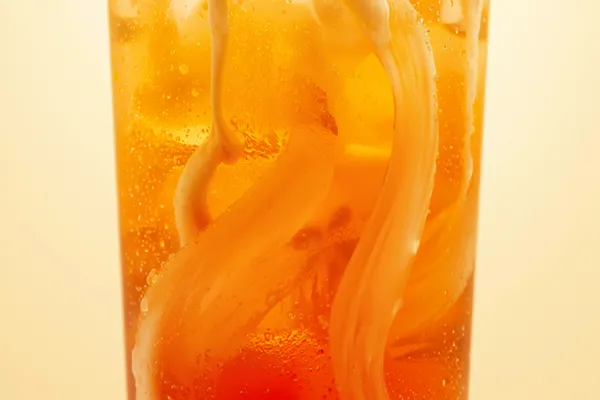
Thai Iced Tea (Cha Yen)
The bright-orange, creamy-sweet Thai street drink: strong spiced black tea sweetened with condensed milk and poured over ice with a float of cream. How to brew it strong and why it's so orange.
 21+
21+ Kuala Lumpur, Malaysia · Malaysian
Jungle Bird (Dark Rum, Campari & Pineapple)
The tiki drink with a bitter backbone: dark rum and Campari shaken with fresh pineapple and lime. Tropical and lush but grown-up and dry — the 1970s Malaysian classic that bridges tiki and the aperitivo world.
 21+
21+ Singapore (the Raffles Hotel Long Bar) · Singaporean
Singapore Sling (The Raffles Hotel Classic)
The tropical gin classic born at Raffles Hotel: gin, cherry liqueur, Bénédictine, citrus and pineapple, shaken into a frothy, ruby long drink. The full original build, not the sugary shortcut.
From our kitchen community
Ratings & Reviews
My Rating
Tap a star to rate — no sign-in, no form needed.
My Review
0 Ratings
🥣 0 home cooks made it!
Be the first to rate Mango Sticky Rice (Khao Niao Mamuang).
Related Recipes
Thailand · Thai
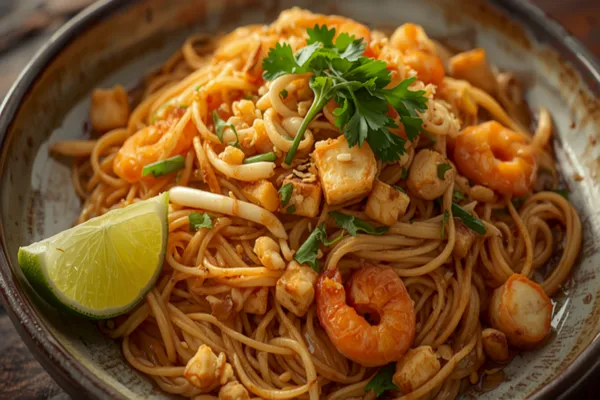
Pad Thai (Thai Stir-Fried Rice Noodles)
Thailand's most famous noodle dish — rice noodles tossed in a sweet-sour-salty tamarind sauce with prawns, tofu, egg, and crunchy beansprouts, finished with crushed peanuts and a squeeze of lime. A fast, balanced wok classic.
Thailand (street and market drink) · Thai
Thai Iced Tea (Cha Yen)
The bright-orange, creamy-sweet Thai street drink: strong spiced black tea sweetened with condensed milk and poured over ice with a float of cream. How to brew it strong and why it's so orange.
Central Thailand / Southeast Asia · Thai
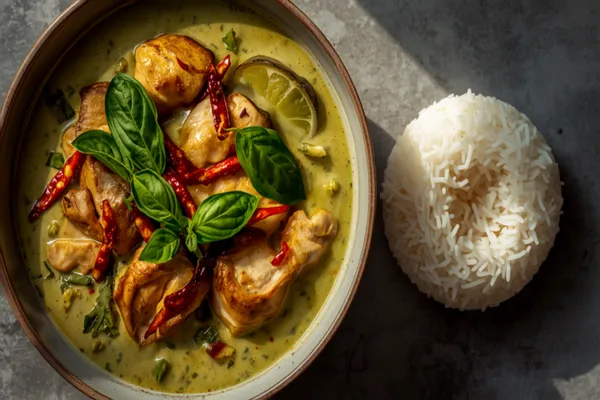
Thai Green Curry (Gaeng Keow Wan Gai)
Thailand's fragrant green curry, built the way it's meant to be: a fresh pounded paste bloomed in cracked coconut cream, chicken and Thai eggplant simmered to silk, finished with fish sauce, palm sugar, and a fistful of basil. Hot, sweet, herbal, and ready in under an hour.
The Malay Peninsula — the Straits of Malacca coast, from Malacca and Kuala Lumpur north to Penang · Malaysian
Nasi Lemak (Malaysian Coconut Rice with Sambal Ikan Bilis)
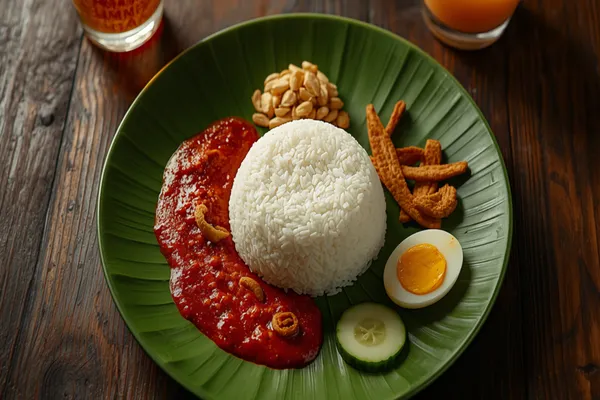
Malaysia's national breakfast: jasmine rice steamed in coconut milk with pandan, ginger and lemongrass, banked against a dark sambal tumis fried until the oil splits, with crisp anchovies, roasted peanuts, cucumber and a boiled egg.
Kerala / South India · Indian
Palada Payasam (Kerala Rice Ada Milk Pudding)
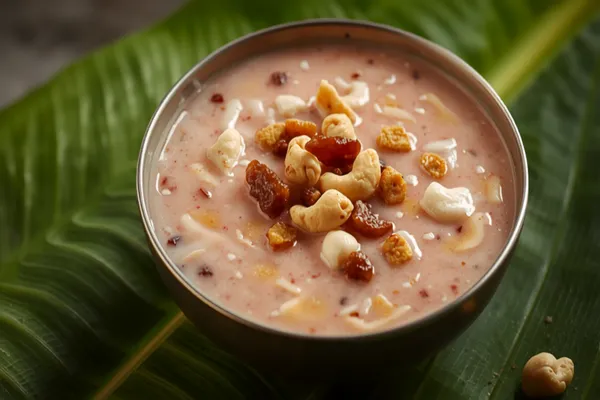
The milky, rose-tinged payasam that crowns the Onam sadya: tender rice ada simmered slowly in sweetened milk until it thickens and turns a pale pink, scented with cardamom and ghee-fried nuts. Patient, simple, and unforgettable.
Java — the Sundanese west and Betawi Jakarta, where the dish took its familiar form · Indonesian
Gado-Gado (Indonesian Vegetable Plate with Bumbu Kacang)
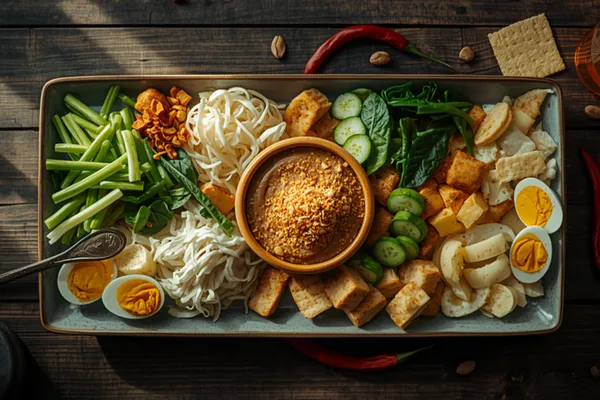
Indonesia's national salad: blanched cabbage, long beans, bean sprouts and water spinach with potato, fried tofu and tempeh, boiled egg and lontong, under a ground sauce of fried peanuts, palm sugar, tamarind and chilli.
Further reading
- Cultural Story · Southeast AsiaA Cook's Map of Southeast AsiaSoutheast Asia isn't one cuisine but a dozen, bound loosely by rice, fish sauce, fresh herbs, and the pounded paste. A guide to how Thai, Vietnamese, Indonesian, Filipino, Malaysian, and Singaporean cooking differ, what they share, and where to start cooking.
- Cultural Story · InternationalWorld Classics: A Cook's Tour Beyond IndiaTable & Traditions is India-first, but the world has a place at this table too. A guide to our curated international slice — the European, East Asian, Southeast Asian, Middle Eastern and North African, and American dishes worth cooking, and where to begin with each.