Korea — the kimjang tradition, from mild Pyongyang-style kimchi in the north to the seafood-heavy kimchi of Jeolla in the south · Korean
Baechu-Kimchi (Traditional Napa Cabbage Kimchi)
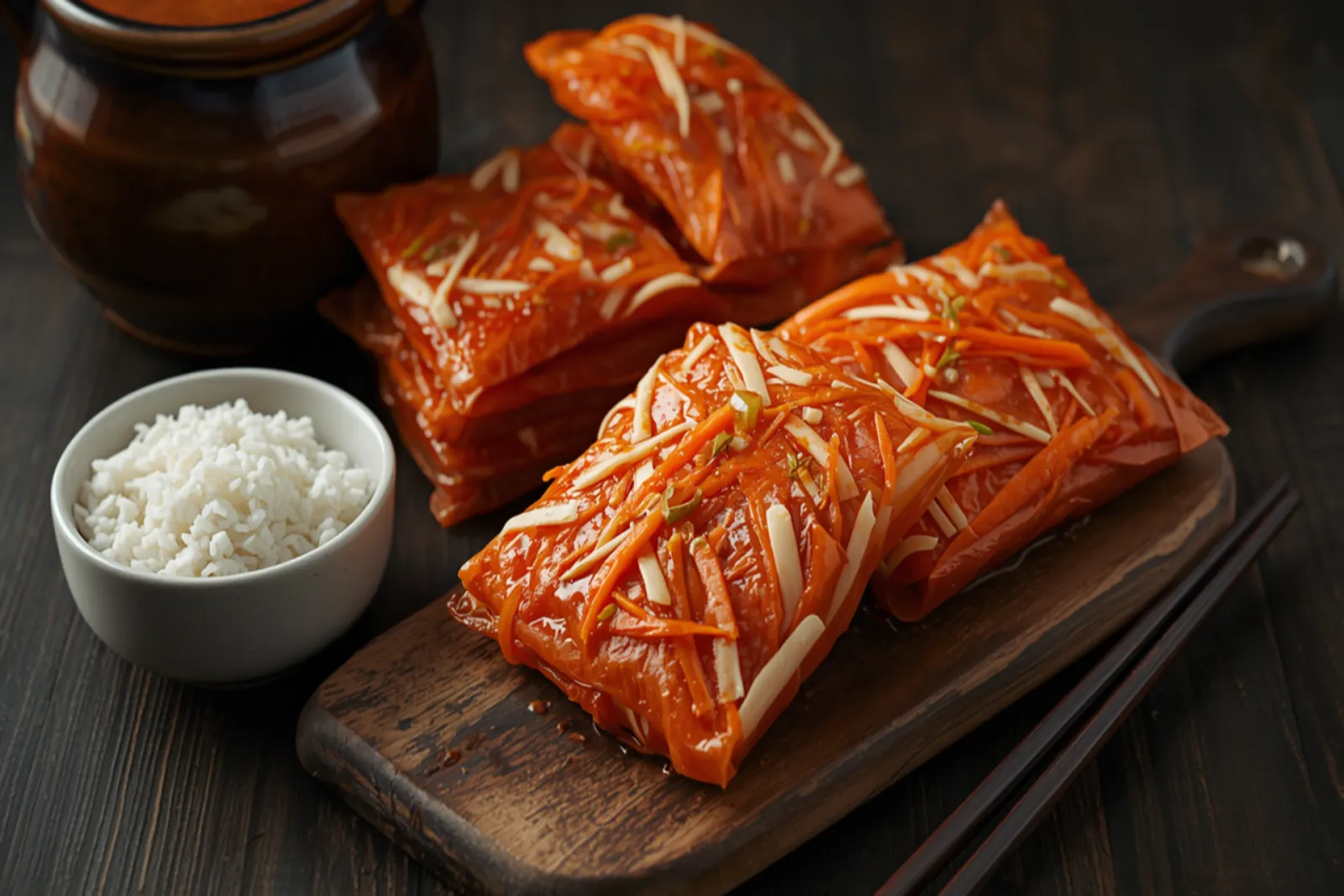
Korea's defining side dish, made the whole-leaf way: napa cabbage brined until it bends, packed leaf by leaf with a gochugaru paste of garlic, ginger, fish sauce and salted shrimp, then left to sour into something deep, fizzy and alive.
Published August 19, 2026
Cultural context
Kimchi (김치) is far older than its chilli: pickled vegetables appear in Korean records for well over a millennium, and gochugaru only arrived after chillies reached the peninsula in the early 1600s. This whole-leaf napa version — tongbaechu-kimchi, also called baechu-kimchi or pogi-kimchi — is what Koreans mean when they simply say 'kimchi'. It is the centrepiece of kimjang, the late-autumn ritual in which families and neighbours make a winter's worth together; UNESCO inscribed kimjang on its Intangible Cultural Heritage list in 2013 for South Korea and in 2015 for North Korea. Recipes are family property and vary sharply by province, so no single version is the correct one.
Baechu kimchi is not a condiment. In a Korean meal it is the fixed point everything else is arranged around — the thing on the table whether lunch is a bowl of rice or a fourteen-dish spread — and the version made from whole quarters of salted napa cabbage, packed leaf by leaf with a red seasoning paste, is what Koreans mean when they say the word without qualification. Its full name is tongbaechu-kimchi; you will also see it as pogi-kimchi. Making it at home takes an afternoon and rewards you for months.
A vegetable pickle older than its chilli
Kimchi’s red colour is the newest thing about it. Salted and brined vegetables are recorded on the Korean peninsula for well over a thousand years, long predating chillies, which only reached Korea in the early 1600s via traders working the routes out of the Americas. Before that, kimchi was a pale, salt-and-brine affair much closer to today’s baek-kimchi. Gochugaru transformed it within a couple of generations, and the transformation stuck.
The dish also belongs to a season. Kimjang, the late-autumn making of a winter’s supply, is a communal effort — households, neighbours and extended family working through mountains of cabbage together, then dividing the result. UNESCO inscribed kimjang as Intangible Cultural Heritage in 2013 on South Korea’s nomination and in 2015 on North Korea’s. Recipes are family inheritances, and provinces disagree cheerfully: northern kimchi tends to be less salty and lighter on both chilli and seafood, southern Jeolla kimchi is bolder, saltier and thick with fermented seafood, and Pyongyang’s white radish version is milder still. There is no single authentic formula, only your version and someone else’s.
The salt does the real work
Everything that goes wrong with homemade kimchi goes wrong during salting. The two-hour brine is not seasoning — it is a structural and microbial intervention. Osmosis pulls water out of the cabbage until the ribs bend instead of snapping, which both makes the leaves foldable and opens them to the paste. At the same time the salinity tilts the field decisively toward lactobacilli and away from spoilage organisms, so that fermentation goes to lactic acid rather than to rot.
That is why you salt the thick white stems more heavily than the frilly tops, and why the bend test matters more than the clock: a dense head in a cold kitchen may want three hours, a loose one in a warm kitchen barely ninety minutes.
Why there’s rice porridge in the paste
The cooked rice-flour porridge is the least obvious ingredient and one of the most useful. Wet cabbage leaves are slippery, and a dry spice mix simply slides off them; the starch gel gives the paste enough body to cling to every leaf. It also delivers accessible sugars, so the bacteria have something to eat from hour one and the ferment starts briskly instead of stalling. Cool it completely before it meets the gochugaru — hot porridge dulls the colour and can kill the culture you are counting on.
Fermenting, and knowing when to stop
Leave the sealed container at cool room temperature and check daily. Within a day or two you’ll see bubbles when you press the top and smell a distinct sourness: that’s the ferment running. Move it to the fridge at that point and the process slows to a crawl without stopping, which is the whole design. Fresh kimchi, a week old, is crisp and bright and best eaten as is. At a month it’s properly sour and complex. Past that it becomes cooking kimchi — the ingredient that makes kimchi-jjigae, kimchi fried rice and kimchijeon taste like anything at all. Nothing here is a failure state; it is a sequence.
Serve it cold beside almost anything. It’s the natural partner to bulgogi, and a spoonful belongs on every bibimbap. More on the dishes that define a cuisine in the World Classics guide.
Ingredients
For salting the cabbage
- 2.7 kg (6 lb) napa cabbage About 2 large heads. Look for dense, heavy heads with tightly packed white ribs — loose, leafy cabbage goes limp.
- 70 g (about 1/2 cup) coarse sea salt or kosher salt Non-iodized. Iodine and anti-caking agents can inhibit the lactobacilli that do the fermenting.
For the rice porridge (juk)
- 500 ml (2 cups) water
- 2 tbsp glutinous (sweet) rice flour Plain rice flour works; so does a few tablespoons of leftover cooked rice blitzed with the water.
- 2 tbsp sugar Turbinado, brown or white. It is food for the bacteria as much as seasoning.
For the seasoning paste (yangnyeom)
- 120 g (about 2 cups) gochugaru (Korean red pepper flakes) Coarse-ground, bright red, not smoky. This is the one ingredient with no substitute — chilli powder or cayenne will make the kimchi harsh and muddy.
- 60 g (about 1/2 cup) garlic cloves, finely minced Roughly 24 cloves. Yes, that much.
- 2 tsp fresh ginger, finely minced
- 1 medium onion, finely minced or blended
- 120 ml (1/2 cup) Korean anchovy sauce (myeolchi-aekjeot) or fish sauce
- 60 ml (1/4 cup) saeujeot (salted fermented shrimp), chopped, with its brine Optional but characteristic. Leave it out and add a splash more fish sauce; the kimchi will be cleaner but less deep.
For the filling vegetables
- 300 g (about 2 cups) Korean radish (mu) or daikon, cut into matchsticks
- 100 g (about 1 cup) carrot, cut into matchsticks
- 7–8 spring onions, cut into 4 cm lengths
- 1 cup Asian chives (buchu), cut into 4 cm lengths Optional. Substitute 3 more spring onions.
- 1 cup minari (water dropwort), cut into 4 cm lengths Optional and regional — common in southern kimchi for its clean, herbal bite.
Method
Tap a step’s number to check it off as you go.
-
Trim any protruding core from each cabbage. Cut a short slit into the base, then pull the head apart with your hands so it splits into halves along the leaves. Cut a second slit through the core of each half, about 5 cm up from the stem, leaving the leaves attached.
Why: Tearing rather than cutting follows the natural seams between leaves, so nothing shreds. Keeping the quarters attached at the core is the whole point of tongbaechu-kimchi — the packet holds together and each leaf ferments at its own pace, giving one bite crisp rib and soft leaf at once.
-
Dunk the halves in water, then salt them leaf by leaf: lift each leaf and scatter salt along it, using noticeably more near the thick white stems and less at the frilly tips.
Why: The ribs are dense and hold water; the leaf tips are thin and wilt in minutes. Graduated salting is how you get both parts to the same texture instead of soggy tips and raw stems.
-
Lay the halves cut-side up in a large basin and leave for 2 hours, turning them over every 30 minutes and ladling the pooled brine back over the top.
Why: Salt draws water out by osmosis, collapsing the cell walls so the leaves bend without snapping and the paste can penetrate. It also raises the salinity enough that lactobacilli outcompete spoilage bacteria — this step is the food-safety step, not just a texture step.
-
Test a thick stem: it should bend right over without cracking. Wash the cabbage in cold water three times, splitting the halves into quarters along the slits as you go. Cut out the cores, then drain the quarters cut-side down in a colander for at least 30 minutes.
Why: The rinse removes surface salt so the finished kimchi is seasoned rather than salty. Draining matters just as much — trapped water dilutes the paste and gives you thin, pallid kimchi.
-
While the cabbage salts, whisk the rice flour into the cold water in a small pan and cook over medium heat, stirring, for about 10 minutes until it thickens to a loose porridge. Stir in the sugar, cook 1 minute more, then cool completely.
Why: The starch porridge does two jobs: it glues the paste to slippery wet leaves so the seasoning doesn't slide off, and its sugars give the lactobacilli an immediate food source, so fermentation starts fast and cleanly. It must be cold before it meets the chilli — heat dulls gochugaru's colour and can kill the culture.
-
Tip the cooled porridge into a large bowl and stir in the gochugaru. Let it sit 5 minutes, then mix in the garlic, ginger, onion, fish sauce and saeujeot until you have a glossy, thick paste.
Why: Giving the chilli flakes a few minutes to hydrate in the porridge blooms their colour and takes the raw edge off, turning a gritty red powder into a smooth, sweet-hot paste.
-
Fold in the radish, carrot, spring onions and, if using, the chives and minari. Taste — it should be assertively salty and savoury, a little stronger than you'd want to eat straight.
Why: The cabbage is unseasoned inside and will pull salt and flavour out of the paste over the first few days. Paste that tastes perfect now will taste flat in a week.
-
Wearing gloves, take a cabbage quarter and spread paste over every leaf, working from the stem outward and using less as you reach the tips. Fold the quarter in on itself into a neat packet, wrapping the outermost leaf around it, and pack it into a clean jar, crock or onggi.
Why: Gloves are not squeamishness — gochugaru and garlic will burn your hands for hours. Wrapping the packet with an outer leaf keeps the filling in and protects the tender leaves from air, which is what browns kimchi.
-
Press the packets down firmly so the brine rises over the top, leaving at least 5 cm of headspace. Seal and leave at cool room temperature for 1–2 days, opening once a day to press down and release gas.
Why: Submerged kimchi ferments; exposed kimchi grows mould and yeast. The bubbles and the sharp sour smell after a day or two are lactic fermentation running properly — pressing down keeps everything under the brine and stops jars overflowing.
-
Once it smells and tastes sour and fizzes when pressed, move it to the fridge. Eat it fresh straight away, or leave it a few weeks to deepen.
Why: Cold doesn't stop fermentation, it slows it to a crawl — which is exactly what you want, because kimchi keeps changing in the fridge and each stage has its own use, from crisp and fresh to properly sour cooking kimchi.
A quick, anonymous tap — no review needed.
Variations
- Vegan (chaesik-kimchi)
Replace the fish sauce and saeujeot with 4 tbsp light soy sauce plus a strong stock of dried shiitake and kombu simmered into the porridge water. It ferments perfectly well; the flavour is cleaner and more vegetal, without the marine depth.
- Mak-kimchi (the easy version)
Chop the salted cabbage into bite-size pieces and simply toss everything together in a bowl instead of spreading leaf by leaf. Same flavour, a third of the work, and the standard weeknight approach in most Korean homes.
- Baek-kimchi (white kimchi)
Leave out the gochugaru entirely and slacken the paste with pear juice and extra brine. This is closer to what kimchi was before chillies arrived — mild, cold and refreshing, and the version to make for children or chilli-averse guests.
- Gluten-free
Naturally gluten-free as written — just check your fish sauce and anchovy sauce, as some brands are cut with wheat-based seasoning.
Serving & Storage
Serve cold in a small dish alongside almost any Korean meal — a bowl of rice and a stew is the classic minimum. Cut the packets crossways into bite-size pieces with kitchen scissors just before serving so the layers stay intact.
Pairs with: Steamed short-grain rice, Bulgogi, Grilled pork belly (samgyeopsal), Doenjang stew, Fried eggs.
Storage: Keeps 6 months or more refrigerated in a sealed container, growing steadily more sour. Always press the kimchi back under its brine and use a clean utensil. Once it is too sour to eat straight, it becomes the best possible cooking kimchi — for jjigae, fried rice and pancakes.
Nutrition
Per serving (100 g (about 1/2 cup))
- Calories
- 28
- Protein
- 1.6 g
- Carbs
- 5 g
- Fat
- 0.4 g
- Fiber
- 2 g
- Sugar
- 2 g
- Sodium
- 670 mg
Notable micronutrients: Vitamin C, Vitamin K, Vitamin A, Folate, Probiotics
Estimated using standard ingredient data. Values vary with brands and substitutions.
Frequently Asked Questions
Do I have to use gochugaru, or can I use another chilli powder?
Use gochugaru. It is coarse-ground, mildly sweet, fruity and vividly red — it contributes colour and body as much as heat. Cayenne is far hotter and thinner, and generic chilli powder usually contains cumin, oregano and garlic powder, which will taste plainly wrong. If you can only find fine gochugaru, use about a third less by volume.
How do I know if it has gone wrong rather than just sour?
Sour, fizzy, funky and pungent are all correct — kimchi is supposed to smell strong. What is not correct is fuzzy mould on the surface, a slimy texture throughout, or a sharp solvent smell. A thin white film (kahm yeast) on exposed kimchi is harmless: skim it, press everything back under the brine, and keep going.
Can I make it without the fish sauce and salted shrimp?
Yes. Buddhist temple cuisine has made kimchi without any seafood for centuries, and the vegan variation above is a legitimate version, not a compromise. Expect a cleaner, brighter flavour — the fermented seafood is what gives standard kimchi its savoury weight and slightly funky finish.
Why is my kimchi bland or too salty?
Both usually trace to the brining step. Too salty means the cabbage was under-rinsed after salting; bland means it was over-rinsed, over-drained, or the paste itself was under-seasoned. Aim to taste raw paste that seems slightly too strong, and always rinse three times but no more.
Is a special kimchi fridge or onggi necessary?
No. Onggi — porous earthenware crocks — breathe slightly and buffer temperature, and dedicated kimchi refrigerators hold a steady near-freezing temperature, both of which give more even fermentation. A glass jar or BPA-free plastic tub in an ordinary fridge makes very good kimchi; just keep the vegetables submerged and burp the container.
What to drink with this
All drinks →Hand-picked pours to match this dish.

Korea · Korean
Sujeonggwa (Korean Cinnamon-Ginger Punch)
A deep-amber Korean punch simmered from cinnamon and ginger, sweetened with sugar or honey, and served ice-cold with soft dried persimmon and pine nuts. Spiced, soothing and traditionally the close to a Korean feast.
Japan (the chado tea tradition of Kyoto and Uji, home of Japan's finest matcha) · Japanese
Matcha (Whisked Usucha, Thin Tea)
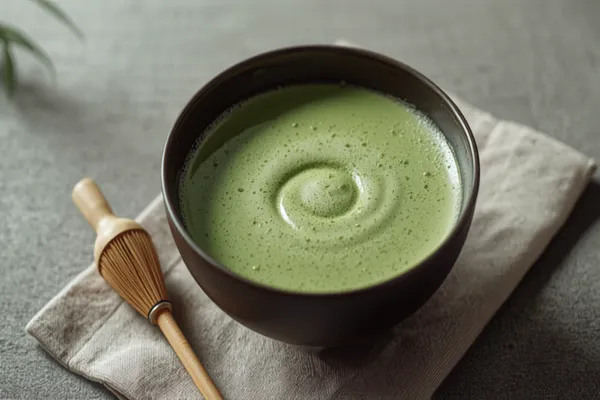
How to whisk a proper bowl of usucha — thin matcha — with a bamboo chasen: bright, jade-green, frothed to a fine foam, and faintly sweet-bitter. The everyday face of Japan's centuries-old tea tradition, ready in two minutes on a home counter.
Japan (matcha tradition, Uji & Nishio) · Japanese
Matcha Latte (Whisked Japanese Green Tea Latte)
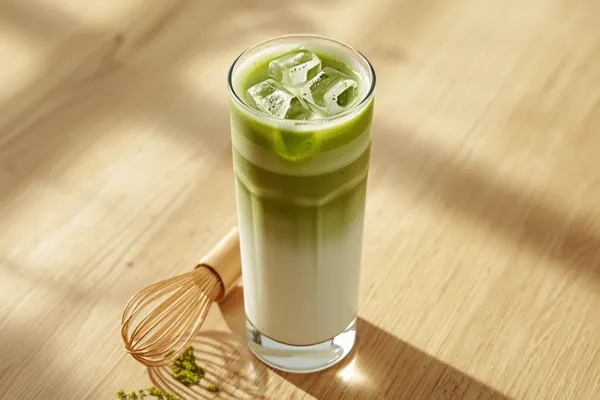
Stone-ground Japanese matcha whisked smooth and poured over steamed milk — grassy, sweet and gently caffeinated, with no bitterness when you make it right. A café favourite that's better and cheaper at home.
From our kitchen community
Ratings & Reviews
My Rating
Tap a star to rate — no sign-in, no form needed.
My Review
0 Ratings
🥣 0 home cooks made it!
Be the first to rate Baechu-Kimchi (Traditional Napa Cabbage Kimchi).
Related Recipes
Korea · Korean
Bibimbap (Korean Mixed Rice Bowl)
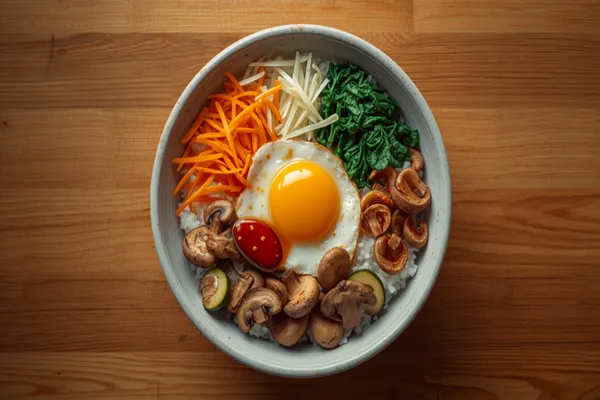
Korea's beautiful mixed rice bowl: a base of warm rice crowned with seasoned vegetables, marinated beef, a fried egg, and a spoonful of sweet-spicy gochujang sauce — all stirred together at the table. Endlessly adaptable and a feast of colour, texture, and flavour.
Korea · Korean
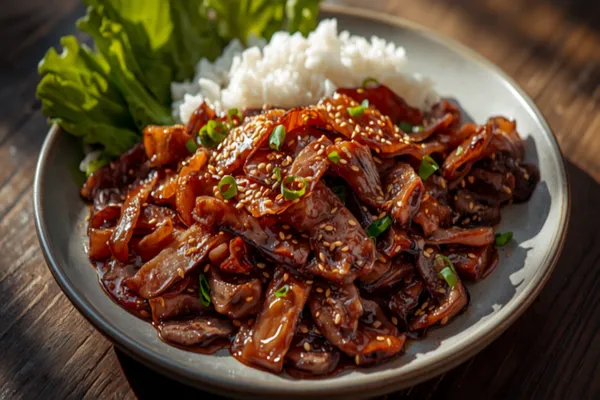
Bulgogi (Korean Marinated Grilled Beef)
Korea's beloved 'fire meat': thin slices of beef marinated in a sweet-savoury blend of soy, pear, garlic, and sesame, then seared hot and fast until caramelised at the edges. Tender, glossy, and ready in minutes once it hits the pan.
Northern China · Chinese
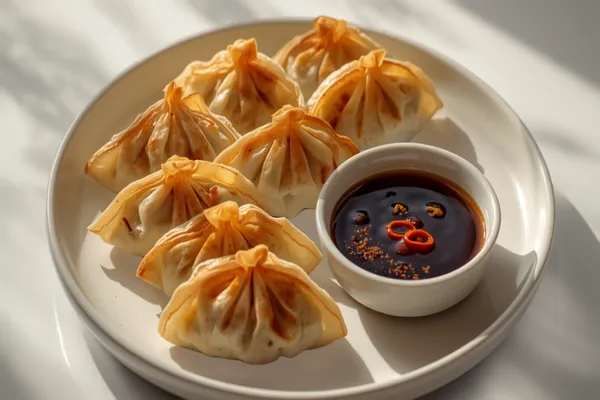
Pork and Chive Potstickers (Jiaozi)
The dumplings at the heart of Chinese celebration: juicy pork-and-chive filling folded into pleated wrappers, then pan-fried crisp on the bottom and steamed soft on top. A hands-on, make-together feast — fold a big batch and freeze the rest.
Korea · Korean
Sujeonggwa (Korean Cinnamon-Ginger Punch)
A deep-amber Korean punch simmered from cinnamon and ginger, sweetened with sugar or honey, and served ice-cold with soft dried persimmon and pine nuts. Spiced, soothing and traditionally the close to a Korean feast.
Taiwan — born in the juancun military-dependents' villages around Gangshan in Kaohsiung, perfected in the noodle shops of Taipei · Taiwanese
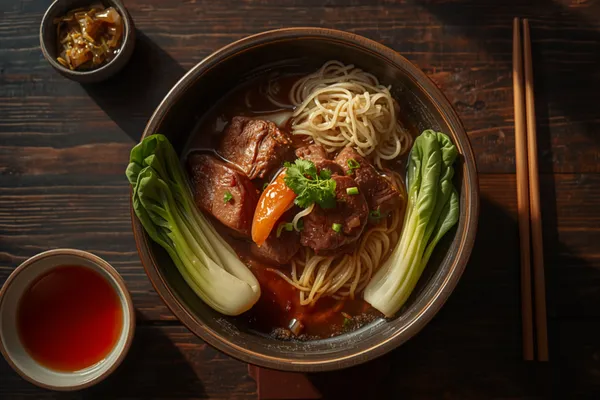
Taiwanese Beef Noodle Soup — Red-Braised Niu Rou Mian with Shank and Tendon
Taiwan's national bowl: beef shank and tendon braised for three hours in a dark, glossy broth built on fried chilli bean paste, caramelised rock sugar and tomato. The colour comes from frying the doubanjiang in oil, not from soy sauce — and that one step is the whole dish.
Korea — a Joseon royal-court dish from Seoul, now cooked in every Korean home · Korean
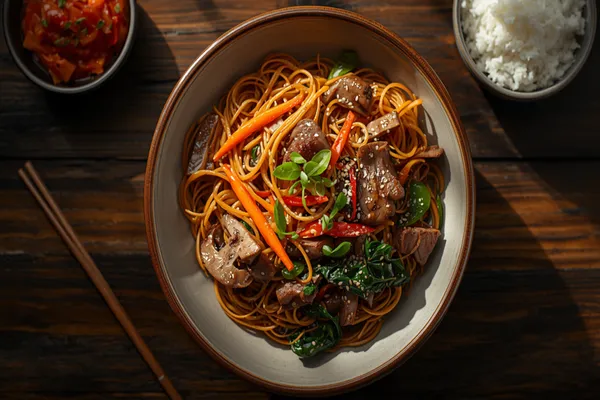
Japchae (Korean Glass Noodle Stir-Fry)
Korea's celebration noodle — chewy sweet-potato dangmyeon tossed with beef, shiitake and a rainbow of vegetables each cooked separately so every strand keeps its own colour and bite. A royal-court dish from 1600s Seoul that now appears at every first birthday, wedding and Chuseok table.
Seoul — the Sindang-dong tteokbokki alley, by way of the Joseon royal kitchens · Korean
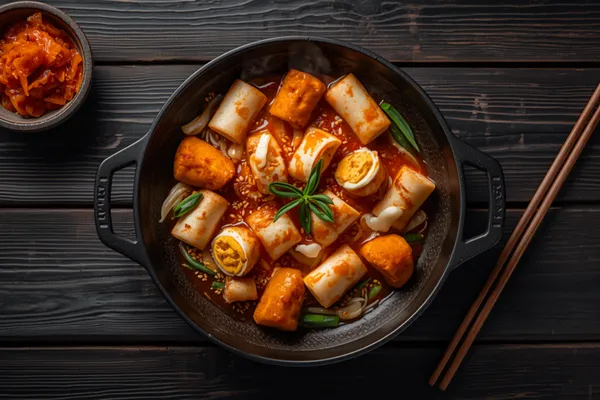
Tteokbokki (Korean Spicy Rice Cakes)
Korea's defining street snack — cylinders of chewy garaetteok simmered in an anchovy broth thickened to a glossy red gravy with gochujang, gochugaru and just enough sugar. Invented in a Sindang-dong alley in 1953 and descended, improbably, from a soy-sauce dish of the Joseon royal court.