Korea · Korean
Bibimbap (Korean Mixed Rice Bowl)
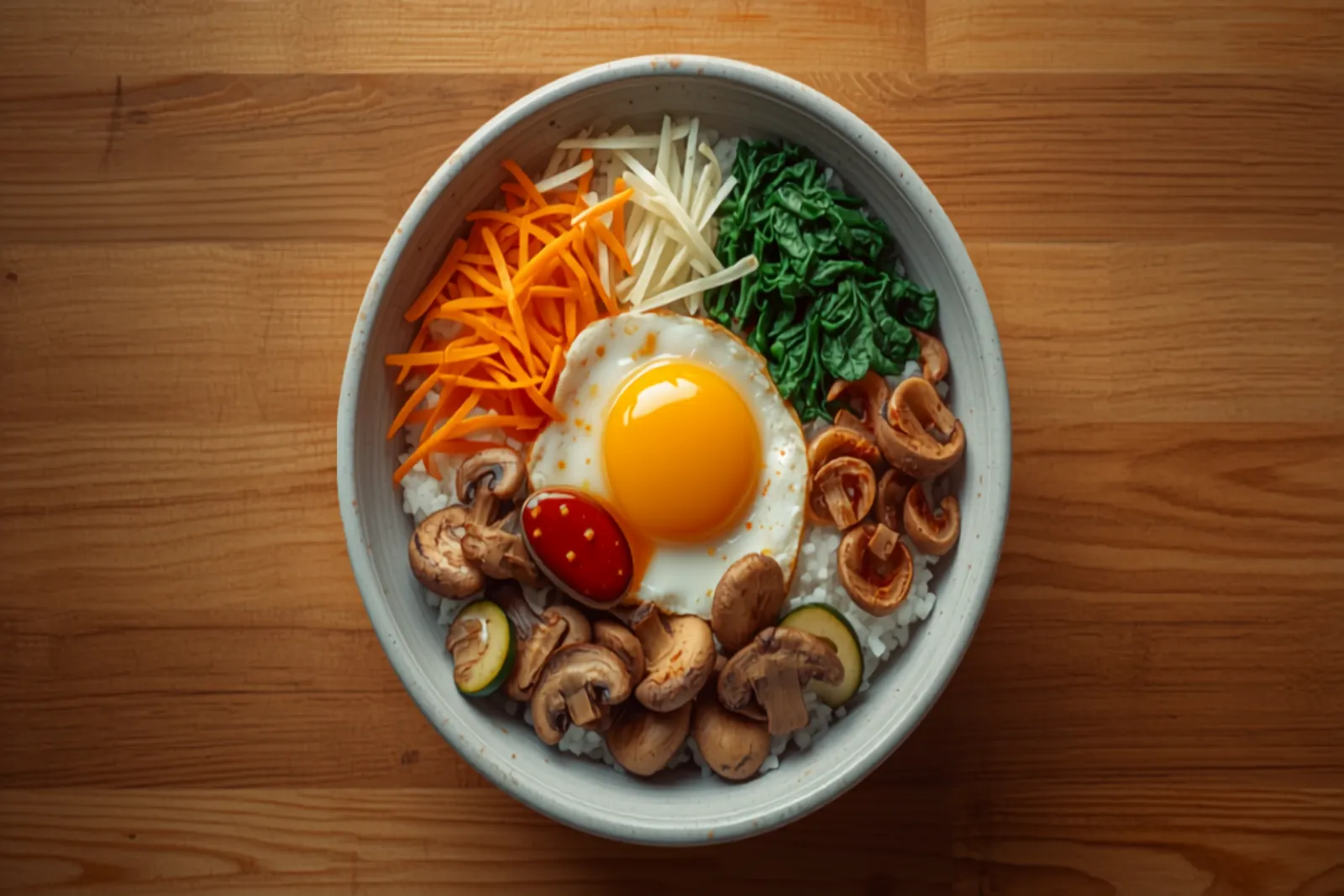
Korea's beautiful mixed rice bowl: a base of warm rice crowned with seasoned vegetables, marinated beef, a fried egg, and a spoonful of sweet-spicy gochujang sauce — all stirred together at the table. Endlessly adaptable and a feast of colour, texture, and flavour.
Published June 20, 2026
Cultural context
Bibimbap (비빔밥) literally means 'mixed rice.' Its roots are practical — a way to use up assorted banchan (side dishes) over rice — but it grew into a celebrated dish in its own right, with the city of Jeonju famous for its elaborate version. The arrangement of colourful vegetables reflects the Korean principle of balancing the five colours and five flavours; the whole thing is meant to be stirred together vigorously before eating.
Bibimbap might be the most photogenic dinner in the world: a bowl of warm rice fanned with neat piles of seasoned vegetables, marinated beef, and a glossy fried egg, with a bright red spoonful of gochujang sauce in the middle. Then you stir the whole thing together and eat it — which is the point, because bibim means “to mix” and bap means “rice.”
Its origins are humble and practical: a way to gather up assorted banchan (the little side dishes of a Korean meal) over rice. But it grew into a celebrated dish in its own right, with the city of Jeonju famous for its lavish version.
The namul are the heart of it
What makes bibimbap special is that each vegetable — the namul — is cooked and seasoned separately, to suit its own character. Spinach gets blanched and tossed with sesame oil and garlic; bean sprouts the same; carrot and zucchini are quickly sautéed; mushrooms get a splash of soy. It’s more pans than a one-pot meal, but it’s why every bite tastes layered rather than muddled, and why the bowl looks the way it does. The traditional spread of colours — green, white, orange, brown, red — reflects an old Korean ideal of balance.
Gochujang ties it together
The sauce is non-negotiable and irreplaceable: gochujang, Korea’s fermented red chili paste, loosened with sesame oil, a little sugar, vinegar, and water into something pourable. It’s sweet, savoury, and spicy at once, and nothing else tastes quite like it. Serve it on the side so each person can dial in their own heat.
Mix it (and consider the stone bowl)
Arrange everything beautifully, top with the runny-yolked egg, then stir it all together hard before the first bite. If you want to go further, serve it dolsot-style in a sizzling, sesame-brushed stone bowl, where the bottom layer of rice crisps into a golden crust called nurungji — for many people the best part of the meal.
Looking for more build-your-own bowls? Browse the full recipe collection, or read more cultural stories on the traditions behind the food.
Ingredients
Base
- 3 cups cooked short-grain white rice Warm, freshly cooked. Sticky Korean or Japanese short-grain is ideal.
- 4 eggs One per bowl, fried sunny-side up with runny yolks.
For the beef
- 300 g beef sirloin or ribeye, thinly sliced Or use ground beef. Vegetarians can skip or use sautéed mushrooms.
- 2 tbsp soy sauce
- 1 tbsp sesame oil
- 1 tbsp sugar
- 2 cloves garlic, minced
Vegetables (namul)
- 150 g spinach Blanched, squeezed, and tossed with sesame oil, garlic, and salt.
- 150 g bean sprouts Blanched and seasoned the same way.
- 1 carrot, julienned Quickly sautéed with a pinch of salt.
- 1 zucchini, julienned Quickly sautéed.
- 150 g shiitake mushrooms, sliced Sautéed with a splash of soy sauce.
For the gochujang sauce
- 3 tbsp gochujang (Korean red chili paste) The fermented sweet-spicy paste that defines the bowl. No substitute.
- 1 tbsp sesame oil
- 1 tbsp sugar or honey
- 1 tbsp rice vinegar
- 1 tbsp water, to loosen
To finish
- 1 tbsp toasted sesame seeds
- 1 sheet toasted seaweed (gim), shredded (optional)
Method
Tap a step’s number to check it off as you go.
-
Marinate the sliced beef in soy sauce, sesame oil, sugar, and garlic for 15 minutes, then stir-fry over high heat until just cooked. Set aside.
Why: A quick marinade seasons the beef through; high heat sears it fast so it stays tender rather than stewing.
-
Prepare each vegetable separately: blanch and season the spinach and bean sprouts with sesame oil, garlic, and salt; sauté the carrot, zucchini, and mushrooms individually. Keep them in separate piles.
Why: Each namul is seasoned to its own character — this is the heart of bibimbap. Cooking them separately keeps the colours and flavours distinct rather than muddled.
-
Whisk the gochujang sauce ingredients together until smooth and pourable.
Why: Loosening the thick paste with oil, vinegar, and water makes it easy to distribute when you mix the bowl.
-
Fry the eggs sunny-side up, keeping the yolks runny.
Why: The runny yolk acts as a rich sauce that coats everything when stirred in.
-
Divide warm rice among four bowls. Arrange the beef and vegetables in neat sections on top, like spokes of a wheel, and set a fried egg in the centre. Add a spoonful of gochujang sauce.
Why: The careful arrangement isn't just for looks — it lets each person see and choose, and it honours the five-colour tradition before everything is mixed.
-
At the table, scatter sesame seeds and seaweed over the top, then mix everything together thoroughly before eating.
Why: Bibimbap is meant to be stirred vigorously so every bite has rice, vegetables, meat, egg, and sauce. 'Bibim' means 'to mix' — don't skip it.
A quick, anonymous tap — no review needed.
Variations
- Vegetarian / vegan
Skip the beef (use extra mushrooms or marinated tofu) and the egg, or swap in a vegan egg. The namul and gochujang sauce carry the bowl beautifully.
- Dolsot (stone bowl)
Serve in a sizzling-hot stone bowl brushed with sesame oil so the bottom layer of rice crisps into a golden crust (nurungji) — the most prized version.
- Quick weeknight
Use whatever vegetables you have and a couple of quick stir-fries instead of individual namul. Leftover rice and a fried egg make it a 15-minute meal.
Serving & Storage
Serve each bowl with its egg on top and gochujang sauce on the side so people can adjust the heat. Provide extra sauce and sesame oil, and remember to mix it all together before the first bite.
Pairs with: Kimchi, Miso or soybean-paste soup (doenjang-guk), Pickled radish, Barley tea or a cold beer.
Storage: Best assembled fresh, but the components keep well separately for 3 days — making it excellent for meal prep. Store namul, beef, rice, and sauce apart and assemble to order.
Nutrition
Per serving (1 bowl (1/4 recipe))
- Calories
- 580
- Protein
- 28 g
- Carbs
- 62 g
- Fat
- 24 g
- Fiber
- 6 g
- Sugar
- 12 g
- Sodium
- 920 mg
Notable micronutrients: Iron, Vitamin A, Vitamin C, Folate
Estimated using standard ingredient data. Values vary with brands and substitutions.
Frequently Asked Questions
What is gochujang and can I substitute it?
Gochujang is a thick, fermented Korean chili paste — sweet, savoury, and spicy all at once. It's the defining flavour of the bibimbap sauce and has no real substitute; sriracha or other chili sauces taste completely different. It's sold in tubs at most supermarkets and Asian groceries and keeps for months.
What are namul?
Namul are the seasoned vegetable side dishes that top the bowl — each blanched or sautéed and dressed individually with things like sesame oil, garlic, and salt. Preparing them separately is what gives bibimbap its layered flavours and signature look. You can use whatever vegetables you have.
What's dolsot bibimbap?
A version served in a screaming-hot stone bowl (dolsot) brushed with sesame oil. The rice against the hot stone forms a crispy golden crust at the bottom called nurungji — many people's favourite part. If you don't have a stone bowl, a regular bowl works fine.
Am I supposed to mix it?
Absolutely — 'bibim' means 'to mix.' Stir everything together vigorously, sauce and all, before eating, so each spoonful has a bit of everything. The neat arrangement is just the starting point.
What to drink with this
All drinks →Hand-picked pours to match this dish.

Korea · Korean
Sujeonggwa (Korean Cinnamon-Ginger Punch)
A deep-amber Korean punch simmered from cinnamon and ginger, sweetened with sugar or honey, and served ice-cold with soft dried persimmon and pine nuts. Spiced, soothing and traditionally the close to a Korean feast.
Japan (the chado tea tradition of Kyoto and Uji, home of Japan's finest matcha) · Japanese
Matcha (Whisked Usucha, Thin Tea)
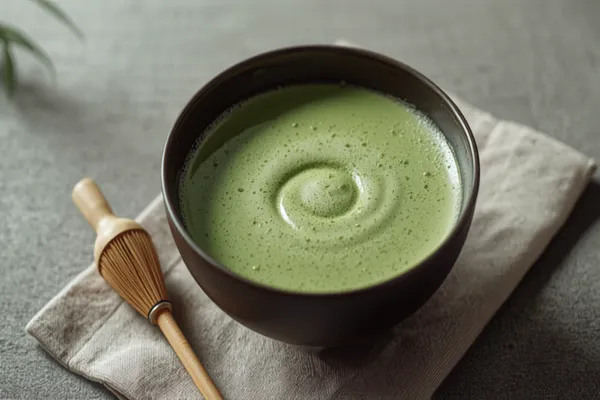
How to whisk a proper bowl of usucha — thin matcha — with a bamboo chasen: bright, jade-green, frothed to a fine foam, and faintly sweet-bitter. The everyday face of Japan's centuries-old tea tradition, ready in two minutes on a home counter.

Japan (matcha tradition, Uji & Nishio) · Japanese
Matcha Latte (Whisked Japanese Green Tea Latte)
Stone-ground Japanese matcha whisked smooth and poured over steamed milk — grassy, sweet and gently caffeinated, with no bitterness when you make it right. A café favourite that's better and cheaper at home.
From our kitchen community
Ratings & Reviews
My Rating
Tap a star to rate — no sign-in, no form needed.
My Review
0 Ratings
🥣 0 home cooks made it!
Be the first to rate Bibimbap (Korean Mixed Rice Bowl).
Related Recipes
Korea · Korean
Bulgogi (Korean Marinated Grilled Beef)
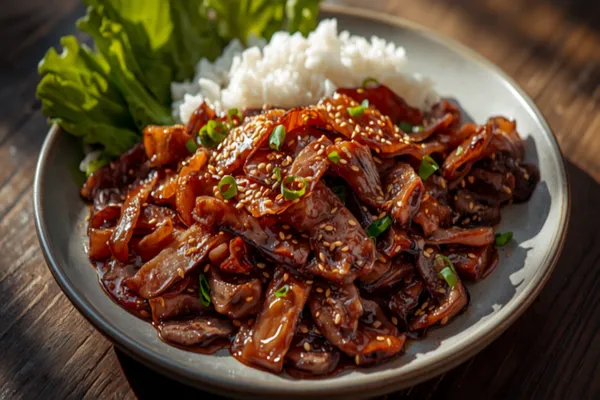
Korea's beloved 'fire meat': thin slices of beef marinated in a sweet-savoury blend of soy, pear, garlic, and sesame, then seared hot and fast until caramelised at the edges. Tender, glossy, and ready in minutes once it hits the pan.
Korea — the kimjang tradition, from mild Pyongyang-style kimchi in the north to the seafood-heavy kimchi of Jeolla in the south · Korean
Baechu-Kimchi (Traditional Napa Cabbage Kimchi)
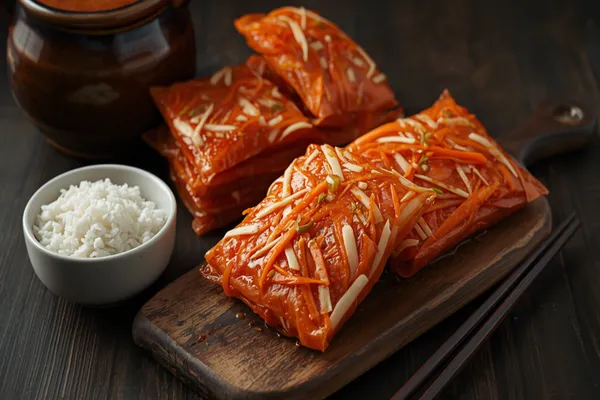
Korea's defining side dish, made the whole-leaf way: napa cabbage brined until it bends, packed leaf by leaf with a gochugaru paste of garlic, ginger, fish sauce and salted shrimp, then left to sour into something deep, fizzy and alive.
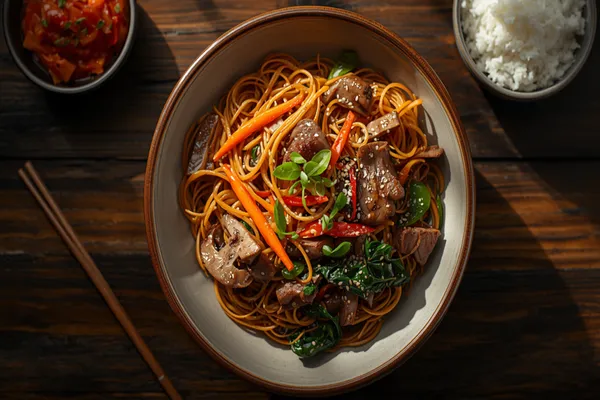
Korea — a Joseon royal-court dish from Seoul, now cooked in every Korean home · Korean
Japchae (Korean Glass Noodle Stir-Fry)
Korea's celebration noodle — chewy sweet-potato dangmyeon tossed with beef, shiitake and a rainbow of vegetables each cooked separately so every strand keeps its own colour and bite. A royal-court dish from 1600s Seoul that now appears at every first birthday, wedding and Chuseok table.
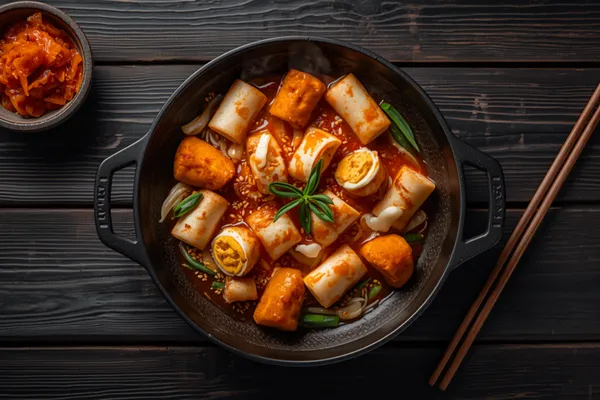
Seoul — the Sindang-dong tteokbokki alley, by way of the Joseon royal kitchens · Korean
Tteokbokki (Korean Spicy Rice Cakes)
Korea's defining street snack — cylinders of chewy garaetteok simmered in an anchovy broth thickened to a glossy red gravy with gochujang, gochugaru and just enough sugar. Invented in a Sindang-dong alley in 1953 and descended, improbably, from a soy-sauce dish of the Joseon royal court.