Korea · Korean
Bulgogi (Korean Marinated Grilled Beef)
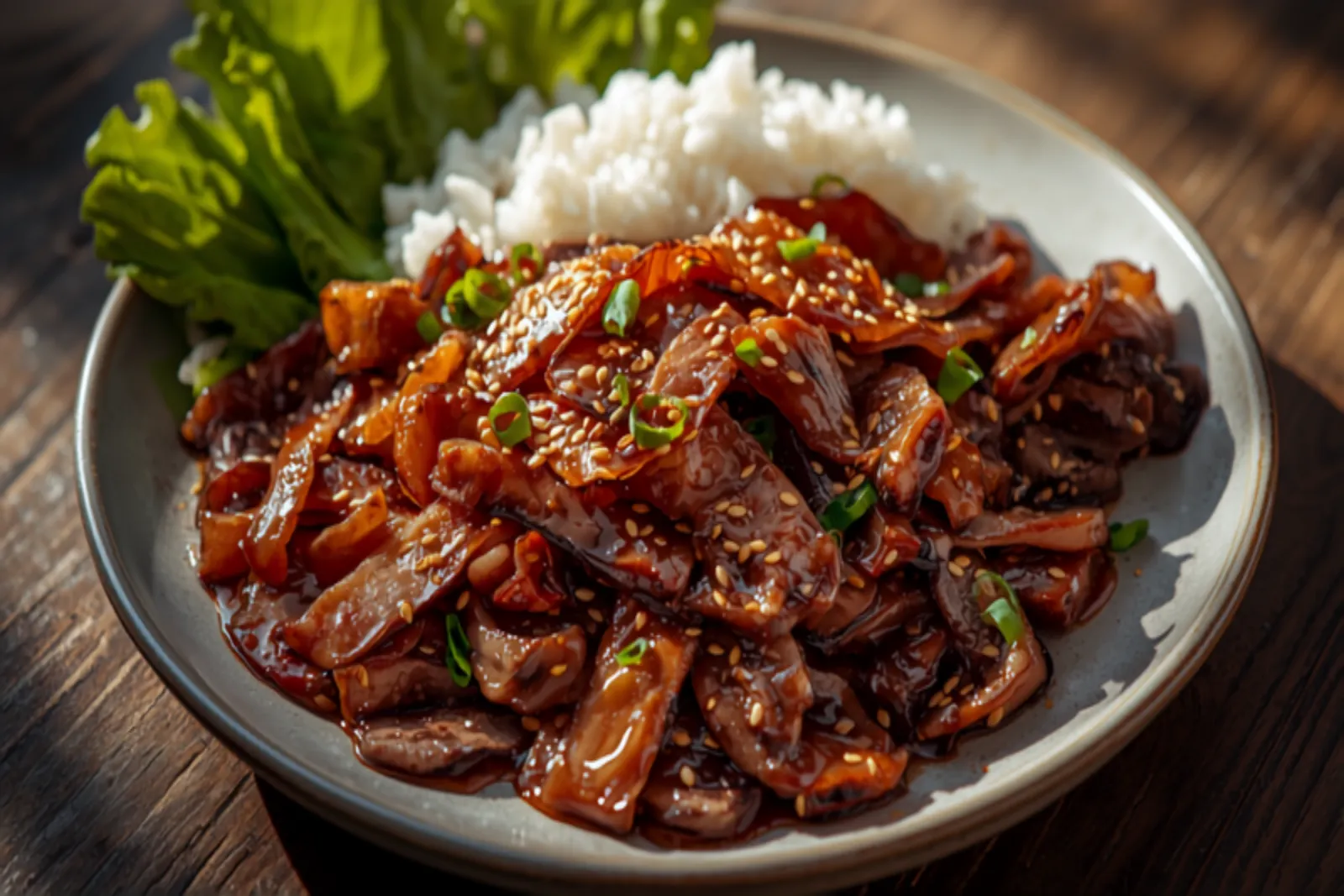
Korea's beloved 'fire meat': thin slices of beef marinated in a sweet-savoury blend of soy, pear, garlic, and sesame, then seared hot and fast until caramelised at the edges. Tender, glossy, and ready in minutes once it hits the pan.
Published June 20, 2026
Cultural context
Bulgogi (불고기) means 'fire meat,' a name that points to its origins in grilling over open flame, with a lineage tracing back to the skewered grilled meat of the Goguryeo era. Today it's one of the most popular Korean dishes worldwide, a fixture of Korean barbecue restaurants and home tables alike, traditionally cooked on a domed grill plate and wrapped in lettuce with rice and condiments (ssam).
Bulgogi — literally “fire meat” — is the gateway dish of Korean cooking: thin slices of beef in a sweet, savoury, garlicky marinade, seared hard and fast until the edges caramelise. It’s tender, glossy, deeply moreish, and, once the meat has marinated, on the table in about ten minutes. No wonder it’s one of the dishes that’s carried Korean food around the world.
It’s a staple of Korean barbecue, traditionally cooked over fire on a domed metal plate, but it works just as well in a screaming-hot pan at home.
Thin slices, against the grain
The texture of bulgogi depends on the cut and the slicing. You want a well-marbled ribeye or sirloin sliced as thinly as you possibly can, against the grain. The easiest way is to firm the beef in the freezer for half an hour first, which lets you cut wafer-thin slices that cook in seconds and stay tender. If there’s a Korean grocery nearby, their pre-sliced bulgogi beef does the job for you.
The pear is the secret
The marinade’s quiet hero is grated Korean pear. Its natural enzymes tenderise the meat into that famous melt-in-the-mouth softness, while lending a clean sweetness that balances the soy and garlic. A ripe regular pear, or even grated apple or kiwi, will stand in. Thirty minutes of marinating does a lot; a few hours does more — just don’t push past a day, or the texture goes mushy.
High heat, no crowding
When it’s time to cook, the only rule that matters is heat. Get the pan blazing hot and cook the beef in batches in a single layer, letting it sear before you stir. Crowd the pan and the meat sheds liquid and stews grey; give it room and the marinade’s sugars char into glossy, caramelised edges. Toss in the onion at the end, finish with sesame seeds, and serve it straight away — ideally wrapped in lettuce with rice and a dab of chili paste, ssam-style.
Looking for more fast, high-impact mains? Browse the full recipe collection, or read more cultural stories on the traditions behind the food.
Ingredients
For the beef
- 700 g ribeye or sirloin, very thinly sliced Slice against the grain, paper-thin — freezing the beef for 30–60 minutes first makes this much easier. Pre-sliced 'bulgogi' beef from Korean groceries is ideal.
For the marinade
- 1/2 Korean or Asian pear, grated The secret ingredient — its enzymes tenderise the meat and add natural sweetness. A ripe Bosc pear or a few tablespoons of grated apple work too.
- 5 tbsp soy sauce
- 2 tbsp brown sugar Or honey.
- 2 tbsp sesame oil
- 2 tbsp rice wine (mirin or Shaoxing)
- 5 cloves garlic, grated
- 2 cm piece ginger, grated
- 1/2 onion, grated
- 1/4 tsp black pepper
To cook and finish
- 1 onion, sliced
- 2 spring onions, cut into lengths
- 1 tbsp toasted sesame seeds
Method
Tap a step’s number to check it off as you go.
-
Slice the beef as thinly as possible against the grain. If it's not pre-sliced, freeze it for 30–60 minutes first to firm it up for clean, thin cuts.
Why: Thin, against-the-grain slices cook in seconds and stay tender; thick or with-the-grain pieces turn chewy. The semi-frozen trick is how restaurants get those wafer-thin slices.
-
Whisk together the grated pear, soy, sugar, sesame oil, rice wine, garlic, ginger, grated onion, and pepper. Toss the beef in the marinade and chill for at least 30 minutes, ideally 2–4 hours.
Why: The pear's natural enzymes tenderise the meat while the marinade seasons it. Longer is better, but don't go past a day or the texture turns mushy.
-
Heat a large pan, wok, or grill plate until very hot. Cook the beef in batches in a single layer, letting it sear before stirring, until caramelised at the edges.
Why: A screaming-hot pan and an uncrowded layer give you caramelisation instead of a grey, watery braise — the sugars in the marinade char beautifully on high heat.
-
In the last minute, add the sliced onion and spring onions and toss just until they soften slightly.
Why: Adding them late keeps them sweet and a little crisp rather than collapsing into the meat.
-
Finish with toasted sesame seeds and serve immediately.
Why: Bulgogi is best straight off the heat, while the edges are still caramelised and glossy.
A quick, anonymous tap — no review needed.
Variations
- Pork bulgogi (dwaeji bulgogi)
Use thinly sliced pork shoulder and add a spoonful of gochujang and gochugaru to the marinade for a spicy, deep-red version that's hugely popular in Korea.
- Chicken bulgogi
Use thinly sliced chicken thigh; the same marinade works, though chicken needs a minute or two longer to cook through.
- On the grill
Cook over charcoal on a grill pan or in a basket for the smoky, over-fire flavour the dish is named for.
Serving & Storage
Serve hot with steamed rice and an array of banchan, or do it ssam-style: tuck a piece of beef into a lettuce leaf with rice, a dab of ssamjang (or gochujang), garlic, and chili, then wrap and eat in one bite.
Pairs with: Steamed rice, Lettuce leaves for wrapping (ssam), Kimchi, Ssamjang, Cold beer or soju.
Storage: Cooked bulgogi keeps 3 days refrigerated and reheats well; it's excellent in fried rice, noodles, or sandwiches. Uncooked marinated beef can be frozen for up to 2 months.
Nutrition
Per serving (1 portion (1/4 recipe))
- Calories
- 420
- Protein
- 34 g
- Carbs
- 16 g
- Fat
- 24 g
- Fiber
- 1 g
- Sugar
- 12 g
- Sodium
- 1100 mg
Notable micronutrients: Iron, Zinc, Vitamin B12
Estimated using standard ingredient data. Values vary with brands and substitutions.
Frequently Asked Questions
What cut of beef is best for bulgogi?
Well-marbled ribeye or sirloin, sliced paper-thin against the grain. The marbling keeps it juicy and the thin slices cook in seconds. Korean groceries sell pre-sliced 'bulgogi' beef that's perfect; otherwise, freeze a steak briefly to slice it thinly yourself.
Why is there pear in the marinade?
Korean (Asian) pear is a classic bulgogi tenderiser — its natural enzymes break down the meat for that signature melt-in-the-mouth texture, while adding a clean sweetness. A ripe regular pear, kiwi, or grated apple can stand in if you can't find one.
How long should I marinate it?
At least 30 minutes, and a few hours is ideal. Avoid going much past 24 hours — the enzymes in the pear and onion will eventually turn the texture mushy. If you're short on time, even 30 minutes gives good flavour.
How do I get caramelised edges instead of grey meat?
Get the pan very hot and cook in batches without crowding. Too much meat at once drops the temperature and the beef releases liquid and steams. Sear in a single layer, let it brown before stirring, and you'll get those glossy, charred edges.
What to drink with this
All drinks →Hand-picked pours to match this dish.

Korea · Korean
Sujeonggwa (Korean Cinnamon-Ginger Punch)
A deep-amber Korean punch simmered from cinnamon and ginger, sweetened with sugar or honey, and served ice-cold with soft dried persimmon and pine nuts. Spiced, soothing and traditionally the close to a Korean feast.

Japan (the chado tea tradition of Kyoto and Uji, home of Japan's finest matcha) · Japanese
Matcha (Whisked Usucha, Thin Tea)
How to whisk a proper bowl of usucha — thin matcha — with a bamboo chasen: bright, jade-green, frothed to a fine foam, and faintly sweet-bitter. The everyday face of Japan's centuries-old tea tradition, ready in two minutes on a home counter.

Japan (matcha tradition, Uji & Nishio) · Japanese
Matcha Latte (Whisked Japanese Green Tea Latte)
Stone-ground Japanese matcha whisked smooth and poured over steamed milk — grassy, sweet and gently caffeinated, with no bitterness when you make it right. A café favourite that's better and cheaper at home.
From our kitchen community
Ratings & Reviews
My Rating
Tap a star to rate — no sign-in, no form needed.
My Review
0 Ratings
🥣 0 home cooks made it!
Be the first to rate Bulgogi (Korean Marinated Grilled Beef).
Related Recipes

Korea · Korean
Bibimbap (Korean Mixed Rice Bowl)
Korea's beautiful mixed rice bowl: a base of warm rice crowned with seasoned vegetables, marinated beef, a fried egg, and a spoonful of sweet-spicy gochujang sauce — all stirred together at the table. Endlessly adaptable and a feast of colour, texture, and flavour.
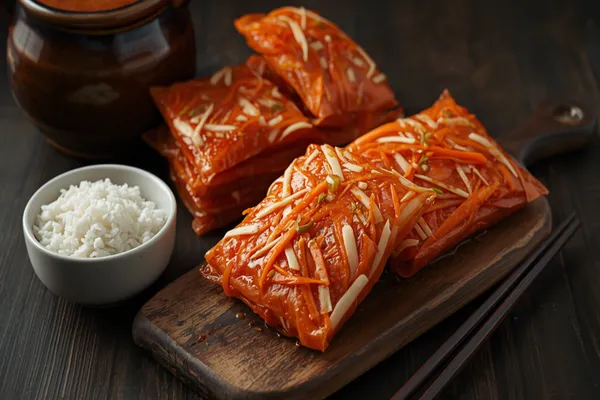
Korea — the kimjang tradition, from mild Pyongyang-style kimchi in the north to the seafood-heavy kimchi of Jeolla in the south · Korean
Baechu-Kimchi (Traditional Napa Cabbage Kimchi)
Korea's defining side dish, made the whole-leaf way: napa cabbage brined until it bends, packed leaf by leaf with a gochugaru paste of garlic, ginger, fish sauce and salted shrimp, then left to sour into something deep, fizzy and alive.
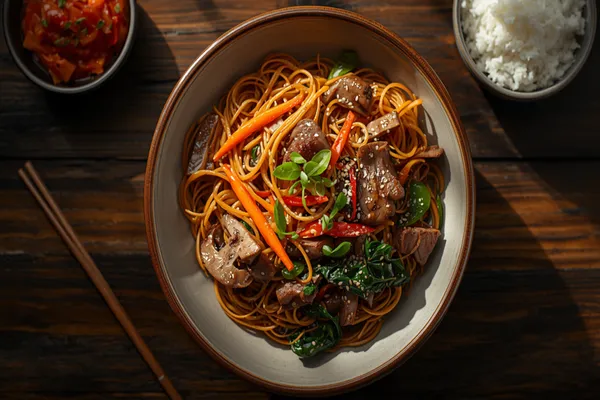
Korea — a Joseon royal-court dish from Seoul, now cooked in every Korean home · Korean
Japchae (Korean Glass Noodle Stir-Fry)
Korea's celebration noodle — chewy sweet-potato dangmyeon tossed with beef, shiitake and a rainbow of vegetables each cooked separately so every strand keeps its own colour and bite. A royal-court dish from 1600s Seoul that now appears at every first birthday, wedding and Chuseok table.
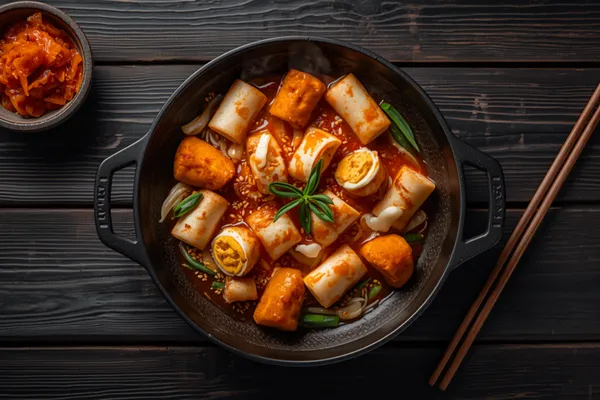
Seoul — the Sindang-dong tteokbokki alley, by way of the Joseon royal kitchens · Korean
Tteokbokki (Korean Spicy Rice Cakes)
Korea's defining street snack — cylinders of chewy garaetteok simmered in an anchovy broth thickened to a glossy red gravy with gochujang, gochugaru and just enough sugar. Invented in a Sindang-dong alley in 1953 and descended, improbably, from a soy-sauce dish of the Joseon royal court.