Korea — a Joseon royal-court dish from Seoul, now cooked in every Korean home · Korean
Japchae (Korean Glass Noodle Stir-Fry)
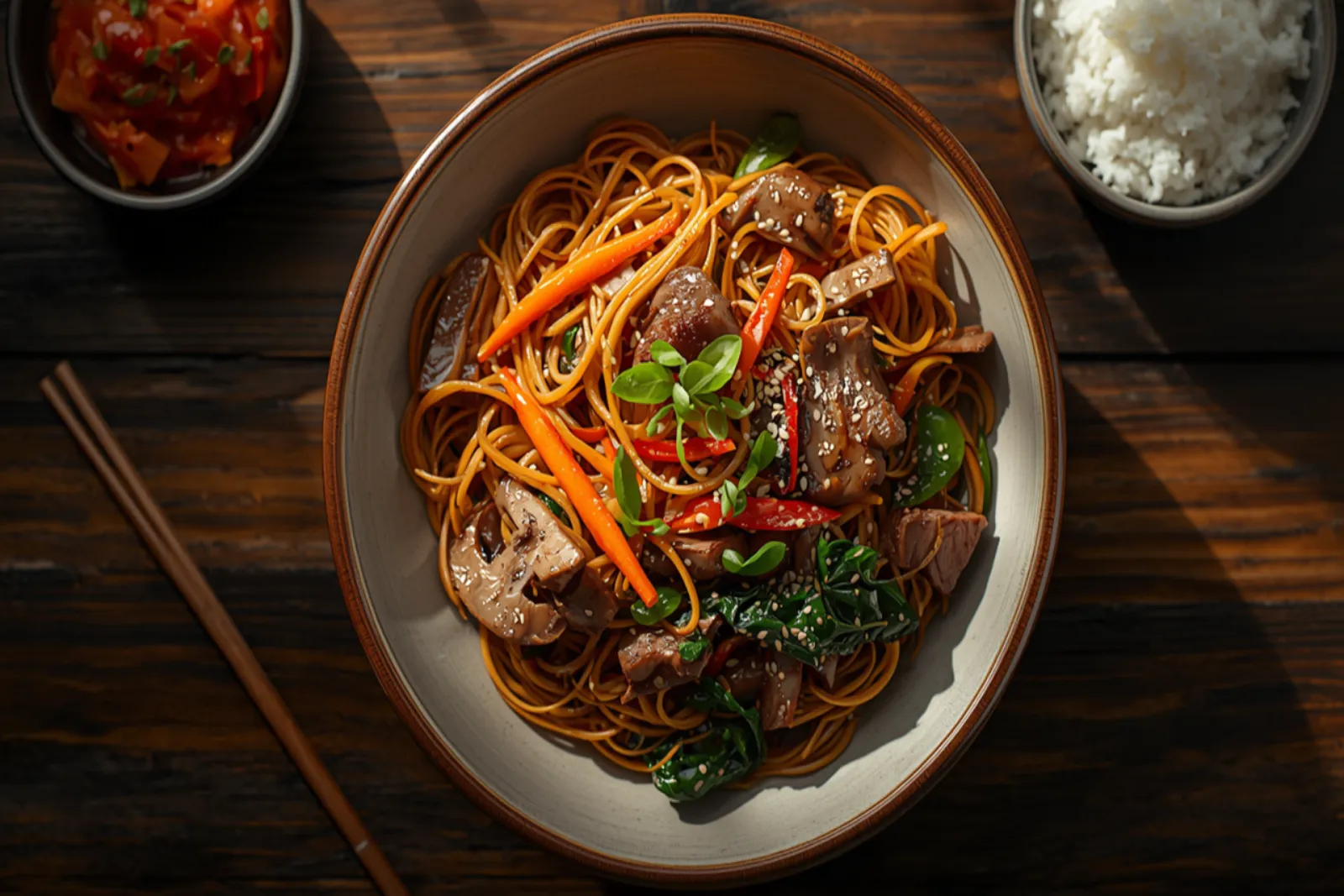
Korea's celebration noodle — chewy sweet-potato dangmyeon tossed with beef, shiitake and a rainbow of vegetables each cooked separately so every strand keeps its own colour and bite. A royal-court dish from 1600s Seoul that now appears at every first birthday, wedding and Chuseok table.
Published September 4, 2026
Cultural context
Japchae was invented in the early 1600s by Yi Chung, a courtier who served a dish of finely cut, separately seasoned vegetables and mushrooms at a banquet for King Gwanghaegun. The king liked it enough to promote him and put the dish on the royal menu. The name means 'mixed vegetables' — jap, mixed; chae, vegetables — and for three centuries there were no noodles in it at all. Sweet-potato starch noodles, dangmyeon, arrived with Chinese food along the new railway lines in the early twentieth century, and a factory opened at Sariwon in Hwanghae province in 1919 began making them at scale; the noodle version took over within a decade. Today japchae is the dish that signals an occasion: long noodles for a long life at doljanchi first birthdays and hwangap sixtieths, and a fixture at weddings, Chuseok and Seollal.
Japchae is the dish that tells a Korean table something is being celebrated. It arrives in a wide shallow bowl, warm rather than hot: sweet-potato glass noodles gone deep amber with soy and sesame, tangled with beef, shiitake, ribbons of spinach and matchsticks of carrot, each one still recognisably itself. It is a side dish that everyone eats like a main, and it turns up at first birthdays, sixtieth birthdays, weddings, Chuseok and Lunar New Year with a consistency that no other Korean dish quite matches.
Its origin is unusually well documented. The Veritable Records of the Joseon Dynasty credit a courtier named Yi Chung with inventing it in the early 1600s for a banquet held by King Gwanghaegun — a plate of finely cut vegetables, mushrooms and nuts, each element cooked and seasoned on its own. The king was impressed enough to promote him and add the dish to the royal menu. What is striking is what that original japchae did not contain: any noodles at all. The name says so plainly. Jap means mixed, chae means vegetables.
How the noodles got in
Dangmyeon, the sweet-potato starch noodle the dish is now built on, is barely a century old in Korea. It came with Chinese food travelling the new railway lines in the early twentieth century, and when a factory at Sariwon in Hwanghae province started producing the noodles at scale from 1919, the noodle version of japchae spread within about a decade and never left. So the dish everyone thinks of as ancient royal cuisine is really a 1600s idea wearing a 1920s addition — which is a fair description of a lot of what we now call traditional cooking.
That history explains the method. Japchae is not a stir-fry that happens to have vegetables in it; it is a namul dish — Korea’s whole family of individually seasoned vegetable sides — that later acquired noodles. Everything is cooked and seasoned separately and only combined at the end.
The separate-pans rule
This is the step every shortcut recipe removes and the one that actually makes the dish. Onion, carrot, pepper, spring onion, mushroom and beef each go into the pan alone, salted lightly, for one to three minutes. Crowded together they release water, the pan temperature collapses, and everything steams into the same soft, uniform grey. Cooked one at a time over real heat they hold their colour and their texture, so the finished bowl reads as five or six distinct things rather than one.
It sounds laborious and is not. Use one pan without washing it between batches, work in the order given, and the whole sequence takes about ten minutes.
Hot noodles, and why you must not rinse them
Boil the dangmyeon a shade past what feels right — sweet-potato starch keeps firming as it cools, so noodles that are perfect in the pot are tough on the plate. Drain them and put them straight back into the pan with the soy sauce, sugar and sesame oil while they are still hot and their surface starch is open. They will drink the sauce in two or three minutes and turn glossy and amber right through.
Rinsing them under cold water — the reflex from Italian and Chinese noodle cooking — closes that surface and the seasoning then simply slides off. The other rule worth keeping is to squeeze the blanched spinach until it genuinely stops dripping. Spinach is ninety per cent water, and a japchae sitting in a puddle almost always traces back to that one handful.
Toss it with your hands
Dangmyeon is slippery and long. Tongs shred it and mash the spinach into clumps; hands lift from the bottom, separate the strands and let you feel the moment the sauce is evenly through. Then taste and correct, because every component was salted on its own and the total is genuinely unpredictable until it is all in one bowl. Sweet, savoury and nutty should sit level, with none of the three out in front.
Serve it warm or at room temperature, in the middle of a spread. For the grilled beef it wants alongside, make bulgogi; for the kimchi that belongs on the same table, start with baechu-kimchi. The world classics guide maps the rest.
Ingredients
For the noodles
- 200 g (7 oz) dangmyeon — Korean sweet-potato starch noodles Not interchangeable with Chinese mung-bean fensi or Japanese harusame. Dangmyeon is thicker, greyish and translucent when raw, and cooks to a springy chew nothing else replicates. Sold dry in long coils at any Korean grocer.
For the noodle seasoning
- 3 tbsp Korean soy sauce (jin-ganjang) or a good all-purpose soy sauce
- 2 tbsp sugar Japchae is meant to be gently sweet — this is not a place to cut back by half.
- 1 1/2 tbsp toasted sesame oil
For the beef
- 200 g (7 oz) beef sirloin, ribeye or skirt, cut across the grain into thin 5 cm strips Partly freeze the piece for 20 minutes and it slices far more neatly. Omit entirely for the temple-style version — see the variations.
- 1 tbsp soy sauce
- 1 tsp each sugar and toasted sesame oil
- 1 clove garlic, grated, plus plenty of black pepper
For the vegetables
- 5 large dried shiitake mushrooms, soaked in warm water for 30 minutes, squeezed dry and sliced Dried, not fresh, if you can. Drying converts shiitake ribonucleotides into guanylate, which is the savoury backbone holding up a dish with no stock in it. Save the soaking liquid for soup.
- 1 medium onion, halved and sliced thinly with the grain
- 1 large carrot, julienned into matchsticks
- 200 g (7 oz) spinach, washed, stems on Korean cooks use whole-leaf spinach with the roots trimmed but the stems left long, so it stays in ribbons rather than collapsing into mush.
- 4 spring onions, cut into 5 cm lengths
- 1/2 red bell pepper, sliced thinly (optional, for colour) Not traditional in the oldest versions but standard in home cooking now — japchae is judged partly on its five colours.
For cooking and finishing
- 3–4 tbsp neutral oil, for cooking the vegetables in batches
- 2 cloves garlic, grated
- 1 tbsp toasted sesame oil, for dressing the spinach
- 1 tbsp toasted sesame seeds, lightly crushed
- To taste fine sea salt
For the jidan garnish (optional but traditional)
- 1 egg, separated, beaten and fried as two thin sheets, then sliced into fine ribbons Yellow and white sheets cooked separately over the lowest heat so neither browns. This is the royal-court flourish; skip it on a weeknight.
Method
Tap a step’s number to check it off as you go.
-
Soak the dried shiitake in warm water for 30 minutes until fully soft. Squeeze them out over the bowl, trim the stems and slice the caps thinly. Meanwhile toss the beef with its soy sauce, sugar, sesame oil, garlic and black pepper and leave it for 15 minutes.
Why: The short sugar-and-soy marinade does two jobs: it seasons the meat all the way through in thin slices, and the sugar accelerates browning so the beef colours in the seconds before it would overcook. Keep the mushroom liquid — it is free dashi for tomorrow's soup.
-
Bring a pan of water to the boil and blanch the spinach for 30 seconds, just until it wilts. Drain into cold water, then squeeze it hard, in handfuls, until it stops dripping. Cut into 5 cm lengths and dress with 1 tbsp sesame oil, a pinch of salt and half the grated garlic.
Why: Spinach is about ninety per cent water and a japchae that pools at the bottom of the bowl is almost always under-squeezed spinach. Squeezing also concentrates the leaf so it can carry the sesame oil rather than dilute it. The cold shock stops the cooking and locks in the green.
-
Heat a wide frying pan over medium-high with a slick of oil and cook each remaining vegetable separately, salting each one lightly: onion for 2 minutes until translucent, carrot for 2 minutes until just bendy, pepper for 1 minute, spring onions for under a minute, shiitake for 3 minutes. Move each to a large wide bowl as it is done. Sear the beef last in the same pan, 2 minutes, until just cooked.
Why: This is the whole discipline of japchae, and the step people skip. Piled into one pan the vegetables release water, drop the temperature and steam into a uniform grey-brown; cooked one at a time they stay separate in colour, texture and flavour. It is the logic of Korean namul applied to a noodle dish — which is exactly what japchae is, and why its name means mixed vegetables rather than fried noodles.
-
Boil the dangmyeon in plenty of unsalted water for 6–7 minutes, until uniformly translucent with no chalky core and clearly springy. Drain — do not rinse under cold water — and snip through the mass two or three times with scissors.
Why: Sweet-potato starch keeps firming as it cools, so noodles that are perfect in the pot are stubborn on the plate; err a shade past al dente. Rinsing cold closes the starch surface and the noodles then refuse the sauce. Cutting them makes the dish possible to eat with chopsticks — a whole coil is close to a metre long.
-
Return the hot drained noodles to the empty pan over low heat with the soy sauce, sugar and sesame oil. Toss for 2–3 minutes until the noodles have drunk the sauce, turned glossy and gone a deep amber all the way through.
Why: Seasoning the noodles alone, while they are hot and open, is the difference between japchae and noodles with sauce on them. A cold noodle sits in the dressing; a hot one absorbs it, which is why the finished strands taste seasoned rather than coated.
-
Tip the noodles into the bowl with everything else. Add the remaining garlic and the sesame seeds and toss thoroughly with clean hands, lifting from the bottom, until every strand is coated and the vegetables are evenly dispersed.
Why: Hands, not tongs. Dangmyeon is slippery and tongs tear it while bruising the spinach into clumps; hands separate the strands and let you feel when the sauce is evenly distributed. It is standard practice in Korean kitchens for exactly this reason.
-
Taste and correct — it should be balanced between sweet, savoury and nutty, with no single note in front. Add a splash more soy sauce for salt, a pinch of sugar for roundness, a few drops of sesame oil for aroma. Scatter with the egg ribbons if using.
Why: Every element was seasoned separately, so the total salt is unpredictable until it is all together. Adjusting at the end, in the bowl, is built into the method rather than a sign something went wrong.
-
Serve warm or at room temperature, never fridge-cold.
Why: Japchae is banchan — a shared side that sits on the table through the meal — and it was designed to be made ahead and eaten at leisure. Cold dulls the sesame oil and stiffens the noodles; a brief warm-through restores both.
A quick, anonymous tap — no review needed.
Variations
- Temple-style / vegan japchae
Leave out the beef and the egg and lean harder on mushrooms — dried shiitake plus wood ear for texture. Korean Buddhist temple cooking also omits garlic and spring onion; without them, add a little extra sesame oil and a pinch of ground perilla seed for body. The dish loses nothing essential, which makes sense given that the original had no meat in it either.
- Gungjung japchae (royal court)
The oldest form, closer to what Yi Chung actually served: no noodles at all, or only a token handful, with finely julienned vegetables, seogi and shiitake mushrooms, marinated beef and pine nuts, each element cooked and seasoned separately and arranged rather than tossed.
- Japchae-bap
Spooned over a bowl of hot short-grain rice, which turns the side dish into a full meal. Common on Korean-Chinese restaurant menus and the easiest way to use up leftovers.
- Kongnamul japchae
Built on blanched soybean sprouts instead of — or alongside — the noodles, for a lighter, crunchier version. Japchae takes its surname from whatever leads it: buchu (garlic chive) japchae, beoseot (mushroom) japchae and gochu (chilli) japchae all exist.
- Spicy seafood japchae
Prawns and squid in place of beef, with 1–2 tbsp gochujang and a teaspoon of gochugaru stirred into the noodle seasoning. Modern, popular, and a good use for the shiitake soaking liquid as a splash of moisture in the pan.
Serving & Storage
Put it out in a wide shallow bowl at room temperature as part of a spread rather than as a course on its own — that is how it is eaten. It belongs beside grilled meat, so bulgogi or samgyeopsal, a bowl of rice, kimchi and a couple of other banchan. At a celebration table it sits in the middle and everyone helps themselves through the meal. Barley tea is the everyday drink alongside; makgeolli or a light soju if the occasion warrants it.
Pairs with: Steamed short-grain rice, Bulgogi or grilled pork belly, Baechu-kimchi, Barley tea (boricha), Makgeolli or a clean soju.
Storage: Keeps 3 days covered in the fridge. The noodles firm up as the starch retrogrades — this is normal and reversible. Revive with a tablespoon of water and a few drops of sesame oil, then a short blast in the microwave or a minute in a warm pan, and bring it back to room temperature before serving. It does not freeze; the noodles turn to paste on thawing. Japchae is genuinely good made a few hours ahead, which is precisely why it is the dish Korean cooks choose when they are feeding a crowd.
Nutrition
Per serving (1 side portion (about 200 g), with beef)
- Calories
- 335
- Protein
- 12 g
- Carbs
- 47 g
- Fat
- 11 g
- Fiber
- 3 g
- Sugar
- 11 g
- Sodium
- 640 mg
Notable micronutrients: Vitamin A, Vitamin K, Vitamin C, Iron, Manganese
Estimated using standard ingredient data. Values vary with brands and substitutions.
Frequently Asked Questions
Can I use other glass noodles instead of dangmyeon?
Not really. Dangmyeon is made from sweet-potato starch and is noticeably thicker, chewier and more elastic than Chinese mung-bean vermicelli (fensi) or Japanese harusame, both of which go soft and shred when tossed. The bounce is the point of the dish — Koreans describe it as jjolgit-jjolgit — and no other noodle has it. Any Korean grocer and most large Asian supermarkets carry it dry; it keeps indefinitely in the cupboard.
Do I really have to cook every vegetable in a separate batch?
If you want japchae rather than a stir-fry, yes. Vegetables crowded into one pan give up their water, drop the pan below searing temperature and steam each other; you end up with one flavour and one colour. Cooked one at a time they keep their own texture and the finished bowl reads as five distinct things. You can cut the work honestly by cooking them in quick succession in the same unwashed pan — the fond carries forward — and it takes about ten minutes in total, not the half hour people fear.
Why is my japchae hard and clumpy the next day?
The starch in the noodles has retrograded — the molecules recrystallise as they cool, which makes them firm and sticky. It is completely reversible with a little moisture and gentle heat: sprinkle over a tablespoon of water, add a few drops of sesame oil, warm it through briefly, then let it come back to room temperature before serving. Do not reheat it fiercely or the noodles go gluey.
Is japchae gluten-free?
The noodles are — dangmyeon is pure sweet-potato starch. The soy sauce usually is not, since Korean jin-ganjang is typically brewed with wheat. Swap in tamari or a certified gluten-free soy sauce and the whole dish is safe, with no change to the method or the taste worth mentioning.
Why is japchae served at birthdays and weddings?
Long noodles carry a wish for a long, unbroken life across much of East Asia, and in Korea that puts japchae at exactly the meals where the wish matters: doljanchi, the first birthday that once marked a child surviving infancy, and hwangap, the sixtieth. The five colours of the vegetables are read as harmony and abundance. Its royal-court origins under King Gwanghaegun gave it a prestige that stuck, and because it is good at room temperature and better made in advance, it is also simply the most practical thing to put on a table for thirty people.
Can I make it ahead for a party?
Yes, and you should — this is one of the very few noodle dishes that improves with a few hours' rest, as the seasoning distributes evenly through the strands. Make it in the morning, leave it covered at cool room temperature, and toss it once more with a few drops of sesame oil before serving. If it has to go in the fridge, take it out an hour before the meal.
What to drink with this
All drinks →Hand-picked pours to match this dish.

Korea · Korean
Sujeonggwa (Korean Cinnamon-Ginger Punch)
A deep-amber Korean punch simmered from cinnamon and ginger, sweetened with sugar or honey, and served ice-cold with soft dried persimmon and pine nuts. Spiced, soothing and traditionally the close to a Korean feast.
Japan (the chado tea tradition of Kyoto and Uji, home of Japan's finest matcha) · Japanese
Matcha (Whisked Usucha, Thin Tea)
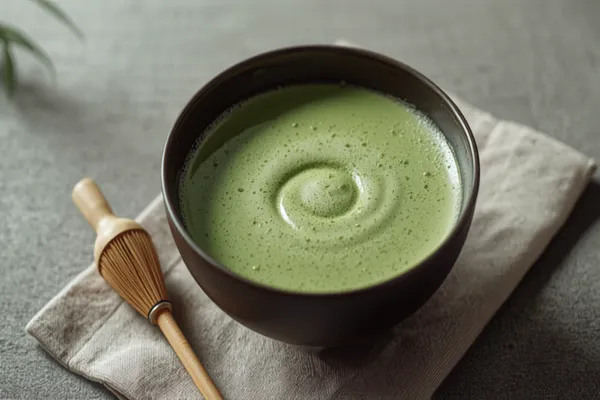
How to whisk a proper bowl of usucha — thin matcha — with a bamboo chasen: bright, jade-green, frothed to a fine foam, and faintly sweet-bitter. The everyday face of Japan's centuries-old tea tradition, ready in two minutes on a home counter.
Japan (matcha tradition, Uji & Nishio) · Japanese
Matcha Latte (Whisked Japanese Green Tea Latte)
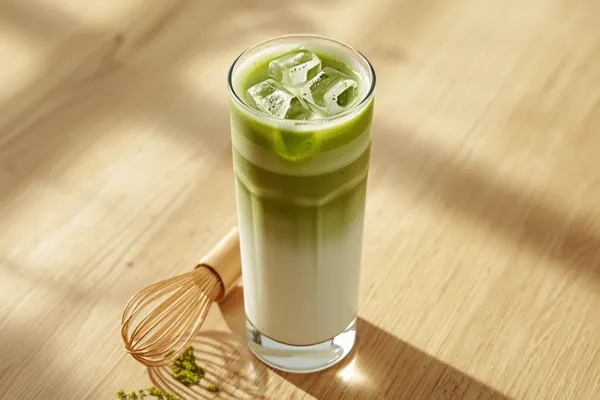
Stone-ground Japanese matcha whisked smooth and poured over steamed milk — grassy, sweet and gently caffeinated, with no bitterness when you make it right. A café favourite that's better and cheaper at home.
From our kitchen community
Ratings & Reviews
My Rating
Tap a star to rate — no sign-in, no form needed.
My Review
0 Ratings
🥣 0 home cooks made it!
Be the first to rate Japchae (Korean Glass Noodle Stir-Fry).
Related Recipes
Korea · Korean
Bulgogi (Korean Marinated Grilled Beef)
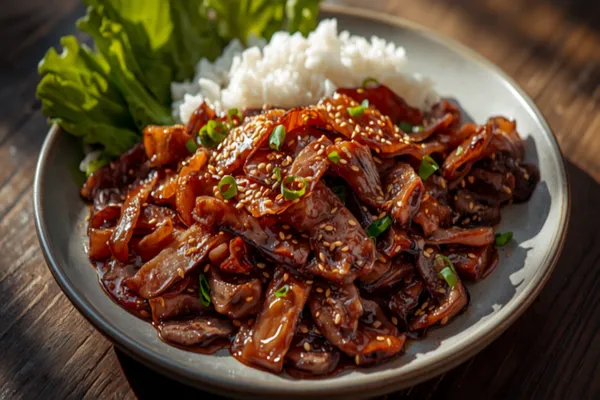
Korea's beloved 'fire meat': thin slices of beef marinated in a sweet-savoury blend of soy, pear, garlic, and sesame, then seared hot and fast until caramelised at the edges. Tender, glossy, and ready in minutes once it hits the pan.
Korea · Korean
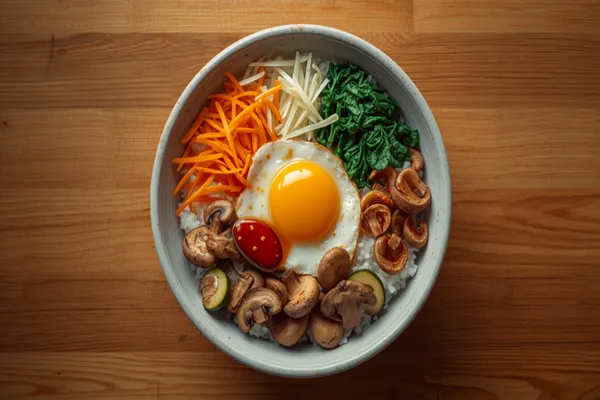
Bibimbap (Korean Mixed Rice Bowl)
Korea's beautiful mixed rice bowl: a base of warm rice crowned with seasoned vegetables, marinated beef, a fried egg, and a spoonful of sweet-spicy gochujang sauce — all stirred together at the table. Endlessly adaptable and a feast of colour, texture, and flavour.
Korea — the kimjang tradition, from mild Pyongyang-style kimchi in the north to the seafood-heavy kimchi of Jeolla in the south · Korean
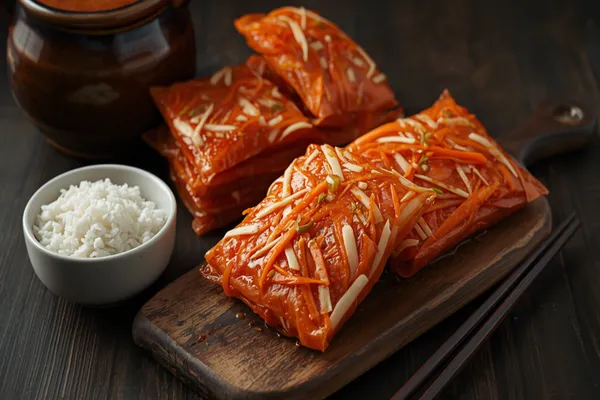
Baechu-Kimchi (Traditional Napa Cabbage Kimchi)
Korea's defining side dish, made the whole-leaf way: napa cabbage brined until it bends, packed leaf by leaf with a gochugaru paste of garlic, ginger, fish sauce and salted shrimp, then left to sour into something deep, fizzy and alive.
Korea · Korean
Sujeonggwa (Korean Cinnamon-Ginger Punch)
A deep-amber Korean punch simmered from cinnamon and ginger, sweetened with sugar or honey, and served ice-cold with soft dried persimmon and pine nuts. Spiced, soothing and traditionally the close to a Korean feast.
Seoul — the Sindang-dong tteokbokki alley, by way of the Joseon royal kitchens · Korean
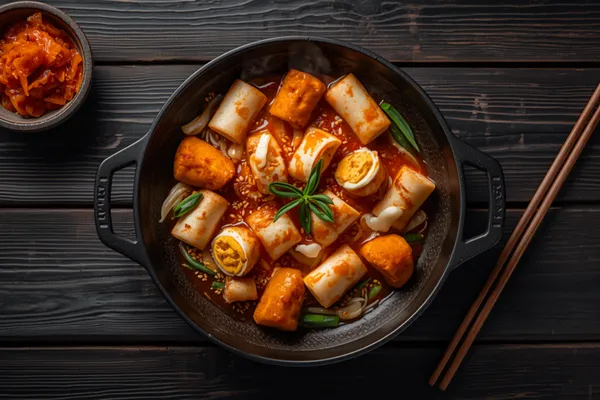
Tteokbokki (Korean Spicy Rice Cakes)
Korea's defining street snack — cylinders of chewy garaetteok simmered in an anchovy broth thickened to a glossy red gravy with gochujang, gochugaru and just enough sugar. Invented in a Sindang-dong alley in 1953 and descended, improbably, from a soy-sauce dish of the Joseon royal court.