Seoul — the Sindang-dong tteokbokki alley, by way of the Joseon royal kitchens · Korean
Tteokbokki (Korean Spicy Rice Cakes)
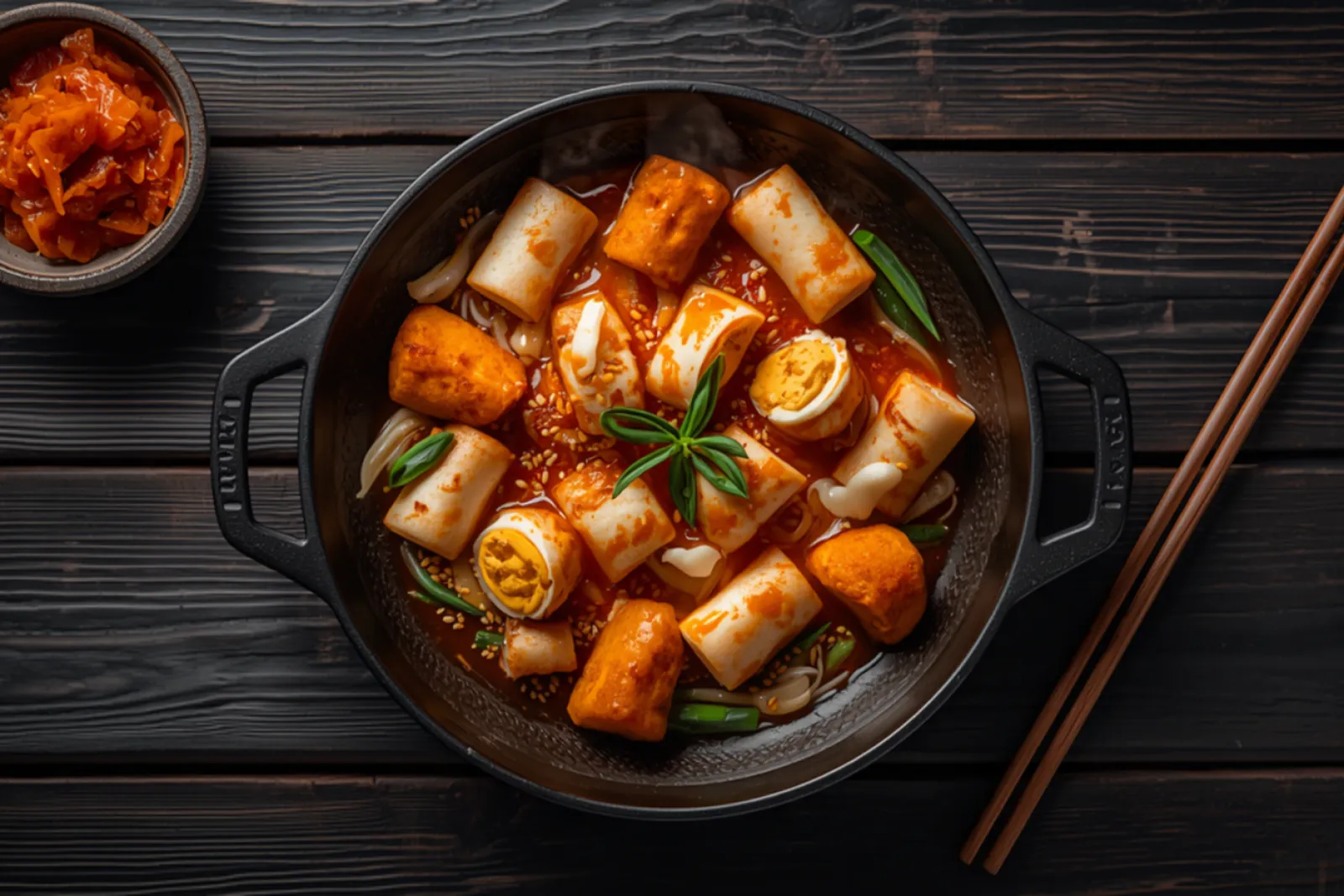
Korea's defining street snack — cylinders of chewy garaetteok simmered in an anchovy broth thickened to a glossy red gravy with gochujang, gochugaru and just enough sugar. Invented in a Sindang-dong alley in 1953 and descended, improbably, from a soy-sauce dish of the Joseon royal court.
Published September 15, 2026
Cultural context
Two dishes share this name and only one of them is spicy. Gungjung tteokbokki, the royal-court version recorded in Joseon-era cookbooks, is a soy-sauce and sesame stir-fry of rice cake with beef, mushrooms and vegetables — it predates the arrival of chilli in Korean cooking and has no heat in it at all. The red version everyone now means is barely seventy years old. It is credited to Ma Bok-rim, who in 1953, the year the Korean War ended, began selling gochujang-sauced rice cakes from a stall in Sindang-dong in Seoul; the most-told account has her dropping a piece of garaetteok into a bowl of jajangmyeon at a Chinese restaurant opening and working backwards from how good it tasted, which is why her sauce blended gochujang with dark chunjang bean paste. American wheat-flour aid was flooding a hungry postwar Korea, so the cheaper flour rice cakes of that decade made the dish affordable enough to become universal. Sindang-dong is still an alley of tteokbokki restaurants, and Ma's shop is still on it.
Tteokbokki is what Korea eats standing up. A shallow tray of it sits bubbling at the front of every street stall and every bunsik shop, scarlet and glossy, fat white cylinders of rice cake turning slowly in a sauce that has been reducing since the morning. You get a paper cup, a toothpick, and about ninety seconds of the best texture in Korean food before it starts to change. It is cheap, it is shared, and it is probably the single dish most responsible for how the rest of the world now imagines Korean snacking.
It is also much younger than it looks. The name goes back centuries — tteok, rice cake; bokki, from bokkeum, stir-fried — but the dish it originally named was gungjung tteokbokki, a royal-court stir-fry of rice cake with beef, mushrooms and vegetables in soy sauce and sesame oil. Brown, restrained, faintly sweet, and not spicy at all, because it comes from a period before chilli had become central to Korean cooking. That dish still exists and is still worth making. It has nothing to do with the red one.
A stall in Sindang-dong, 1953
The red version is credited to Ma Bok-rim, who started selling it from a stall in the Sindang-dong district of Seoul in 1953 — the year the Korean War ended, in a city that was largely rubble. The story that gets told is that she dropped a piece of garaetteok into a bowl of jajangmyeon at a Chinese restaurant opening, tasted the sauce-coated rice cake, and went home to work out a seasoning of her own, blending gochujang with the dark chunjang bean paste that had given the noodles their savour.
Whether or not the anecdote is exact, the blend is real and it explains why the best tteokbokki is not simply sweet and hot. Postwar Korea was awash in American wheat-flour aid and short of rice, so the rice cakes of that decade were often made from flour — cheaper, softer, and cheap enough that a stall snack could become a national habit. Sindang-dong is still a street of tteokbokki restaurants, and Ma’s shop is still on it.
The two things that actually matter
Broth, not water
You can make tteokbokki with water and it will be fine. The gap between fine and very good is a fifteen-minute anchovy and kelp broth — dried anchovies with the heads and black guts pinched off, a palm-sized piece of dasima dropped in for the last five minutes only. The anchovies contribute inosinate and the kelp glutamate, and the two together produce far more savoury depth than either does alone. That synergy is the backbone of Korean everyday cooking, and in a dish this simple there is nothing else to hide behind.
Boil the kelp too long and it gives back alginates instead: a slightly slippery texture and a vegetal bitterness. Five minutes, then out.
It is a hard boil in a wide pan
The instinct is to turn the heat down and let it simmer. Don’t. The sauce starts as 600 ml of thin red liquid and has to become a clinging gravy in roughly the same eight to twelve minutes the rice cakes need to cook through — which only happens over a genuine boil in a wide, shallow pan with enough surface area to evaporate. A deep pot cannot get there in time, and you end up with soft, overcooked tteok swimming in sauce that never thickened.
Stir every minute. Rice cakes sink, and the sugar in the sauce concentrates as it reduces, so the base scorches faster than you would expect.
Stop while there is still chew
Everything about tteokbokki comes down to texture. Koreans describe the ideal as jjolgit-jjolgit — a springy, resistant bounce — and the window between chalky-in-the-middle and collapsing into paste is only a couple of minutes wide. Bite one. The moment the centre is no longer dense and white, it is done. If they went in frozen or fridge-cold without a cold-water soak first, that centre will never catch up, which is the single most common reason a home batch disappoints.
Serve it straight out of the pan while the sauce still pools, with fritters to dunk. And when the rice cakes are gone, tip in a bowl of rice and fry it flat in what is left, because the sauce is half the dish and nobody in Korea throws it away.
For the grilled beef that belongs on the same table, make bulgogi; for the kimchi, start with baechu-kimchi. The world classics guide has the wider map.
Ingredients
For the anchovy broth (yuksu)
- 800 ml (3 1/3 cups) water
- 12–15 (about 20 g) dried anchovies for stock (gukmyeolchi), heads and black guts removed Pinch off the head and pull out the dark viscera — that is where the bitterness lives. Large stock-grade anchovies, not the small crisp ones sold for snacking. Sold frozen at Korean grocers; keep them in the freezer.
- 1 piece (about 10 x 10 cm) dried kelp (dasima / kombu) Wipe it with a dry cloth; never wash off the white bloom, which is glutamate. It goes in for the last five minutes only.
- 1/2 onion, and 2 spring onion roots or white ends (optional)
For the rice cakes
- 500 g (1 lb 2 oz) garaetteok — cylindrical Korean rice cakes, the short tteokbokki-tteok size Fresh is best; refrigerated or frozen is what most of us get. Frozen cakes need 20–30 minutes in cold water to soften before they go in the pan, or they will never fully hydrate. Wheat-flour tteok (milttteok) is the old street-stall version and is softer and more slippery; rice tteok is chewier and more common now.
- 150 g (5 oz) eomuk — Korean fish cake sheets, cut into bite-sized triangles or ribbons The flat sheets, not the tubed or ball shapes, are what a Sindang-dong stall uses. Pour boiling water over them in a sieve first to rinse off surface oil.
For the sauce
- 3 tbsp gochujang — Korean fermented chilli paste Brands vary hugely in heat and sweetness. Start at 3 tbsp, taste at the end, and adjust. It is a fermented soybean paste first and a chilli paste second, which is why it cannot be replaced by sriracha or harissa.
- 1 1/2 tbsp gochugaru — Korean chilli flakes, coarse This carries the colour and the clean front-of-mouth heat; gochujang alone gives a duller, browner red.
- 1 1/2 tbsp sugar, or 1 tbsp sugar plus 1 tbsp Korean corn syrup (mullyeot) Corn syrup is what gives street tteokbokki its lacquered shine. Honey or rice syrup works; plain sugar is fine.
- 1 tbsp soy sauce
- 2 cloves garlic, finely grated
- 1 tsp chunjang — Korean black bean paste (optional, and very much the Sindang-dong touch) A teaspoon adds the dark, roasted savouriness that separates the old Ma Bok-rim style from the flat sweet-hot versions. Skip it and the dish is still good.
To finish
- 3 spring onions, cut into 5 cm lengths
- 2 hard-boiled eggs, peeled (optional but near-universal)
- 1/4 head green cabbage, cut into rough 4 cm squares (optional)
- 1 tsp toasted sesame seeds and a few drops of toasted sesame oil
Method
Tap a step’s number to check it off as you go.
-
If your garaetteok are frozen or hard from the fridge, put them in a bowl of cold water for 20–30 minutes while you make the broth. Drain and separate any that are stuck together.
Why: Rice cakes that go into the pan still cold and dense stay chalky in the middle no matter how long they simmer — the starch cannot gelatinise evenly from a frozen core. A cold soak rehydrates them slowly and uniformly. Hot water is worse: it softens the outside into mush before the centre moves at all.
-
Put the water, prepared anchovies, onion and spring onion roots in a wide shallow pan and bring to a gentle simmer. Cook for 15 minutes, add the kelp, simmer 5 minutes more, then strain and discard the solids. You want about 600 ml of broth.
Why: Anchovies and kelp are the two halves of Korean umami — the anchovies bring inosinate, the kelp glutamate, and together they multiply rather than add. The kelp goes in late because boiling it for more than a few minutes pulls out alginates that turn the stock slimy and faintly bitter. Water alone makes a serviceable tteokbokki; this broth is what makes it taste like a stall's.
-
Return the strained broth to the wide pan. Whisk in the gochujang, gochugaru, sugar, soy sauce, garlic and chunjang, if using, and bring to a boil over medium-high heat.
Why: Dissolving the sauce into the liquid before the solids go in means no pockets of raw paste clinging to a rice cake. A wide, shallow pan matters more than it sounds — the sauce has to reduce and concentrate around the tteok, and a deep pot boils the liquid away too slowly to get there before the rice cakes overcook.
-
Add the drained rice cakes, the fish cake and the cabbage. Boil, uncovered, stirring every minute or so, for 8–12 minutes.
Why: This is a boil, not a simmer, and it is doing two things at once: cooking the tteok through, and reducing 600 ml of thin red liquid into a clinging gravy. Stirring is not optional — rice cakes settle and scorch onto the base within a couple of minutes, and the sugar in the sauce makes that happen faster as it concentrates.
-
When the rice cakes are soft the whole way through and yield with a distinct springy resistance, and the sauce has reduced enough to coat the back of a spoon, add the spring onions and the halved boiled eggs and cook for 1 minute more.
Why: Chew is the entire point of tteokbokki — Koreans call it jjolgit-jjolgit — so stop the moment the cakes lose their chalky centre and before they start to slump. The window is a couple of minutes wide. The spring onions go in last so they keep their bite and their green.
-
Taste and correct: more gochujang for depth, gochugaru for heat, a pinch of sugar if the chilli is sharp, a splash of broth if it has tightened too far. Take the pan off the heat, add a few drops of sesame oil and scatter over the sesame seeds.
Why: Gochujang brands differ enough in salt, sugar and heat that no fixed quantity survives contact with a different jar, so the final adjustment is part of the recipe rather than a rescue. The sesame oil goes in off the heat because its aroma compounds are volatile and boiling drives them off.
-
Serve immediately, straight from the pan, with the sauce still loose enough to pool.
Why: The sauce keeps thickening as it cools and the rice cakes keep absorbing it, so a bowl that looked right in the pan can be stiff five minutes later. Tteokbokki is a dish eaten standing up at a stall for a reason — it has a short best-before window measured in minutes.
A quick, anonymous tap — no review needed.
Variations
- Gungjung tteokbokki (royal court)
The original and the opposite: no chilli at all. Stir-fry the rice cakes with marinated beef, shiitake, carrot, onion and blanched greens in soy sauce, sugar and sesame oil, finishing with pine nuts and egg-sheet ribbons. It is a banquet dish, brown and glossy rather than red, and it is what the name meant for several centuries before 1953.
- Rabokki
The most popular modern variant — a packet of instant ramyeon noodles dropped in for the final 3 minutes, with an extra splash of broth to carry them. Half the tteokbokki eaten in Korea is arguably rabokki.
- Rosé tteokbokki
A 2020s café version that has travelled further than any other: 150 ml of cream or whole milk stirred in at the end, which mellows the gochujang into something pink, rich and much less aggressive. Often built on bacon rather than fish cake. Not traditional and not pretending to be.
- Gireum tteokbokki (oil tteokbokki)
The Tongin Market style from central Seoul. No broth at all — the rice cakes are shallow-fried in oil with gochugaru, soy and sugar until blistered and slightly crisp, giving a drier, smokier, chewier snack.
- Vegan tteokbokki
Drop the anchovies and fish cake and build the broth from dried shiitake and a generous piece of kelp instead, with a splash of soy sauce for salt. Add fried tofu puffs or thick mushroom slices for body. Check the gochujang label — most is vegan, but some brands are not, and a few contain wheat.
Serving & Storage
Eat it hot out of the pan, in the middle of the table, with a stack of small bowls and toothpicks rather than plates — tteokbokki is shared, not portioned. The near-compulsory partner is twigim, Korean fritters: prawns, squid, sweet potato or a whole rolled kimari seaweed-and-noodle roll, dunked straight into the red sauce until they soften. Sundae (blood sausage) and a paper cup of steamed fishcake broth are the other two thirds of the classic street trio. When the rice cakes are gone, tip a bowl of rice into the leftover sauce and fry it flat — that is bokkeumbap, and skipping it is considered a mistake.
Pairs with: Twigim (Korean fritters), Fried mandu dumplings, Baechu-kimchi, Cold barley tea (boricha), Cold lager or a plain soju.
Storage: Best eaten within minutes of cooking and genuinely not a make-ahead dish. Leftovers keep 2 days in the fridge, where the rice cakes will go hard as the starch retrogrades — that is reversible. Reheat in a pan with 3–4 tbsp of water or broth over a low-medium heat, stirring until the cakes soften and the sauce loosens again; microwaving alone tends to leave hard cores. Do not freeze the cooked dish. Uncooked garaetteok, on the other hand, freezes for months and is the thing worth keeping in stock.
Nutrition
Per serving (1 snack portion (about 220 g), with fish cake and half an egg)
- Calories
- 395
- Protein
- 12 g
- Carbs
- 71 g
- Fat
- 6 g
- Fiber
- 3 g
- Sugar
- 12 g
- Sodium
- 980 mg
Notable micronutrients: Vitamin A, Vitamin C, Iron, Selenium, Niacin
Estimated using standard ingredient data. Values vary with brands and substitutions.
Frequently Asked Questions
Can I use any rice cakes, or do they have to be garaetteok?
They need to be the cylindrical tteokbokki-tteok — short fat cylinders about 5 cm long, cut from the long garaetteok logs. The sliced oval tteokguk rice cakes sold for New Year soup are the same dough but the wrong shape: they are thin, cook in two minutes and go soft and floppy in this sauce. Sliced tteok is a substitute, not an equivalent. Chinese nian gao is a different dough entirely and behaves differently again.
Mine came out chalky in the middle. What went wrong?
Almost always frozen or fridge-cold rice cakes that went into the pan without a soak. Give them 20–30 minutes in cold water first — cold, not hot, so the centre hydrates before the outside softens. The other cause is a sauce that reduced faster than the cakes cooked; if the pan is drying out while the tteok are still firm, add a splash of broth and keep going rather than turning the heat down, because you need the boil to finish them.
How do I make it less spicy without making it bland?
Cut the gochugaru first and keep the gochujang, since the flakes carry most of the sharp heat while the paste carries the fermented savoury depth. Then lengthen the broth slightly and add a little more sugar. If it still needs taming, stir in 100–150 ml of milk or cream at the end, which is effectively the rosé version — dairy fat binds capsaicin and drops the perceived heat a long way without thinning the flavour.
Is tteokbokki gluten-free?
Not reliably, even though rice cakes sound like it should be. Most gochujang is made with wheat flour or barley malt, ordinary soy sauce contains wheat, and eomuk fish cake is usually bound with wheat starch. Gluten-free gochujang exists, tamari replaces the soy sauce, and the fish cake can be left out or swapped for tofu. Also check the tteok itself — cheaper street-style cakes are sometimes made from wheat flour rather than rice.
Why does street tteokbokki taste different from mine at home?
Two reasons, and neither is a secret ingredient. The first is the pan: stalls keep an enormous shallow tray on a constant low boil, so the sauce reduces slowly for hours, deepens and becomes intensely concentrated, while fresh rice cakes are fed in continuously. The second is that the broth has been building all day, enriched by every batch of fish cake that has passed through it. You can move a long way toward it at home with a proper anchovy-and-kelp broth, a wide pan instead of a deep pot, and that optional teaspoon of chunjang.
What is the difference between tteokbokki and gungjung tteokbokki?
Roughly four hundred years and the entire flavour profile. Gungjung tteokbokki is the Joseon royal-court dish: rice cakes stir-fried with beef, mushrooms and vegetables in soy sauce and sesame oil, brown, mild and not spicy in the slightest, from an era before chilli was common in Korean cooking. The red gochujang version is a Seoul street food dating to Ma Bok-rim's stall in Sindang-dong in 1953. They share a name and a rice cake and almost nothing else.
What to drink with this
All drinks →Hand-picked pours to match this dish.

Korea · Korean
Sujeonggwa (Korean Cinnamon-Ginger Punch)
A deep-amber Korean punch simmered from cinnamon and ginger, sweetened with sugar or honey, and served ice-cold with soft dried persimmon and pine nuts. Spiced, soothing and traditionally the close to a Korean feast.
Japan (the chado tea tradition of Kyoto and Uji, home of Japan's finest matcha) · Japanese
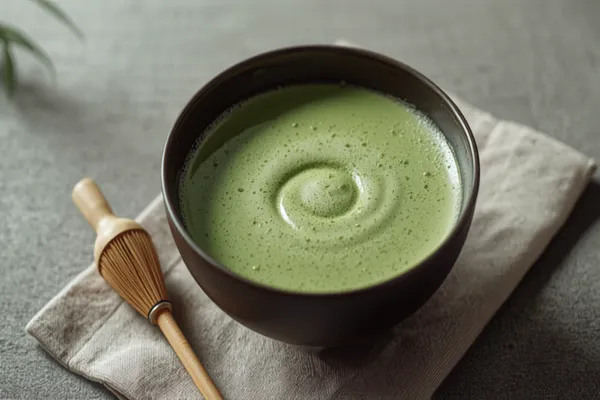
Matcha (Whisked Usucha, Thin Tea)
How to whisk a proper bowl of usucha — thin matcha — with a bamboo chasen: bright, jade-green, frothed to a fine foam, and faintly sweet-bitter. The everyday face of Japan's centuries-old tea tradition, ready in two minutes on a home counter.
Japan (matcha tradition, Uji & Nishio) · Japanese
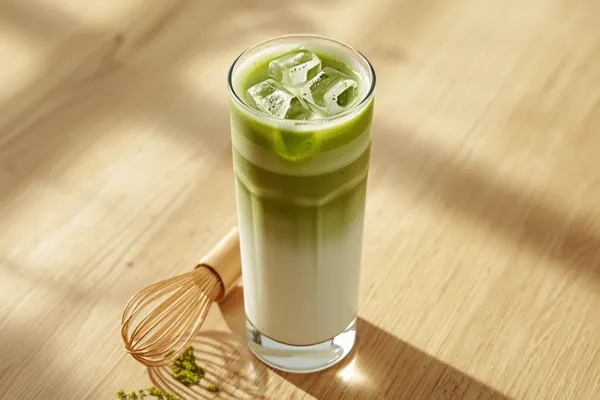
Matcha Latte (Whisked Japanese Green Tea Latte)
Stone-ground Japanese matcha whisked smooth and poured over steamed milk — grassy, sweet and gently caffeinated, with no bitterness when you make it right. A café favourite that's better and cheaper at home.
From our kitchen community
Ratings & Reviews
My Rating
Tap a star to rate — no sign-in, no form needed.
My Review
0 Ratings
🥣 0 home cooks made it!
Be the first to rate Tteokbokki (Korean Spicy Rice Cakes).
Related Recipes
Korea — a Joseon royal-court dish from Seoul, now cooked in every Korean home · Korean
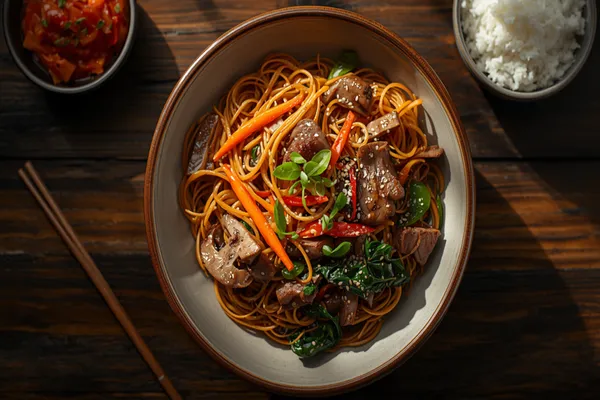
Japchae (Korean Glass Noodle Stir-Fry)
Korea's celebration noodle — chewy sweet-potato dangmyeon tossed with beef, shiitake and a rainbow of vegetables each cooked separately so every strand keeps its own colour and bite. A royal-court dish from 1600s Seoul that now appears at every first birthday, wedding and Chuseok table.
Korea · Korean
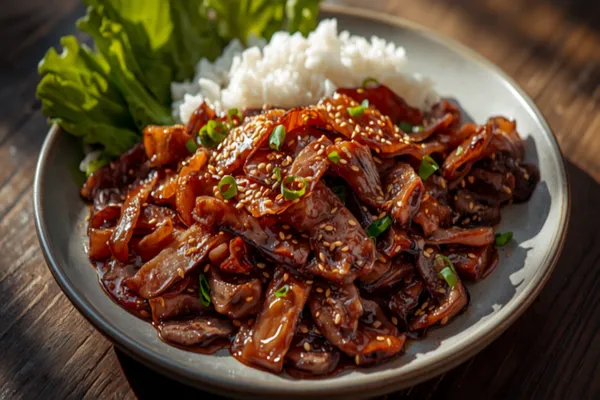
Bulgogi (Korean Marinated Grilled Beef)
Korea's beloved 'fire meat': thin slices of beef marinated in a sweet-savoury blend of soy, pear, garlic, and sesame, then seared hot and fast until caramelised at the edges. Tender, glossy, and ready in minutes once it hits the pan.
Korea — the kimjang tradition, from mild Pyongyang-style kimchi in the north to the seafood-heavy kimchi of Jeolla in the south · Korean
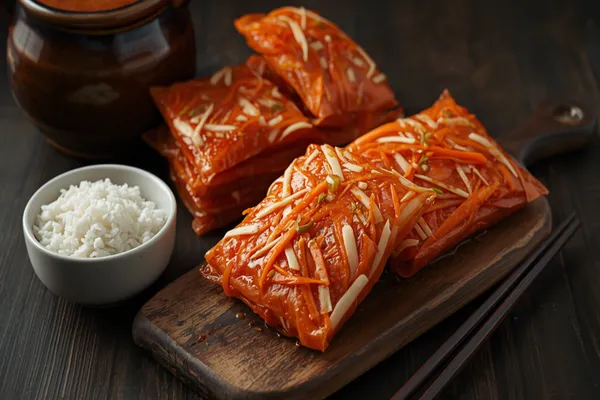
Baechu-Kimchi (Traditional Napa Cabbage Kimchi)
Korea's defining side dish, made the whole-leaf way: napa cabbage brined until it bends, packed leaf by leaf with a gochugaru paste of garlic, ginger, fish sauce and salted shrimp, then left to sour into something deep, fizzy and alive.
Korea · Korean
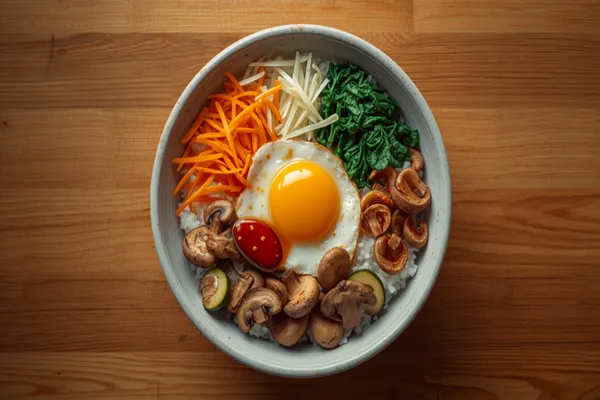
Bibimbap (Korean Mixed Rice Bowl)
Korea's beautiful mixed rice bowl: a base of warm rice crowned with seasoned vegetables, marinated beef, a fried egg, and a spoonful of sweet-spicy gochujang sauce — all stirred together at the table. Endlessly adaptable and a feast of colour, texture, and flavour.