Kerala / South India (Fort Kochi and the Travancore coast) · Indian
Meen Moilee (Kerala Fish Molee in Coconut Milk)
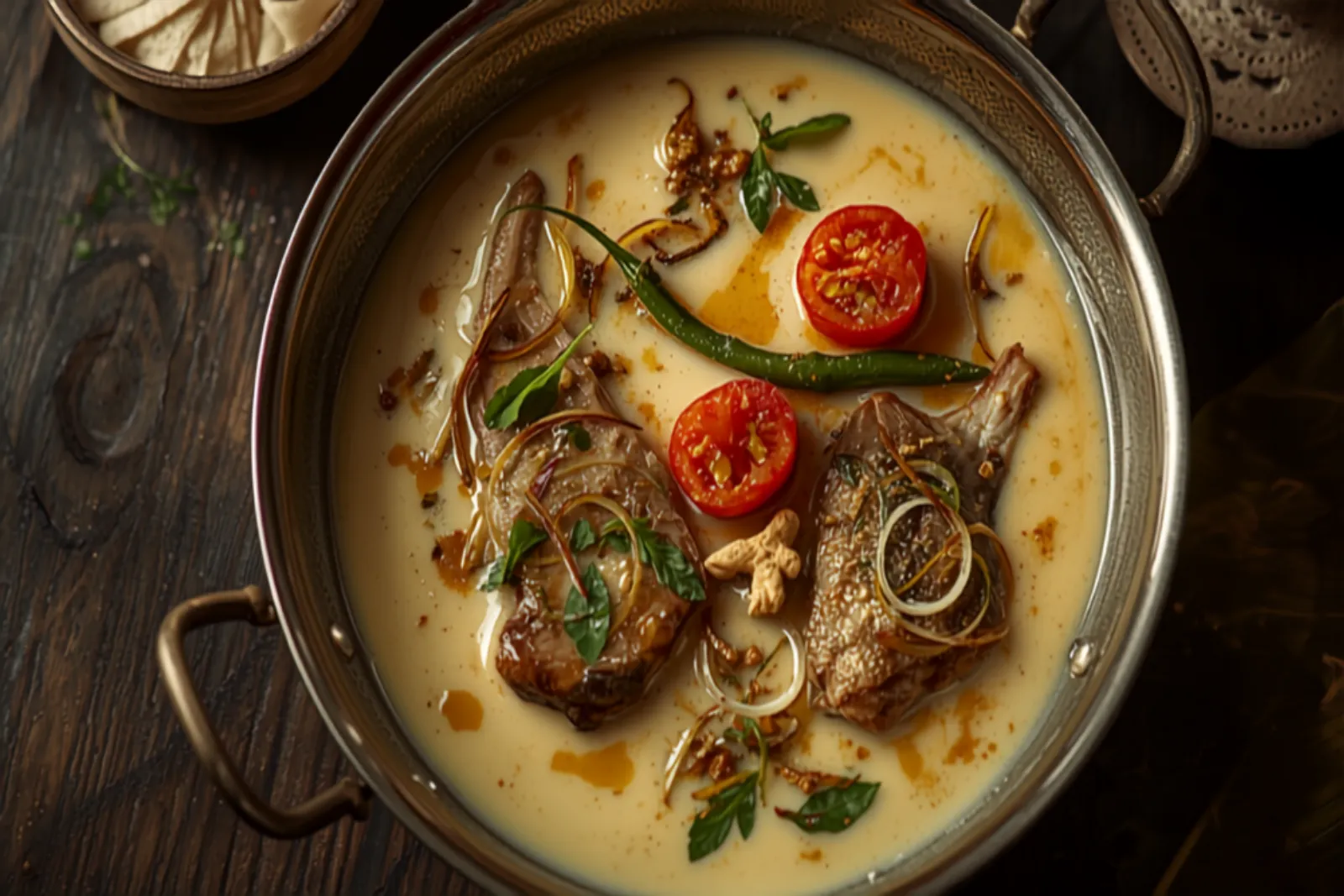
Kerala's pale gold coconut-milk fish stew — seer fish poached gently in shallots, ginger, green chilli and two grades of coconut milk. Barely spiced, deeply fragrant, and the most elegant fish curry on the Malabar coast.
Published August 5, 2026
Cultural context
Meen moilee belongs to Kerala's Syrian Christian kitchens along the old spice-trading coast around Kochi, where Portuguese, Dutch and later British palates met Malayali cooking. Unlike the fiery red kudampuli fish curries of the same coast, moilee is pale, mild and coconut-rich — a dish shaped by that encounter. The name is usually traced either to the Portuguese *molho* (sauce) or to a much-repeated legend about a cook named Molly; both are stories rather than settled history.
Meen moilee is the quiet one. On a coast that produces some of the fiercest fish curries in India — kudampuli-soured, chilli-red, built to be eaten with cold rice — this pale gold coconut stew from the Syrian Christian kitchens around Fort Kochi does almost the opposite. It poaches the fish rather than boiling it, tastes of shallot and ginger and coconut oil rather than chilli, and comes out of the pan the colour of old ivory.
That restraint is the history of the dish. Kochi was the hinge of the spice trade, and moilee carries the fingerprints of everyone who passed through: the Portuguese who arrived in 1500 and reportedly found the local curries unbearable, the Dutch who followed them, the British who took the dish east and left versions of it in Malaysia and Singapore as fish moolie. The name itself is unresolved — it may come from the Portuguese molho, meaning sauce, or from the often-told story of a cook named Molly who improvised a mild curry for European guests. Both are good stories. Neither is documented.
Two coconut milks, and why the order matters
Everything about moilee’s texture comes from treating coconut milk as two separate ingredients rather than one. Thin milk — the second pressing of the grated flesh, or a diluted can — is the cooking medium. It has little fat, so it can simmer without splitting, and it carries the shallot, ginger and chilli into the fish.
Thick milk, the first pressing, goes in at the very end and never boils. It is a fragile emulsion, and heat above a bare shiver breaks it into oil and grainy curds. Every failed moilee is the same failure. If you are working from a can, chill it first: the thick cream sets at the top and lifts out cleanly with a spoon.
Don’t brown the shallots
The single instruction most home cooks ignore. In most Indian curries you cook onions until they are deep brown, because that caramelisation is the base flavour. Moilee doesn’t want it. Cook the shallots slowly in coconut oil until they are soft, translucent and completely uncoloured — eight to ten minutes on medium-low, with a pinch of salt to draw out water and keep the pan from catching. Take on any colour and the gravy turns beige and tastes of a different dish.
The fish is poached, not curried
A one-minute sear before the fish goes into the gravy is structural, not culinary. It sets the outside of the steak so it survives the simmer intact. The actual cooking happens in five or six minutes in the thin coconut milk, covered, with the pan barely moving — and you never stir. Spoon gravy over the steaks instead. Firm, bone-in steaks are worth seeking out: the bone leaks gelatine into the stew and gives it a body that fillets can’t.
What to eat it with
Appam, ideally — the fermented rice-and-coconut pancake with a lacy edge and a soft spongy middle exists more or less to be dipped into gravies like this one. Idiyappam works equally well, and Kerala red parboiled rice is what most homes actually serve it with on a Tuesday. Serve it warm rather than scalding, and let it sit ten minutes off the heat first; moilee settles.
For the other side of the same coast, make the fiery red Kerala fish curry, and pair this stew with a batch of appam. More on the region’s coconut-and-curry-leaf grammar in the guide to South Indian cooking.
Ingredients
For the fish
- 600 g (1 1/4 lb) seer fish (king mackerel) steaks, 2 cm thick Seer fish — neymeen — is the classic choice because its firm steaks hold shape in the gravy. Pomfret, halibut, cod loin or kingklip all work; avoid delicate flaky fish that collapses.
- 1/2 tsp ground turmeric
- 1/2 tsp freshly ground black pepper
- 1 tsp fine salt
- 2 tsp lime juice
For the stew
- 3 tbsp coconut oil Unrefined, cold-pressed. In Kerala this is not a substitutable fat — its aroma is half the dish.
- 1 tsp black mustard seeds
- 2 sprigs fresh curry leaves
- 10 shallots, thinly sliced Small round Indian shallots (chuvannulli) are sweeter than onion and dissolve into the gravy. About 200 g.
- 4 cm piece fresh ginger, cut into fine julienne
- 6 cloves garlic, thinly sliced
- 4 green chillies, slit lengthways Slit rather than chopped — they perfume the stew without turning it hot. Use 2 for a very mild version.
- 1/2 tsp ground turmeric
- 1/4 tsp freshly ground black pepper
- 6 whole cloves
- 1 small cinnamon stick
- 250 ml (1 cup) thin coconut milk The second pressing. From a can: mix 125 ml full-fat coconut milk with 125 ml water.
- 250 ml (1 cup) thick coconut milk The first pressing — the rich top of the can. This goes in last and must never boil.
- 1 medium tomato, cut into thick rounds
- 1 tsp white vinegar or lime juice A small acid at the end lifts the coconut fat. Coconut vinegar is traditional.
- salt, to taste
Method
Tap a step’s number to check it off as you go.
-
Rub the fish steaks with the turmeric, pepper, salt and lime juice and set aside for 15 minutes.
Why: Turmeric and acid firm up the surface of the fish and neutralise any muddiness, so the steaks stay intact and clean-tasting in a gravy that has almost nothing else to hide behind.
-
Heat 2 tbsp of the coconut oil in a wide, shallow pan and sear the fish for about 1 minute a side, just until the surface sets. Lift out and reserve — it should still be raw in the middle.
Why: A brief sear is insurance, not cooking: it seals the steaks so they survive the simmer without shedding into the sauce. The fish finishes gently in the coconut milk.
-
Add the remaining oil to the same pan. Splutter the mustard seeds, then add the curry leaves, cloves and cinnamon.
Why: Mustard seeds only release their nutty pungency once they pop; adding them to warm rather than hot oil leaves them raw and bitter.
-
Add the shallots, ginger, garlic and slit chillies with a pinch of salt. Cook over medium-low heat for 8–10 minutes until the shallots are soft and translucent but have taken no colour at all.
Why: This is the step that separates moilee from every other Kerala curry. Browning would build caramel and sulphur notes; moilee wants the shallots sweet and ghostly pale so the finished stew stays ivory-gold.
-
Stir in the turmeric and pepper and cook for 30 seconds.
Why: Ground spices need a moment in fat to lose their raw, dusty edge — but turmeric burns fast, so 30 seconds is the whole window.
-
Pour in the thin coconut milk, bring to a bare simmer and cook for 5 minutes.
Why: The thin milk is the cooking liquid. It can simmer safely because it has little fat to split, and it lets the aromatics infuse before the fish goes in.
-
Slide the fish back in in a single layer, lay the tomato rounds on top, cover and simmer very gently for 5–6 minutes, spooning gravy over the steaks once or twice. Do not stir.
Why: Stirring breaks the fish. Spooning does the same job. The tomato sits on top rather than being stirred through so it softens without staining the gravy pink.
-
Pour in the thick coconut milk, add the vinegar and swirl the pan. Warm through for 2–3 minutes over the lowest heat — the surface should barely shiver. Do not let it boil.
Why: Boiling breaks the emulsion in first-press coconut milk and the gravy separates into oil and grainy curds. Below a simmer it stays glossy and silken, which is the entire point of the dish.
-
Taste for salt, finish with a few fresh curry leaves and a teaspoon of raw coconut oil if you like, and rest 10 minutes off the heat before serving.
Why: Moilee tastes markedly better a few minutes after cooking, once the coconut milk has stopped moving and the ginger and chilli have settled into it.
A quick, anonymous tap — no review needed.
Variations
- Prawn moilee
Swap the fish for 500 g large prawns. Skip the sear, and add them raw with the thin coconut milk for 3 minutes only — they overcook in seconds.
- Vegetarian moilee
Use 500 g of firm vegetables — ash gourd, carrot, green beans and potato — simmered in the thin coconut milk until just tender before the thick milk goes in. Common in Kerala homes during Lent.
- Malabar-style, with fried onion
Some Kochi kitchens finish the stew with a spoon of crisp-fried shallots and a pinch of garam masala for a slightly richer, more Muslim-Malabar reading of the dish.
- Egg moilee
Halved boiled eggs in place of the fish, added with the thick coconut milk. A standard weeknight version and a good use of the same gravy.
Serving & Storage
Serve warm rather than piping hot, in a shallow bowl so the tomato rounds show, with lacy appam or idiyappam to soak up the gravy. Kerala red parboiled rice is the everyday partner.
Pairs with: Appam, Idiyappam, Kerala red rice, Puli inji, Thoran.
Storage: Keeps 2 days refrigerated. Reheat very gently in a pan over low heat — never in a rolling boil or a microwave on full power, both of which split the coconut milk. Do not freeze; the emulsion breaks on thawing.
Nutrition
Per serving (1 serving (about 1/4 of the pan))
- Calories
- 430
- Protein
- 32 g
- Carbs
- 12 g
- Fat
- 29 g
- Fiber
- 3 g
- Sugar
- 6 g
- Sodium
- 620 mg
Notable micronutrients: Selenium, Vitamin B12, Omega-3 fatty acids, Manganese
Estimated using standard ingredient data. Values vary with brands and substitutions.
Frequently Asked Questions
Why did my moilee curdle?
The thick coconut milk boiled. First-press coconut milk is an emulsion of fat and water held together loosely, and a full boil breaks it into oil and grain. Add the thick milk at the very end, keep the heat at its lowest, and take the pan off the moment the surface starts to shiver.
Can I use canned coconut milk instead of fresh?
Yes, and most cooks outside Kerala do. Use one 400 ml can of full-fat coconut milk: spoon off the thick cream from the top for the finishing 'thick milk', and dilute the remaining thin liquid with water to make the cup of thin milk. Avoid light coconut milk — there isn't enough fat to give the stew its body.
What fish works best if I can't get seer fish?
Any firm white fish cut into steaks or thick fillets: pomfret, halibut, cod loin, monkfish or snapper. Avoid sole, tilapia and other thin, flaky fish — they disintegrate in the gravy. Bone-in steaks give the best flavour because the bone releases gelatine into the stew.
Is meen moilee spicy?
No, and that is deliberate. The green chillies are slit rather than chopped so they scent the gravy without releasing much heat, and the only other heat is a little black pepper. It is one of the mildest curries on a coast famous for fierce ones.
How is this different from Kerala fish curry?
They are near-opposites made from the same fish. The red meen curry is soured hard with kudampuli (Malabar tamarind), reddened with Kashmiri chilli and often has no coconut milk at all. Moilee is pale, mild, coconut-milk-based and finished with a whisper of vinegar.
What to drink with this
All drinks →Hand-picked pours to match this dish.
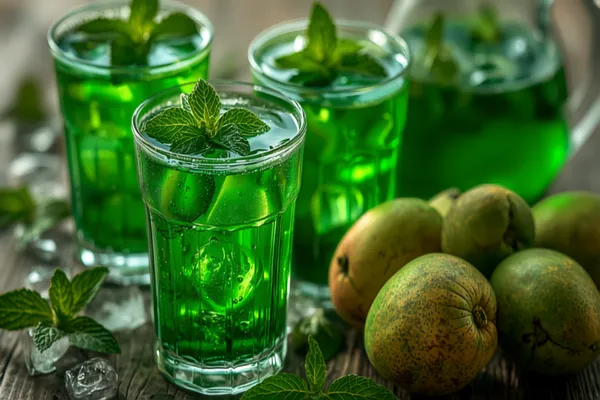
North & West India (peak-summer drink across the subcontinent) · Indian
Aam Panna (Raw Green Mango Summer Cooler)
India's tangy, jade-green raw-mango cooler — roasted or boiled green mangoes blended with cumin, black salt and mint. The traditional heat-stroke remedy that tastes like summer.
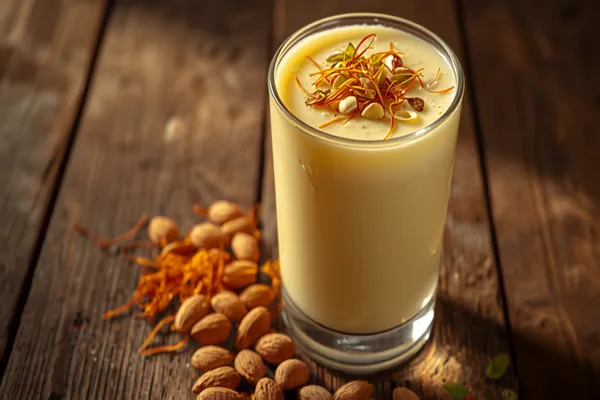
Pan-Indian (North & West India) · Indian
Badam Milk (Saffron Almond Milk)
Milk simmered with a paste of soaked almonds, saffron, cardamom and a whisper of nutmeg — India's rich, fragrant almond drink. Comforting served warm in winter, reviving served chilled in summer, festive any time.
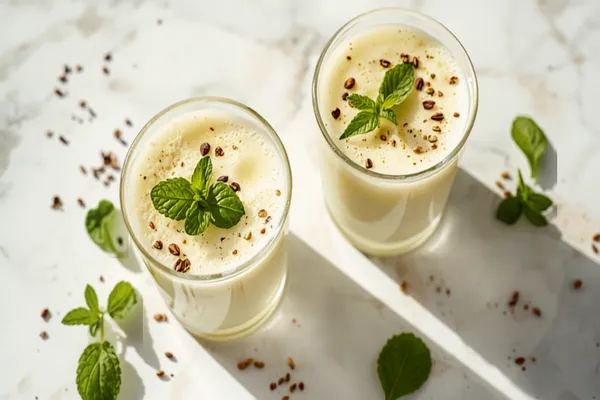
Pan-Indian (Gujarat & West India especially) · Indian
Chaas (Spiced Indian Buttermilk / Masala Chaas)
Whisked yogurt thinned with water and seasoned with cumin, green chilli, ginger and curry leaves — India's cooling, savoury buttermilk. A salty-tangy digestive that beats the heat and settles a heavy meal in two minutes.
From our kitchen community
Ratings & Reviews
My Rating
Tap a star to rate — no sign-in, no form needed.
My Review
0 Ratings
🥣 0 home cooks made it!
Be the first to rate Meen Moilee (Kerala Fish Molee in Coconut Milk).
Related Recipes
Kerala / South India (Malabar coast) · Indian
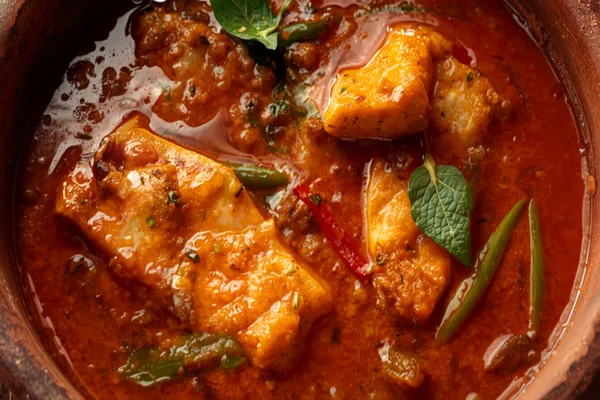
Kerala Fish Curry (Meen Curry with Coconut)
A coastal Kerala classic: fish simmered in a tangy, coconut-rich gravy sharpened with kokum-like kudampuli (Malabar tamarind) and a fragrant curry-leaf tempering. Sour, spicy, and built for rice.
Kerala / South India · Indian
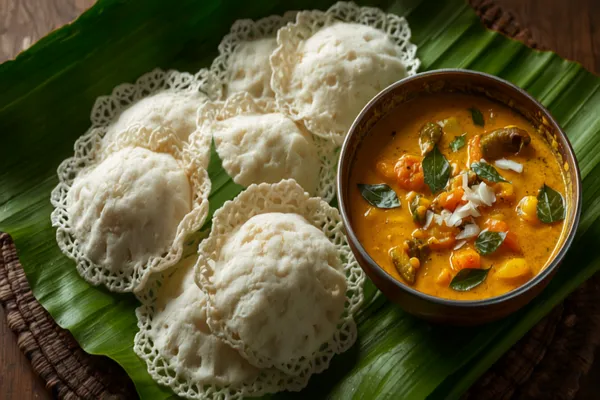
Appam with Vegetable Stew (Kerala Lacy Rice Hoppers)
Kerala's soft, lacy-edged fermented rice-and-coconut hoppers, served with a gently spiced coconut-milk vegetable stew. A breakfast-table classic of the Malabar and Travancore coasts — pillowy in the centre, crisp at the rim.
Kerala / South India · Indian
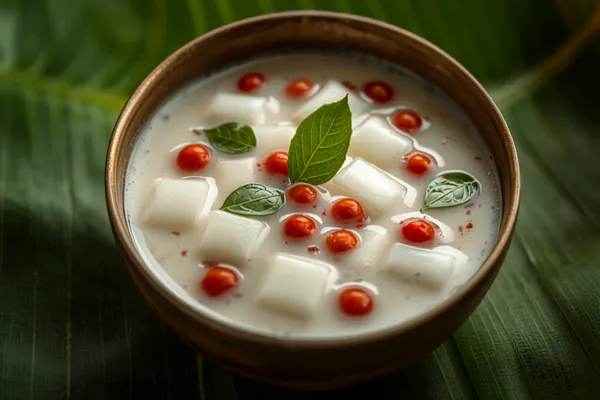
Olan (Kerala Ash Gourd and Cowpea in Coconut Milk)
A serene, mildly sweet sadya dish: ash gourd and red cowpeas simmered in thin then thick coconut milk, seasoned with only green chili and curry leaves and finished with raw coconut oil. The quiet, cooling course of the feast.
Goa / West India · Indian
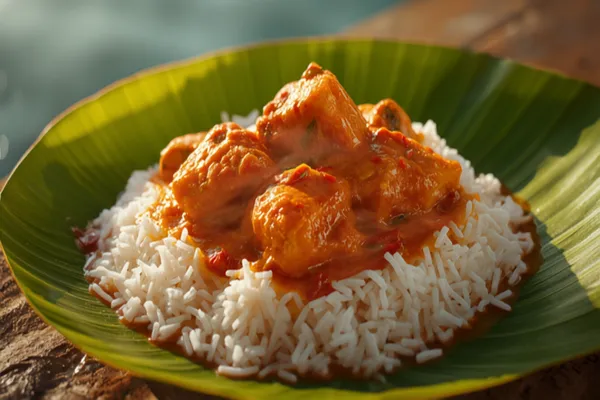
Goan Fish Curry (Xitti Kodi)
Goa's everyday coconut fish curry — fish simmered in a vivid red gravy of ground coconut, Kashmiri chilli, and spices, soured with tamarind or kokum. Tangy, gently fiery, and built for spooning over plain rice.