Cultural Story · North Karnataka
Jolada Rotti: The Sorghum Bread That Built North Karnataka's Table
Before the curry comes the bread. Jolada rotti — the unleavened sorghum flatbread of North Karnataka — is the foundation that dishes like ennegayi are built to be eaten with. Here's its story, and why it matters.
Published June 19, 2026
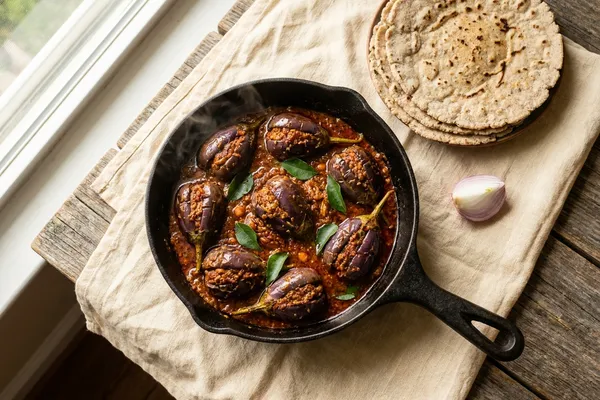
To understand a dish like badanekayi ennegayi, you have to understand what it’s eaten with. In North Karnataka, that is almost always jolada rotti — a pale, dry, unleavened round of sorghum, slightly tangy, built to soak up an oily, spiced gravy.
Sorghum — jola in Kannada, jowar in Hindi — is the grain of the Deccan plateau, where the soil is dry and the monsoon is unreliable. Where wheat and rice falter, sorghum holds. So the bread followed the crop, and across the dryland districts of Dharwad, Bijapur, and Gadag, jolada rotti became the everyday staple: stacked tall in farmhouse kitchens, carried to the fields, and laid out at weddings beside bowls of ennegayi and chutney pudi.
A bread with no shortcut
Jolada rotti is just sorghum flour and hot water, and that simplicity is exactly what makes it hard. With no gluten to bind it, the dough has to be worked warm and patted out by hand, palm against palm, into a thin disc that holds together on its own. Getting it round and even is a skill measured in years, not weeks — which is part of why a well-made stack still earns quiet respect at the table.
It is also, almost incidentally, naturally gluten-free and high in fiber — a traditional food that happens to align neatly with how many people want to eat now. But in North Karnataka it was never a health choice. It was simply the bread the land could grow, made by hands that knew how.
Frequently Asked Questions
What is jolada rotti made of?
Just two things: jowar (sorghum) flour and hot water, plus salt. It is unleavened and gluten-free, which is exactly why it takes practice to roll — there's no gluten to hold it together.
Why is jolada rotti eaten in North Karnataka specifically?
Sorghum is the dryland grain of the Deccan plateau, thriving where rice and wheat struggle. The bread followed the crop — it is the everyday staple of districts like Dharwad, Bijapur, and Gadag.
Related Recipes
Related stories & guides
- Cultural Story · South IndiaA Complete Guide to South Indian CookingSouth India isn't one cuisine but many — Tamil, Kerala, Karnataka, Andhra and Telangana, each with its own grains, spices, and rituals. A guide to the building blocks, the regional differences, and where to start cooking.
- Ingredient Deep DiveThe Indian Spice Pantry: A Beginner's MapYou don't need a hundred spices to cook Indian food — you need a dozen, and the know-how to use them. A practical guide to the essential Indian spices, what each does, and the techniques (tadka, bhuna, dry-roasting) that unlock them.