Louisiana · American (Creole/Cajun)
Louisiana Chicken and Sausage Gumbo
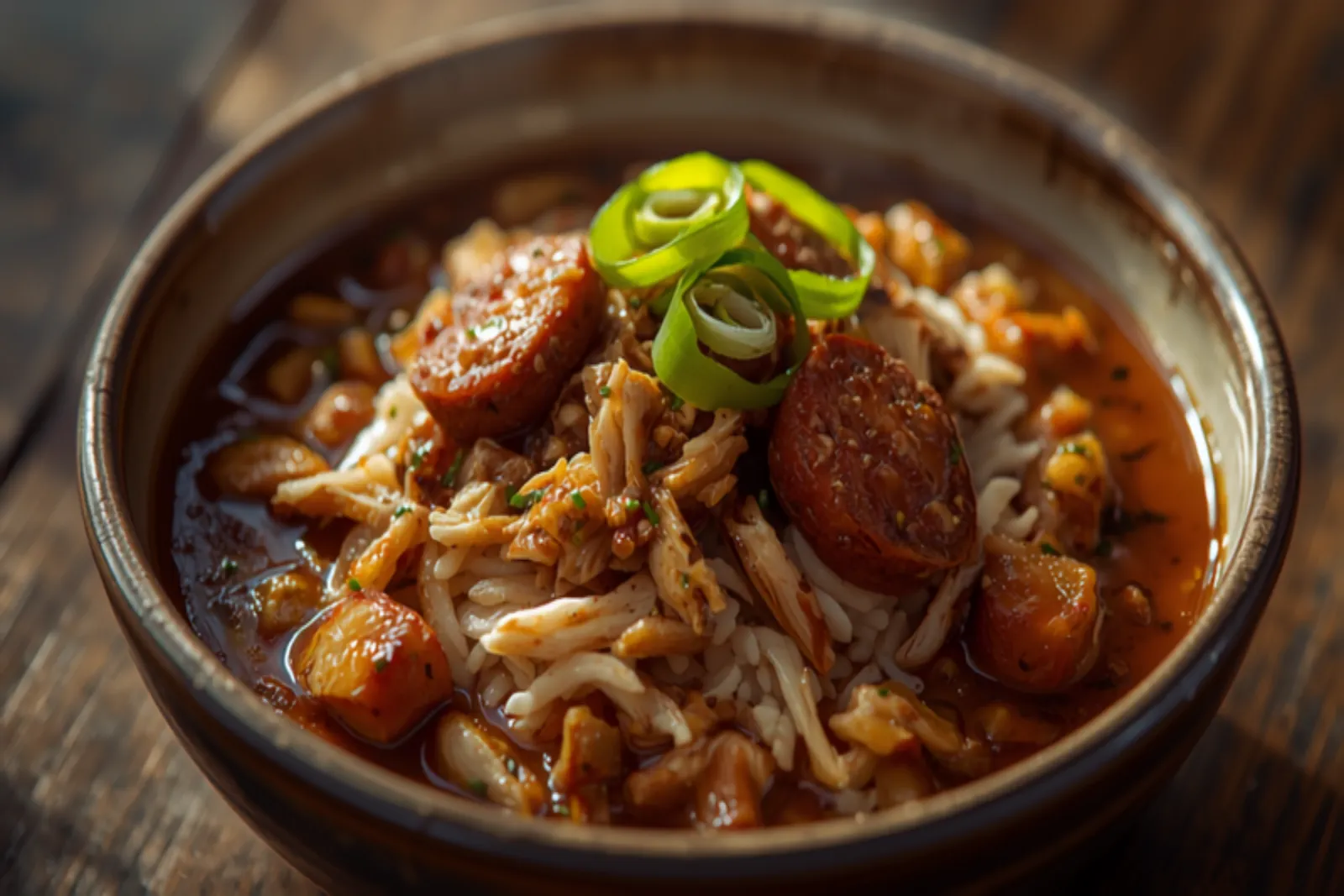
The soul of Louisiana in a pot: a dark, nutty roux thickened with the 'holy trinity' of vegetables, simmered with chicken and andouille sausage into a deep, smoky stew, served over rice. Patience at the stove is the whole secret.
Published June 20, 2026
Cultural context
Gumbo is the signature dish of Louisiana — a true melting-pot stew blending French roux technique, West African okra (which gives gumbo its name, from a Bantu word for okra), the Choctaw filé powder of Indigenous cooks, and Spanish and Caribbean influences. Cajun and Creole cooks each have their versions; this chicken-and-andouille gumbo is a Cajun country classic, built on a deeply browned roux and the 'holy trinity' of onion, celery, and bell pepper.
Gumbo is Louisiana in a bowl — a dark, smoky, deeply savoury stew that tells the whole story of the state’s cooking in one pot. There’s French technique in the roux, West African okra in the name (from a Bantu word for the vegetable), Choctaw filé powder, and Spanish and Caribbean influences in the seasoning. This version, chicken and andouille sausage over rice, is a Cajun country classic and a fantastic introduction to the dish.
It’s not hard, exactly, but it asks for your attention and your time. There’s one step you genuinely cannot rush, and getting it right is the difference between good gumbo and unforgettable gumbo.
The roux is everything
Gumbo begins with a dark roux: equal parts flour and fat, stirred over the heat until it turns the colour of chocolate. This takes 30 to 45 minutes of near-constant stirring, and you can’t walk away — but it’s where the gumbo’s nutty, toasted, almost coffee-like depth comes from. Aim for a milk-to-dark-chocolate brown. If you ever see black specks, it’s burnt and bitter, and there’s no saving it; tip it out and start again. (A more forgiving route is to toast the flour dry in the oven first.)
The trinity stops the clock
The moment the roux hits the colour you want, in go the holy trinity — onion, celery, and green bell pepper. The cool vegetables hit the hot roux with a dramatic sizzle and immediately stop it cooking further, which is exactly what you want. They’re Louisiana’s version of mirepoix, and they soften into the aromatic foundation of the whole dish.
Low, slow, and better tomorrow
After that it’s a gentle hour and a half of simmering, skimming the fat as it rises so the gumbo is rich without being greasy. Shred the chicken back in, and finish off the heat with spring onions, parsley, and — if you like — a little filé powder (never boiled, or it turns ropey). Serve it over a scoop of white rice with hot sauce at the table. Like most great stews, gumbo is even better the day after.
Looking for more soulful Southern cooking? Browse the full recipe collection, or read more cultural stories on the traditions behind the food.
Ingredients
For the roux
- 180 ml (3/4 cup) neutral oil
- 120 g (1 cup) plain flour
The holy trinity
- 1 large onion, diced
- 2 stalks celery, diced
- 1 green bell pepper, diced
- 4 cloves garlic, minced
For the gumbo
- 400 g andouille sausage, sliced Smoked andouille is the classic; any good smoked sausage works.
- 700 g bone-in chicken thighs Bone-in for flavour; the meat is shredded back in later.
- 1.5 litres chicken stock Warm. Add gradually to the roux.
- 2 bay leaves
- 1 tbsp Cajun seasoning Plus more to taste. Or a blend of paprika, cayenne, thyme, and garlic powder.
- 1 tsp dried thyme
- salt and black pepper
To finish and serve
- 4 spring onions, sliced
- 1 small handful fresh parsley, chopped
- 1/2 tsp filé powder (optional) Ground sassafras, stirred in off the heat to thicken and add an earthy note. Never boil it or it turns stringy.
- to serve cooked white rice and hot sauce
Method
Tap a step’s number to check it off as you go.
-
Season and brown the chicken thighs and sliced sausage in the pot, then set aside. Leave the rendered fat and browned bits behind.
Why: Browning the meat first builds deep flavour and leaves a flavourful fond; the smoky sausage fat seasons everything that follows.
-
Make the roux: add the oil and flour to the pot and stir constantly over medium-low heat for 30–45 minutes, until it turns the colour of dark chocolate. Do not let it burn.
Why: The dark roux is the soul of gumbo — it provides the nutty, toasted flavour and the colour. This is the step you cannot rush or walk away from; black flecks mean it's burnt and you must start over.
-
As soon as the roux is dark, add the onion, celery, and bell pepper and stir — they'll sizzle hard and stop the roux cooking further. Add the garlic after a couple of minutes.
Why: The cold vegetables halt the roux's cooking at the perfect moment and begin to soften into the base. This trinity is the aromatic foundation of Louisiana cooking.
-
Gradually whisk in the warm stock, a ladle at a time, until smooth. Add the browned meat, bay leaves, Cajun seasoning, and thyme. Bring to a simmer.
Why: Adding stock slowly keeps the roux from seizing into lumps. A gentle simmer melds everything together.
-
Simmer uncovered, stirring occasionally, for about 1.5 hours, until thickened and deeply flavoured. Skim any fat from the top. Lift out the chicken, shred the meat off the bones, and return it to the pot.
Why: A long, slow simmer is where gumbo develops its depth; skimming keeps it from being greasy. Shredding the chicken off the bone gives better texture than chunks.
-
Taste and adjust the seasoning. Off the heat, stir in the spring onions, parsley, and filé powder if using. Serve in bowls over a scoop of white rice, with hot sauce on the side.
Why: Filé is added off the heat because boiling makes it ropey. A scoop of rice in the centre is the traditional way to serve gumbo, and hot sauce lets each person dial up the heat.
A quick, anonymous tap — no review needed.
Variations
- Seafood gumbo
Skip the chicken and add shrimp, crab, and oysters in the last 10 minutes of cooking, using seafood stock. A Creole coastal classic.
- With okra
Add sliced okra with the trinity; it thickens the gumbo and adds its own flavour (and is the dish's namesake). Use okra or filé to thicken, traditionally not both.
- Shortcut roux
Toast the flour dry in a 200°C/400°F oven until deep brown, then whisk into the fat — a more hands-off route to a dark roux with less risk of burning.
Serving & Storage
Ladle over a mound of fluffy white rice in the centre of the bowl. Set out hot sauce, filé powder, and extra spring onions at the table. Crusty bread or cornbread on the side is welcome.
Pairs with: White rice, Cornbread, Hot sauce (Louisiana-style), A cold beer or sweet tea.
Storage: Gumbo is famously better the next day. Keeps 4 days refrigerated and freezes well for 3 months. Reheat gently; add filé only when serving, never to the whole pot if you'll reheat it.
Nutrition
Per serving (1 bowl with rice (1/8 recipe))
- Calories
- 480
- Protein
- 28 g
- Carbs
- 30 g
- Fat
- 28 g
- Fiber
- 2 g
- Sugar
- 3 g
- Sodium
- 1040 mg
Notable micronutrients: Iron, Niacin, Vitamin B6
Estimated using standard ingredient data. Values vary with brands and substitutions.
Frequently Asked Questions
What is a roux and how dark should it be?
A roux is flour cooked in fat — the thickener and flavour base of gumbo. For this style, you want it dark, roughly the colour of milk chocolate to dark chocolate, which takes 30–45 minutes of constant stirring. The darker it goes, the more flavour and the less thickening power. If you see black specks, it's burnt — start over, as burnt roux ruins the whole pot.
What is the 'holy trinity'?
Onion, celery, and green bell pepper — the aromatic base of Cajun and Creole cooking, Louisiana's answer to the French mirepoix. They're added to the hot roux, where they sizzle and stop it cooking, then soften into the gumbo's foundation.
Do I need okra or filé powder?
Both are traditional thickeners and either is optional. Okra (the dish's namesake) thickens as it cooks; filé (ground sassafras) is stirred in at the end. Traditionally you use one or the other, not both. This roux-based gumbo is delicious with neither, but filé adds a lovely earthy note.
Why is my gumbo greasy?
A dark roux and smoked sausage render a lot of fat. Simmer uncovered and skim the fat off the top as it rises — gumbo is meant to be rich but not oily. Making it a day ahead helps: the fat solidifies on top and lifts off easily.
What to drink with this
All drinks →Hand-picked pours to match this dish.

Mexico (agua fresca tradition) · Mexican
Agua de Jamaica (Hibiscus Iced Tea)
Mexico's ruby-red hibiscus cooler: dried jamaica flowers steeped, sweetened and chilled into a tart, refreshing agua fresca. The right steep, how to control the tartness, and why it's so good for you.
Mexico (agua fresca tradition) · Mexican
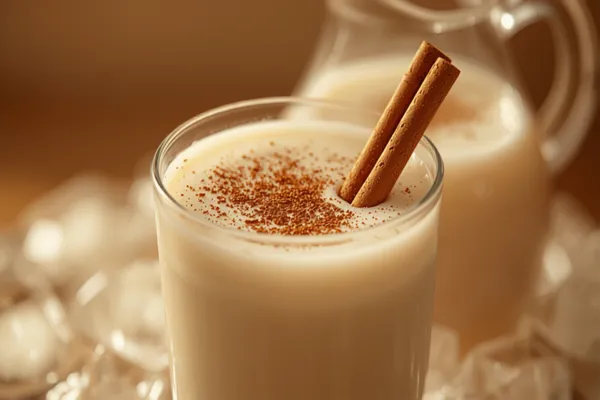
Horchata (Mexican Rice & Cinnamon Cooler)
The creamy, cinnamon-scented rice drink of Mexico: soaked rice blended with cinnamon, sweetened and chilled. No cooking, no dairy needed — just soaking, blending and straining.

Cuba (mojito tradition), worldwide · Cuban
Virgin Mojito (Non-Alcoholic Mint & Lime Cooler)
A proper mojito mocktail — fresh mint, lime and a little sugar, lengthened with soda over crushed ice. All the bright, herbal lift of the original, none of the rum.
From our kitchen community
Ratings & Reviews
My Rating
Tap a star to rate — no sign-in, no form needed.
My Review
0 Ratings
🥣 0 home cooks made it!
Be the first to rate Louisiana Chicken and Sausage Gumbo.
Related Recipes
The Lowcountry (coastal South Carolina and Georgia) · American Southern
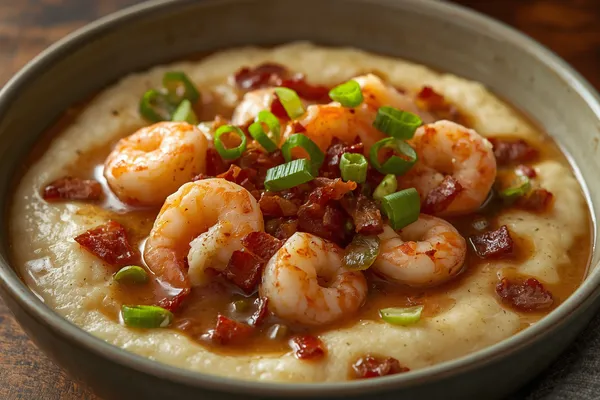
Lowcountry Shrimp and Grits
The South Carolina coast in a bowl: sweet shrimp in a savory, peppery gravy spooned over a pot of slow-cooked, properly creamy stone-ground grits. A Gullah Geechee breakfast that became a Southern icon.

Portland parish, Jamaica — the Blue Mountain and John Crow interior of the Windward Maroons, and the roadside pits of Boston Bay · Jamaican
Jamaican Jerk Chicken — Pimento Smoke, Scotch Bonnet and the Maroons' Fire
Real jerk is not a sauce you brush on at the end. It is a wet pimento-and-Scotch-bonnet paste worked into slashes cut to the bone, then smoke-roasted slowly over allspice wood until the skin blisters black. Here is how to get genuinely close on a home grill — and why low heat, not high, is the whole trick.

Rio de Janeiro and Minas Gerais — the black-bean south-east of Brazil, where the *feijoada completa* table took its modern form · Brazilian
Feijoada Completa — Rio's Saturday Pot of Black Beans and Pork
Brazil's national dish is a long, patient pot of black beans and salted, smoked and fresh pork, eaten at lunchtime on a Saturday with rice, garlicky collards, farofa and sliced orange. Here is how the whole table comes together, and why each part of it is there.
Further reading
- Cultural Story · InternationalWorld Classics: A Cook's Tour Beyond IndiaTable & Traditions is India-first, but the world has a place at this table too. A guide to our curated international slice — the European, East Asian, Southeast Asian, Middle Eastern and North African, and American dishes worth cooking, and where to begin with each.
- Cultural Story · The Lowcountry (coastal South Carolina and Georgia)The Gullah Geechee Roots of Lowcountry CookingShrimp and grits, red rice, gumbo, okra stew — the food the world calls 'Southern' was, on the coast, shaped by the Gullah Geechee, descendants of enslaved West Africans who built a distinct culture and cuisine along the Carolina and Georgia shore.