Kerala / South India · Indian
Pachadi (Kerala Cucumber and Yogurt with Coconut)
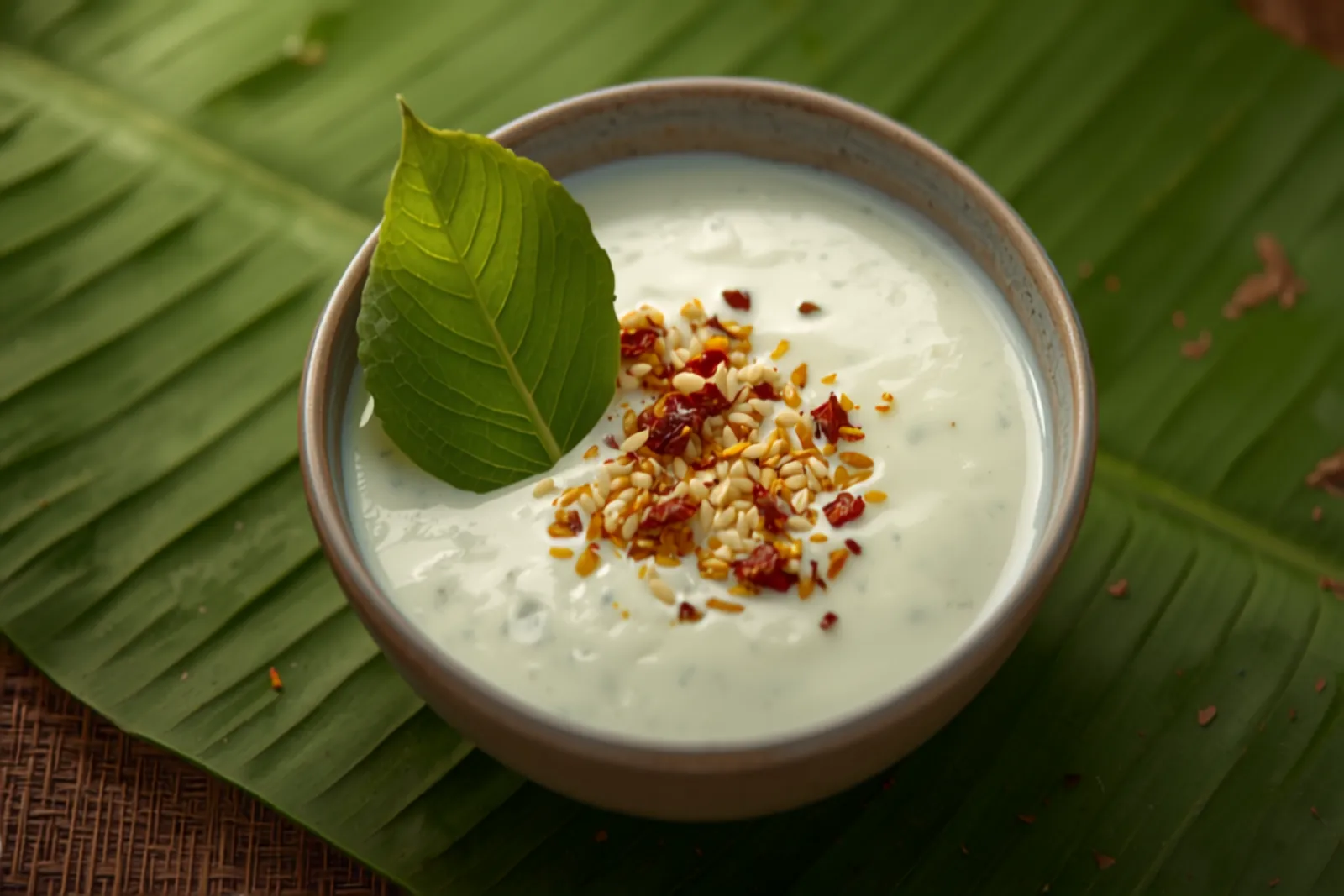
The cooling sweet-sour relish of the sadya: cucumber in coconut-ground yogurt with a hint of green chili and a mustard tempering. Kerala's answer to raita, and the dish that refreshes the palate between courses.
Published June 22, 2026
Cultural context
Pachadi is the sweet-and-sour yogurt dish of the Kerala sadya — cucumber, pineapple, or beetroot ground with coconut into whisked yogurt and tempered with mustard. Cooling and lightly sweet, it refreshes the palate between the spicier curries; its savoury sibling is kichadi.
Pachadi is the cooling, sweet-sour relish of the Kerala sadya — cucumber (or pineapple, or beetroot) folded into yogurt that’s been ground with fresh coconut and a little raw mustard, then finished with a mustard-seed tempering. It’s Kerala’s answer to raita, and the dish that refreshes the palate between the spicier courses.
Coconut and a little raw mustard
What sets pachadi apart from a plain raita is the paste: fresh coconut ground with green chili and a pinch of raw mustard, stirred into whisked yogurt. That mustard gives it a gentle, distinctive sharpness.
Sweet or savoury, cool either way
Cucumber makes the everyday version; pineapple (with a little jaggery) or cooked beetroot make the sweeter, more colourful sadya versions. Whichever you choose, combine everything off the heat so the yogurt stays fresh and tangy, then crown it with a coconut-oil tempering.
Serve it alongside kaalan and avial — the full feast is mapped out in our Onam sadya guide.
Ingredients
For the base
- 2 cups cucumber, finely chopped Pineapple or cooked beetroot can replace the cucumber for a sweeter or rosier pachadi.
- 1.5 cups thick yogurt, whisked
- salt
For the coconut paste
- 1/2 cup grated coconut (fresh)
- 1/2 tsp mustard seeds A little raw mustard ground into the paste gives pachadi its characteristic gentle sharpness.
- 2 green chilies
For the tempering
- 1 tbsp coconut oil
- 1/2 tsp mustard seeds
- 2 dried red chilies
- 1 sprig curry leaves
Method
Tap a step’s number to check it off as you go.
-
Lightly cook the chopped cucumber with a splash of water and salt for 3–4 minutes until just softened, then cool. (For beetroot, cook until tender; pineapple can be used raw or lightly cooked.)
Why: A brief cook takes the raw edge off while keeping a little bite; cooling before adding yogurt stops it splitting.
-
Grind the coconut with the raw mustard and green chilies to a smooth paste.
Why: A touch of raw mustard ground into the coconut is what distinguishes Kerala pachadi from a plain raita — it adds a gentle sharpness.
-
Mix the coconut paste into the whisked yogurt, then fold in the cooled cucumber and salt.
Why: Combining off the heat keeps the yogurt fresh and tangy.
-
Temper mustard seeds, dried chilies, and curry leaves in coconut oil and pour over the pachadi.
Why: The mustard-seed tempering perfumes the top and is the finishing flourish of the dish.
A quick, anonymous tap — no review needed.
Variations
- Pineapple pachadi
Use pineapple (with a little jaggery) for the popular sweet-sour version — a sadya favourite.
- Beetroot pachadi
Cooked beetroot turns the yogurt a beautiful pink and adds earthy sweetness.
- Vegan
Use thick coconut or cashew yogurt; the coconut paste keeps it rich and authentic-tasting.
Serving & Storage
The cooling, palate-cleansing dish of the sadya — a spoonful between the spicier curries. Doubles as a refreshing raita with any rice meal.
Pairs with: Steamed rice, Sambar, Pappadam.
Storage: Best the day it's made; keeps 1 day refrigerated, after which the yogurt sharpens.
Nutrition
Per serving (about 1/2 cup)
- Calories
- 110
- Protein
- 4 g
- Carbs
- 8 g
- Fat
- 7 g
- Fiber
- 2 g
- Sugar
- 5 g
- Sodium
- 260 mg
Notable micronutrients: Calcium, Vitamin C, Probiotics
Estimated using standard ingredient data. Values vary with brands and substitutions.
Frequently Asked Questions
What's the difference between pachadi and kichadi?
They're close Kerala siblings. Pachadi tends to be the sweeter, sweet-sour one (often pineapple or beetroot), while kichadi is the more savoury cucumber or okra version. Both are yogurt-and-coconut dishes with a mustard tempering.
How is pachadi different from north Indian raita?
Pachadi grinds coconut — and a little raw mustard — into the yogurt and finishes with a coconut-oil tempering, giving it a distinct Kerala flavour rather than the plain spiced yogurt of a raita.
Can I use other vegetables?
Yes — cucumber, pineapple, beetroot, ash gourd, and even okra (for kichadi) all work. The yogurt-coconut-mustard base stays the same.
What to drink with this
All drinks →Hand-picked pours to match this dish.
North & West India (peak-summer drink across the subcontinent) · Indian
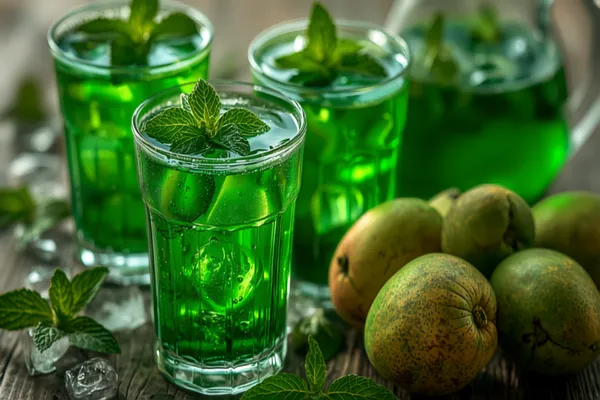
Aam Panna (Raw Green Mango Summer Cooler)
India's tangy, jade-green raw-mango cooler — roasted or boiled green mangoes blended with cumin, black salt and mint. The traditional heat-stroke remedy that tastes like summer.
Pan-Indian (North & West India) · Indian
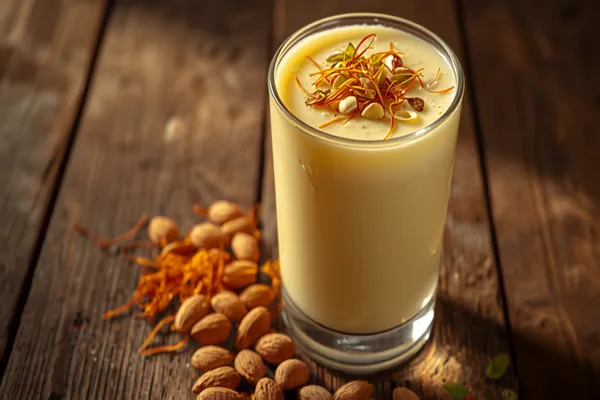
Badam Milk (Saffron Almond Milk)
Milk simmered with a paste of soaked almonds, saffron, cardamom and a whisper of nutmeg — India's rich, fragrant almond drink. Comforting served warm in winter, reviving served chilled in summer, festive any time.
Pan-Indian (Gujarat & West India especially) · Indian
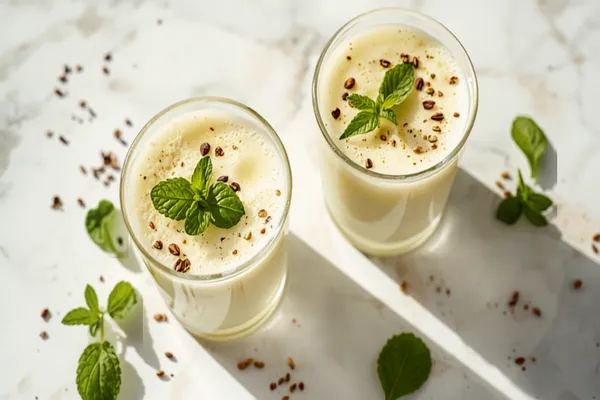
Chaas (Spiced Indian Buttermilk / Masala Chaas)
Whisked yogurt thinned with water and seasoned with cumin, green chilli, ginger and curry leaves — India's cooling, savoury buttermilk. A salty-tangy digestive that beats the heat and settles a heavy meal in two minutes.
From our kitchen community
Ratings & Reviews
My Rating
Tap a star to rate — no sign-in, no form needed.
My Review
0 Ratings
🥣 0 home cooks made it!
Be the first to rate Pachadi (Kerala Cucumber and Yogurt with Coconut).
Related Recipes
Kerala / South India · Indian
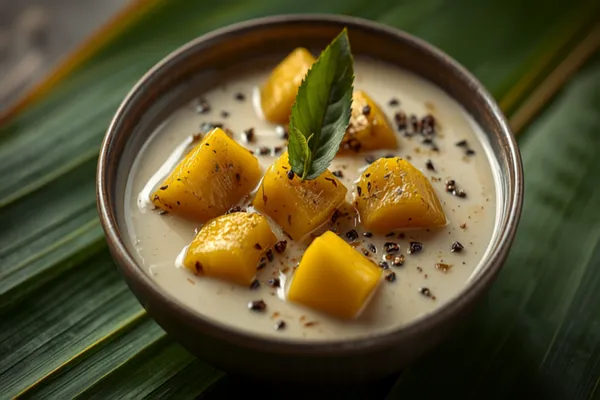
Kaalan (Kerala Yam and Plantain in Spiced Yogurt and Coconut)
A thick, tangy sadya curry of yam and raw plantain cooked in sour yogurt with a roasted coconut paste, reduced until glossy and keeping for days. The bold, long-life counterpoint to olan.
Kerala / South India · Indian
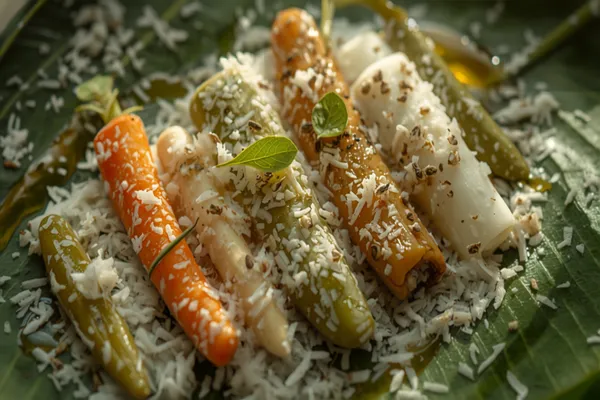
Avial (Kerala Mixed Vegetables in Coconut and Yogurt)
A cornerstone of the Kerala sadya: a medley of vegetables simmered until tender and bound in a coconut-cumin paste with tangy yogurt, finished with raw coconut oil and curry leaves. Wholesome, gentle, and quietly addictive.
Kerala / South India · Indian
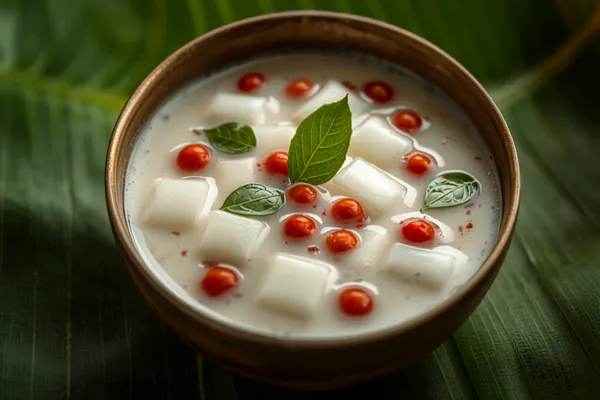
Olan (Kerala Ash Gourd and Cowpea in Coconut Milk)
A serene, mildly sweet sadya dish: ash gourd and red cowpeas simmered in thin then thick coconut milk, seasoned with only green chili and curry leaves and finished with raw coconut oil. The quiet, cooling course of the feast.
Further reading
- Cultural Story · South IndiaA Complete Guide to South Indian CookingSouth India isn't one cuisine but many — Tamil, Kerala, Karnataka, Andhra and Telangana, each with its own grains, spices, and rituals. A guide to the building blocks, the regional differences, and where to start cooking.
- Festival & Seasonal · KeralaThe Onam Sadya: Kerala's Feast on a Banana LeafOnce a year, Kerala lays out one of the world's great vegetarian feasts — two dozen-plus dishes served on a banana leaf in a precise order, eaten with the hands. A guide to the Onam sadya: what's on the leaf, where it goes, and why it matters.