West Bengal / East India · Indian
Sandesh (Bengali Chhena Sweet)
Bengal's most elegant sweet: fresh chhena gently cooked with sugar and cardamom into a soft, fudge-like confection, pressed into delicate shapes. Refined, milky, and ready in under half an hour.
Published June 30, 2026
Cultural context
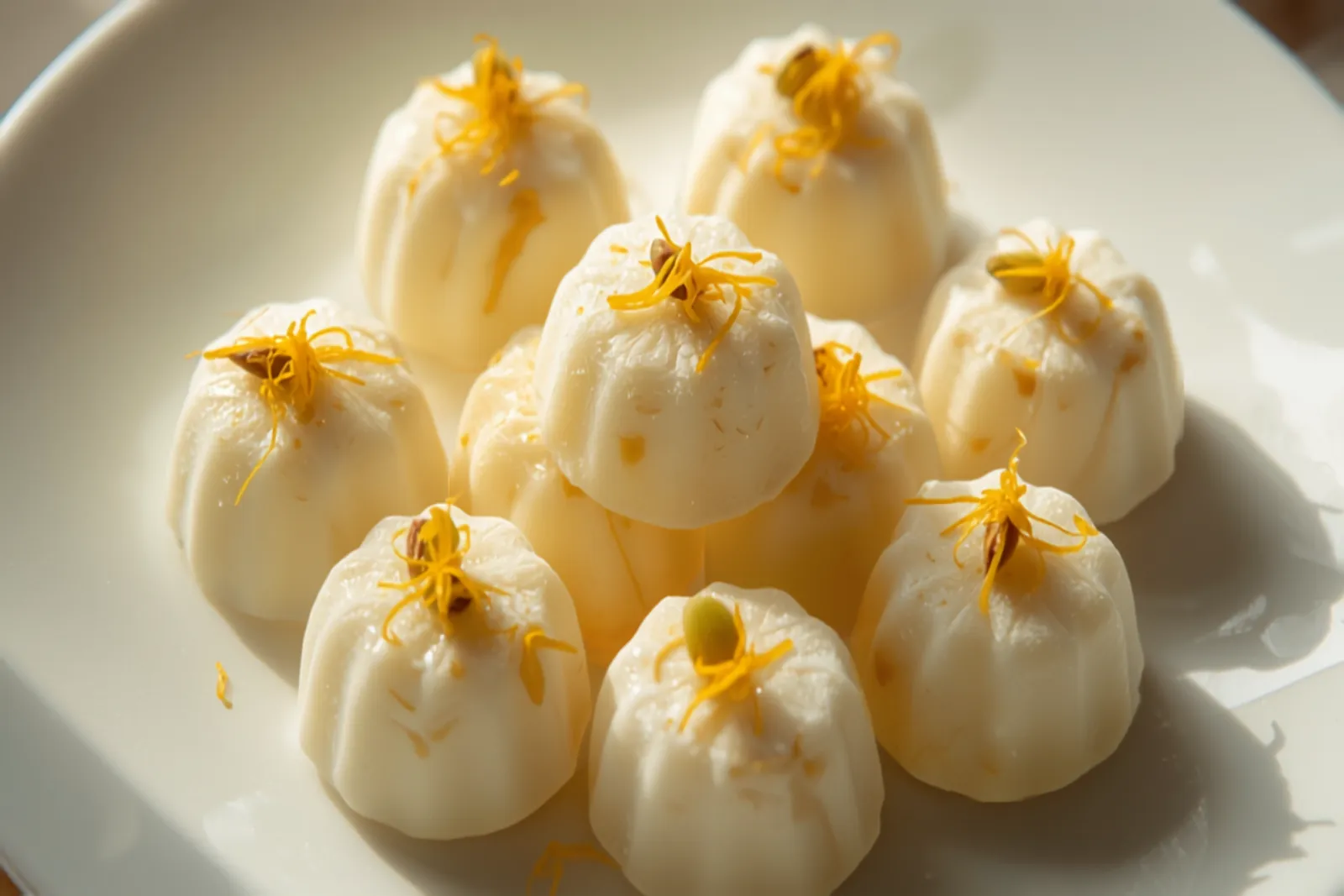
Sandesh (shondesh) is the jewel of Bengali sweet-making — a refined chhena confection that showcases Bengal's mastery of fresh-cheese sweets. Less syrupy than most Indian mithai, it ranges from soft (norom paak) to firmer (kara paak), and is shaped in carved wooden moulds for festivals and offered at Durga Puja and other occasions.
Sandesh is the most refined expression of Bengal’s genius with fresh-cheese sweets — soft, milky, lightly cardamom-scented chhena cooked gently with sugar into a fudge-like confection and pressed into delicate shapes. Where much Indian mithai is dripping in syrup, sandesh is restrained and elegant, and it comes together in under half an hour.
It begins, again, with chhena
Like rasgulla, sandesh starts from chhena — milk curdled with lemon, drained, and rinsed. The difference is what happens next: instead of boiling it in syrup, you knead the chhena until perfectly smooth, then cook it gently with sugar until it just comes together into a soft, shapeable mass.
The cook is everything (norom paak)
This soft-cook style is called norom paak, and the whole skill is in the timing. Cook on low, stirring constantly, only until the chhena thickens and holds together — a minute too long and it turns dry and hard. Stop early; it firms as it cools. (Cook a touch longer for kara paak, a firmer sandesh that holds carved-mould patterns and keeps longer.)
Shape it with care
Sandesh is traditionally pressed into carved wooden moulds that emboss it with flowers and shells, but rolling into balls or flattening into discs with a pistachio pressed on top is just as lovely. In winter, the great version is nolen gur sandesh, made with fragrant date-palm jaggery.
For its spongy cousin, see rasgulla, or browse the full recipe collection.
Ingredients
For the chhena
- 1 litre full-fat cow's milk
- 2–3 tbsp lemon juice (diluted) To curdle; add gradually until the whey runs clear.
For the sandesh
- 1/3 cup sugar Adjust to taste; powdered sugar dissolves fastest. Jaggery (nolen gur) is traditional in winter.
- 1/4 tsp ground cardamom
To garnish
- chopped pistachios or a saffron strand
Method
Tap a step’s number to check it off as you go.
-
Make chhena: boil the milk, curdle off the heat with diluted lemon juice, strain through muslin, and rinse under cold water. Squeeze out excess moisture and hang 15 minutes.
Why: Fresh, well-rinsed chhena with most of the water removed is the base of all good sandesh; the rinse removes any sour taste.
-
Knead the chhena until completely smooth and free of grains, 4–5 minutes.
Why: Smooth chhena gives a fine, melt-in-the-mouth sandesh; grainy chhena makes it crumbly. Don't skip the kneading.
-
Cook the chhena with the sugar in a non-stick pan over low heat, stirring constantly, for 6–8 minutes until it thickens into a soft, dough-like mass that holds together.
Why: Gentle, constant cooking dries the chhena just enough to shape (norom paak — soft cook). Overcook and it turns dry and hard; this is the step to watch closely.
-
Stir in the cardamom, cool slightly, then shape — press into a greased mould, roll into balls, or flatten into discs and press a pistachio on top.
Why: Shaping while warm and pliable gives clean forms; carved wooden moulds give the traditional patterned sandesh.
-
Cool fully (chill briefly) so the pieces firm up before serving.
Why: Sandesh sets as it cools; serving warm leaves it too soft to hold its shape.
A quick, anonymous tap — no review needed.
Variations
- Nolen gur sandesh
Use date-palm jaggery (nolen gur) instead of sugar for the prized winter version with deep caramel flavour.
- Kara paak (firmer)
Cook a little longer for a firmer, longer-keeping sandesh that holds intricate moulded shapes.
- Fruit sandesh
Fold in mango pulp or a little fruit purée for a flavoured, seasonal sandesh.
Serving & Storage
Serve at room temperature or lightly chilled as a refined end to a meal or as festival mithai. A saffron strand or pistachio makes it elegant.
Pairs with: Cardamom, Pistachio, A festive sweets platter.
Storage: Keeps 3–4 days refrigerated in an airtight box. Soft (norom paak) sandesh is best within a couple of days; firmer kara paak keeps longer.
Nutrition
Per serving (2 pieces)
- Calories
- 150
- Protein
- 6 g
- Carbs
- 18 g
- Fat
- 6 g
- Fiber
- 0 g
- Sugar
- 17 g
- Sodium
- 40 mg
Notable micronutrients: Calcium, Phosphorus
Estimated using standard ingredient data. Values vary with brands and substitutions.
Frequently Asked Questions
What's the difference between sandesh and rasgulla?
Both start from fresh chhena, but rasgulla is boiled in syrup until spongy and juicy, while sandesh is gently cooked with sugar into a soft, fudge-like sweet and shaped — drier, denser, and more delicate. Sandesh is the more refined of the two.
Why is my sandesh dry or crumbly?
Either the chhena wasn't kneaded smooth, or it was overcooked with the sugar. Cook on low and stop as soon as it comes together into a soft mass that holds shape — it firms further as it cools.
What is nolen gur?
Nolen gur is fresh date-palm jaggery, a prized winter ingredient in Bengal with a deep caramel aroma. Nolen gur sandesh is a seasonal delicacy and well worth seeking out if you can find the jaggery.
What to drink with this
All drinks →Hand-picked pours to match this dish.
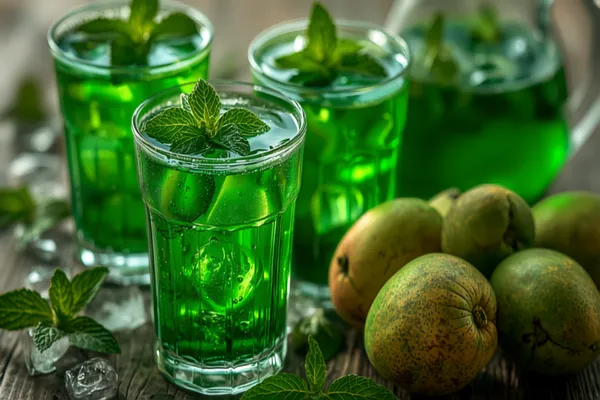
North & West India (peak-summer drink across the subcontinent) · Indian
Aam Panna (Raw Green Mango Summer Cooler)
India's tangy, jade-green raw-mango cooler — roasted or boiled green mangoes blended with cumin, black salt and mint. The traditional heat-stroke remedy that tastes like summer.
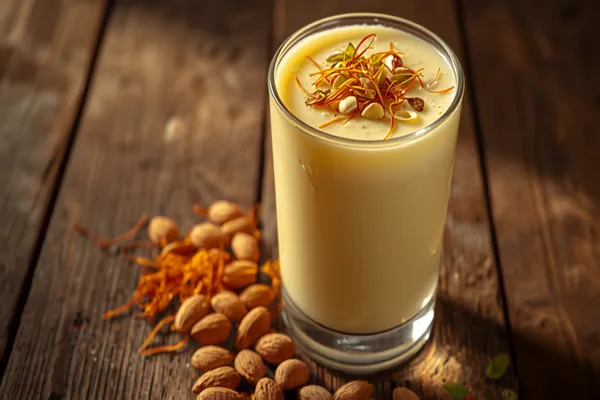
Pan-Indian (North & West India) · Indian
Badam Milk (Saffron Almond Milk)
Milk simmered with a paste of soaked almonds, saffron, cardamom and a whisper of nutmeg — India's rich, fragrant almond drink. Comforting served warm in winter, reviving served chilled in summer, festive any time.
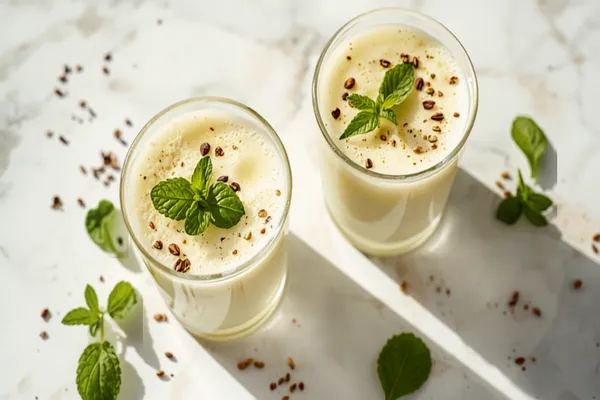
Pan-Indian (Gujarat & West India especially) · Indian
Chaas (Spiced Indian Buttermilk / Masala Chaas)
Whisked yogurt thinned with water and seasoned with cumin, green chilli, ginger and curry leaves — India's cooling, savoury buttermilk. A salty-tangy digestive that beats the heat and settles a heavy meal in two minutes.
From our kitchen community
Ratings & Reviews
My Rating
Tap a star to rate — no sign-in, no form needed.
My Review
0 Ratings
🥣 0 home cooks made it!
Be the first to rate Sandesh (Bengali Chhena Sweet).
Related Recipes
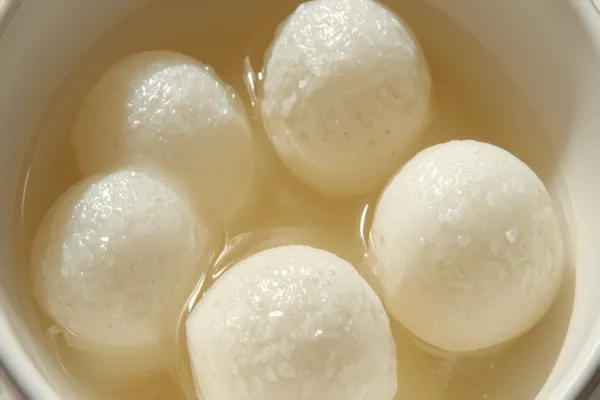
Eastern India (West Bengal and Odisha) · Indian
Rasgulla (Spongy Chhena Dumplings in Syrup)
The cloud-soft sweet of eastern India: dumplings of fresh chhena (curdled-milk cheese) boiled in light sugar syrup until they swell into springy, syrup-soaked spheres. Deceptively simple, gloriously satisfying.
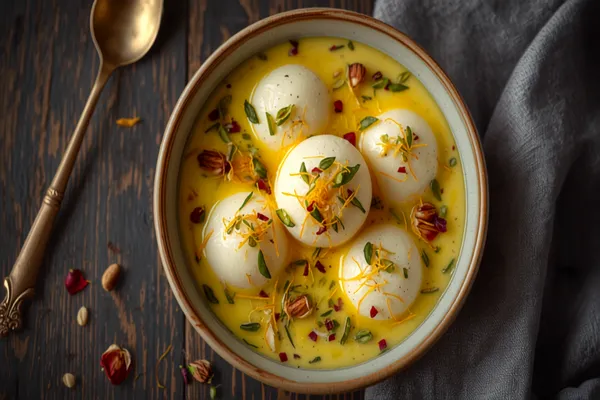
Eastern India (Bengal) · Indian
Rasmalai (Chhena Discs in Saffron-Cardamom Cream)
Soft, spongy discs of fresh chhena poached in syrup, then soaked in saffron- and cardamom-scented rabri (thickened milk) and showered with pistachios. Eastern India's most luxurious milk sweet, served cold.
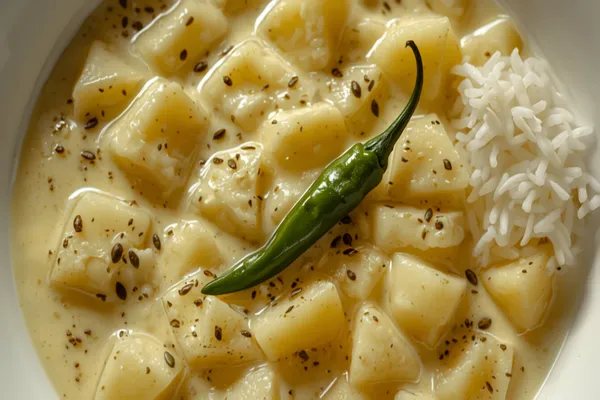
West Bengal / East India · Indian
Aloo Posto (Bengali Potatoes in Poppy Seed Paste)
A beloved Bengali vegetarian dish: potatoes cooked in a creamy, nutty paste of ground white poppy seeds, gently spiced and finished with mustard oil and green chili. Humble, soothing, and quietly addictive.
Further reading
- Cultural Story · Eastern IndiaA Complete Guide to Bengali and Eastern Indian CookingFrom the fish-and-rice heart of Bengal to Odisha's temple food, Assam's sour-clean dishes, and the smoke-and-ferment cooking of the Northeast — a guide to eastern India's distinct, often gentle, sometimes fiery table.
- Festival & SeasonalIndian Festival Sweets: From Diwali to EidIn India, no celebration is complete without mithai. A guide to the sweets that define the festival calendar — the Diwali mithai box, the Eid dessert table, and the regional treasures of Bengal and the south — and what makes each one special.