Japan (an Edo-era wagashi, made nationwide; strawberry daifuku is a Tokyo innovation) · Japanese
Daifuku (Soft Mochi Wrapped Around Sweet Red-Bean Anko)
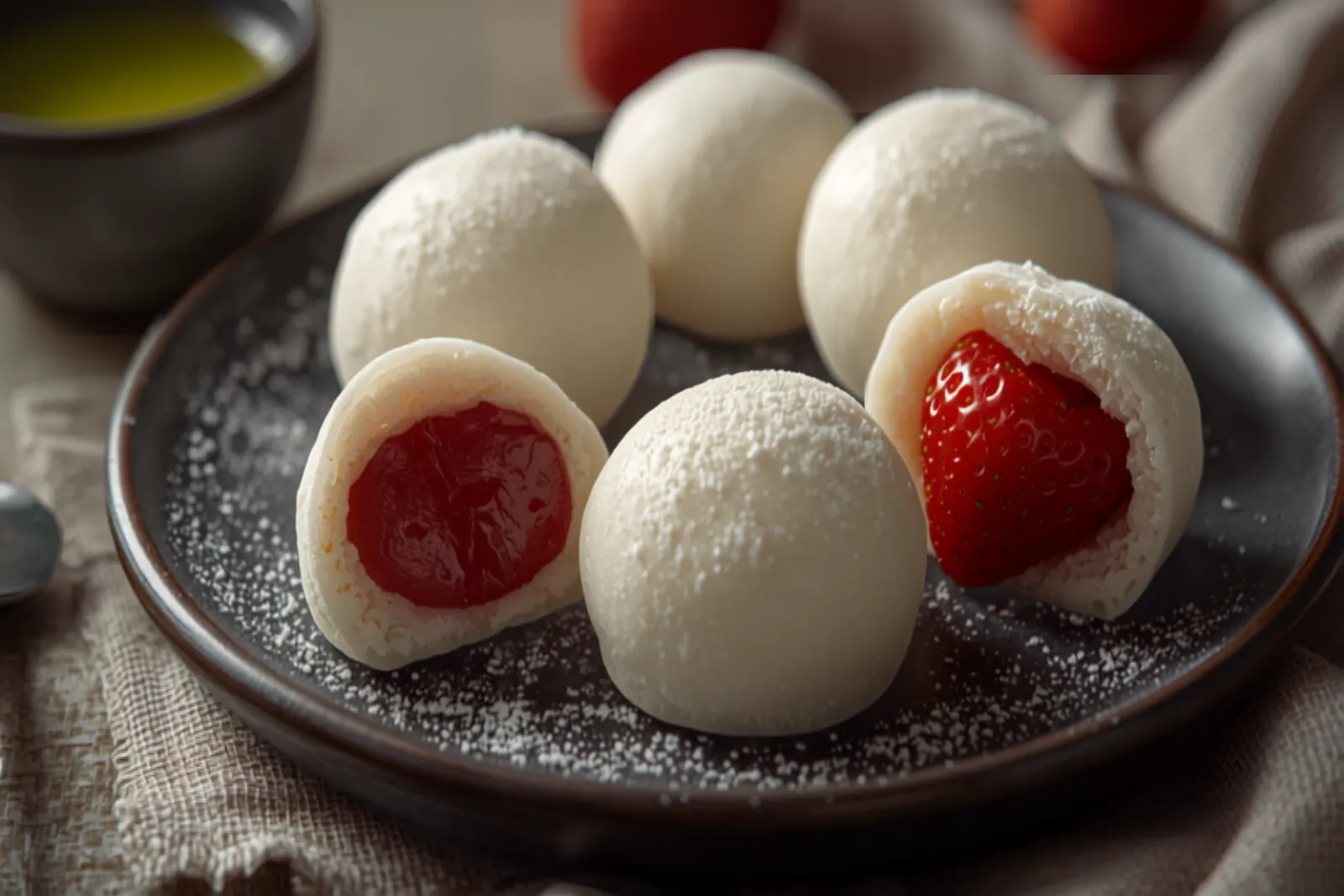
Pillowy, cloud-soft mochi made from glutinous rice flour, dusted in potato starch and wrapped around a ball of sweet red-bean anko. The most beloved of Japanese wagashi — and the base for the springtime favorite, strawberry daifuku.
Published August 3, 2026
Cultural context
Daifuku — literally 'great luck' — is a soft mochi confection that took its modern round, filled shape in the Edo period, when it was sold as a cheap, filling street sweet. It's a cornerstone of wagashi, the traditional sweets served with green tea, and turns up at New Year and other celebrations for its auspicious name. The strawberry version, ichigo daifuku, is a surprisingly recent 1980s invention that became an instant classic and a herald of spring.
Bite into a daifuku and you meet two textures in quick succession: first the mochi, soft and stretchy and faintly sweet, dusted in a whisper of starch; then the cool, dense anko at its heart, sweetened red beans that have anchored Japanese sweets for centuries. The name means “great luck,” which is a lot to ask of a small round snack, but daifuku has always carried a cheerful, everyday optimism — it was Edo-period street food before it was a delicacy, sold cheap and filling to anyone with a coin.
It belongs to the world of wagashi, the traditional confections made to be eaten alongside green tea, where sweetness is meant to set off the tea’s gentle bitterness rather than shout over it. That’s the frame to keep in mind: daifuku isn’t dessert in the Western sense so much as a companion to a bowl of matcha.
Sweet rice flour, and no shortcuts on it
The mochi begins and ends with the right flour. You need shiratamako or mochiko — glutinous, or “sweet,” rice flour, milled from a different rice than the everyday kind. This is the single ingredient you cannot fudge: ordinary rice flour cooks up crumbly and sad, while glutinous rice flour turns gloriously stretchy, the whole reason mochi is mochi. Happily, it’s also naturally gluten-free. Whisk it smooth with sugar and water — the sugar isn’t only for sweetness, it keeps the finished mochi soft and pliable for longer — and cook it in the microwave in short bursts, stirring between, until it turns from milky white to glossy and translucent.
Befriend the potato starch
Fresh-cooked mochi is astonishingly sticky, and the thing that saves you is potato starch (katakuriko). Be generous with it — on the work surface, on top of the dough, on your hands, in a little bowl kept close for re-dusting. Work while the mochi is still warm and pliable, because it stiffens as it cools, and that’s also why you shape the anko filling first: once the mochi is ready you want to move quickly, pinching each disc up and around a ball of filling and sealing it at a single point so the wrapper stays thin and even.
The strawberry that changed everything
For all its Edo-era pedigree, daifuku’s most famous modern form is barely forty years old. Ichigo daifuku — a whole small strawberry wrapped in anko, then in mochi — was dreamt up in Tokyo in the 1980s and became an instant classic, a harbinger of spring in every confectioner’s window. The magic is the sequence of one bite: soft mochi, sweet bean, then a sudden bright burst of tart juicy berry. Pat the strawberries bone-dry, seal the anko fully around each one, and — this matters — eat them the same day, because the berry that makes them wonderful is also what makes them fleeting.
Make a batch, brew something green, and taste why this small lucky sweet has lasted centuries. For more to serve with the teapot, browse the full recipe collection, or read the cultural stories behind the food.
Ingredients
For the filling
- 240 g (about 1 cup) sweet red-bean paste (anko) Koshian (smooth) is the tidiest to shape; tsubuan (chunky) works too. Store-bought is standard and completely fine.
For the mochi
- 100 g (about 3/4 cup) shiratamako or mochiko (glutinous / sweet rice flour) Also labelled 'sweet rice flour.' This is the one non-negotiable ingredient — regular rice flour will not turn stretchy. Naturally gluten-free.
- 180 ml (3/4 cup) water
- 40 g (about 3 tbsp) granulated sugar Sugar keeps the mochi soft and pliable for longer, not just sweet.
For dusting
- 1/4 cup potato starch (katakuriko) or cornstarch For coating your hands, the work surface, and the finished mochi so nothing sticks. Do not substitute flour.
For strawberry daifuku (optional)
- 8 small strawberries Hulled and patted very dry. Small, sweet, in-season berries are best.
Method
Tap a step’s number to check it off as you go.
-
Divide the anko into 8 portions (about 30 g each) and roll into balls. For strawberry daifuku, wrap each portion of anko around a dry strawberry, point up, leaving the tip peeking or fully enclosed. Chill while you make the mochi.
Why: Pre-shaping the filling means you can work fast once the hot mochi is ready — mochi stiffens as it cools, so you don't want to be scrambling. Chilling firms the anko so it holds a neat ball.
-
In a microwave-safe bowl, whisk the shiratamako, sugar, and water until completely smooth with no lumps.
Why: Any undissolved flour becomes a hard grain in the finished mochi; a smooth slurry cooks into an even, glassy dough.
-
Cover loosely and microwave in three bursts — 1 minute, stir; 1 minute, stir; then 30–60 seconds — until the mochi is thick, translucent, and stretchy. (Or steam 15–20 minutes.)
Why: Cooking in stages with a good stir between cooks the starch evenly; you're watching for it to turn from milky to glossy and translucent, which means the mochi is done.
-
Dust a work surface generously with potato starch, scrape the hot mochi out onto it, and dust the top too. Let it cool just enough to handle.
Why: Potato starch is the only thing standing between you and a hopelessly sticky mess — be generous. Mochi must still be warm and pliable to shape, so don't let it fully cool.
-
Dust your hands, pinch off 8 pieces, and flatten each into a disc about 8 cm (3 in) across, thinner at the edges than the center.
Why: A center that's slightly thicker gives the filling room without the seam becoming a tough knot of doubled-up mochi.
-
Place a ball of filling in the center (for strawberries, point down), then draw the edges of the mochi up and pinch them together to seal. Set seam-side down and brush off excess starch.
Why: Sealing at a single point keeps the wrapper thin and even all around; resting seam-down lets the pinch fuse closed so it won't spring open.
A quick, anonymous tap — no review needed.
Variations
- Ichigo daifuku (strawberry)
The modern spring classic: a whole small strawberry wrapped in anko, then in mochi, so each bite goes soft-sweet-then-bright with a burst of juicy tart berry. Assemble the day you'll eat them — the strawberry weeps if it sits.
- Shiro-an or fruit fillings
Swap red-bean anko for white bean paste (shiro-an), or tuck in other fruit — a segment of mandarin, a cube of ripe kiwi — for a colorful, less traditional daifuku.
- Yomogi (mugwort) mochi
Knead a spoonful of yomogi (mugwort) powder into the mochi for the fragrant green kusa-daifuku eaten in spring, faintly herbal against the sweet bean.
Serving & Storage
Serve at room temperature the day they're made, with green tea — a bowl of whisked matcha is the classic partner. Eat daifuku whole or in two hands; the soft mochi stretches beautifully.
Pairs with: Whisked matcha (usucha), Sencha or hojicha, A small pot of genmaicha.
Storage: Daifuku is at its best within hours of making, when the mochi is softest, and is really a same-day sweet. It stiffens in the fridge, so keep it at cool room temperature under plastic and eat within a day. Plain (non-strawberry) daifuku can be frozen and thawed at room temperature, though the texture softens; strawberry daifuku must be eaten the day it's made.
Nutrition
Per serving (1 daifuku)
- Calories
- 150
- Protein
- 2 g
- Carbs
- 34 g
- Fat
- 0 g
- Fiber
- 2 g
- Sugar
- 16 g
- Sodium
- 10 mg
Notable micronutrients: Iron, Folate, Manganese
Estimated using standard ingredient data. Values vary with brands and substitutions.
Frequently Asked Questions
Can I use regular rice flour instead of shiratamako or mochiko?
No — this is the one substitution that won't work. Ordinary rice flour is made from non-glutinous rice and cooks up crumbly, never stretchy. You specifically need glutinous/sweet rice flour (shiratamako or mochiko), sold at any Asian grocer and often labelled 'sweet rice flour.'
My mochi is impossibly sticky — what am I doing wrong?
Almost always not enough potato starch, or trying to work the mochi too hot with bare hands. Be genuinely generous dusting the surface, the top of the dough, and your hands, and keep a little bowl of starch nearby to re-dust as you shape.
How do I keep strawberry daifuku from getting soggy?
Pat the hulled strawberries completely dry before wrapping, seal the anko fully around each berry so juice can't reach the mochi, and — most importantly — assemble and eat them the same day. The strawberry is what makes ichigo daifuku wonderful and also what makes it perishable.
What to drink with this
All drinks →Hand-picked pours to match this dish. Alcoholic pairings are for adults of legal drinking age (21+ in the US) — please drink responsibly.
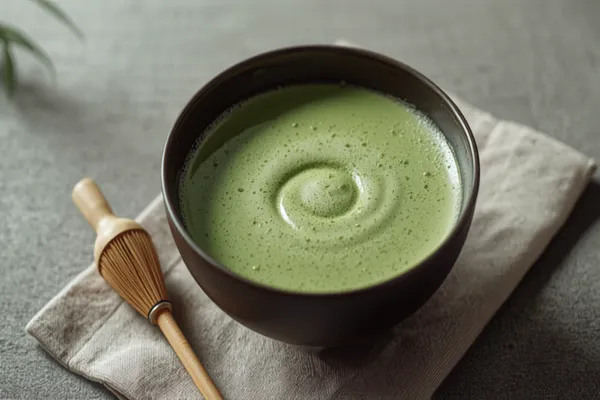
Japan (the chado tea tradition of Kyoto and Uji, home of Japan's finest matcha) · Japanese
Matcha (Whisked Usucha, Thin Tea)
How to whisk a proper bowl of usucha — thin matcha — with a bamboo chasen: bright, jade-green, frothed to a fine foam, and faintly sweet-bitter. The everyday face of Japan's centuries-old tea tradition, ready in two minutes on a home counter.
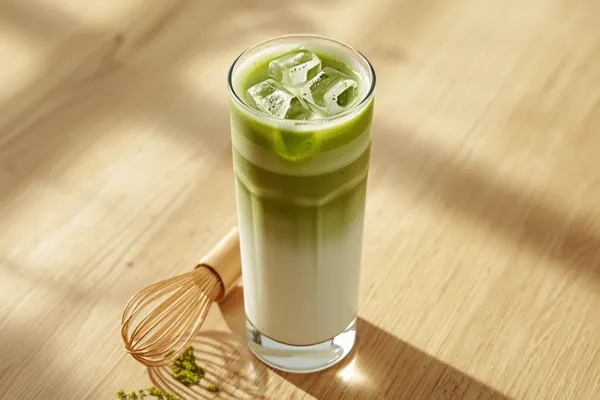
Japan (matcha tradition, Uji & Nishio) · Japanese
Matcha Latte (Whisked Japanese Green Tea Latte)
Stone-ground Japanese matcha whisked smooth and poured over steamed milk — grassy, sweet and gently caffeinated, with no bitterness when you make it right. A café favourite that's better and cheaper at home.
 21+
21+ American bars (via Japanese Midori) · Japanese-American
Midori Sour (Melon Liqueur, Lemon & Lime)
The bright-green retro sour: sweet Midori melon liqueur balanced with fresh lemon and lime, lengthened with a splash of soda. A vivid, nostalgic crowd-pleaser — sweet-tart, low-proof and unmistakably '80s.
From our kitchen community
Ratings & Reviews
My Rating
Tap a star to rate — no sign-in, no form needed.
My Review
0 Ratings
🥣 0 home cooks made it!
Be the first to rate Daifuku (Soft Mochi Wrapped Around Sweet Red-Bean Anko).
Related Recipes
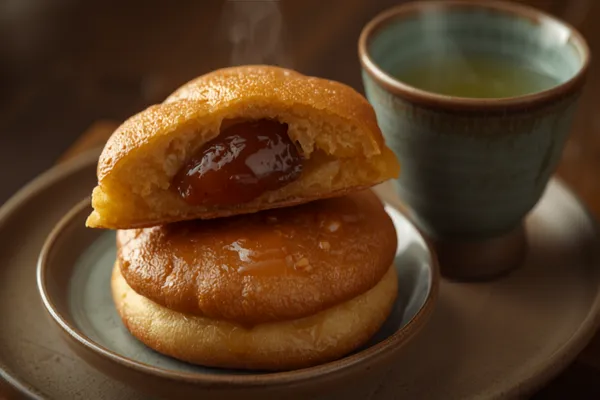
Japan (a Tokyo-born wagashi, now made nationwide) · Japanese
Dorayaki (Honey Pancakes with Sweet Red-Bean Anko)
Two small, springy castella-style pancakes sandwiching a generous layer of sweet red-bean anko. Fragrant with honey and faintly caramel, dorayaki is the beloved wagashi that turned a certain blue robot cat into a national mascot for good snacks.
Japan (the chado tea tradition of Kyoto and Uji, home of Japan's finest matcha) · Japanese
Matcha (Whisked Usucha, Thin Tea)
How to whisk a proper bowl of usucha — thin matcha — with a bamboo chasen: bright, jade-green, frothed to a fine foam, and faintly sweet-bitter. The everyday face of Japan's centuries-old tea tradition, ready in two minutes on a home counter.
Japan (matcha tradition, Uji & Nishio) · Japanese
Matcha Latte (Whisked Japanese Green Tea Latte)
Stone-ground Japanese matcha whisked smooth and poured over steamed milk — grassy, sweet and gently caffeinated, with no bitterness when you make it right. A café favourite that's better and cheaper at home.