Cultural Story · Japan
A Complete Guide to Japanese Cooking
Japanese food is not one thing but a whole grammar — washoku and the everyday home meal, the umami of dashi, the discipline of rice, and a country of sharply distinct regions. A guide to the philosophy, the building blocks, and where to start cooking.
Published August 3, 2026
“Japanese food” tends to conjure a single image in the West — a slab of raw fish on rice — that flattens one of the world’s most disciplined and varied cuisines. Sushi is a specialist tradition that many Japanese cooks would never attempt at home. The everyday reality is quieter and, for a home cook, far more useful: a bowl of rice, a bowl of soup, a few small dishes, and a pantry that turns humble ingredients into something deeply savoury. This guide maps that world — the philosophy, the building blocks, and where to begin.
Washoku: one soup, three dishes
The heart of home cooking is washoku, and its everyday template is ichijū-sansai — “one soup, three dishes.” A meal is a bowl of rice, a bowl of soup (usually miso soup), and a small constellation of okazu: one main dish and two smaller sides, plus pickles. It is not a rigid rule so much as a rhythm, and once you feel it, dinner assembles itself.
The aesthetic behind it is often summarised as the five principles: five tastes (sweet, sour, salty, bitter, and umami), five colours (white, black, red, green, yellow), and five cooking methods (simmering, grilling, steaming, frying, and serving raw). A well-composed Japanese meal touches most of these — not out of fussiness, but because variety of taste, colour, and texture is how a simple table stays interesting.
Dashi and the fifth taste
If there is one thing to learn first, it is dashi — the five-minute stock of kombu (dried kelp) and katsuobushi (smoked, dried bonito) that underpins the entire cuisine. Dashi is the clearest expression of umami, the savoury “fifth taste” that Japanese cooking prizes above all. It flavours miso soup, simmered dishes like nikujaga, the dipping tsuyu for chilled soba, and a hundred everyday things. Learn it once — we walk through it in our guide to dashi — and a shelf of instant hondashi will carry you the rest of the way on a weeknight.
Rice is the point
Everything else on the table is, in a sense, an accompaniment to rice (gohan, a word that also just means “a meal”). Japanese short-grain rice — Koshihikari and its cousins — cooks up glossy and faintly sticky, and its quality genuinely matters: rinse it well, let it rest, and treat it as the centre of the plate rather than a filler. Seasoned with vinegar it becomes shari, the foundation of sushi; shaped and salted it becomes a portable onigiri; left plain it soaks up the broth of a donburi like oyakodon.
A country of regions
Japan is long and mountainous, and its food changes sharply as you travel:
- Kantō (Tokyo & the east) favours darker, saltier seasoning — the soy-forward broths and the edomae sushi that was born as Tokyo street food.
- Kansai (Kyoto & Osaka) leans lighter and subtler, prizing the clarity of dashi; Kyoto’s refined kaiseki and Osaka’s exuberant street food (takoyaki, okonomiyaki) are two faces of the same region.
- Hokkaidō, the cold north, is dairy, seafood, corn, and rich miso ramen.
- Kyūshū, the warm south, gives us tonkotsu ramen and a sweeter soy sauce.
- Okinawa, subtropical and long independent, cooks its own way entirely — pork, bitter melon, and a famously long-lived diet.
For now we group our recipes by theme rather than geography — washoku home cooking, noodles, sushi and rice, and sweets and tea — but the regional map is the deeper story underneath.
The seasons, on the plate
No idea runs deeper through Japanese cooking than shun — the peak moment when an ingredient is at its best. A menu is expected to announce the season, through the ingredient itself and often through the garnish, the vessel, and the colour on the plate. You do not need a cupboard of special dishes to honour it; you need only to cook what is good right now, and to notice.
Where to start
Begin with dashi and a bowl of miso soup — five minutes that teach you the flavour of the whole cuisine. Cook a donburi, a batch of crackling karaage, or a pot of comforting Japanese curry. Learn to whisk a bowl of matcha when you want the ritual, and save sushi for when the fundamentals feel easy. Then browse the full recipe collection or read more of the cultural stories behind the food.
Frequently Asked Questions
What is washoku?
Washoku is traditional Japanese cuisine — recognised by UNESCO in 2013 as an intangible cultural heritage. It describes not just dishes but a whole approach: fresh, seasonal ingredients treated simply, a meal structured around rice, respect for the natural flavour of each ingredient, and an aesthetic of balance in taste, colour, and cooking method. Its everyday form is the ichijū-sansai meal — 'one soup, three dishes.'
What ingredients do I need to start cooking Japanese food at home?
A short pantry goes a long way: Japanese short-grain rice, soy sauce (koikuchi), mirin, sake, rice vinegar, miso, and the makings of dashi — kombu (dried kelp) and katsuobushi (bonito flakes), or a jar of instant dashi. Add toasted sesame, nori, and a bottle of neutral oil and you can cook most of the home-kitchen canon.
Where should a beginner start with Japanese cooking?
Start with dashi and a bowl of miso soup — they teach the flavour that underpins everything. Then cook a donburi like oyakodon, a batch of chicken karaage, or a pot of Japanese curry. Save sushi and the tea whisk for once the fundamentals feel like second nature.
Related Recipes
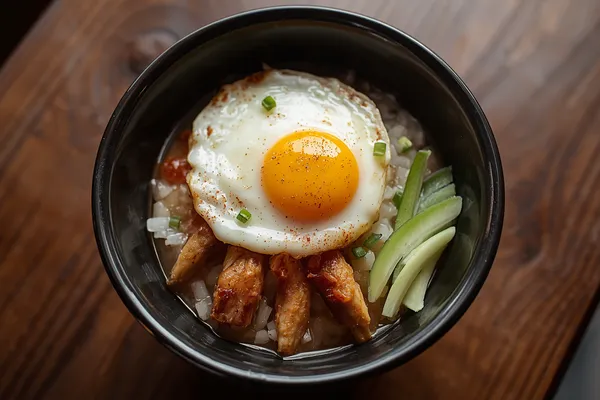
Japan (nationwide home cooking; the donburi tradition is rooted in Tokyo) · Japanese
Oyakodon (Japanese Chicken and Egg Rice Bowl)
The Japanese home-cooking classic: chicken simmered with sweet onions in a dashi-soy broth, bound with barely-set egg and slid over hot rice. Fast, frugal, and deeply comforting — dinner in under thirty minutes.
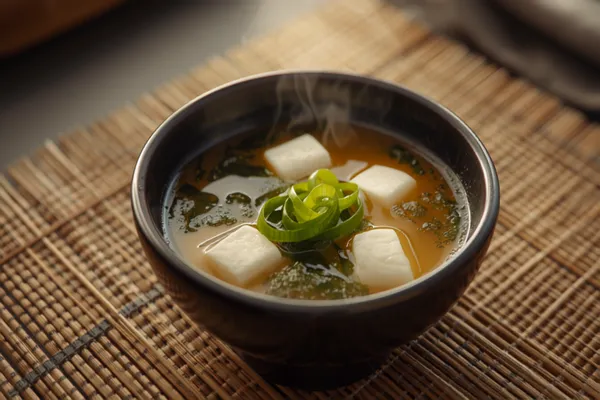
Japan (nationwide home cooking; a daily fixture from Hokkaido to Okinawa) · Japanese
Miso Soup (Miso Shiru with Dashi, Wakame & Tofu)
The quiet backbone of the Japanese table: a clear dashi broth loosened with miso and dotted with soft tofu, wakame, and scallion. Five minutes, a handful of ingredients, and a bowl that tastes like home.
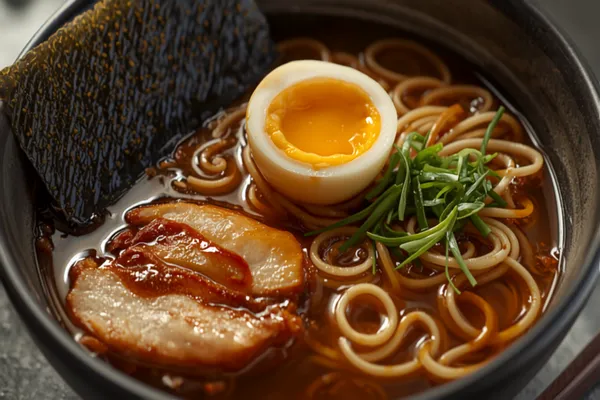
Tokyo, Japan · Japanese
Tokyo Shoyu Ramen (Soy Sauce Ramen)
The classic Tokyo bowl: springy noodles in a clear, soy-seasoned chicken broth, topped with marinated egg, chashu pork, and spring onion. A weekend project broken into make-ahead parts that come together into a restaurant-worthy bowl.
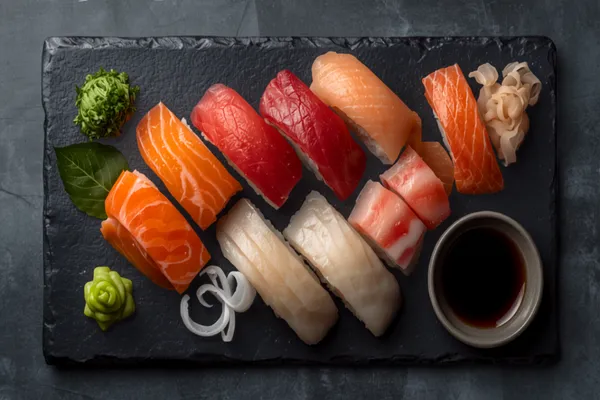
Japan · Japanese
Nigiri Sushi (Salmon and Tuna)
Hand-pressed Japanese nigiri — seasoned sushi rice topped with glistening slices of fresh salmon and tuna, with a dab of wasabi between. A lesson in sushi rice, the knife, and restraint, plus a simple maki roll to round out the platter.
Related stories & guides
- Ingredient Deep Dive · JapanDashi: The Quiet Foundation Under Japanese CookingBefore miso soup, before noodle broth, before a hundred simmered dishes, there is dashi — the five-minute stock of kelp and dried fish that gives Japanese food its savory depth. Here's what it is, why it matters, and how to make it.
- Cultural Story · InternationalWorld Classics: A Cook's Tour Beyond IndiaTable & Traditions is India-first, but the world has a place at this table too. A guide to our curated international slice — the European, East Asian, Southeast Asian, Middle Eastern and North African, and American dishes worth cooking, and where to begin with each.
- Cultural Story · Southeast AsiaA Cook's Map of Southeast AsiaSoutheast Asia isn't one cuisine but a dozen, bound loosely by rice, fish sauce, fresh herbs, and the pounded paste. A guide to how Thai, Vietnamese, Indonesian, Filipino, Malaysian, and Singaporean cooking differ, what they share, and where to start cooking.