Japan (nationwide home cooking; Kansai favors beef, Kanto often uses pork) · Japanese
Nikujaga (Japanese Soy-Simmered Beef and Potato Stew)
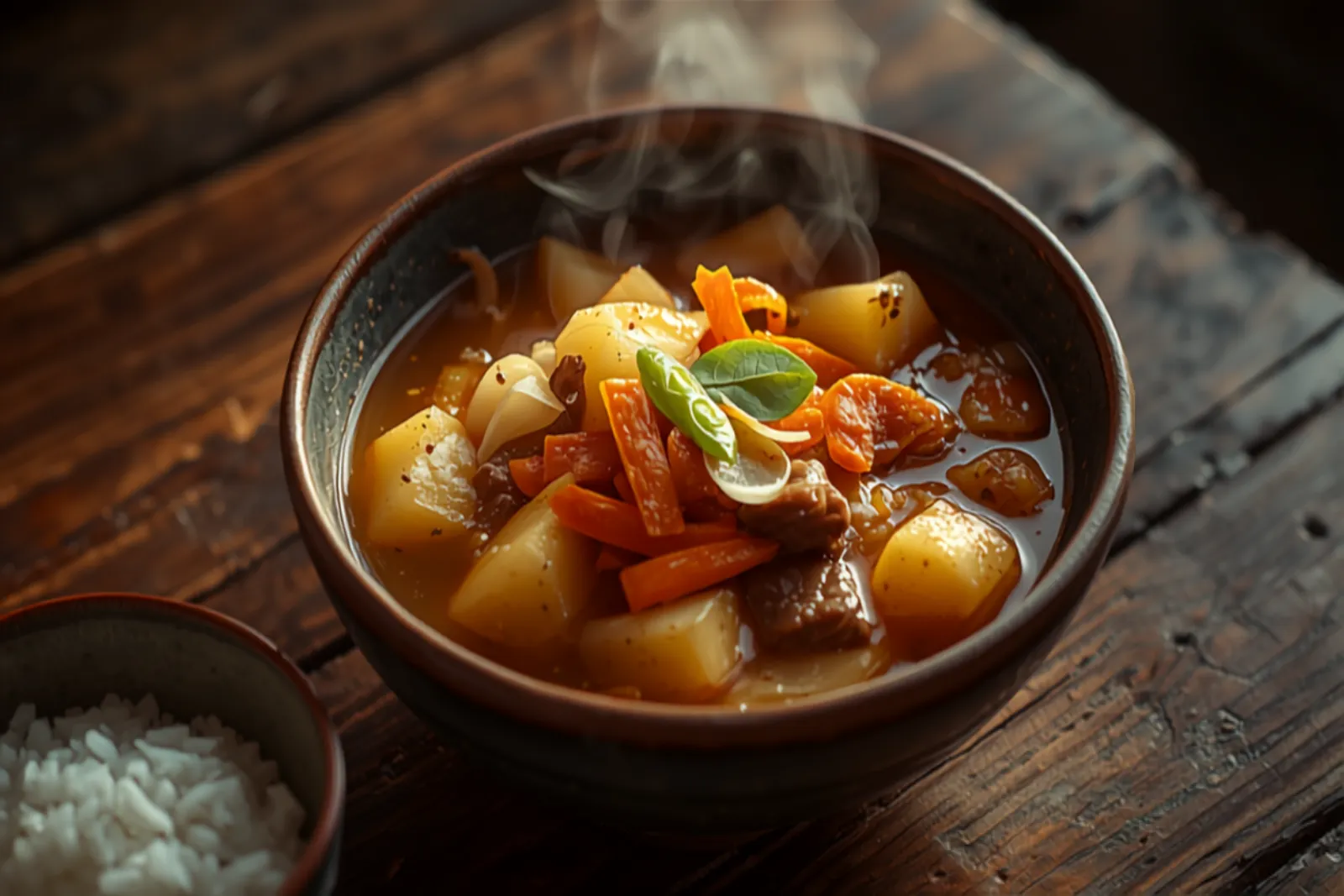
The taste of home in a Japanese kitchen: thin-sliced beef and tender potatoes simmered slow in a sweet dashi-soy broth with onion and carrot. Humble, deeply comforting, and the dish everyone says their mother makes best.
Published August 3, 2026
Cultural context
Nikujaga — niku (meat) and jaga (potato) — is the archetypal ofukuro no aji, the 'taste of mother's cooking.' Legend credits its invention to the navy in Meiji-era Kure, an attempt to recreate a beef stew an admiral had eaten in Britain; whatever its true origin, it became the comforting weeknight simmer that defines home for generations of Japanese.
Ask a Japanese person what dish means home and there’s a good chance the answer is nikujaga. It is the very definition of ofukuro no aji — “the taste of mother’s cooking” — a soy-simmered stew of beef and potatoes so bound up with childhood and comfort that it turns up in surveys of the food men most want their partners to know how to make. Not glamorous, not restaurant food, just deeply, reliably good: soft potatoes drinking in a sweet-savory broth, thin ribbons of beef, sweet onion, and carrot, all simmered slow in a single pot.
The name is plain-spoken — niku is meat, jaga is potato — and so is the dish. Its most-repeated origin story is charmingly odd: that a Meiji-era naval officer in Kure, missing a beef stew he’d eaten in Britain, asked the ship’s cooks to recreate it, and this soy-simmered cousin was the delicious misunderstanding that resulted. True or not, nikujaga became the weeknight simmer of the nation.
Dashi is the quiet foundation
Nikujaga looks like a meat-and-potato stew, but what makes it unmistakably Japanese is dashi. The clear kombu-and-bonito stock is the savory base the whole pot is built on — it’s the difference between a generic sweet-soy braise and something that tastes of washoku. You don’t taste dashi as a separate note here so much as feel its depth underneath everything. If you’re not yet friendly with it, our guide to dashi will get you there in ten minutes.
Sugar first, soy later
There’s a small but real technique buried in the simmering order, and it’s worth knowing. Add the sugar, sake, and mirin before the soy sauce. Salt firms vegetables and slows them from absorbing flavor, so if the soy goes in too early the potatoes stay bland at the center. Sweeten first, let the sweetness work its way in, then season with soy. Lay a drop lid — an otoshibuta, or just a circle of parchment — right on the surface so the shallow broth is pushed up over everything and seasons it evenly without drowning it.
The magic is in the rest
Here is the counterintuitive heart of nikujaga: it isn’t finished when it’s cooked. Turn off the heat and walk away for at least ten or fifteen minutes. As the stew cools, the seasoned broth is pulled deep into the potatoes and meat, and the flavor sets in a way no amount of extra simmering can rush. This is why every Japanese home cook will tell you nikujaga is even better the next day — and why it’s such a generous make-ahead dish. Patience is the last ingredient.
Craving more of the comforting, everyday side of Japanese cooking? Browse the recipe collection, or settle in with the cultural stories behind the food.
Ingredients
For the stew
- 300 g thinly sliced beef (or pork) Use thin-sliced beef or pork belly/shoulder (the kind sold for sukiyaki or shabu-shabu). In Kansai beef is traditional; in Kanto pork is common — both are correct.
- 4 medium (about 600 g) starchy potatoes Yukon Gold or a floury variety. Cut into large chunks and, if you like, round off the sharp edges (mentori) so they don't crumble.
- 1 large onion Cut into thick wedges; it softens into sweetness and helps thicken the broth.
- 1 carrot Cut into rough bite-size chunks (rangiri).
- 1 pack (about 100 g) shirataki noodles (optional) Rinsed and parboiled. Traditional in many households; they soak up the broth beautifully.
- 1 tbsp neutral oil
For the broth
- 1.5 cups (375 ml) dashi Kombu-katsuo dashi, or instant hondashi in hot water. This is the savory base the whole stew is built on.
- 3 tbsp soy sauce
- 2 tbsp mirin The alcohol simmers off, leaving the gentle sweetness that balances the soy.
- 1 tbsp sake
- 1 tbsp sugar Adjust to taste; nikujaga leans a touch sweet, in the amakara (sweet-salty) style.
To finish
- handful snow peas or green beans, blanched Added at the end for a fresh green note and color.
Method
Tap a step’s number to check it off as you go.
-
Heat the oil in a heavy pot and stir-fry the beef over medium-high heat just until it loses its raw color. Add the onion, carrot, and potato and toss for a minute or two.
Why: Browning the meat first builds a savory base and coats the vegetables in fat, so they hold their shape and soak up flavor rather than falling apart in the broth.
-
Pour in the dashi to nearly cover, bring to a simmer, and skim off any foam (aku) that rises.
Why: Skimming the scum keeps the broth clean and clear-tasting; leaving it in makes the finished stew muddy and slightly bitter.
-
Add the sake, mirin, and sugar first and simmer 5 minutes, then add the soy sauce. Lay a drop lid (otoshibuta) or a circle of parchment directly on the surface.
Why: Sugar and sake go in before soy because salt firms vegetables and slows their softening — sweeten first, salt later. The drop lid pushes the shallow broth up over everything for even seasoning without needing to fully submerge the stew.
-
Simmer gently over medium-low heat for about 20 minutes, until the potatoes are tender to a skewer and the broth has reduced by about a third.
Why: A slow, patient simmer is the whole character of nikujaga — it lets the potatoes drink in the sweet-savory broth from the inside rather than just coating them.
-
Stir in the blanched green vegetables to warm through, then turn off the heat and let the stew rest 10–15 minutes before serving.
Why: Resting is the secret step: as the stew cools slightly, the flavors are drawn deep into the potatoes and meat. Nikujaga genuinely tastes better after a short sit — or even the next day.
A quick, anonymous tap — no review needed.
Variations
- Pork (Kanto style)
Swap the beef for thin-sliced pork belly or shoulder, the common choice in eastern Japan. Slightly richer and a touch more everyday; season exactly the same way.
- Vegetarian
Leave out the meat, build the broth from kombu-shiitake dashi, and add extra onion, mushrooms, and fried tofu (atsuage) for body. Sweet, savory, and satisfying without the beef.
- Curry nikujaga
Stir a spoonful of Japanese curry roux or curry powder into the finished broth for a warming, cross-cultural spin that kids love over rice.
Serving & Storage
Serve warm in a bowl with plenty of the broth, alongside steamed rice and a bowl of miso soup — the quintessential home-style Japanese dinner. It reheats beautifully, so it's a natural for making ahead.
Pairs with: Steamed short-grain rice, Miso soup, Quick-pickled vegetables (tsukemono), Cold barley tea or sake.
Storage: Nikujaga keeps and improves in the fridge for up to 3 days — the flavor deepens overnight. Reheat gently on the stove. It's a strong make-ahead dish; the potatoes soften slightly on reheating but the taste only gets better.
Nutrition
Per serving (1 generous bowl)
- Calories
- 340
- Protein
- 18 g
- Carbs
- 38 g
- Fat
- 12 g
- Fiber
- 4 g
- Sugar
- 11 g
- Sodium
- 820 mg
Notable micronutrients: Potassium, Vitamin A, Vitamin B12
Estimated using standard ingredient data. Values vary with brands and substitutions.
Frequently Asked Questions
Beef or pork for nikujaga?
Both are traditional. Western Japan (Kansai) leans toward beef, while eastern Japan (Kanto) often uses pork — a genuine regional divide, not a mistake either way. Use thin-sliced meat sold for sukiyaki or shabu-shabu so it cooks quickly and stays tender.
What is a drop lid (otoshibuta) and do I need one?
It's a lid that sits directly on the food rather than on the pot rim, pushing the shallow simmering broth up and over everything for even seasoning with less liquid. You don't need a special one — a circle of parchment paper or foil with a small hole cut in the center does the same job.
Why does nikujaga taste better the next day?
As the stew cools, the seasoned broth is drawn deep into the potatoes and meat rather than staying on the surface. That's why the resting step matters and why leftovers are so prized — the flavor sets and deepens overnight.
What to drink with this
All drinks →Hand-picked pours to match this dish. Alcoholic pairings are for adults of legal drinking age (21+ in the US) — please drink responsibly.
Japan (the chado tea tradition of Kyoto and Uji, home of Japan's finest matcha) · Japanese
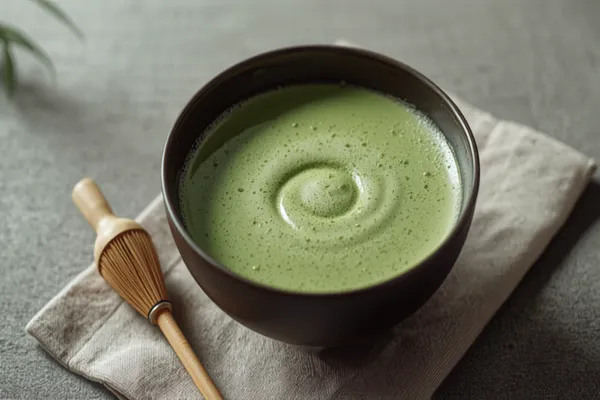
Matcha (Whisked Usucha, Thin Tea)
How to whisk a proper bowl of usucha — thin matcha — with a bamboo chasen: bright, jade-green, frothed to a fine foam, and faintly sweet-bitter. The everyday face of Japan's centuries-old tea tradition, ready in two minutes on a home counter.
Japan (matcha tradition, Uji & Nishio) · Japanese
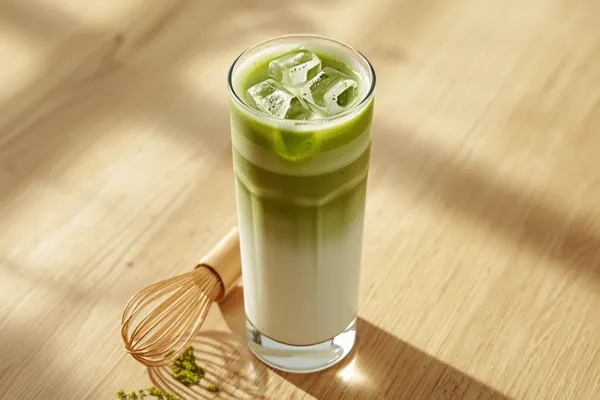
Matcha Latte (Whisked Japanese Green Tea Latte)
Stone-ground Japanese matcha whisked smooth and poured over steamed milk — grassy, sweet and gently caffeinated, with no bitterness when you make it right. A café favourite that's better and cheaper at home.
 21+
21+ American bars (via Japanese Midori) · Japanese-American
Midori Sour (Melon Liqueur, Lemon & Lime)
The bright-green retro sour: sweet Midori melon liqueur balanced with fresh lemon and lime, lengthened with a splash of soda. A vivid, nostalgic crowd-pleaser — sweet-tart, low-proof and unmistakably '80s.
From our kitchen community
Ratings & Reviews
My Rating
Tap a star to rate — no sign-in, no form needed.
My Review
0 Ratings
🥣 0 home cooks made it!
Be the first to rate Nikujaga (Japanese Soy-Simmered Beef and Potato Stew).
Related Recipes
Japan (nationwide; adapted from British naval curry in the Meiji era and thoroughly naturalized) · Japanese
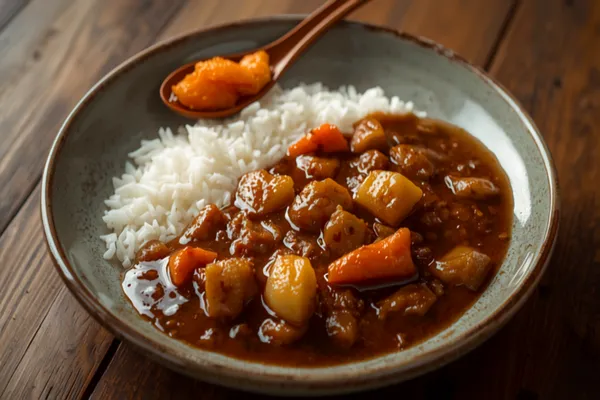
Japanese Curry (Kare Raisu) with From-Scratch Roux
Kare raisu, Japan's beloved national comfort food: sweet onions, carrots, and potatoes simmered into a thick, glossy, mildly sweet-savoury curry built on a scratch curry roux — with an honest note on the curry-block shortcut every Japanese household actually keeps.
Japan (nationwide home cooking; a daily fixture from Hokkaido to Okinawa) · Japanese
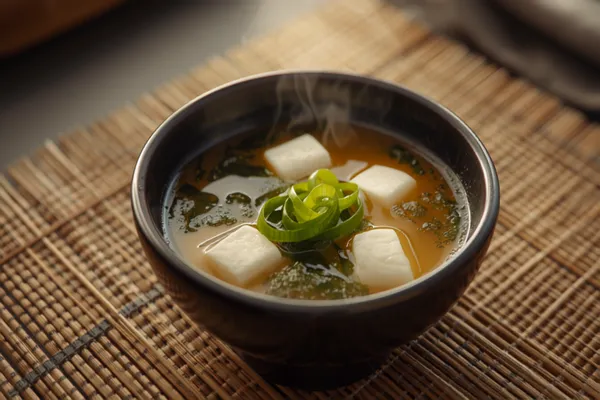
Miso Soup (Miso Shiru with Dashi, Wakame & Tofu)
The quiet backbone of the Japanese table: a clear dashi broth loosened with miso and dotted with soft tofu, wakame, and scallion. Five minutes, a handful of ingredients, and a bowl that tastes like home.
Japan (nationwide home cooking; the donburi tradition is rooted in Tokyo) · Japanese
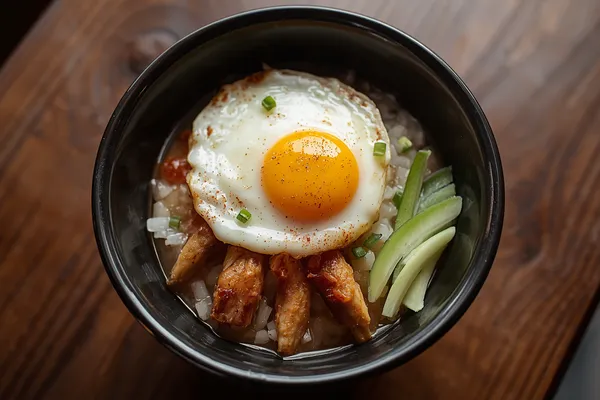
Oyakodon (Japanese Chicken and Egg Rice Bowl)
The Japanese home-cooking classic: chicken simmered with sweet onions in a dashi-soy broth, bound with barely-set egg and slid over hot rice. Fast, frugal, and deeply comforting — dinner in under thirty minutes.
Further reading
- Ingredient Deep Dive · JapanDashi: The Quiet Foundation Under Japanese CookingBefore miso soup, before noodle broth, before a hundred simmered dishes, there is dashi — the five-minute stock of kelp and dried fish that gives Japanese food its savory depth. Here's what it is, why it matters, and how to make it.
- Cultural Story · JapanA Complete Guide to Japanese CookingJapanese food is not one thing but a whole grammar — washoku and the everyday home meal, the umami of dashi, the discipline of rice, and a country of sharply distinct regions. A guide to the philosophy, the building blocks, and where to start cooking.