West Bengal / East India · Indian
Kosha Mangsho (Bengali Slow-Cooked Mutton Curry)
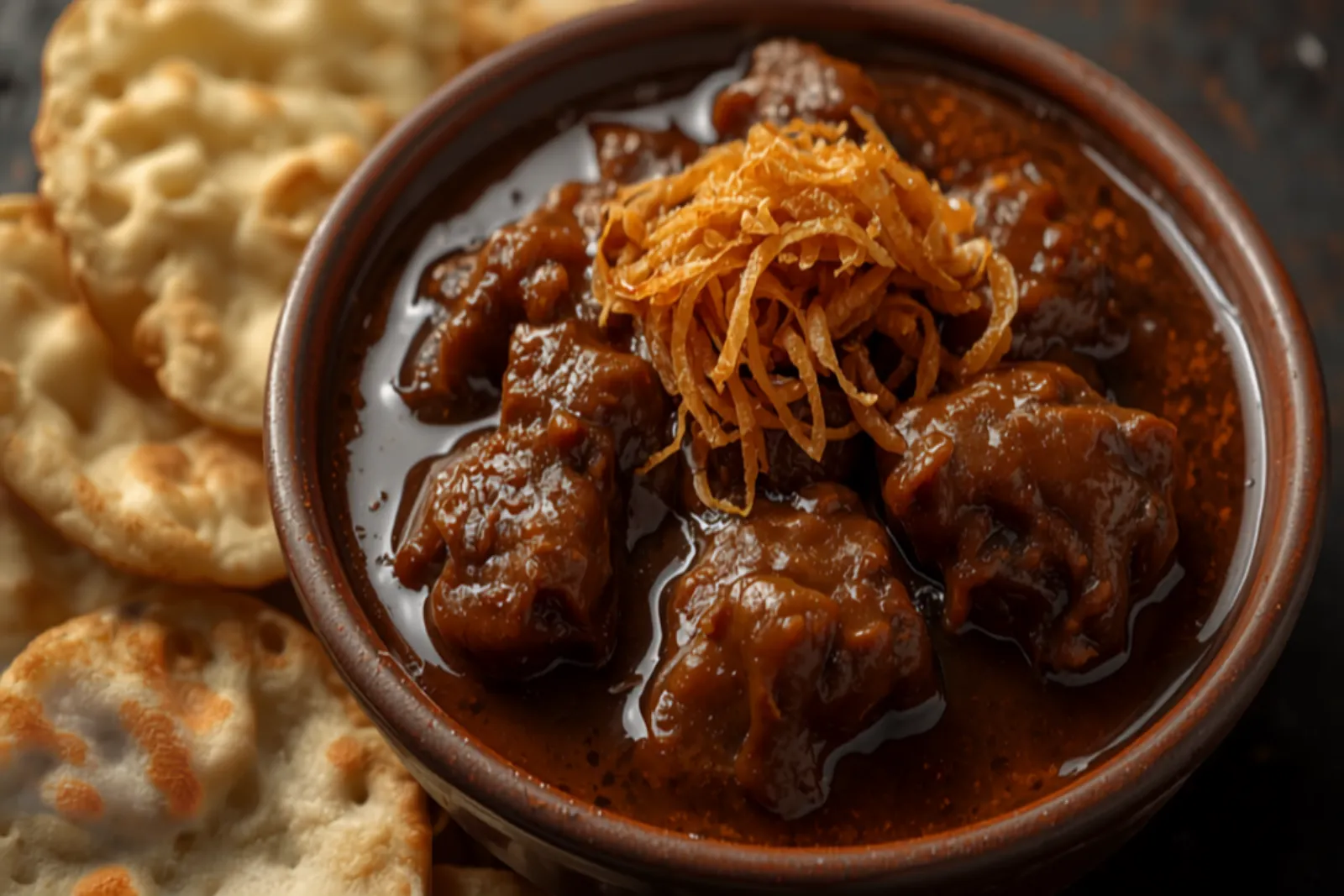
Bengal's Sunday-best mutton: goat marinated in yogurt and mustard oil, then slow-cooked with onions and whole spices until the gravy turns dark, thick, and clinging. 'Kosha' means slow-fried — and the patience is the dish.
Published July 14, 2026
Cultural context
Kosha mangsho is the celebratory mutton dish of Bengal — the Sunday lunch, the festival centrepiece, the dish served with luchi at Durga Puja. 'Kosha' refers to the slow, patient frying (bhuna) of the meat and masala over low heat until the gravy darkens and thickens into a glossy coat rather than a thin curry.
Kosha mangsho is Bengal’s Sunday best — goat marinated in yogurt and mustard oil, then slow-fried with caramelised onions and whole spices until the gravy turns dark, thick, and glossy enough to cling to every piece. It’s the dish that anchors a Durga Puja lunch and countless Sunday tables, served with hot luchi or rice. Where the everyday Bengali fish curry is light and brothy, this is its rich, celebratory counterpart.
”Kosha” is a technique, not just a name
The word kosha describes the slow, patient frying — Bengal’s version of bhuna — that defines the dish. After the meat goes in with its masala, you fry it on medium-low for a long stretch, stirring as it releases its juices and reabsorbs them, until the oil separates and everything turns dark and glossy. This is where the flavour is built; there’s no shortcut, and you don’t add water until it’s done.
Sugar, onions, and mustard oil
Three Bengali signatures give kosha mangsho its character: a little sugar melted into hot mustard oil to deepen the colour, onions browned patiently to a near-caramel, and mustard oil’s pungency running through it all. Together they create the dark, faintly sweet, deeply savoury base.
Then, patience
Once the kosha stage is done, a little hot water and a long gentle simmer turn the bone-in goat meltingly tender. Finish with Bengali garam masala, and — like most great curries — let it rest; it’s even better the next day.
For the lighter side of the Bengali table, see macher jhol and shukto, or read the full guide to Bengali home cooking.
Ingredients
For the marinade
- 1 kg bone-in mutton/goat, cut into pieces Bone-in is essential for a rich gravy; shoulder and leg with some fat are ideal.
- 1 cup thick yogurt
- 2 tbsp ginger-garlic paste
- 3 tbsp mustard oil The Bengali fat; some goes in the marinade, more for cooking.
- 1 tsp turmeric, 1 tsp red chili powder, salt
For the curry
- 3 onions, thinly sliced
- 2 tomatoes, chopped (optional, for body)
- whole spices: 4 cloves, 4 green cardamom, 2 black cardamom, 2 inch cinnamon, 2 bay leaves
- 1 tbsp ground cumin and coriander
- 1 tsp sugar A Bengali touch — it helps the onions caramelise and deepens the colour.
- 1 tsp Bengali garam masala (to finish)
Method
Tap a step’s number to check it off as you go.
-
Marinate the mutton in yogurt, ginger-garlic, mustard oil, turmeric, chili, and salt for at least 2 hours (overnight is better).
Why: The yogurt tenderises the goat and the long marination drives flavour deep — important for a cut that needs slow cooking.
-
Heat mustard oil to smoking, cool slightly, add the sugar and let it melt and darken, then fry the sliced onions and whole spices until deep brown.
Why: Caramelised sugar and deeply browned onions are what give kosha mangsho its signature dark colour and rich, sweet-savoury base.
-
Add the marinated mutton and the ground spices and begin to 'kosha' — fry on medium-low, stirring often, for 20–30 minutes as it releases and reabsorbs its juices.
Why: This long frying (bhuna/kosha) is the heart of the dish: it coats the meat in masala, builds deep flavour, and is what separates kosha mangsho from an ordinary curry. Don't rush or add water yet.
-
Once the oil separates and the masala is dark and glossy, add a little hot water, cover, and simmer gently 45–60 minutes until the meat is fork-tender.
Why: Adding water only after the kosha stage keeps the gravy concentrated; a long, gentle simmer makes tough goat meltingly tender.
-
Finish with Bengali garam masala and rest. The gravy should be thick and clinging, not thin.
Why: Garam masala at the end lifts the aroma; resting deepens it. Kosha mangsho is a semi-dry, clinging curry by definition.
A quick, anonymous tap — no review needed.
Variations
- With potatoes
Add browned potato chunks during the simmer — a common, beloved addition that soaks up the dark gravy.
- Chicken kosha
Use bone-in chicken (kosha murgi); reduce the simmer to about 25 minutes for a quicker version.
- Spicier
Increase the chili and finish with extra Bengali garam masala for a fierier curry.
Serving & Storage
Serve with luchi (fried puffed bread), steamed rice, or pulao. It's the classic Durga Puja and Sunday-lunch centrepiece, often with a wedge of lime and sliced onion.
Pairs with: Luchi, Steamed rice, Basanti pulao, Sliced onion and lime.
Storage: Keeps 3–4 days refrigerated and is famously better the next day as the gravy deepens. Reheat gently with a splash of water.
Nutrition
Per serving (1 serving)
- Calories
- 480
- Protein
- 36 g
- Carbs
- 10 g
- Fat
- 33 g
- Fiber
- 2 g
- Sugar
- 5 g
- Sodium
- 640 mg
Notable micronutrients: Iron, Zinc, Vitamin B12
Estimated using standard ingredient data. Values vary with brands and substitutions.
Frequently Asked Questions
What does 'kosha' mean?
Kosha refers to slow-frying the meat and masala over low-medium heat (the Bengali version of bhuna), letting it release and reabsorb its juices until the gravy darkens and thickens into a glossy coat. It's the defining technique — and the reason the dish takes time.
Why is mustard oil important?
Mustard oil gives Bengali cooking its characteristic pungency and depth. Heat it to smoking and cool slightly before use to mellow the raw sharpness. You can substitute another oil, but the dish loses its Bengali character.
How do I make the mutton tender?
Three things: a yogurt marinade, bone-in meat, and a long, gentle simmer after the kosha stage. Goat needs time — don't rush the final simmer, and add only hot water so you don't shock the meat.
What to drink with this
All drinks →Hand-picked pours to match this dish.
North & West India (peak-summer drink across the subcontinent) · Indian
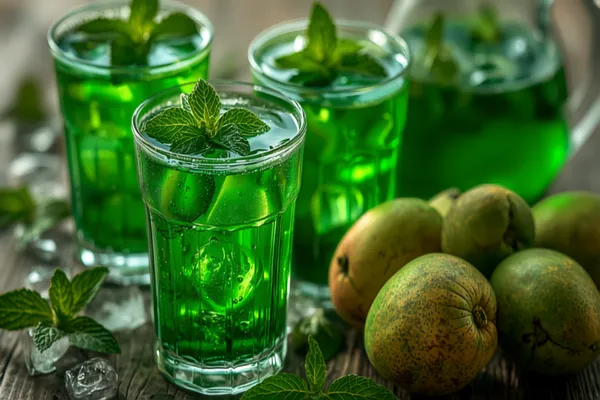
Aam Panna (Raw Green Mango Summer Cooler)
India's tangy, jade-green raw-mango cooler — roasted or boiled green mangoes blended with cumin, black salt and mint. The traditional heat-stroke remedy that tastes like summer.
Pan-Indian (North & West India) · Indian
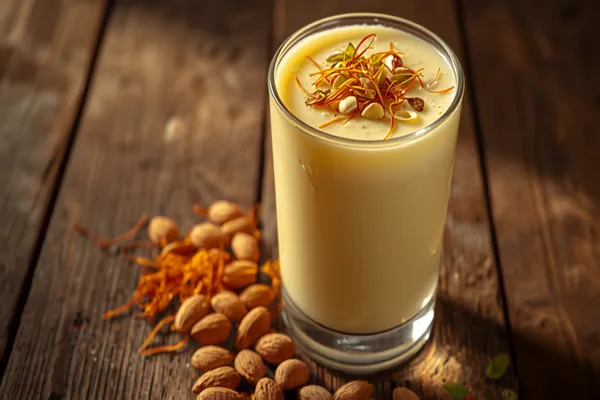
Badam Milk (Saffron Almond Milk)
Milk simmered with a paste of soaked almonds, saffron, cardamom and a whisper of nutmeg — India's rich, fragrant almond drink. Comforting served warm in winter, reviving served chilled in summer, festive any time.
Pan-Indian (Gujarat & West India especially) · Indian
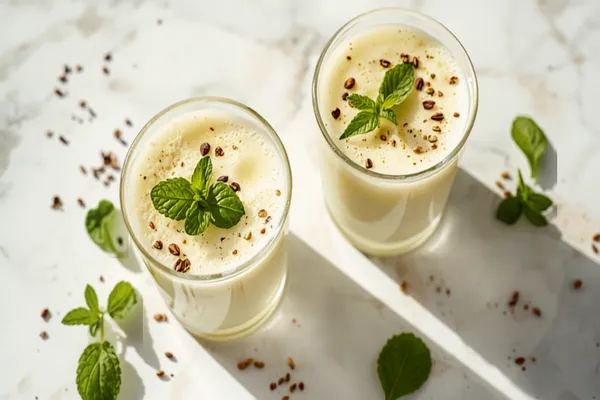
Chaas (Spiced Indian Buttermilk / Masala Chaas)
Whisked yogurt thinned with water and seasoned with cumin, green chilli, ginger and curry leaves — India's cooling, savoury buttermilk. A salty-tangy digestive that beats the heat and settles a heavy meal in two minutes.
From our kitchen community
Ratings & Reviews
My Rating
Tap a star to rate — no sign-in, no form needed.
My Review
0 Ratings
🥣 0 home cooks made it!
Be the first to rate Kosha Mangsho (Bengali Slow-Cooked Mutton Curry).
Related Recipes
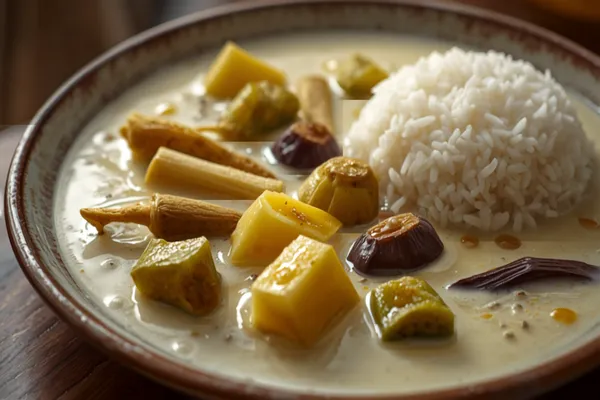
West Bengal / East India · Indian
Shukto (Bengali Mixed Vegetables with a Bitter Note)
The dish that opens a traditional Bengali meal: a gently spiced, milk-enriched medley of vegetables built around bitter melon, balanced with a paste of mustard and poppy seeds and a tempering of panch phoron and bay. Subtle, soothing, and quietly sophisticated.
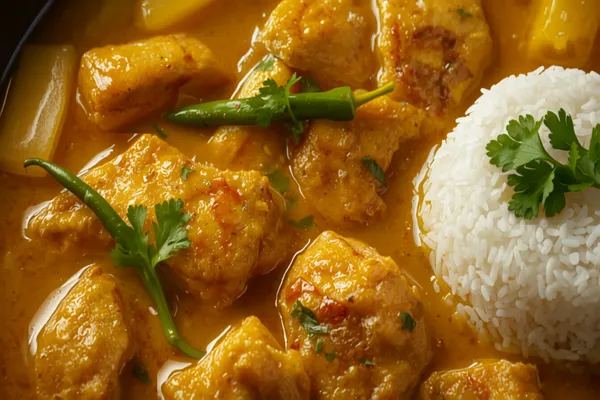
West Bengal / East India · Indian
Macher Jhol (Bengali Fish Curry)
The everyday Bengali fish curry: lightly fried fish simmered in a thin, golden gravy of potatoes, tomato, and panch phoron-scented spice. Clean, comforting, and made to be eaten with a mound of rice.

West Bengal / East India · Indian
Chingri Malai Curry (Bengali Prawn Coconut Curry)
The Bengali feast-day prawn curry — plump golda prawns simmered in a silky coconut-milk gravy scented with whole garam masala, ginger and a whisper of sugar. Rich, gently sweet and unmistakably celebratory.
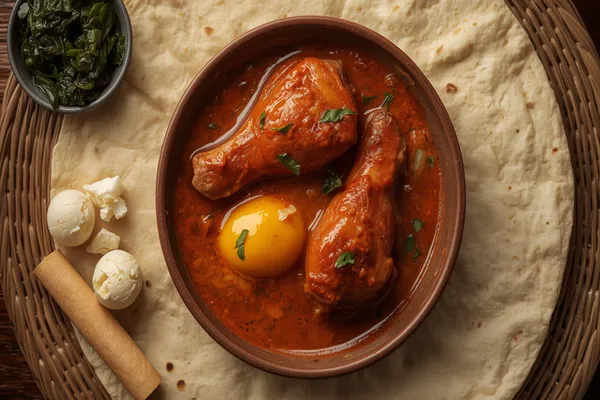
The Ethiopian highlands — Amhara and Addis Ababa, shared across the Horn of Africa · Ethiopian
Doro Wat (Ethiopian Spiced Chicken Stew)
Ethiopia's feast-day chicken stew, built the slow way: a kilo of onions dry-cooked to a purée before any fat touches the pan, berbere and spiced butter bloomed into them, and chicken and whole eggs simmered until the sauce turns mahogany.