Thailand (Phuket / Southern Thailand) · Thai
Pad Pak Ruam Mit (Thai Stir-Fried Mixed Vegetables)
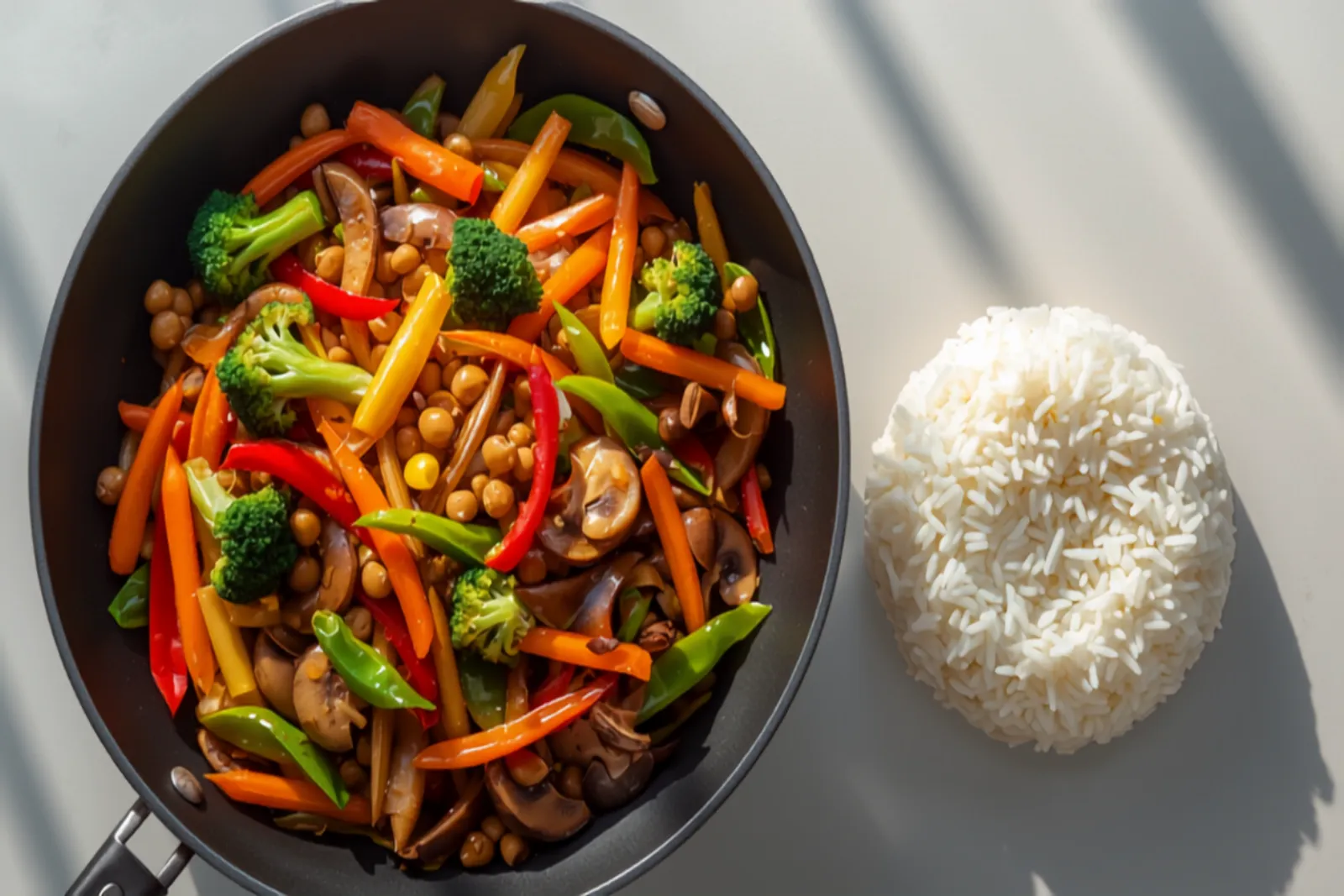
The bright, fast vegetable stir-fry on every Thai table: a rainbow of crisp-tender vegetables tossed over high heat in a garlicky, savoury-sweet sauce. Endlessly adaptable, naturally plant-based, and on the table in 15 minutes.
Published June 20, 2026
Cultural context
Pad pak ruam mit — 'stir-fried mixed vegetables' — is a staple of everyday Thai cooking and a centrepiece of the Phuket Vegetarian Festival, the dramatic nine-day Taoist celebration when devotees follow a strict meat- and (often) allium-free 'jay' diet. The festival turns Phuket's streets yellow with jay flags and food stalls, and vegetable dishes like this one take centre stage.
Pad pak ruam mit — “stir-fried mixed vegetables” — is the dish that quietly anchors every Thai meal: a fast, bright tangle of crisp-tender vegetables in a glossy, garlicky, savoury-sweet sauce. It’s the kind of thing Thai cooks throw together without a recipe, and it shines at the Phuket Vegetarian Festival, the dramatic nine-day Taoist celebration when much of the island eats a strict plant-based “jay” diet.
It asks for almost nothing but speed and heat.
Prep everything first
Stir-frying happens in minutes, with no pause to chop once the wok is hot. So cut all your vegetables to similar sizes and mix the sauce before you light the burner. A “rainbow” of firm and leafy vegetables — carrot, broccoli, peppers, snow peas, baby corn, mushrooms, cabbage — is traditional; use whatever’s freshest.
High heat, added by density
Get the wok as hot as it will go for that signature smoky wok hei, and add vegetables by how long they take: the firm ones (carrot, broccoli, beans) first, the softer ones (peppers, mushrooms, cabbage) a couple of minutes later. Keep everything moving so it sears rather than stews, and pour the sauce in at the end to glaze, not drown.
Making it festival-correct
The festival’s jay diet is strictly vegan and traditionally avoids the pungent alliums — garlic, onion, shallot, chives, leek. To cook it jay-style, simply leave out the garlic and reach for a jay-certified seasoning sauce; the fierce heat and mushroom “oyster” sauce still give it deep savour. Serve it straight from the wok over jasmine rice.
Looking for more festival cooking? Browse the World Festive collection or the full recipe collection.
Ingredients
For the stir-fry
- 2 tbsp neutral oil
- 4 cloves garlic, minced For a strict 'jay' (Buddhist-vegan) version, omit the garlic — see the note.
- 1 carrot, thinly sliced on the diagonal
- 1 small head broccoli, in florets
- 1 red bell pepper, sliced
- 100 g snow peas or green beans
- 100 g mushrooms, halved
- 1 baby corn and/or napa cabbage, chopped Use any mix of firm and leafy vegetables you like.
For the sauce
- 2 tbsp vegetarian oyster (mushroom) sauce Or regular oyster sauce if not keeping it vegetarian.
- 1 tbsp light soy sauce
- 1 tsp sugar
- 1/2 tsp white pepper
- 3 tbsp water or vegetable stock
Method
Tap a step’s number to check it off as you go.
-
Prep all the vegetables and stir the sauce ingredients together before you start. Cut everything to similar sizes.
Why: Stir-frying is fast and furious — there's no time to chop once the wok is hot. Even sizes mean everything cooks at the same rate.
-
Heat the oil in a wok over the highest heat until shimmering, then add the garlic and stir for a few seconds until fragrant.
Why: A screaming-hot wok gives the smoky 'wok hei' and keeps vegetables crisp rather than stewed. Garlic goes in first but only briefly so it doesn't burn.
-
Add the firmest vegetables first (carrot, broccoli, beans), stir-fry 2 minutes, then add the softer ones (pepper, mushrooms, corn, cabbage).
Why: Staggering by density means everything finishes crisp-tender at once instead of some raw and some mushy.
-
Pour in the sauce and toss hard for 1–2 minutes until the vegetables are coated and just crisp-tender and the sauce glosses everything.
Why: Keep it moving over high heat — the sauce should reduce to a glaze that clings, not a puddle that boils the vegetables.
-
Serve immediately over steamed jasmine rice.
Why: Stir-fries wait for no one; the vegetables keep softening off the heat, so serve straight away while they still have snap.
A quick, anonymous tap — no review needed.
Variations
- Strict jay (festival-style)
For the Phuket Vegetarian Festival's jay diet, omit the garlic and any allims (onion, shallot, chives) and use a jay-certified seasoning sauce. The high heat and mushroom sauce still give plenty of savour.
- With tofu
Add cubes of fried firm tofu for a more substantial, protein-rich main.
- Spicy
Toss in sliced fresh chilies with the garlic, or finish with a spoonful of chili oil.
Serving & Storage
Serve hot over jasmine rice as a main, or as one dish among several in a shared Thai meal. A squeeze of lime and a small dish of prik nam pla (or chili oil for vegans) brighten it at the table.
Pairs with: Steamed jasmine rice, Tom yum soup, Fried tofu, Thai iced tea.
Storage: Best fresh and crisp. Leftovers keep 2 days refrigerated; reheat quickly over high heat, though the vegetables soften. Not suitable for freezing.
Nutrition
Per serving (1 portion (1/4 recipe))
- Calories
- 160
- Protein
- 5 g
- Carbs
- 18 g
- Fat
- 8 g
- Fiber
- 5 g
- Sugar
- 7 g
- Sodium
- 620 mg
Notable micronutrients: Vitamin C, Vitamin A, Folate
Estimated using standard ingredient data. Values vary with brands and substitutions.
Frequently Asked Questions
What vegetables work best?
Any mix of firm and leafy ones — the classic is a 'rainbow' of carrot, broccoli, peppers, snow peas, baby corn, mushrooms, and cabbage. Use what's fresh. The key is cutting them to similar sizes and adding them by density so everything cooks evenly.
What makes it suitable for the Phuket Vegetarian Festival?
The festival's 'jay' diet is strictly plant-based and traditionally avoids the five pungent vegetables (garlic, onion, shallot, chives, leek). To make this dish festival-correct, omit the garlic and use a jay-certified seasoning sauce — the high-heat stir-frying and mushroom sauce still deliver plenty of flavour.
How do I get that restaurant 'wok hei' flavour?
Maximum heat and a hot wok, cooking in a single layer without crowding, and keeping everything moving. Have all your prep done first, because the cooking takes only minutes. Crowding the wok steams the vegetables instead of searing them.
What to drink with this
All drinks →Hand-picked pours to match this dish. Alcoholic pairings are for adults of legal drinking age (21+ in the US) — please drink responsibly.

Thailand (street and market drink) · Thai
Thai Iced Tea (Cha Yen)
The bright-orange, creamy-sweet Thai street drink: strong spiced black tea sweetened with condensed milk and poured over ice with a float of cream. How to brew it strong and why it's so orange.
 21+
21+ Kuala Lumpur, Malaysia · Malaysian
Jungle Bird (Dark Rum, Campari & Pineapple)
The tiki drink with a bitter backbone: dark rum and Campari shaken with fresh pineapple and lime. Tropical and lush but grown-up and dry — the 1970s Malaysian classic that bridges tiki and the aperitivo world.
 21+
21+ Singapore (the Raffles Hotel Long Bar) · Singaporean
Singapore Sling (The Raffles Hotel Classic)
The tropical gin classic born at Raffles Hotel: gin, cherry liqueur, Bénédictine, citrus and pineapple, shaken into a frothy, ruby long drink. The full original build, not the sugary shortcut.
From our kitchen community
Ratings & Reviews
My Rating
Tap a star to rate — no sign-in, no form needed.
My Review
0 Ratings
🥣 0 home cooks made it!
Be the first to rate Pad Pak Ruam Mit (Thai Stir-Fried Mixed Vegetables).
Related Recipes
Central Thailand / Southeast Asia · Thai
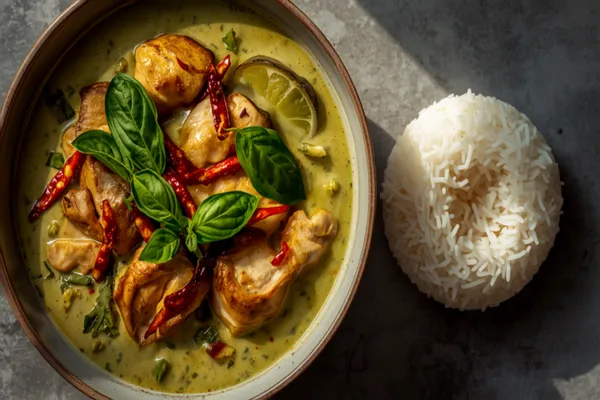
Thai Green Curry (Gaeng Keow Wan Gai)
Thailand's fragrant green curry, built the way it's meant to be: a fresh pounded paste bloomed in cracked coconut cream, chicken and Thai eggplant simmered to silk, finished with fish sauce, palm sugar, and a fistful of basil. Hot, sweet, herbal, and ready in under an hour.
Central Thailand / Southeast Asia · Thai
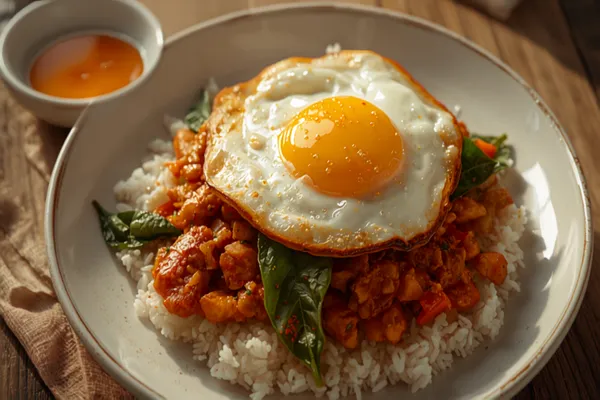
Pad Krapow Gai (Thai Basil Chicken)
The Thai street-food default and the country's unofficial fast food: minced chicken stir-fried hard with garlic and chili, seasoned with three sauces, and finished with a fistful of holy basil. Served over rice with a crisp-edged fried egg, it's dinner in fifteen minutes.
Further reading
- Festival & Seasonal · InternationalWorld Festive: Recipes for Celebrations Around the GlobeEvery culture has its feast days — the holiday tables, the harvest gatherings, the festivals devoted to a single beloved food. This is our guide to celebration cooking from around the world, from a French Yule log to Hawaiian Spam musubi, and the festivals behind each dish.
- Cultural Story · Southeast AsiaA Cook's Map of Southeast AsiaSoutheast Asia isn't one cuisine but a dozen, bound loosely by rice, fish sauce, fresh herbs, and the pounded paste. A guide to how Thai, Vietnamese, Indonesian, Filipino, Malaysian, and Singaporean cooking differ, what they share, and where to start cooking.