Sindhi (Sindh, now diaspora across Western India) / West India · Indian
Sindhi Kadhi (Gram-Flour and Vegetable Curry)
A tangy, gram-flour-thickened vegetable curry from the Sindhi kitchen — roasted besan, tamarind and a medley of vegetables, traditionally served over rice with aloo tuk.
Published August 3, 2026
Cultural context
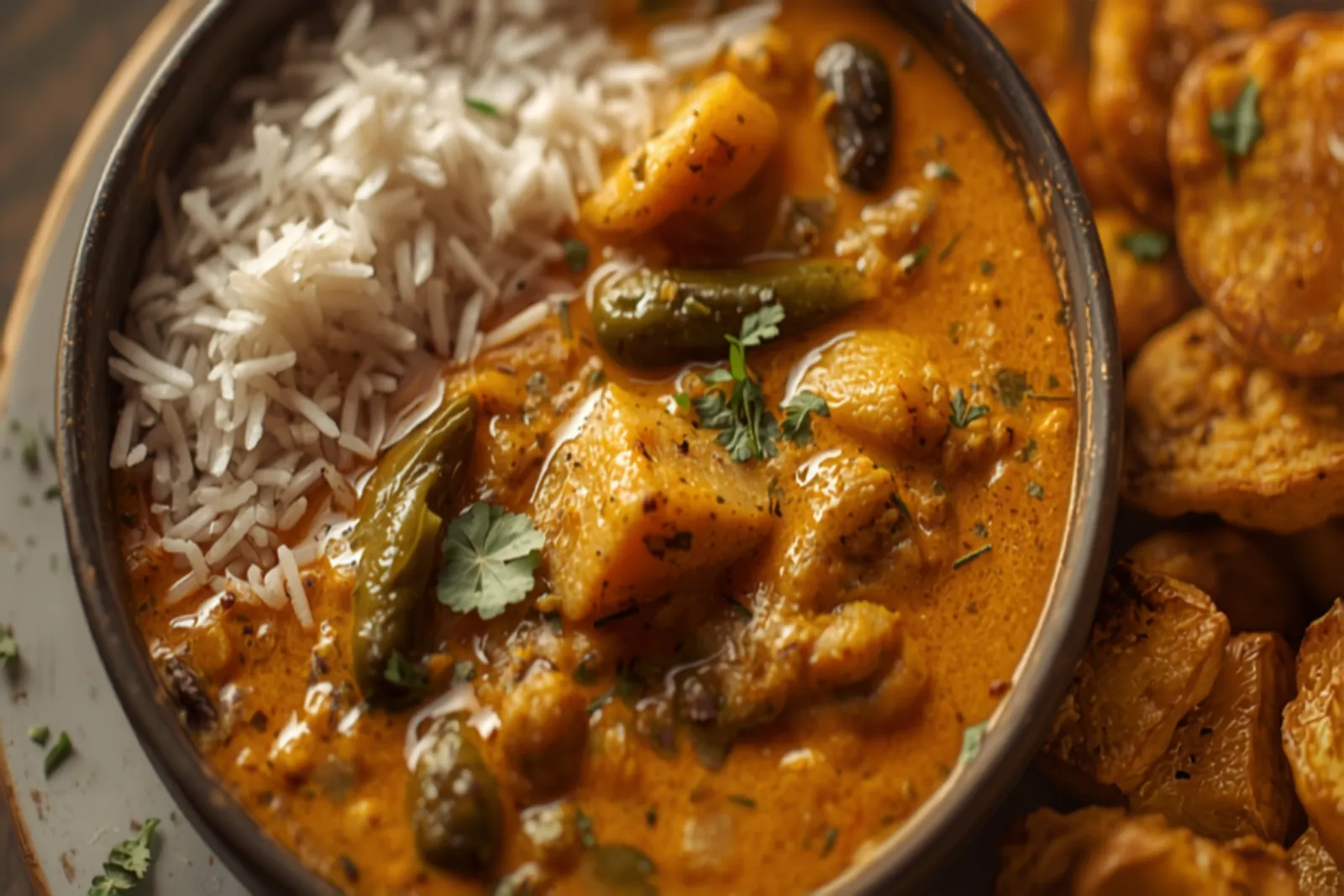
Sindhi kadhi (often just called 'kadhi' or 'curry' in Sindhi homes) is a cornerstone of Sindhi cuisine — the culinary tradition of the Sindhi people, many of whom resettled across western India after Partition. Unlike the yogurt-based kadhis of the north and west, this one is built on roasted gram flour and tamarind, making it a tangy, vegan, vegetable-laden curry. It's the centrepiece of a traditional Sindhi Sunday lunch with rice and aloo tuk.
Sindhi kadhi is a cornerstone of the Sindhi kitchen — a tangy, vegetable-laden curry thickened with roasted gram flour and soured with tamarind. Unlike the yogurt-based kadhis of the north and west, this one is entirely vegan, hearty, and built around a medley of vegetables. For Sindhi families, many of whom resettled across western India after Partition, kadhi chawal with aloo tuk is the classic Sunday lunch.
Roasted besan is the signature
The defining step is roasting the gram flour in oil until it’s golden and nutty — that’s where the curry’s deep flavour comes from. It rewards attention: keep the heat low and stir constantly, because burnt besan will turn the whole pot bitter. Then whisk in hot water gradually for a smooth, lump-free gravy.
A vegetable-forward curry
Drumsticks and cluster beans are the most characteristic vegetables, joined by potato, carrot, lotus stem and okra. Add the hardier vegetables to simmer in the thickening gravy; fry the okra separately and stir it in late so it doesn’t turn things slimy.
Tangy, with a little sweet
Tamarind brings the essential sourness and a touch of jaggery rounds it off. Serve it the traditional way — ladled over steamed rice with crisp aloo tuk alongside. Compare it with the yogurt-based Gujarati kadhi, and explore more of the region in the guide to West Indian cooking.
Ingredients
- 1/2 cup gram flour (besan) Roasting the besan is the defining step — it gives the curry its nutty depth.
- 2 tbsp oil
- 1 tsp cumin seeds
- 1/2 tsp fenugreek seeds (methi dana)
- 1/2 tsp mustard seeds
- a few curry leaves, pinch hing (asafoetida), 1 inch ginger (grated), 1–2 green chilies
- 2 tbsp tamarind pulp The signature sourness; adjust to taste.
- 1/2 tsp turmeric, 1 tsp red chili powder, 1 tsp coriander powder, salt
- 1 tbsp chopped coriander leaves and a little jaggery
Vegetables (a traditional medley)
- drumsticks (moringa), cluster beans (gavar), potato, okra (fried separately), carrot, lotus stem — use what you have Drumsticks and cluster beans are the most characteristic; okra is fried and added at the end so it doesn't make the curry slimy.
Method
Tap a step’s number to check it off as you go.
-
Heat oil and roast the besan on low, stirring constantly, until it turns golden and nutty-smelling. Take care not to burn it.
Why: Roasting the gram flour is the heart of Sindhi kadhi — it cooks off the raw taste and gives the curry its characteristic deep, nutty flavour. Burnt besan, though, ruins the pot, so keep the heat low and stir.
-
Add cumin, fenugreek, mustard, curry leaves, hing, ginger and green chili to the roasted besan, then carefully whisk in hot water to make a smooth, lump-free thin gravy.
Why: Whisking hot water into the roasted besan gradually prevents lumps; the tempering spices bloom in the same pot to flavour the base.
-
Add turmeric, chili and coriander powders and the hardier vegetables (drumstick, cluster beans, potato, carrot), and simmer until tender, about 20 minutes.
Why: The gram-flour gravy thickens as it simmers and the vegetables cook through, releasing their flavour into the tangy base.
-
Stir in the tamarind pulp, a little jaggery and salt, add the separately fried okra, and simmer 5 more minutes. Finish with coriander.
Why: Tamarind gives the essential sourness and jaggery rounds it; frying the okra first and adding it late keeps it from turning the curry slimy.
A quick, anonymous tap — no review needed.
Variations
- With more vegetables
Lotus stem (bhee), tindora, and arbi (colocasia) are all traditional additions — Sindhi kadhi is a vegetable-forward curry.
- Spicier / tangier
Increase the tamarind and green chili for the sharp, bright profile many Sindhi homes prefer.
- No okra
Skip the okra if you'd rather not fry separately; the curry is just as good with drumstick and cluster beans.
Serving & Storage
Serve over plain steamed rice (kadhi chawal) — the classic Sindhi Sunday lunch — with aloo tuk (twice-fried potatoes) on the side. Some enjoy it with boondi or papad too.
Pairs with: Steamed rice, Aloo tuk, Papad, Sweet boondi.
Storage: Keeps 2–3 days refrigerated and the flavour deepens; the gravy thickens, so loosen with a little hot water when reheating. Add fried okra fresh if possible.
Nutrition
Per serving (1 serving (with rice))
- Calories
- 280
- Protein
- 9 g
- Carbs
- 38 g
- Fat
- 10 g
- Fiber
- 8 g
- Sugar
- 8 g
- Sodium
- 480 mg
Notable micronutrients: Fiber, Vitamin C, Iron, Folate
Estimated using standard ingredient data. Values vary with brands and substitutions.
Frequently Asked Questions
How is Sindhi kadhi different from Punjabi or Gujarati kadhi?
Punjabi and Gujarati kadhis are yogurt-based (tangy from soured yogurt, often with pakoras or sugar). Sindhi kadhi has no yogurt at all — it's thickened with roasted gram flour and soured with tamarind, and it's loaded with vegetables, making it a hearty, vegan curry.
Why roast the besan?
Roasting the gram flour in oil until golden is what gives Sindhi kadhi its signature nutty depth and removes any raw flavour. Keep the heat low and stir constantly — burnt besan turns the whole curry bitter.
What vegetables are traditional in Sindhi kadhi?
Drumsticks (moringa) and cluster beans (gavar) are the most characteristic, along with potato, okra, carrot and lotus stem. It's a flexible, vegetable-forward curry — use a seasonal medley, frying the okra separately so it doesn't turn the gravy slimy.
What to drink with this
All drinks →Hand-picked pours to match this dish.
North & West India (peak-summer drink across the subcontinent) · Indian
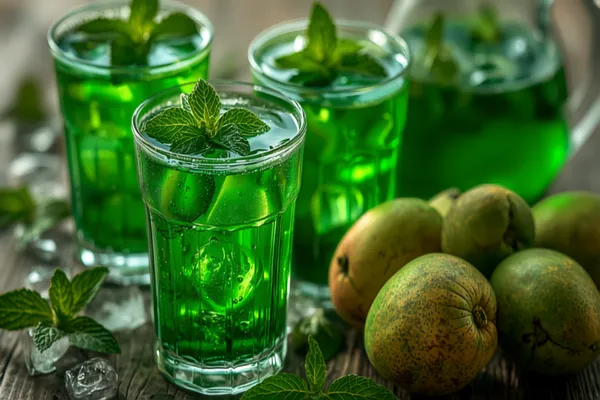
Aam Panna (Raw Green Mango Summer Cooler)
India's tangy, jade-green raw-mango cooler — roasted or boiled green mangoes blended with cumin, black salt and mint. The traditional heat-stroke remedy that tastes like summer.
Pan-Indian (North & West India) · Indian
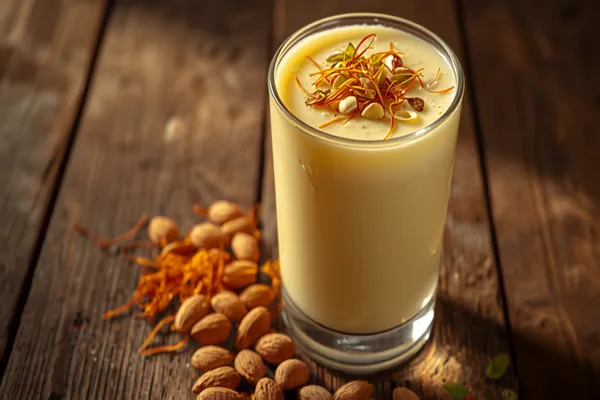
Badam Milk (Saffron Almond Milk)
Milk simmered with a paste of soaked almonds, saffron, cardamom and a whisper of nutmeg — India's rich, fragrant almond drink. Comforting served warm in winter, reviving served chilled in summer, festive any time.

Pan-Indian (Gujarat & West India especially) · Indian
Chaas (Spiced Indian Buttermilk / Masala Chaas)
Whisked yogurt thinned with water and seasoned with cumin, green chilli, ginger and curry leaves — India's cooling, savoury buttermilk. A salty-tangy digestive that beats the heat and settles a heavy meal in two minutes.
From our kitchen community
Ratings & Reviews
My Rating
Tap a star to rate — no sign-in, no form needed.
My Review
0 Ratings
🥣 0 home cooks made it!
Be the first to rate Sindhi Kadhi (Gram-Flour and Vegetable Curry).
Related Recipes
Gujarat / West India · Indian
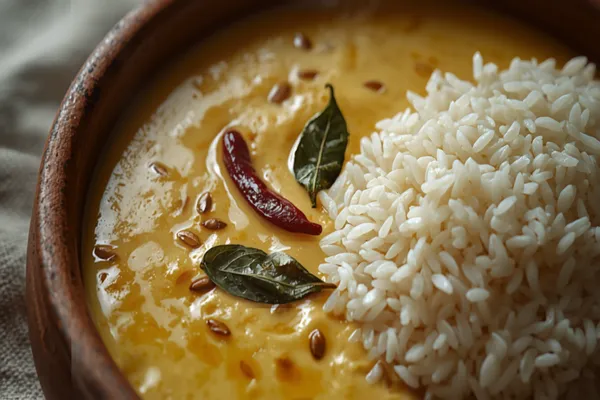
Gujarati Kadhi (Sweet-and-Tangy Yogurt Curry)
The soothing soul of a Gujarati thali: a silky, gently sweet-and-sour curry of yogurt and chickpea flour, tempered with cumin, curry leaves, and a whisper of clove and cinnamon. Light, warming, and made to pour over rice or khichdi.
Rajasthan / West India · Indian
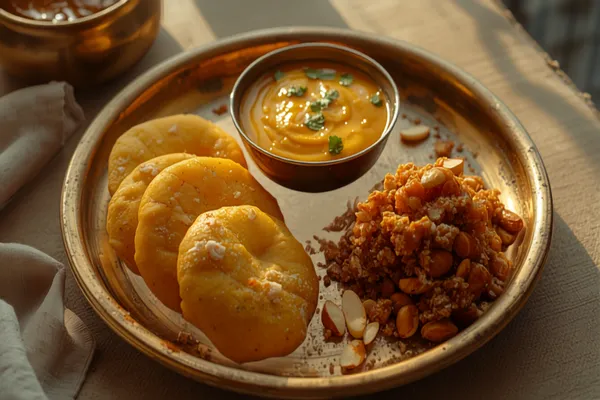
Dal Baati Churma (Rajasthani Baked Wheat Balls with Dal and Sweet Crumble)
Rajasthan's iconic three-part feast: hard-baked wheat baati cracked open and soaked in ghee, served with a spiced panchmel dal and a sweet, cardamom-scented churma crumble.
Gujarat / West India · Indian
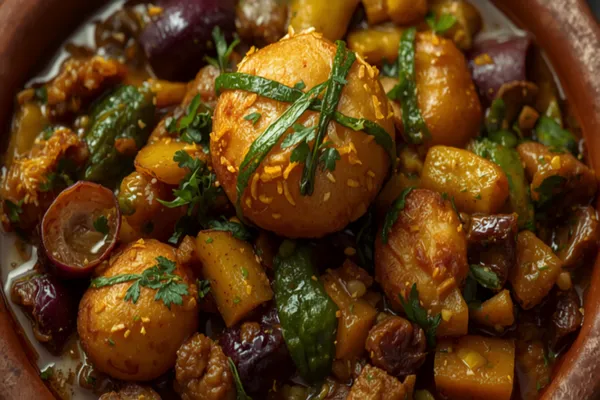
Undhiyu (Gujarati Mixed Winter Vegetable Casserole)
Gujarat's grand winter dish: a slow-cooked medley of seasonal vegetables and fried fenugreek dumplings (muthia) in a fragrant green masala of coriander, coconut, and green garlic. Festive, layered, and the pride of Uttarayan.
Further reading
- Cultural Story · West IndiaA Complete Guide to West Indian CookingFour very different states, one coast: Maharashtra's street food and fiery Kolhapuri curries, Gujarat's sweet-savoury vegetarian thali, Goa's twin Hindu and Catholic kitchens, and Rajasthan's desert cooking. A guide to western India's table.
- Ingredient Deep DiveThe Indian Spice Pantry: A Beginner's MapYou don't need a hundred spices to cook Indian food — you need a dozen, and the know-how to use them. A practical guide to the essential Indian spices, what each does, and the techniques (tadka, bhuna, dry-roasting) that unlock them.