Punjab / North India · Indian
Aloo Gobi (Potato and Cauliflower Curry)
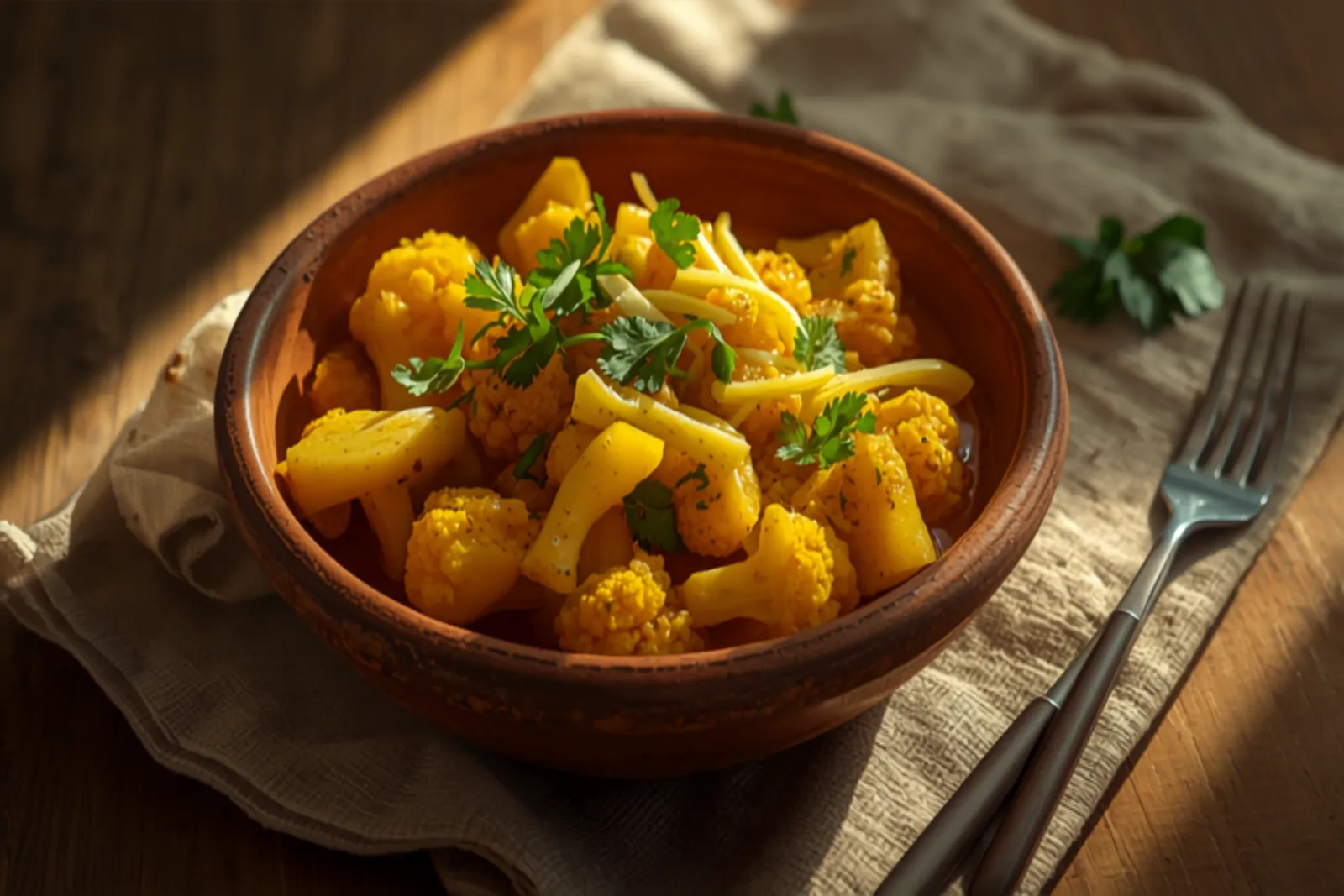
The everyday North Indian dry curry: potatoes and cauliflower cooked with turmeric, cumin and ginger until golden and tender. Simple, vegan, and a benchmark home dish.
Published July 26, 2026
Cultural context
Aloo gobi (aloo = potato, gobi = cauliflower) is one of the most common everyday dishes in North Indian and Punjabi homes — a simple, dry, vegan sabzi that needs nothing more than a couple of vegetables and a few pantry spices. It's the kind of dish judged not by its ingredient list but by technique: keeping the vegetables tender yet intact and golden, not mushy.
Aloo gobi — potato and cauliflower — is among the most cooked dishes in North Indian homes: a simple, dry, vegan sabzi built from two vegetables and a handful of pantry spices. It looks effortless, which is exactly why it’s a quiet test of technique. The goal is tender-but-intact vegetables, golden and spiced, never mushy or grey.
Order and patience
Potatoes go in before cauliflower because they cook slower. Coat both in spice and hot oil before any moisture hits the pan, so they roast and take on colour rather than steam. Then a low, covered cook with just the tomato’s moisture keeps it a proper dry sabzi.
Finish dry and bright
Uncover and turn up the heat to dry off any liquid and crisp the edges, then finish off the heat with garam masala, a pinch of amchur for tang, and fresh coriander. Serve with roti or as part of a thali alongside dal makhani and palak paneer. More technique in the guide to North Indian cooking.
Ingredients
- 1 medium cauliflower, cut into florets
- 2 potatoes, cut into chunks Cut potato and cauliflower to similar size so they cook evenly.
- 1 onion, sliced
- 2 tomatoes, chopped
- 1 tbsp ginger, julienned
- 1–2 green chilies, slit
- 1 tsp cumin seeds
- 1/2 tsp turmeric, 1 tsp ground coriander, 1/2 tsp red chili powder, 1/2 tsp garam masala, 1/2 tsp amchur, salt
- 3 tbsp oil or ghee
- 2 tbsp chopped coriander leaves
Method
Tap a step’s number to check it off as you go.
-
Heat oil, temper cumin seeds, then add ginger, green chili and onion and sauté until the onion softens and turns light gold.
Why: Blooming cumin in hot oil and softening the aromatics builds the flavour base; this is where a plain sabzi gets its depth.
-
Add the potatoes first and cook a few minutes, then the cauliflower, turmeric, coriander and chili powder. Toss to coat and cook on medium, stirring occasionally.
Why: Potatoes take longer, so they go in first. Coating the vegetables in spice and oil before any moisture lets them roast and turn golden rather than steam grey.
-
Add the tomatoes and a little salt, cover, and cook on low until both vegetables are tender, stirring gently so they don't break, about 12–15 minutes.
Why: A low, covered cook with just the tomato's moisture keeps it a dry sabzi; gentle stirring keeps the florets and potato chunks intact rather than mushy.
-
Uncover, raise the heat to dry off any liquid, then finish with garam masala, amchur and fresh coriander.
Why: Drying it off gives the slightly caramelised edges; amchur and garam masala at the end add tang and warmth without cooking off.
A quick, anonymous tap — no review needed.
Variations
- Restaurant gravy version
Add more tomato and a splash of water for a saucier aloo gobi masala to serve with rice.
- With peas (aloo gobi matar)
Add a handful of green peas with the cauliflower for colour and sweetness.
- Roasted
Toss the spiced vegetables in oil and roast at 220°C for a hands-off, deeply browned version.
Serving & Storage
Serve hot with roti, paratha or as part of a thali with dal and rice. A squeeze of lemon and extra coriander brighten it.
Pairs with: Roti, Dal makhani, Paratha, Plain yogurt.
Storage: Keeps 2–3 days refrigerated and reheats well. As a dry sabzi it's good for lunchboxes. Reheat in a pan to re-crisp the edges.
Nutrition
Per serving (1 serving)
- Calories
- 210
- Protein
- 5 g
- Carbs
- 26 g
- Fat
- 11 g
- Fiber
- 6 g
- Sugar
- 5 g
- Sodium
- 420 mg
Notable micronutrients: Vitamin C, Vitamin B6, Potassium, Fiber
Estimated using standard ingredient data. Values vary with brands and substitutions.
Frequently Asked Questions
How do I stop aloo gobi from getting mushy?
Cut the vegetables evenly, coat them in spice and oil before adding tomato, cook on low with the lid on, and stir gently. Don't add water — the tomato gives enough moisture. Finishing on high heat dries it off and firms the edges.
Is aloo gobi vegan?
Yes, if you cook it in oil rather than ghee. The classic version is naturally vegan and gluten-free — just potatoes, cauliflower and spices.
Can I make it ahead?
Yes. It keeps well for 2–3 days and reheats nicely in a pan. The flavour deepens overnight, making it a good make-ahead sabzi for lunchboxes.
What to drink with this
All drinks →Hand-picked pours to match this dish.
North & West India (peak-summer drink across the subcontinent) · Indian
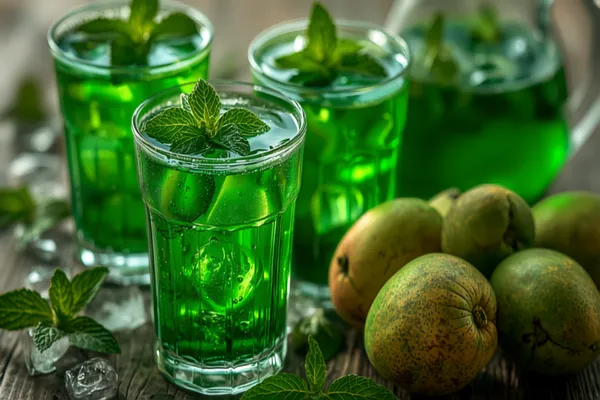
Aam Panna (Raw Green Mango Summer Cooler)
India's tangy, jade-green raw-mango cooler — roasted or boiled green mangoes blended with cumin, black salt and mint. The traditional heat-stroke remedy that tastes like summer.
Pan-Indian (North & West India) · Indian
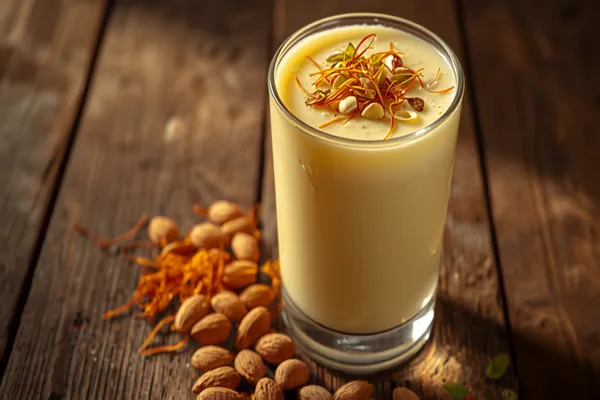
Badam Milk (Saffron Almond Milk)
Milk simmered with a paste of soaked almonds, saffron, cardamom and a whisper of nutmeg — India's rich, fragrant almond drink. Comforting served warm in winter, reviving served chilled in summer, festive any time.

Pan-Indian (Gujarat & West India especially) · Indian
Chaas (Spiced Indian Buttermilk / Masala Chaas)
Whisked yogurt thinned with water and seasoned with cumin, green chilli, ginger and curry leaves — India's cooling, savoury buttermilk. A salty-tangy digestive that beats the heat and settles a heavy meal in two minutes.
From our kitchen community
Ratings & Reviews
My Rating
Tap a star to rate — no sign-in, no form needed.
My Review
0 Ratings
🥣 0 home cooks made it!
Be the first to rate Aloo Gobi (Potato and Cauliflower Curry).
Related Recipes
Punjab / North India · Indian
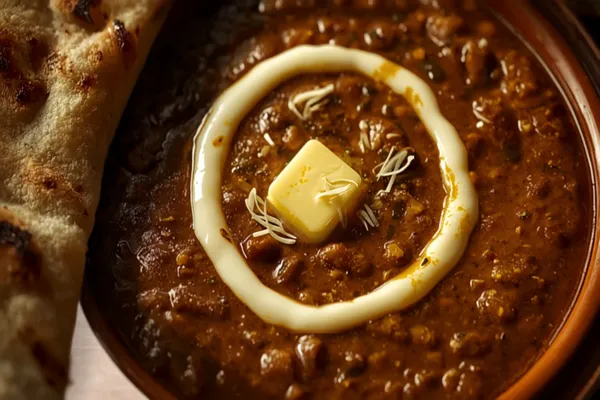
Dal Makhani (Punjabi Black Lentils)
The slow-simmered Punjabi classic: whole black urad and kidney beans cooked for hours into a velvety, smoky, buttery dal. Restaurant-rich at home — the patience is the recipe.
Punjab / North India · Indian
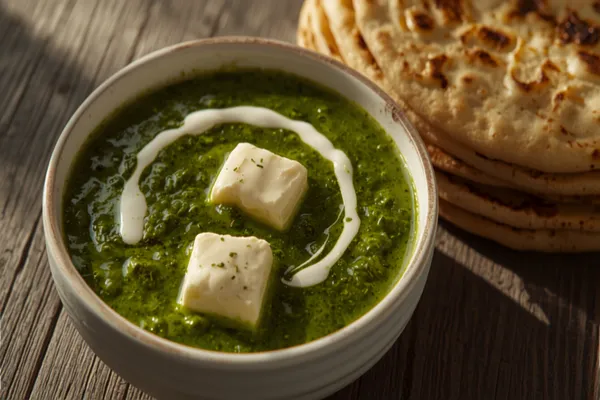
Palak Paneer (Spinach and Paneer Curry)
North India's beloved greens-and-cheese curry: soft paneer cubes in a bright, gently spiced spinach gravy. Vegetarian, quick, and a benchmark of a good home kitchen.
Punjab / North India · Indian
Rajma (Punjabi Red Kidney Bean Curry)
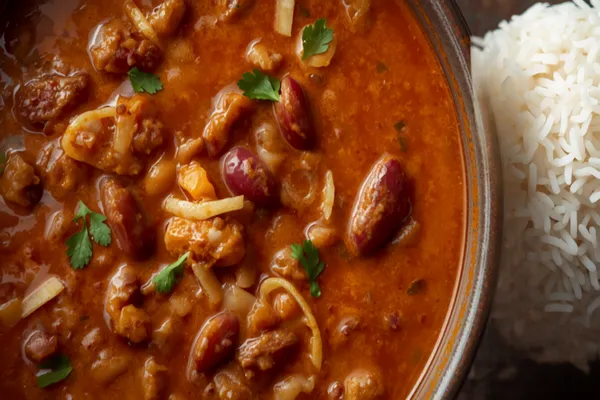
North India's ultimate comfort food: red kidney beans simmered low and slow in a deeply spiced onion-tomato gravy until creamy and rich. Served over rice as rajma-chawal, it's the Sunday lunch a whole region grew up on.
North India (Punjab–Delhi belt) · Indian
Bhindi Masala (Dry North Indian Okra Sabzi)
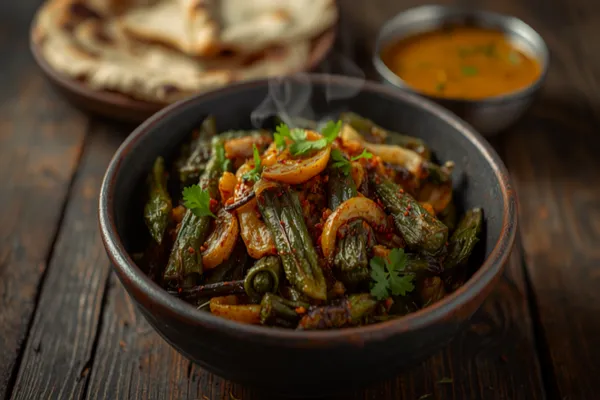
The North Indian home-kitchen classic: tender okra pan-fried until every trace of slime is gone, then tossed with onions, tomatoes and a bright, amchoor-spiked masala. A non-slimy bhindi masala that stays crisp at the edges.

Mumbai, Maharashtra (Indian-Chinese) · Indian-Chinese
Gobi Manchurian (Crispy Indo-Chinese Cauliflower)
Battered, deep-fried cauliflower tossed in a glossy soy-chilli-garlic sauce — sweet, sour, hot and umami all at once. The dry-style Indo-Chinese starter that Nelson Wang's Mumbai kitchen made a nationwide obsession.
Further reading
- Cultural Story · North IndiaA Complete Guide to North Indian CookingThe cuisine the world knows best — and understands least. From Punjab's tandoor and dairy to Kashmir's aromatic Wazwan and Awadh's courtly kebabs, a guide to North India's regions, techniques, and where to begin.
- Ingredient Deep DiveThe Indian Spice Pantry: A Beginner's MapYou don't need a hundred spices to cook Indian food — you need a dozen, and the know-how to use them. A practical guide to the essential Indian spices, what each does, and the techniques (tadka, bhuna, dry-roasting) that unlock them.