Punjab & Delhi (North India) · Indian
Kadai Paneer (Restaurant-Style, with Fresh Kadai Masala)
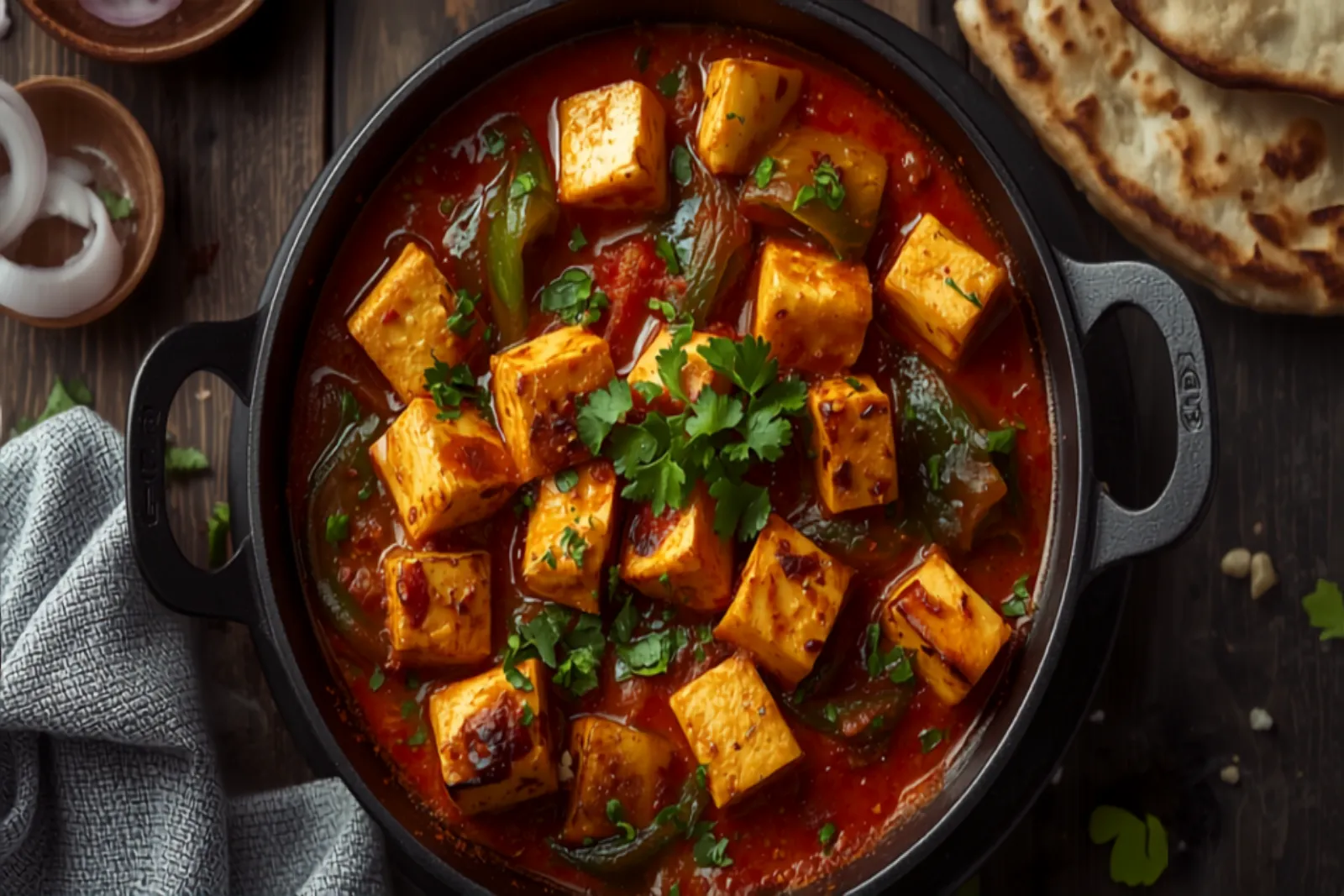
Paneer, onions and capsicum in a semi-dry tomato masala built on freshly pounded coriander seeds and red chillies — the peppery, aromatic North Indian classic named for the wok it's cooked in. Nothing like the flat, creamy versions.
Published July 10, 2026
Cultural context
Named for the kadai (karahi) — the deep, wok-like pan it's seared in — this is a Punjabi and Delhi restaurant staple rather than a single family's dish. Its signature is a freshly pounded masala of coriander seeds and dried red chillies, which is what separates a real kadai paneer from the flat, creamy tomato gravies it's often confused with.
Kadai paneer takes its name from the kadai (or karahi), the deep, wok-like iron pan it’s seared and tossed in over a high flame. It’s one of the most ordered vegetarian dishes in North Indian restaurants from Amritsar to Delhi — and one of the most misunderstood at home, where it’s too often made as just another smooth, creamy tomato gravy with paneer dropped in. The real thing is peppery, semi-dry and unmistakably aromatic, and the difference comes down to one step: a fresh kadai masala.
The masala is the whole dish
Where a butter masala leans on cream and a slow tomato base, a kadai leans on freshly toasted, coarsely pounded coriander seeds and dried red chillies, rounded out with cumin, pepper and a little fennel. Toasting the whole spices blooms their oils; pounding them coarse — flecks, not powder — means they keep releasing aroma right up to the moment you serve. Reach for pre-ground coriander and you’ve made a different, flatter dish. If you keep a stocked Indian spice pantry, you already have everything you need.
Sear hard, fold gently
Two textures define a good kadai. First, the onion and capsicum are cut into petals and squares and hit with a hard sear so their edges blister and smoke while the centres stay crisp — bite, not mush. Capsicum isn’t optional here; its grassy sharpness is part of the flavour signature. Second, the paneer goes in late and gets folded, not stirred, so it stays soft and intact rather than crumbling into the sauce. Cook the tomato base until the ghee splits and pools at the edges — that’s your signal the raw acidity is gone — then bring everything together quickly at the end with crushed kasuri methi and a pinch of reserved masala for a final wave of aroma.
Make it yours
Keep it semi-dry and eat it with naan straight from the pan, or purée the tomatoes and loosen it with a little water for a saucier version over jeera rice. Swap tofu for paneer to make it vegan; the masala does the heavy lifting either way. For more North Indian paneer classics, try the gentler, sweeter matar paneer or the spinach-based palak paneer, or read our guide to North Indian cooking.
Ingredients
For the kadai masala
- 1.5 tbsp coriander seeds The backbone of the dish — warm, citrusy, faintly sweet. Don't substitute ground coriander; the fresh coarse grind is the whole point.
- 4–5 Kashmiri dried red chillies Deep colour, gentle heat. Add 1 hotter chilli (like a byadgi or a small dried Guntur) if you want more bite.
- 1 tsp cumin seeds
- 1/2 tsp black peppercorns
- 1/2 tsp fennel seeds Optional but traditional — a subtle sweet-anise note that rounds the blend.
For the gravy
- 400 g (14 oz) paneer Cut into 1-inch cubes. Fresh or good store-bought; if firm from the fridge, soak in warm water 15 minutes to soften.
- 3 tbsp ghee or neutral oil Ghee for richness; oil to keep it lighter or vegan-adjacent.
- 1 large onion, diced into petals Cut into rough 1-inch squares so the layers separate — you want bite, not a soft base.
- 1 large green capsicum (bell pepper), diced into 1-inch squares Non-negotiable in a kadai — its grassy sharpness is part of the flavour signature.
- 4 medium tomatoes, finely chopped or puréed Ripe and tart. A puréed base gives a smoother restaurant finish; chopped keeps it rustic.
- 1 tbsp ginger-garlic paste
- 1 inch ginger, julienned Added at the end for a fresh, sharp lift.
- 1/2 tsp turmeric
- 1/2 tsp Kashmiri red chilli powder For colour more than heat.
- 1 tsp kasuri methi (dried fenugreek leaves) Crushed between your palms — its faintly bitter, maple-like aroma is a defining North Indian note.
- 2 tbsp cream or a splash of milk (optional) For a richer restaurant-style finish; leave out for the drier home style.
- salt, to taste
- coriander leaves, chopped, to garnish
Method
Tap a step’s number to check it off as you go.
-
Dry-roast the coriander seeds, cumin, peppercorns, fennel and dried red chillies in a hot pan over medium heat for 2–3 minutes, until fragrant and a shade darker. Cool, then pound coarsely in a mortar or pulse in a grinder.
Why: Toasting blooms the volatile oils in the seeds; a coarse grind (not a fine powder) leaves flecks that release aroma as the dish cooks — this fresh kadai masala is what defines the dish.
-
Heat 1 tbsp ghee in a kadai or wide pan over high heat. Sear the onion petals and capsicum squares for 2 minutes until the edges char but the centres stay crisp. Remove and set aside.
Why: A hard sear on high heat gives smoky, blistered edges while keeping crunch — kadai paneer should have texture, not collapse into a soft curry.
-
In the same pan, add the remaining 2 tbsp ghee. Add the ginger-garlic paste and fry 30 seconds until raw-smelling no more, then add the tomatoes, turmeric, chilli powder and salt.
Why: Cooking the ginger-garlic first removes its raw sharpness; the tomatoes then have a seasoned base to break down into.
-
Cook the tomatoes down for 8–10 minutes, stirring, until the masala thickens and the ghee separates and pools at the edges.
Why: The oil splitting out is the visual cue that the tomatoes are fully cooked and the raw acidity is gone — the single most important doneness signal in Indian gravies.
-
Stir in most of the pounded kadai masala (reserve a pinch to finish). Cook 1–2 minutes, then add the paneer, the seared onion and capsicum, and the julienned ginger. Toss gently to coat.
Why: Adding the paneer and vegetables late keeps the paneer soft and the capsicum bright; folding rather than stirring hard stops the paneer from crumbling.
-
Crush the kasuri methi over the top, add the optional cream, and toss for a final minute. Finish with the reserved masala and chopped coriander. Serve hot.
Why: Kasuri methi and the reserved raw masala are added at the end so their aromas stay bright rather than cooking off into the base.
A quick, anonymous tap — no review needed.
Variations
- Vegan (tofu)
Swap paneer for firm tofu (press it first) and use oil instead of ghee; skip the cream or use a splash of cashew cream. The kadai masala carries the flavour.
- Gravy style
Purée the tomatoes and add 1/4 cup water with the masala for a saucier version that spoons over rice or naan.
- Extra heat
Add a slit green chilli with the ginger-garlic and use a hotter dried chilli in the masala — kadai dishes traditionally run peppery.
Serving & Storage
Serve hot from the kadai with butter naan, tandoori roti or jeera rice, a raw onion-and-lime salad on the side, and a bowl of plain yogurt to cool the pepper.
Pairs with: Butter naan, Jeera rice, Tandoori roti, Plain yogurt.
Storage: Keeps 3 days refrigerated; the masala deepens overnight. Reheat gently with a splash of water — the paneer firms up cold, so warm it through slowly to soften again.
Nutrition
Per serving (1 serving (about 1/4 of the dish))
- Calories
- 360
- Protein
- 15 g
- Carbs
- 16 g
- Fat
- 27 g
- Fiber
- 4 g
- Sugar
- 8 g
- Sodium
- 620 mg
Notable micronutrients: Calcium, Vitamin C, Vitamin A
Estimated using standard ingredient data. Values vary with brands and substitutions.
Frequently Asked Questions
What makes kadai paneer different from other paneer curries?
The freshly pounded kadai masala — coarsely ground toasted coriander seeds and dried red chillies — plus seared onion and capsicum. It's peppery, semi-dry and aromatic, not the smooth, creamy, sweet tomato gravy of a paneer butter masala or the spinach base of a palak paneer.
Can I use pre-ground coriander powder instead of pounding seeds?
You can in a pinch, but you'll lose most of what makes the dish special. Whole seeds toasted and coarsely pounded give a fragrance and texture that fine, pre-ground powder simply can't — this is the one step worth not skipping.
How do I keep the paneer soft?
If your paneer is cold and firm, soak the cubes in warm water for 10–15 minutes and drain before adding. Fold it in near the end rather than boiling it, and don't over-reduce the gravy — long cooking turns paneer rubbery.
What to drink with this
All drinks →Hand-picked pours to match this dish.
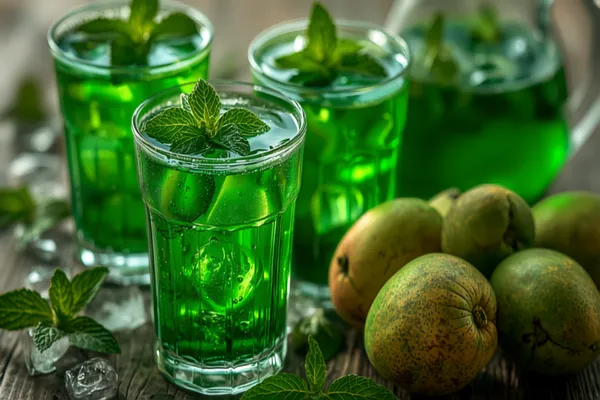
North & West India (peak-summer drink across the subcontinent) · Indian
Aam Panna (Raw Green Mango Summer Cooler)
India's tangy, jade-green raw-mango cooler — roasted or boiled green mangoes blended with cumin, black salt and mint. The traditional heat-stroke remedy that tastes like summer.
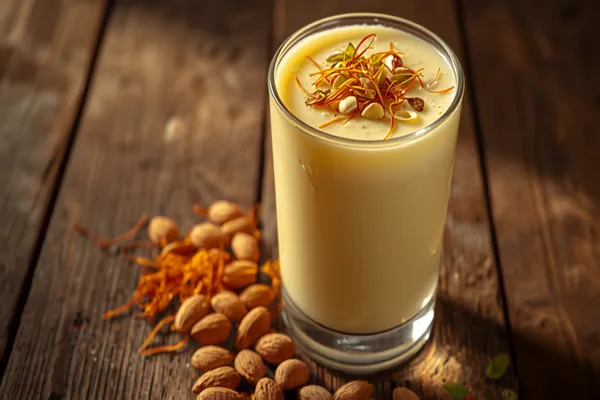
Pan-Indian (North & West India) · Indian
Badam Milk (Saffron Almond Milk)
Milk simmered with a paste of soaked almonds, saffron, cardamom and a whisper of nutmeg — India's rich, fragrant almond drink. Comforting served warm in winter, reviving served chilled in summer, festive any time.
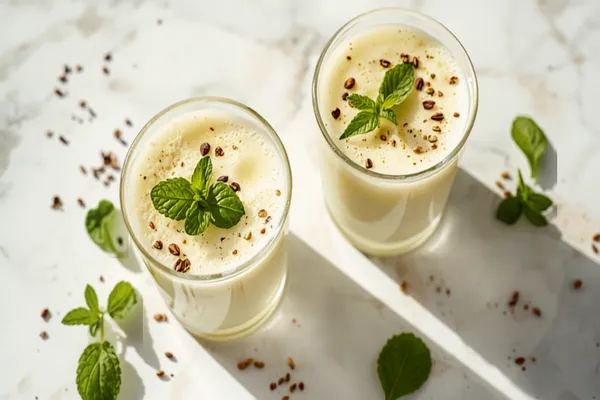
Pan-Indian (Gujarat & West India especially) · Indian
Chaas (Spiced Indian Buttermilk / Masala Chaas)
Whisked yogurt thinned with water and seasoned with cumin, green chilli, ginger and curry leaves — India's cooling, savoury buttermilk. A salty-tangy digestive that beats the heat and settles a heavy meal in two minutes.
From our kitchen community
Ratings & Reviews
My Rating
Tap a star to rate — no sign-in, no form needed.
My Review
0 Ratings
🥣 0 home cooks made it!
Be the first to rate Kadai Paneer (Restaurant-Style, with Fresh Kadai Masala).
Related Recipes
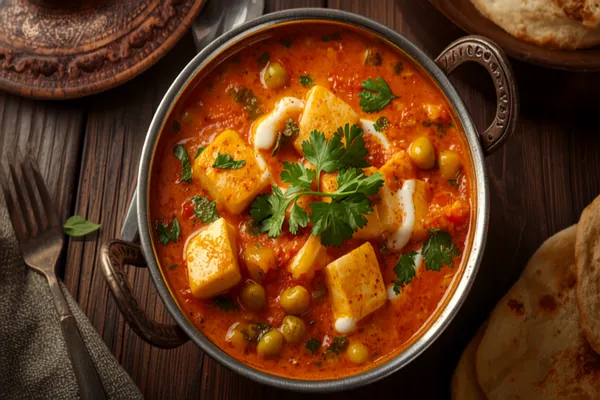
Punjab, North India · Indian
Matar Paneer (Punjabi Peas & Paneer Curry)
Soft paneer and sweet green peas simmered in a silky onion-tomato masala finished with kasuri methi and cream — the North Indian home-and-dhaba classic, rich but not heavy, and ready in under an hour.
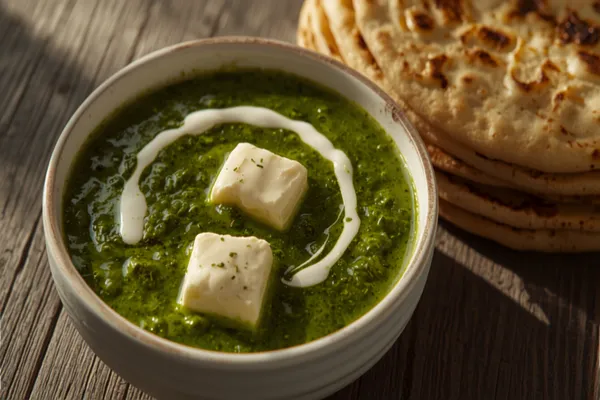
Punjab / North India · Indian
Palak Paneer (Spinach and Paneer Curry)
North India's beloved greens-and-cheese curry: soft paneer cubes in a bright, gently spiced spinach gravy. Vegetarian, quick, and a benchmark of a good home kitchen.
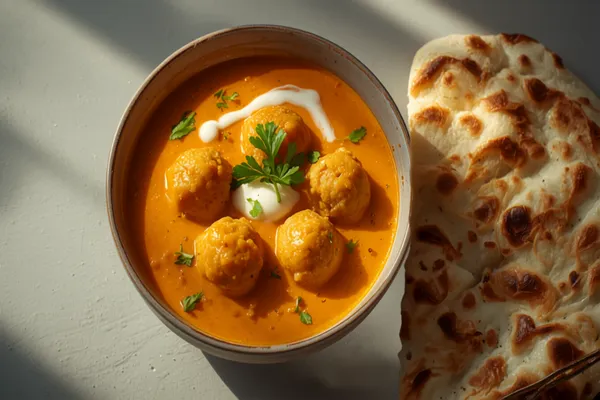
North India (Mughlai-influenced) · Indian
Malai Kofta (Paneer-Potato Dumplings in Creamy Gravy)
A vegetarian restaurant showpiece: soft paneer-and-potato dumplings in a rich, mildly sweet tomato-cashew gravy. Indulgent, festive, and made for special occasions.
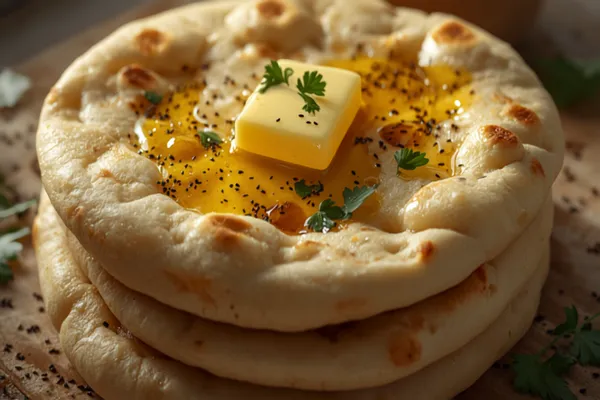
North India (via Persia and Central Asia) · Indian
Naan (Soft Leavened Flatbread)
The pillowy, blistered flatbread of North Indian restaurants — made at home on a hot skillet or under the broiler, no tandoor required. Soft, chewy, and brushed with butter.
Further reading
- Cultural Story · North IndiaA Complete Guide to North Indian CookingThe cuisine the world knows best — and understands least. From Punjab's tandoor and dairy to Kashmir's aromatic Wazwan and Awadh's courtly kebabs, a guide to North India's regions, techniques, and where to begin.
- Ingredient Deep DiveThe Indian Spice Pantry: A Beginner's MapYou don't need a hundred spices to cook Indian food — you need a dozen, and the know-how to use them. A practical guide to the essential Indian spices, what each does, and the techniques (tadka, bhuna, dry-roasting) that unlock them.