Punjab, North India · Indian
Matar Paneer (Punjabi Peas & Paneer Curry)
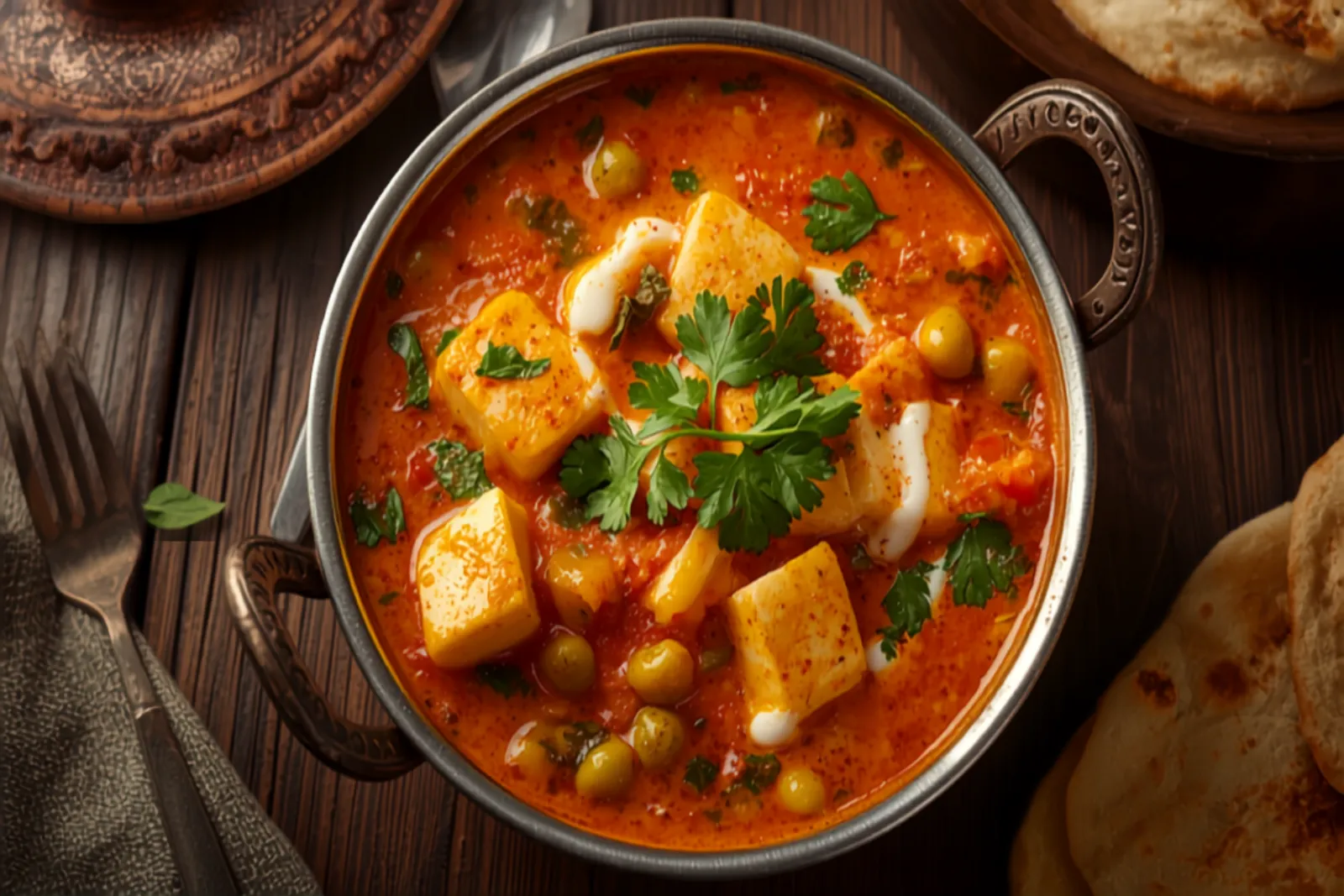
Soft paneer and sweet green peas simmered in a silky onion-tomato masala finished with kasuri methi and cream — the North Indian home-and-dhaba classic, rich but not heavy, and ready in under an hour.
Published July 2, 2026
Cultural context
Matar paneer is a cornerstone of Punjabi vegetarian cooking — a dish that sits on both the everyday home table and the roadside dhaba menu. It rose to national popularity in the 20th century alongside the paneer-and-tomato style of North Indian restaurant cooking, and today it's one of the most-ordered vegetarian curries in Indian restaurants worldwide.
Matar paneer is the North Indian curry that turns two humble things — fresh green peas and soft cubes of paneer — into something worth setting the table for. Across Punjab it lives a double life: a quick, comforting supper cooked at home, and a dhaba favourite ladled out along the highways of the north. The gravy is what carries it: a silky onion-tomato masala, warm with cardamom and cumin, finished with a crush of kasuri methi and a swirl of cream.
The gravy is the whole dish
There’s nowhere to hide in matar paneer, so the base has to be built properly. Deeply golden onions, a smooth tomato purée, and — the quiet trick — a handful of soaked cashews blended in for body. The cashews thicken the gravy the way a restaurant kitchen does, which means you need only a spoonful or two of cream rather than a heavy pour.
Cook the masala until the fat separates
The single most important moment is the bhuna — cooking the onion-tomato masala on steady heat until it thickens and you see droplets of oil beading at the edge of the pan. That’s the sign the tomatoes have lost their rawness and the base has concentrated into something sweet and deep. Skip it and the curry tastes thin and sharp; give it its ten minutes and everything downstream tastes right.
Treat the paneer gently
Paneer goes in at the very end. Simmer it hard and it turns rubbery; fold it in for a couple of minutes and let the pan rest, and it stays soft and drinks up the gravy. Firm store-bought paneer loves a ten-minute soak in warm water first to bring back that fresh, pillowy texture.
Serve it hot with naan to mop up the gravy, and if you love paneer, try the creamed-spinach classic palak paneer next. For the spices behind this style of cooking, see our Indian spice pantry guide.
Ingredients
For the masala base
- 2 tbsp ghee or neutral oil Ghee gives the most authentic dhaba flavour; oil keeps it vegan-adjacent until the cream.
- 2 medium onions, finely chopped Yellow or red; the base of the gravy.
- 3 large ripe tomatoes, chopped Or 1 cup passata. Ripe, deep-red tomatoes give sweetness and colour.
- 1 tbsp ginger-garlic paste
- 8–10 cashews Soaked 10 min in hot water — the secret to restaurant-style silkiness without much cream.
- 1 green chilli, slit Optional, for gentle heat.
- 1 bay leaf
- 2 green cardamom pods
- 1 tsp Kashmiri red chilli powder For colour without harsh heat.
- 1 tsp ground coriander
- 1/2 tsp garam masala Added late so it stays fragrant.
- 250 g paneer, cubed Fresh, moist paneer is best. Firm store-bought paneer benefits from a 10-minute soak in warm water.
- 1 tsp kasuri methi (dried fenugreek leaves) Crushed between your palms — this is the aroma that says 'North Indian restaurant.'
- 2–3 tbsp cream Or 2 tbsp yogurt whisked smooth; cream is richer and won't split.
- 1/2 tsp sugar Balances the tomato's acidity.
- salt, to taste
- fresh coriander, chopped, to garnish
Whole spices
- 1 tsp cumin seeds
Ground spices
- 1/2 tsp turmeric
To finish
- 1.5 cups green peas Fresh in season; frozen work well year-round — add them straight from the freezer.
Method
Tap a step’s number to check it off as you go.
-
Warm the tomatoes, soaked cashews and a splash of water in a small pan for 5 minutes until soft, then blend to a smooth purée. Set aside.
Why: Blending the tomatoes and cashews separately gives a lump-free, glossy gravy and lets the cashews thicken it naturally, so you need far less cream.
-
Heat the ghee in a heavy pan. Add the cumin, bay leaf and cardamom and let them sizzle for a few seconds until aromatic.
Why: Blooming whole spices in hot fat (tadka) releases their oil-soluble aromatics — the fragrant foundation the rest of the dish is built on.
-
Add the onions and cook over medium heat, stirring often, for 8–10 minutes until deep golden.
Why: Properly caramelised onions are the backbone of a Punjabi gravy — rushing this step leaves the curry thin and raw-tasting.
-
Stir in the ginger-garlic paste and green chilli; cook 1 minute until the raw smell goes. Add turmeric, chilli powder and coriander, then the tomato-cashew purée.
Why: Cooking the ground spices briefly in fat before the wet purée goes in stops them tasting dusty and helps them bloom.
-
Cook the masala on medium heat for 8–10 minutes, stirring, until it thickens and you see droplets of fat separating at the edges.
Why: This is bhuna — the moment the masala is properly cooked. The fat separating tells you the tomatoes are no longer raw and the base is concentrated and sweet.
-
Add the peas and about 1 cup hot water to reach a gravy consistency. Simmer 5–6 minutes until the peas are tender.
Why: Peas need only a short simmer; longer and they lose their sweetness and bright colour.
-
Fold in the paneer, cream, sugar, crushed kasuri methi and garam masala. Simmer gently 2–3 minutes, then rest off the heat for 5 minutes.
Why: Adding paneer at the end keeps it soft — boiling it makes it rubbery. The rest lets the paneer drink up the gravy and the flavours settle.
-
Garnish with fresh coriander and serve hot.
A quick, anonymous tap — no review needed.
Variations
- Vegan
Swap paneer for firm tofu (pressed and lightly pan-fried) and use cashew cream or coconut cream in place of dairy cream. Cook in oil rather than ghee.
- Restaurant-rich
Lightly pan-fry the paneer cubes until golden before adding, and finish with an extra tablespoon of cream and a knob of butter for a glossy, indulgent gravy.
- Lighter / no cream
Skip the cream and lean on the cashew purée and 2 tbsp whisked yogurt (added off the boil) for body — still silky, far less rich.
Serving & Storage
Serve hot with hot naan, roti or jeera rice, a sliced-onion-and-lemon salad and a spoon of plain yogurt on the side.
Pairs with: Naan, Jeera rice, Roti, Plain yogurt, Kachumber salad.
Storage: Keeps 3 days refrigerated and the flavour deepens overnight. Reheat gently with a splash of water; the paneer softens again as it warms. Freezes well for up to a month (the paneer texture changes slightly).
Nutrition
Per serving (1 serving (about 1 cup))
- Calories
- 340
- Protein
- 14 g
- Carbs
- 20 g
- Fat
- 23 g
- Fiber
- 5 g
- Sugar
- 9 g
- Sodium
- 560 mg
Notable micronutrients: Calcium, Iron, Vitamin C, Vitamin A
Estimated using standard ingredient data. Values vary with brands and substitutions.
Frequently Asked Questions
Should I fry the paneer first?
It's optional. Frying gives golden edges and a firmer bite that holds up in the gravy — the restaurant look. For the softest, most home-style result, add the paneer raw at the end. If your paneer is firm or store-bought, soak the cubes in warm water for 10 minutes first so they turn pillowy.
Can I use frozen peas?
Yes, and they're excellent here. Frozen peas are picked and frozen at peak sweetness, so out of season they often taste better than fresh. Add them straight from the freezer — no need to thaw — and simmer just until tender.
Why did my gravy taste raw or sour?
Almost always because the masala wasn't cooked long enough. Let the onion-tomato base bhuna until you see fat separating at the edges — that's the signal the tomatoes are done. A half-teaspoon of sugar also balances any lingering tomato acidity.
What to drink with this
All drinks →Hand-picked pours to match this dish.
North & West India (peak-summer drink across the subcontinent) · Indian
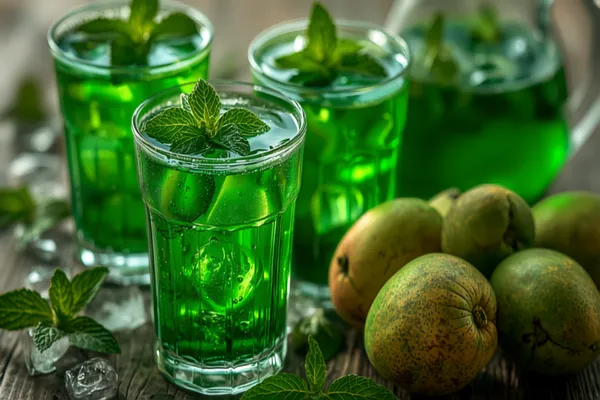
Aam Panna (Raw Green Mango Summer Cooler)
India's tangy, jade-green raw-mango cooler — roasted or boiled green mangoes blended with cumin, black salt and mint. The traditional heat-stroke remedy that tastes like summer.
Pan-Indian (North & West India) · Indian
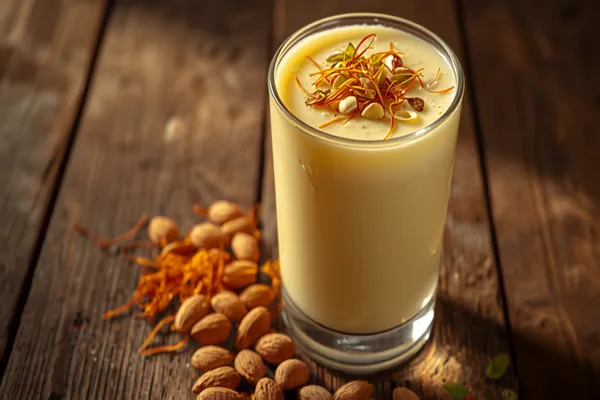
Badam Milk (Saffron Almond Milk)
Milk simmered with a paste of soaked almonds, saffron, cardamom and a whisper of nutmeg — India's rich, fragrant almond drink. Comforting served warm in winter, reviving served chilled in summer, festive any time.
Pan-Indian (Gujarat & West India especially) · Indian
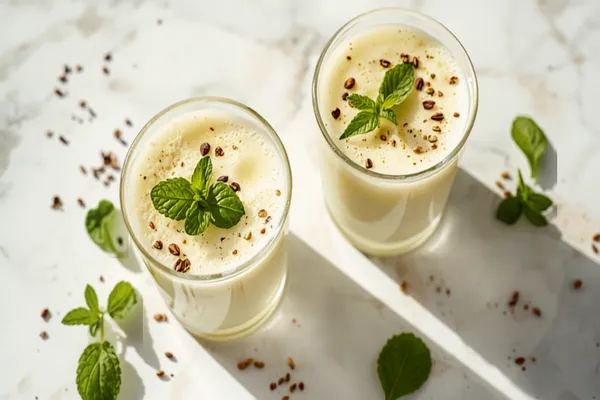
Chaas (Spiced Indian Buttermilk / Masala Chaas)
Whisked yogurt thinned with water and seasoned with cumin, green chilli, ginger and curry leaves — India's cooling, savoury buttermilk. A salty-tangy digestive that beats the heat and settles a heavy meal in two minutes.
From our kitchen community
Ratings & Reviews
My Rating
Tap a star to rate — no sign-in, no form needed.
My Review
0 Ratings
🥣 0 home cooks made it!
Be the first to rate Matar Paneer (Punjabi Peas & Paneer Curry).
Related Recipes
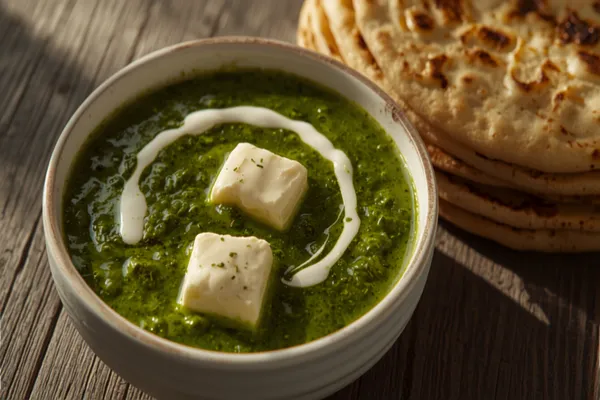
Punjab / North India · Indian
Palak Paneer (Spinach and Paneer Curry)
North India's beloved greens-and-cheese curry: soft paneer cubes in a bright, gently spiced spinach gravy. Vegetarian, quick, and a benchmark of a good home kitchen.
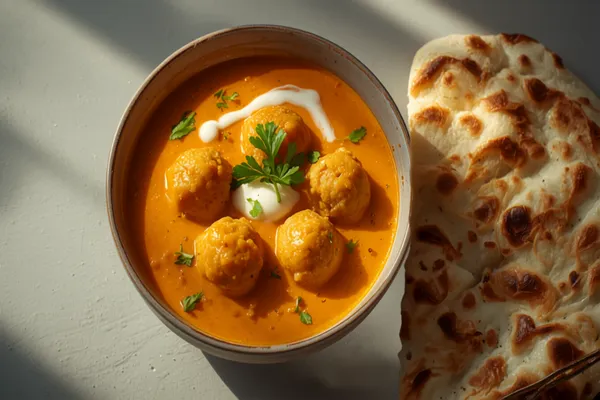
North India (Mughlai-influenced) · Indian
Malai Kofta (Paneer-Potato Dumplings in Creamy Gravy)
A vegetarian restaurant showpiece: soft paneer-and-potato dumplings in a rich, mildly sweet tomato-cashew gravy. Indulgent, festive, and made for special occasions.
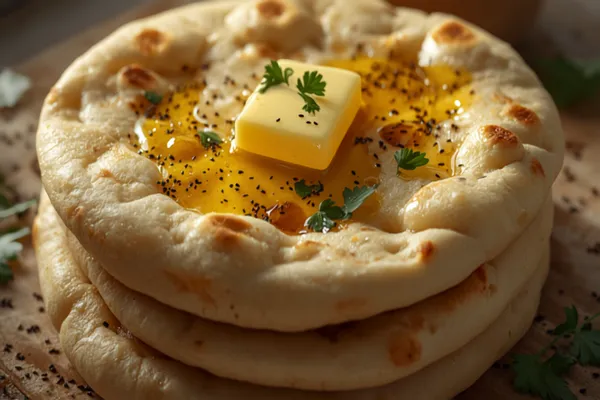
North India (via Persia and Central Asia) · Indian
Naan (Soft Leavened Flatbread)
The pillowy, blistered flatbread of North Indian restaurants — made at home on a hot skillet or under the broiler, no tandoor required. Soft, chewy, and brushed with butter.
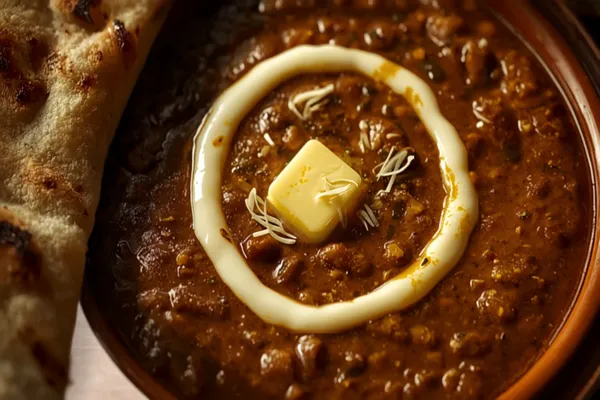
Punjab / North India · Indian
Dal Makhani (Punjabi Black Lentils)
The slow-simmered Punjabi classic: whole black urad and kidney beans cooked for hours into a velvety, smoky, buttery dal. Restaurant-rich at home — the patience is the recipe.
Punjab & Delhi (North India) · Indian
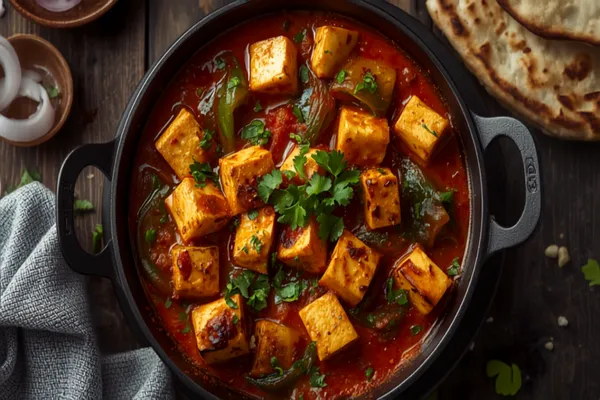
Kadai Paneer (Restaurant-Style, with Fresh Kadai Masala)
Paneer, onions and capsicum in a semi-dry tomato masala built on freshly pounded coriander seeds and red chillies — the peppery, aromatic North Indian classic named for the wok it's cooked in. Nothing like the flat, creamy versions.
North India (Punjab–Delhi belt) · Indian
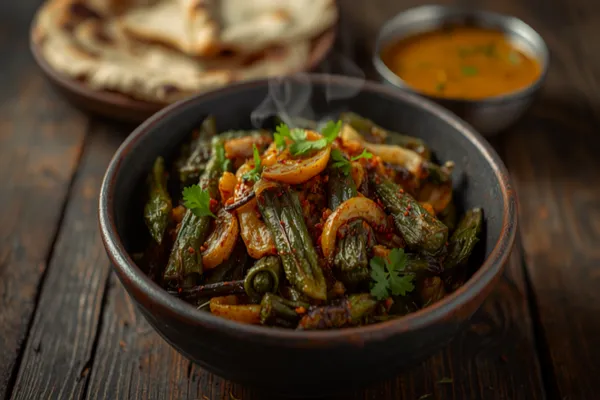
Bhindi Masala (Dry North Indian Okra Sabzi)
The North Indian home-kitchen classic: tender okra pan-fried until every trace of slime is gone, then tossed with onions, tomatoes and a bright, amchoor-spiked masala. A non-slimy bhindi masala that stays crisp at the edges.
North India (Punjab & the Mughlai belt) · Indian
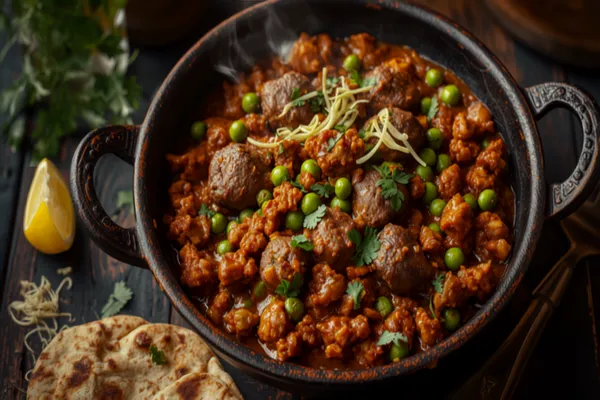
Keema Matar (Punjabi Minced Lamb with Peas)
The North Indian comfort classic: lamb or mutton mince slow-fried into a deep, spiced masala with sweet green peas. The secret is the bhuna — searing the meat hard until the fat runs and the spices caramelize.
Further reading
- Cultural Story · North IndiaA Complete Guide to North Indian CookingThe cuisine the world knows best — and understands least. From Punjab's tandoor and dairy to Kashmir's aromatic Wazwan and Awadh's courtly kebabs, a guide to North India's regions, techniques, and where to begin.
- Ingredient Deep DiveThe Indian Spice Pantry: A Beginner's MapYou don't need a hundred spices to cook Indian food — you need a dozen, and the know-how to use them. A practical guide to the essential Indian spices, what each does, and the techniques (tadka, bhuna, dry-roasting) that unlock them.