Kerala / South India · Indian
Parippu (Kerala Moong Dal with Ghee)
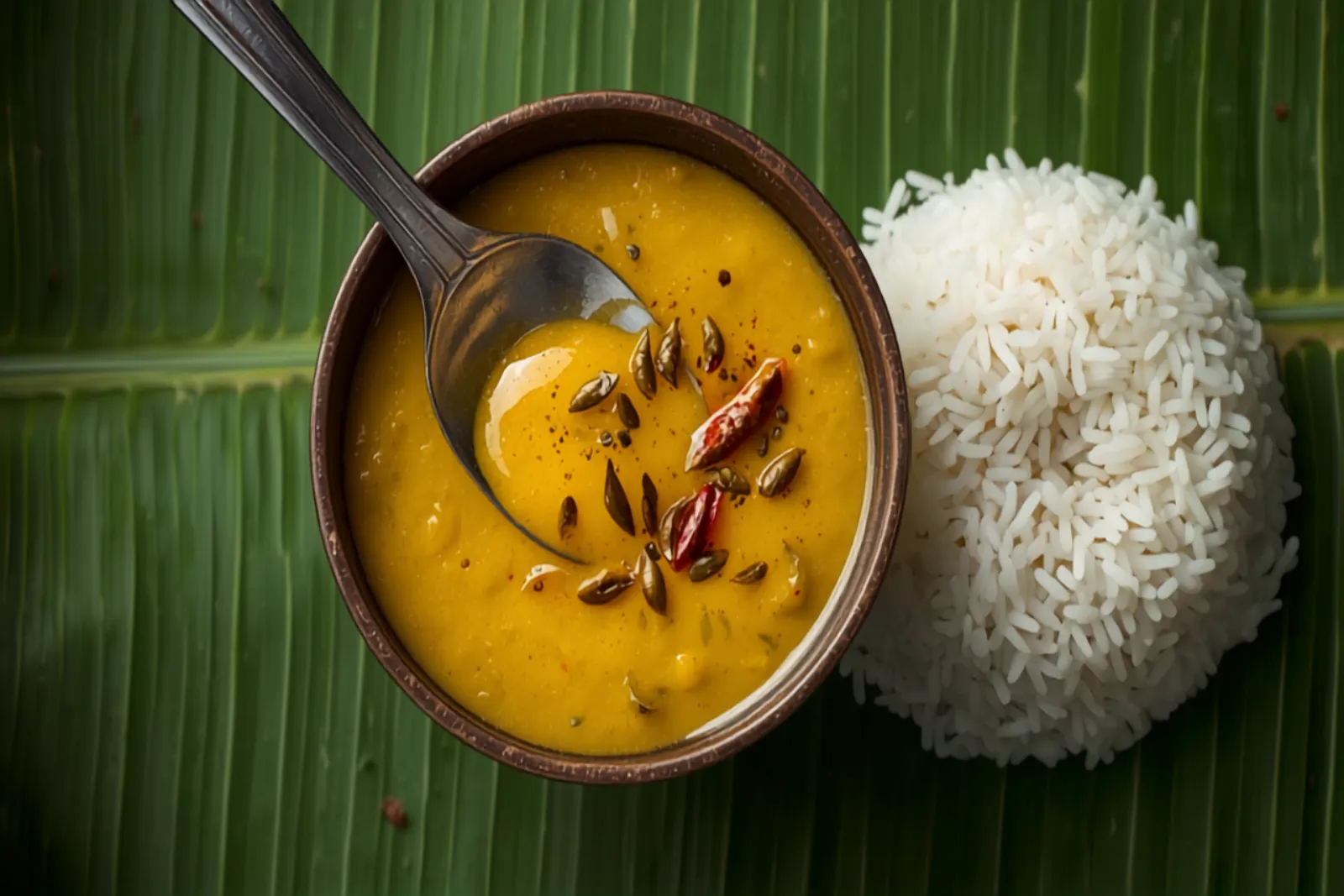
The opening course of the Kerala sadya: soft cooked moong dal tempered lightly and served with a spoon of ghee over the first mound of rice. Simple, soothing, and the dish the feast begins with.
Published June 22, 2026
Cultural context
Parippu is the first course of the Kerala sadya — a soft, lightly spiced moong dal eaten with rice and a spoonful of ghee and pappadam before the heavier curries arrive. Its gentleness is the point: it eases the meal open.
Parippu is where the Kerala sadya begins. Before the avial and the olan, before the sour curries and the payasam, the meal opens quietly: soft moong dal, a mound of rice, a spoon of ghee, and a pappadam to break over the top. It is the gentlest course of the feast, and its simplicity is exactly the point.
A light roast first
The Kerala touch is to dry-roast the moong dal for a couple of minutes before cooking — just until it smells nutty and turns a shade darker. It’s a small step that gives parippu its warm, characteristic aroma and keeps it from tasting flat.
Soft, with a little coconut
Sadya parippu is cooked soft and slightly broken down, then often enriched with a little coarsely ground coconut, cumin, and green chili. Skip the coconut for a plainer everyday dal; keep it for the rounder feast-day version.
The ghee is the point
Finish with a tempering of mustard seeds, dried chili, and curry leaves bloomed in ghee — and then, at the table, one more spoon of ghee over the rice and dal. That is the ceremonial first bite of a sadya. Serve alongside avial and sambar, and read more about the feast in our Onam sadya guide.
Ingredients
For the dal
- 1 cup moong dal (split yellow gram) Cherupayar parippu — the small yellow split moong; dry-roast it lightly first for the traditional aroma.
- 1/4 tsp turmeric
- 3 cups water
For the coconut paste (optional)
- 1/3 cup grated coconut (fresh)
- 1/2 tsp cumin seeds
- 2 green chilies
For the tempering
- 2 tbsp ghee Plus extra to spoon over at the table — non-negotiable for sadya parippu. Use coconut oil to keep it vegan.
- 1/2 tsp mustard seeds
- 2 dried red chilies
- 1 sprig curry leaves
- salt
Method
Tap a step’s number to check it off as you go.
-
Dry-roast the moong dal in a pan over low heat for 2–3 minutes until it smells nutty and turns a shade darker, then rinse.
Why: A light roast deepens the flavour and is the traditional first step for Kerala parippu — it keeps the dal from tasting raw or flat.
-
Pressure-cook or simmer the dal with turmeric and water until very soft and mashable, about 15–20 minutes.
Why: Sadya parippu is soft and slightly broken down, not whole — overcook rather than undercook.
-
If using, coarsely grind the coconut with cumin and green chilies and stir into the cooked dal with salt; simmer 3–4 minutes.
Why: A little ground coconut gives the richer Kerala version its body; you can skip it for a plainer, lighter parippu.
-
Heat ghee and crackle the mustard seeds, dried chilies, and curry leaves, then pour over the dal.
Why: The ghee tempering is the aroma that defines the dish; pouring it hot over the dal blooms the spices.
-
Serve hot over the first mound of rice with an extra spoon of ghee and a pappadam.
Why: On the sadya, parippu-rice-ghee-pappadam is the ceremonial opening of the meal — the ghee is essential.
A quick, anonymous tap — no review needed.
Variations
- Vegan
Temper in coconut oil instead of ghee — still authentic and common in everyday Kerala kitchens.
- Plain (no coconut)
Skip the coconut paste for a lighter, everyday parippu; just dal, turmeric, salt, and the ghee tempering.
- Tuvar/masoor blend
A spoon of toor dal in the moong gives a slightly richer, thicker curry.
Serving & Storage
Always the first course of the sadya — eaten with rice, a generous spoon of ghee, and pappadam before the other curries. Soothing on its own with rice any day.
Pairs with: Steamed rice, Ghee, Pappadam, Mango pickle.
Storage: Keeps 2–3 days refrigerated; it thickens, so loosen with hot water when reheating and re-temper if you like.
Nutrition
Per serving (about 3/4 cup)
- Calories
- 190
- Protein
- 9 g
- Carbs
- 22 g
- Fat
- 8 g
- Fiber
- 5 g
- Sugar
- 1 g
- Sodium
- 300 mg
Notable micronutrients: Folate, Iron, Magnesium
Estimated using standard ingredient data. Values vary with brands and substitutions.
Frequently Asked Questions
Why is parippu served first at a sadya?
It's the gentlest course — soft dal with rice and ghee eases the meal open before the spicier, tangier curries. The order of a sadya is deliberate, and parippu is always near the start.
Do I have to roast the dal?
Not strictly, but a light dry-roast is traditional in Kerala and gives parippu its characteristic nutty aroma. It takes two minutes and is worth doing.
Is the ghee necessary?
For sadya parippu, yes — the spoon of ghee over rice and dal is the whole point of the course. For a vegan version, coconut oil is the everyday substitute.
What to drink with this
All drinks →Hand-picked pours to match this dish.
North & West India (peak-summer drink across the subcontinent) · Indian
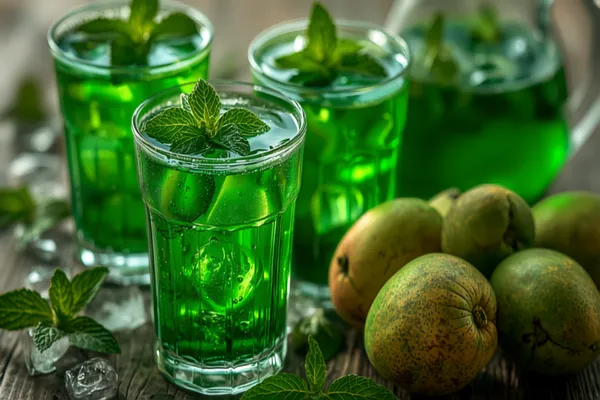
Aam Panna (Raw Green Mango Summer Cooler)
India's tangy, jade-green raw-mango cooler — roasted or boiled green mangoes blended with cumin, black salt and mint. The traditional heat-stroke remedy that tastes like summer.
Pan-Indian (North & West India) · Indian
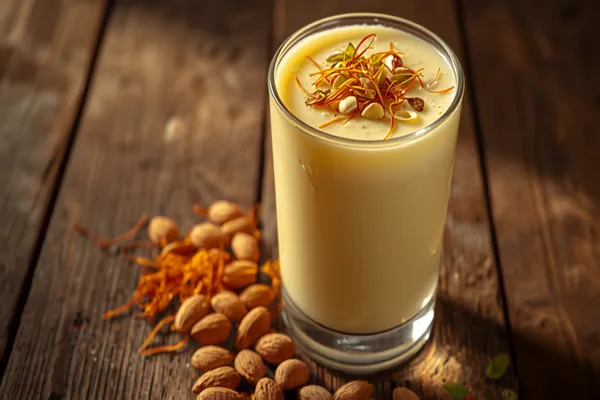
Badam Milk (Saffron Almond Milk)
Milk simmered with a paste of soaked almonds, saffron, cardamom and a whisper of nutmeg — India's rich, fragrant almond drink. Comforting served warm in winter, reviving served chilled in summer, festive any time.
Pan-Indian (Gujarat & West India especially) · Indian
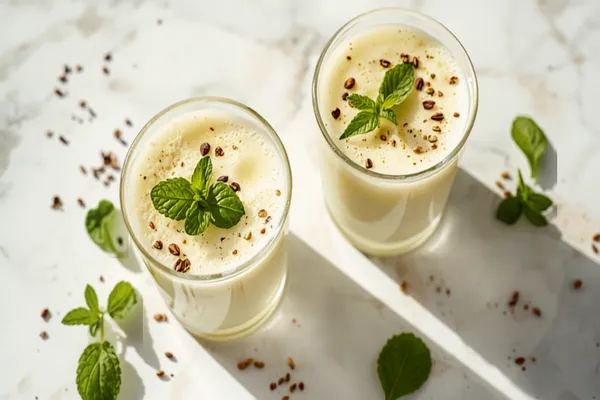
Chaas (Spiced Indian Buttermilk / Masala Chaas)
Whisked yogurt thinned with water and seasoned with cumin, green chilli, ginger and curry leaves — India's cooling, savoury buttermilk. A salty-tangy digestive that beats the heat and settles a heavy meal in two minutes.
From our kitchen community
Ratings & Reviews
My Rating
Tap a star to rate — no sign-in, no form needed.
My Review
0 Ratings
🥣 0 home cooks made it!
Be the first to rate Parippu (Kerala Moong Dal with Ghee).
Related Recipes
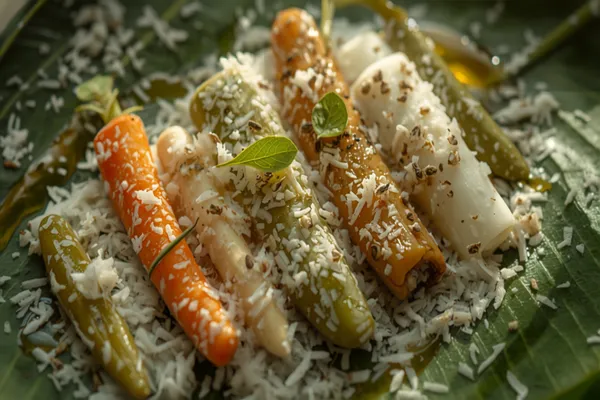
Kerala / South India · Indian
Avial (Kerala Mixed Vegetables in Coconut and Yogurt)
A cornerstone of the Kerala sadya: a medley of vegetables simmered until tender and bound in a coconut-cumin paste with tangy yogurt, finished with raw coconut oil and curry leaves. Wholesome, gentle, and quietly addictive.
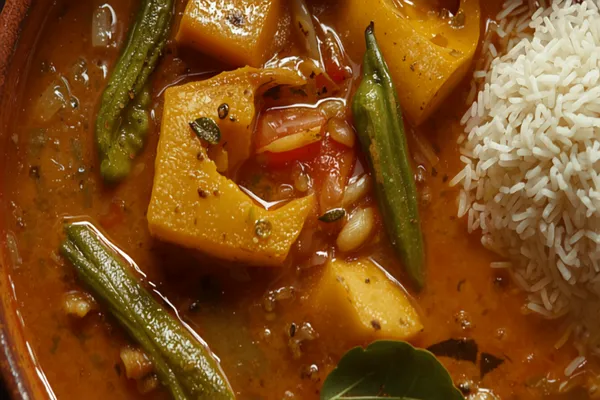
Tamil Nadu / South India · Indian
Sambar (South Indian Lentil and Vegetable Stew)
The everyday backbone of a South Indian meal: toor dal simmered with vegetables and tamarind, seasoned with a freshly ground sambar powder and a sizzling tempering. Tangy, savory, and endlessly comforting.
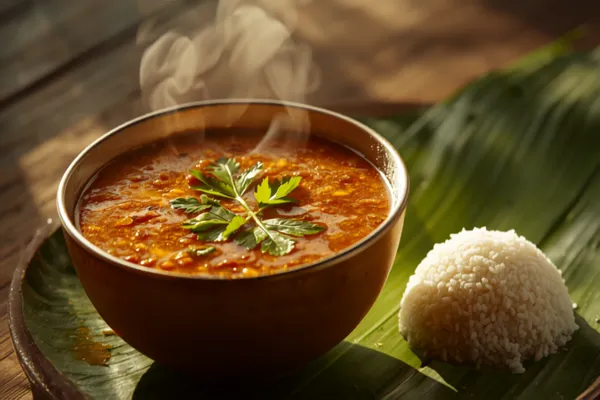
Kerala / South India · Indian
Kerala Rasam (Pepper-Tamarind Broth)
The thin, fragrant, peppery broth that follows the sambar course on the sadya: tamarind and tomato sharpened with a freshly pounded rasam powder and finished with curry leaves. Restorative on its own, perfect poured over rice.
Further reading
- Cultural Story · South IndiaA Complete Guide to South Indian CookingSouth India isn't one cuisine but many — Tamil, Kerala, Karnataka, Andhra and Telangana, each with its own grains, spices, and rituals. A guide to the building blocks, the regional differences, and where to start cooking.
- Festival & Seasonal · KeralaThe Onam Sadya: Kerala's Feast on a Banana LeafOnce a year, Kerala lays out one of the world's great vegetarian feasts — two dozen-plus dishes served on a banana leaf in a precise order, eaten with the hands. A guide to the Onam sadya: what's on the leaf, where it goes, and why it matters.