Kerala / South India · Indian
Puli Inji (Kerala Ginger-Tamarind Relish)
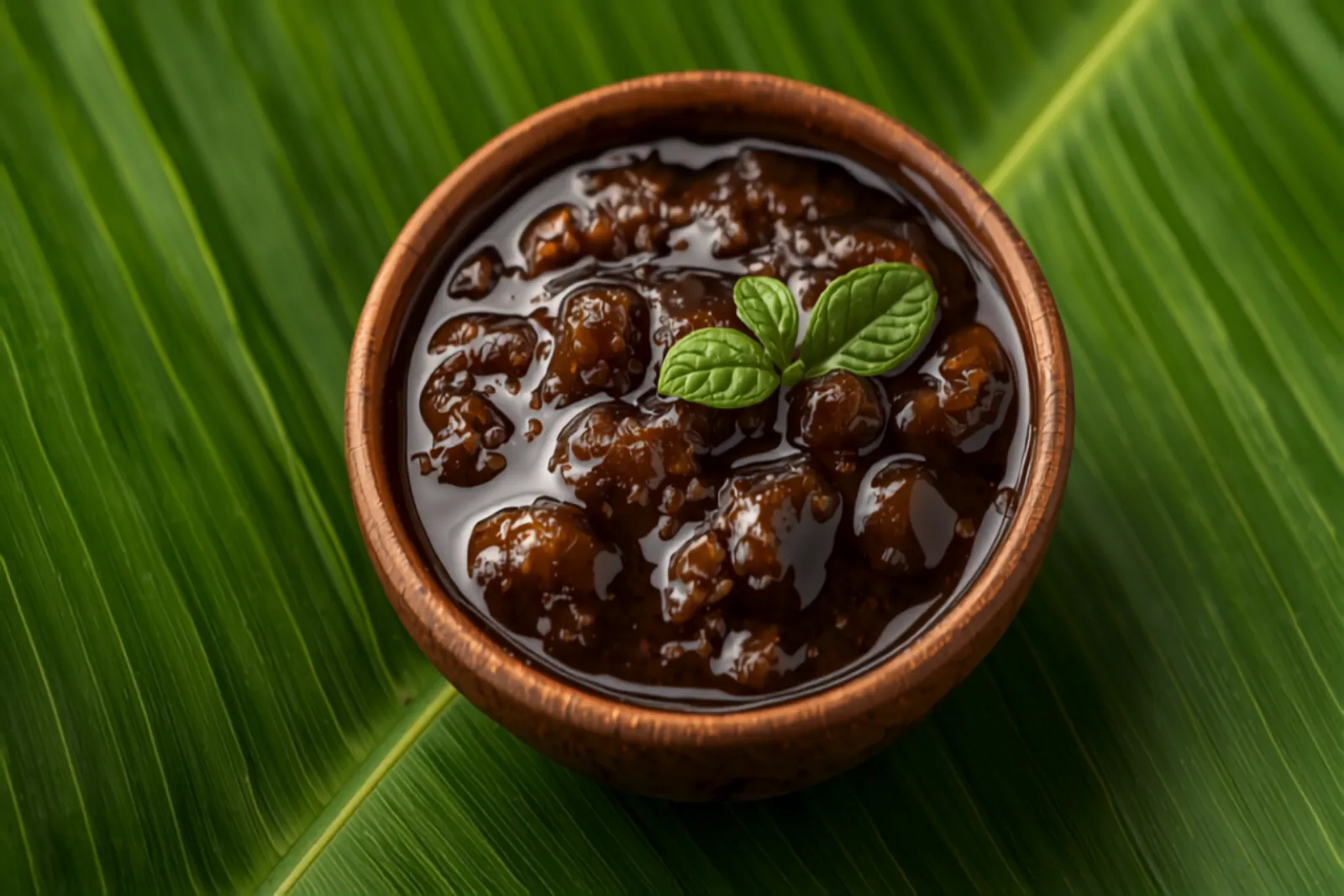
The tiny, mighty dab on the sadya leaf: ginger and green chili cooked down with tamarind and jaggery into a glossy sweet-sour-spicy relish. Also called inji puli — a spoonful goes a long way and it keeps for weeks.
Published June 22, 2026
Cultural context
Puli inji (also inji puli or injipuli) is the small, intensely flavoured ginger-tamarind relish placed at the corner of the Kerala sadya leaf. Sweet, sour, hot, and salty at once, it's eaten in tiny amounts and keeps for weeks — historically a way to balance and preserve on a feast day.
Puli inji is the smallest dish on the Kerala sadya and one of the most important — a dark, glossy ginger-and-tamarind relish that’s sweet, sour, hot, and salty all at once. A dab the size of a coin at the corner of the leaf balances the entire feast.
Fry the ginger properly
The secret is patience with the ginger: fry the finely chopped ginger and green chili in coconut oil until deep golden and crisp at the edges. Underfried ginger tastes sharp and raw; well-fried ginger turns mellow and deep, which is the whole character of the dish.
All four tastes, then keep it
Reduce tamarind water to a glossy base, then balance it with jaggery and a little roasted fenugreek until it’s sweet-sour-spicy-salty in one bite. Because of that sugar, salt, and acidity, puli inji keeps for weeks — and only gets better.
Serve a little beside pachadi and parippu; the full leaf is laid out in our Onam sadya guide.
Ingredients
For the relish
- 1/2 cup fresh ginger, very finely chopped
- 3–4 green chilies, finely chopped
- 1 lemon-sized ball tamarind, soaked in 1.5 cups warm water
- 1/3 cup jaggery, grated Balances the sour and heat; adjust to taste — puli inji should be all four tastes at once.
- 1/2 tsp turmeric
- 1/4 tsp fenugreek seeds, roasted and powdered
- salt
For the tempering
- 2 tbsp coconut oil
- 1/2 tsp mustard seeds
- 2 dried red chilies
- 1 sprig curry leaves
Method
Tap a step’s number to check it off as you go.
-
Heat coconut oil and fry the finely chopped ginger and green chili on medium until the ginger is deep golden and crisp at the edges.
Why: Frying the ginger well removes its raw bite and gives puli inji its deep, mellow flavour — pale, underfried ginger tastes sharp.
-
Add the mustard seeds, dried chilies, and curry leaves to the same pan and let them crackle.
Why: Tempering directly in the ginger oil layers the aroma into the base.
-
Pour in the strained tamarind water with turmeric and salt and simmer until reduced and thickened.
Why: Reducing the tamarind concentrates the sourness and gives the relish its glossy body.
-
Stir in the jaggery and roasted fenugreek powder and cook until thick, dark, and glistening.
Why: Jaggery balances the sour and heat; cook until it coats a spoon — puli inji should be a thick relish, not a thin sauce.
A quick, anonymous tap — no review needed.
Variations
- Hotter
Add more green chili or a pinch of chili powder for a fierier relish.
- Sweeter (Onam-style)
Increase the jaggery for the rounder, sweeter sadya version many families prefer.
- Date-sweetened
Swap some jaggery for a little date paste for a deeper, fudgier sweetness.
Serving & Storage
A tiny dab at the corner of the sadya leaf — eaten in small amounts with rice to balance the meal. Keeps for weeks as an all-purpose ginger pickle.
Pairs with: Steamed rice, Curd rice, Pappadam.
Storage: Excellent keeper — store in a clean dry jar in the fridge for 3–4 weeks; the flavour deepens. Always use a dry spoon.
Nutrition
Per serving (1 tbsp)
- Calories
- 45
- Protein
- 0 g
- Carbs
- 7 g
- Fat
- 2 g
- Fiber
- 1 g
- Sugar
- 5 g
- Sodium
- 180 mg
Notable micronutrients: Manganese, Iron
Estimated using standard ingredient data. Values vary with brands and substitutions.
Frequently Asked Questions
Is it puli inji or inji puli?
Both names are used for the same relish — 'inji' is ginger and 'puli' is tamarind. Some regions and families favour one order; the dish is identical.
Why is it served in such a small amount?
Puli inji is intense — sweet, sour, hot, and salty all at once — so it's a condiment, not a curry. A tiny dab with rice balances the whole sadya, which is exactly its role.
How long does it really keep?
Weeks in the fridge, and traditionally it was made ahead precisely because it lasts. The sugar, salt, and acidity preserve it — just keep it in a clean, dry jar and use a dry spoon.
What to drink with this
All drinks →Hand-picked pours to match this dish.
North & West India (peak-summer drink across the subcontinent) · Indian
Aam Panna (Raw Green Mango Summer Cooler)
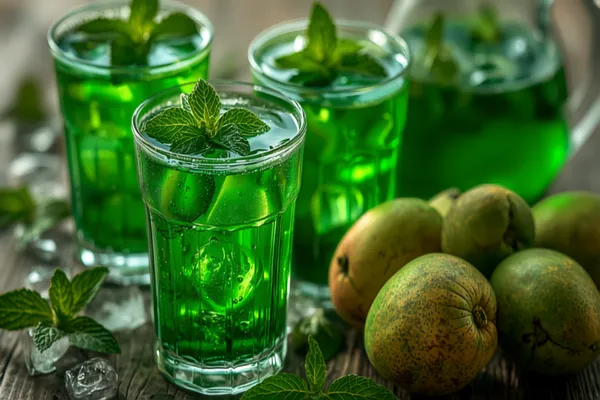
India's tangy, jade-green raw-mango cooler — roasted or boiled green mangoes blended with cumin, black salt and mint. The traditional heat-stroke remedy that tastes like summer.
Pan-Indian (North & West India) · Indian
Badam Milk (Saffron Almond Milk)
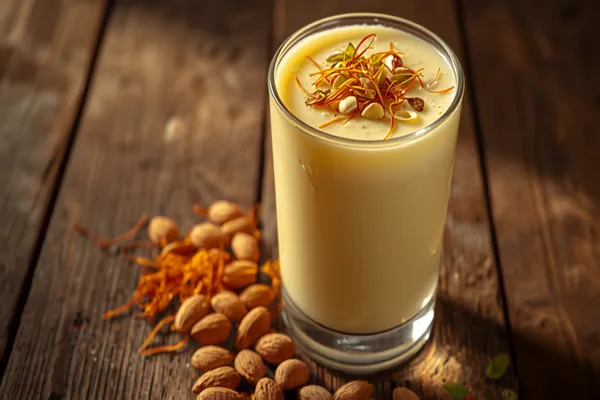
Milk simmered with a paste of soaked almonds, saffron, cardamom and a whisper of nutmeg — India's rich, fragrant almond drink. Comforting served warm in winter, reviving served chilled in summer, festive any time.
Pan-Indian (Gujarat & West India especially) · Indian
Chaas (Spiced Indian Buttermilk / Masala Chaas)
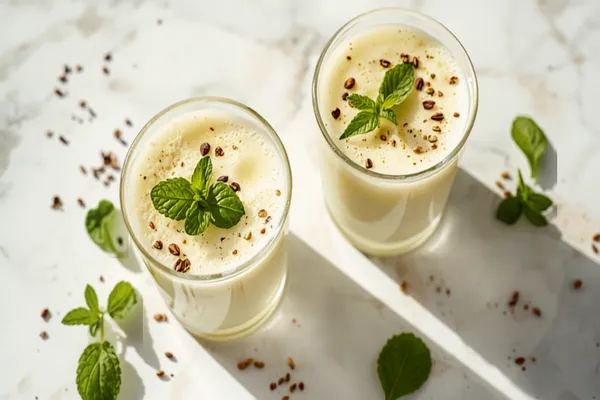
Whisked yogurt thinned with water and seasoned with cumin, green chilli, ginger and curry leaves — India's cooling, savoury buttermilk. A salty-tangy digestive that beats the heat and settles a heavy meal in two minutes.
From our kitchen community
Ratings & Reviews
My Rating
Tap a star to rate — no sign-in, no form needed.
My Review
0 Ratings
🥣 0 home cooks made it!
Be the first to rate Puli Inji (Kerala Ginger-Tamarind Relish).
Related Recipes
Kerala / South India · Indian
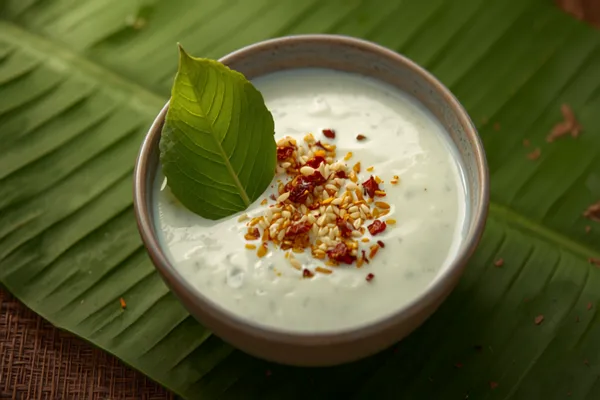
Pachadi (Kerala Cucumber and Yogurt with Coconut)
The cooling sweet-sour relish of the sadya: cucumber in coconut-ground yogurt with a hint of green chili and a mustard tempering. Kerala's answer to raita, and the dish that refreshes the palate between courses.
Kerala / South India · Indian
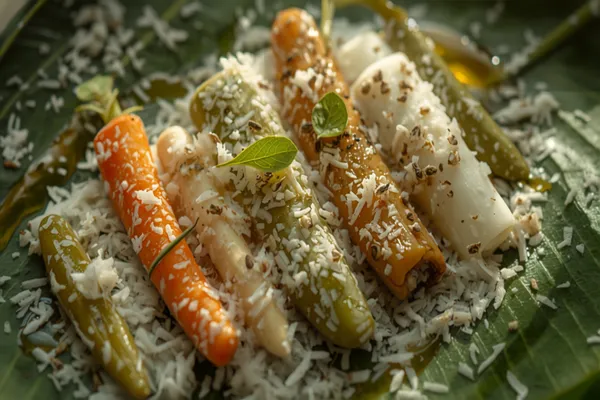
Avial (Kerala Mixed Vegetables in Coconut and Yogurt)
A cornerstone of the Kerala sadya: a medley of vegetables simmered until tender and bound in a coconut-cumin paste with tangy yogurt, finished with raw coconut oil and curry leaves. Wholesome, gentle, and quietly addictive.
Kerala / South India · Indian
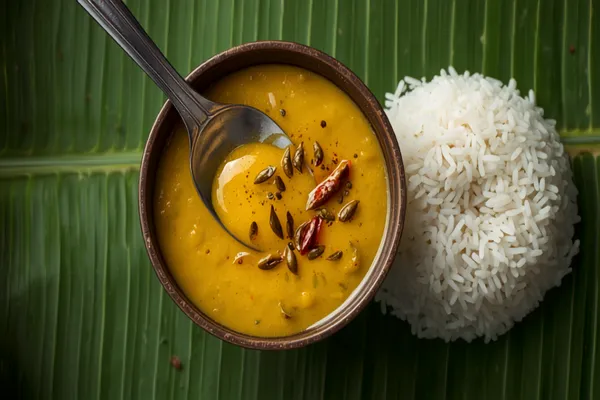
Parippu (Kerala Moong Dal with Ghee)
The opening course of the Kerala sadya: soft cooked moong dal tempered lightly and served with a spoon of ghee over the first mound of rice. Simple, soothing, and the dish the feast begins with.
Further reading
- Cultural Story · South IndiaA Complete Guide to South Indian CookingSouth India isn't one cuisine but many — Tamil, Kerala, Karnataka, Andhra and Telangana, each with its own grains, spices, and rituals. A guide to the building blocks, the regional differences, and where to start cooking.
- Festival & Seasonal · KeralaThe Onam Sadya: Kerala's Feast on a Banana LeafOnce a year, Kerala lays out one of the world's great vegetarian feasts — two dozen-plus dishes served on a banana leaf in a precise order, eaten with the hands. A guide to the Onam sadya: what's on the leaf, where it goes, and why it matters.