Hawaii · Hawaiian
Spam Musubi (Hawaiian Spam Rice Snack)
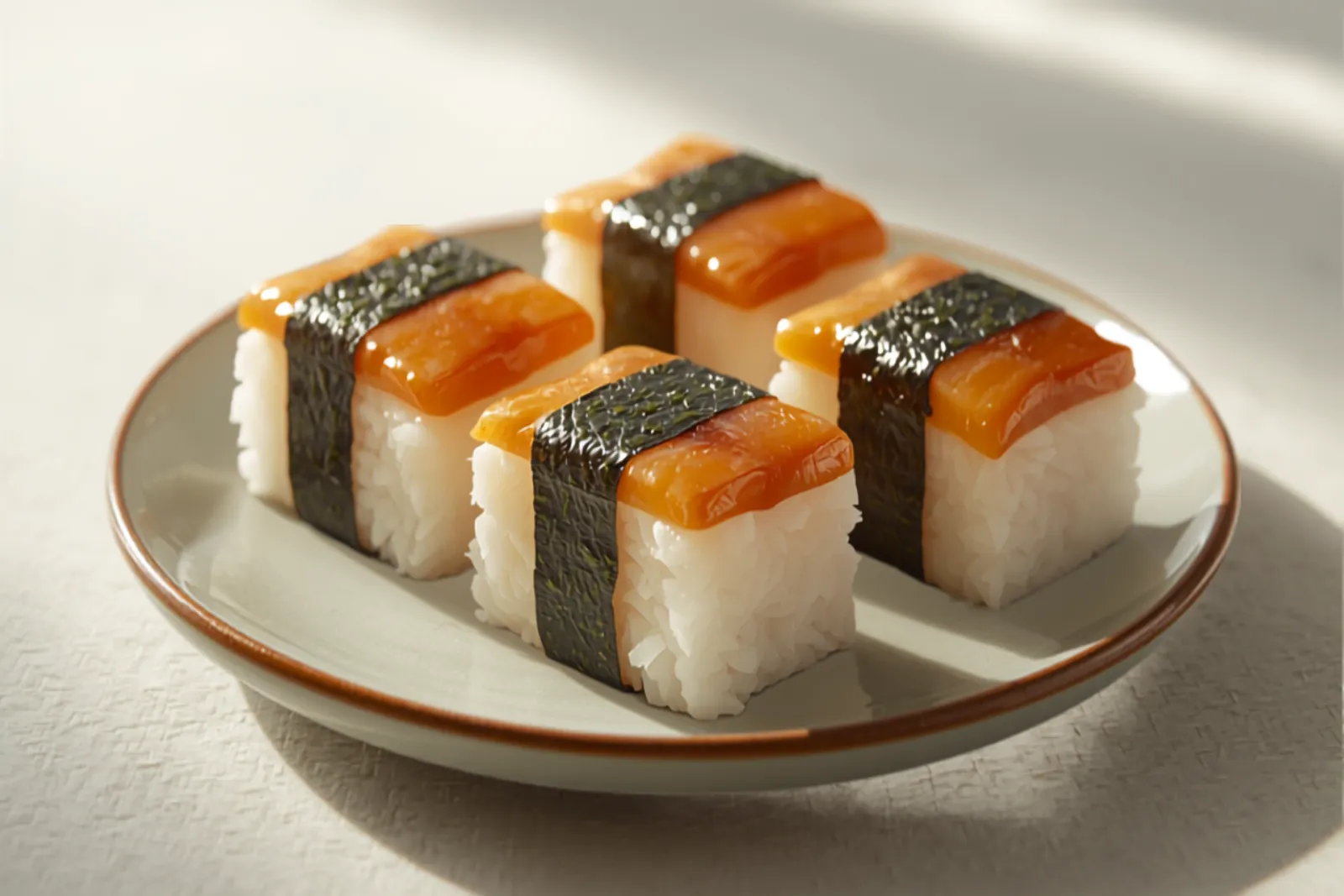
Hawaii's favourite handheld snack: a slab of teriyaki-glazed Spam over a brick of warm sushi rice, wrapped in a strip of nori. Salty, sweet, savoury, and weirdly irresistible — the ultimate proof that humble ingredients make joyful food.
Published June 20, 2026
Cultural context
Spam musubi is the snack-bar staple of Hawaii, found everywhere from gas stations to grocery stores. It fuses Japanese onigiri with Spam, the canned pork that became woven into island cooking during and after World War II. It's the headline food of the Waikiki Spam Jam, an annual street festival in Honolulu celebrating Hawaii's enduring love of Spam.
Spam musubi is Hawaii in a single handful: a slab of sweet-salty, teriyaki-glazed Spam pressed onto a warm brick of sushi rice and banded with a strip of nori. It sounds unlikely and tastes wonderful — savoury, a little sweet, deeply satisfying — and it’s everywhere on the islands, from gas-station counters to lunchboxes. Honolulu even throws a whole street festival for it: the Waikiki Spam Jam.
It’s the cooking of necessity turned into joy. Spam became part of island life during and after World War II, and Hawaii’s cooks, drawing on Japanese onigiri, made it their own.
Crisp the Spam, then glaze
Don’t just slap raw Spam on rice. Fry the slices in a dry pan until browned and crisp at the edges — Spam renders enough of its own fat to do this — then add the soy-sugar-mirin glaze and let it cook down to a sticky lacquer that coats each slice. That sweet-salty caramelised crust is what makes it.
Pack the rice tight
Use warm, sticky short-grain sushi rice and pack it firmly — loose rice means a musubi that crumbles. A musubi mould gives the neat brick shape, but the islands’ favourite hack is to wash out the empty Spam can (both ends off) and use it as a perfectly sized mould. A sprinkle of furikake between rice and Spam is a classic touch.
Wrap, rest, and go
Wrap the nori strip up and around the stack, sealing the seam with a few grains of rice, then let it sit a couple of minutes so the seaweed softens against the rice and everything holds together. Then eat it with your hands, warm or at room temperature — musubi is built to travel.
Looking for more festival snacks? Browse the World Festive collection or the full recipe collection.
Ingredients
For the musubi
- 1 can (340 g) Spam Classic or low-sodium. Sliced lengthways into 6 even slabs.
- 3 cups cooked short-grain (sushi) rice Warm and slightly sticky. Day-old won't pack as well.
- 3 sheets nori (toasted seaweed) Cut in half to make 6 strips.
For the glaze
- 3 tbsp soy sauce
- 2 tbsp sugar
- 2 tbsp mirin
- 1 tsp oyster sauce (optional) For extra savoury depth.
To finish (optional)
- furikake (rice seasoning) Sprinkled on the rice — a classic touch.
Method
Tap a step’s number to check it off as you go.
-
Stir together the soy, sugar, mirin, and oyster sauce. Slice the Spam into 6 slabs.
Why: A premixed glaze caramelises evenly on the Spam; even slices stack neatly into the musubi mould.
-
Fry the Spam slices in a dry pan over medium-high heat until browned and crisp at the edges, then add the glaze and cook until it's sticky and coats each slice.
Why: Spam is fatty enough to fry in its own fat. Crisping it first, then glazing, gives the signature sweet-salty lacquer and a little crunch.
-
Set a musubi mould (or the cleaned, open Spam can) on a strip of nori. Press in a layer of warm rice firmly, sprinkle with furikake, then top with a slice of glazed Spam.
Why: Packing the rice tightly is what holds the musubi together; a mould gives the clean brick shape, but the empty Spam can works in a pinch.
-
Lift away the mould and wrap the strip of nori up and around, sealing the end with a few grains of rice or a dab of water.
Why: The nori binds the stack into a handheld parcel and adds a savoury, crisp wrapper. Moisture seals the seam.
-
Let the musubi sit a couple of minutes so the nori softens slightly against the rice, then serve.
Why: A short rest lets everything meld and the nori adhere, so the musubi holds together when you pick it up.
A quick, anonymous tap — no review needed.
Variations
- With egg
Add a folded, fried egg layer (tamago-style) between the rice and Spam for a heartier, breakfast-leaning musubi.
- Teriyaki chicken or tofu
Swap the Spam for a slab of teriyaki chicken or firm tofu glazed the same way for a different (or vegetarian) musubi.
- Spicy mayo
Add a smear of sriracha mayo under the Spam for a creamy, spicy kick.
Serving & Storage
Eat with your hands, warm or at room temperature — musubi travels brilliantly, which is why it's the islands' favourite on-the-go snack and picnic food. Great in a lunchbox.
Pairs with: Green tea, Macaroni salad (Hawaiian plate-lunch style), Pickled ginger, Cold barley tea.
Storage: Best the day it's made, at room temperature. Refrigerate up to a day, well wrapped, and bring back to room temperature before eating (cold rice turns hard). Don't freeze.
Nutrition
Per serving (1 musubi)
- Calories
- 320
- Protein
- 11 g
- Carbs
- 44 g
- Fat
- 11 g
- Fiber
- 1 g
- Sugar
- 8 g
- Sodium
- 920 mg
Notable micronutrients: Iron, Niacin
Estimated using standard ingredient data. Values vary with brands and substitutions.
Frequently Asked Questions
What is musubi?
Musubi is the Hawaiian relative of Japanese onigiri — a pressed block of rice, here topped with glazed Spam and bound with nori. The name comes from the Japanese for a rice ball. Spam musubi is the most famous version, but you can use other toppings.
Do I need a musubi mould?
It helps you get the clean rectangular shape and pack the rice tightly, but you don't strictly need one. The classic hack is to wash out the empty Spam can (both ends removed) and use it as a mould, since it's exactly the right size.
Can I make Spam musubi ahead?
Yes — it's made to travel. Keep it at room temperature and eat within the day for the best texture. If you refrigerate it, the rice firms up, so let it come back to room temperature before eating. Avoid freezing, which ruins the rice.
What kind of rice should I use?
Short-grain Japanese sushi rice, cooked until sticky and used while still warm. Its stickiness is what lets the musubi hold its shape. Long-grain rice won't pack together and the musubi will fall apart.
What to drink with this
All drinks →Hand-picked pours to match this dish.
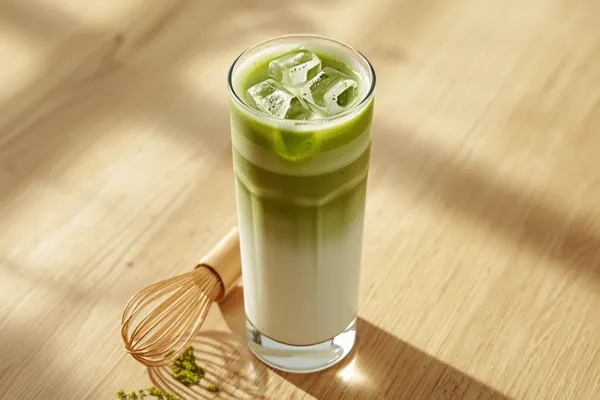
Japan (matcha tradition, Uji & Nishio) · Japanese
Matcha Latte (Whisked Japanese Green Tea Latte)
Stone-ground Japanese matcha whisked smooth and poured over steamed milk — grassy, sweet and gently caffeinated, with no bitterness when you make it right. A café favourite that's better and cheaper at home.

Pan-Indian (the everyday tea of the subcontinent) · Indian
Masala Chai (Spiced Indian Tea)
India's daily ritual in a cup: black tea brewed with milk, sugar and freshly crushed spices. The proper stovetop method, plus how to build your own masala.

Mexico (agua fresca tradition) · Mexican
Agua de Jamaica (Hibiscus Iced Tea)
Mexico's ruby-red hibiscus cooler: dried jamaica flowers steeped, sweetened and chilled into a tart, refreshing agua fresca. The right steep, how to control the tartness, and why it's so good for you.
From our kitchen community
Ratings & Reviews
My Rating
Tap a star to rate — no sign-in, no form needed.
My Review
0 Ratings
🥣 0 home cooks made it!
Be the first to rate Spam Musubi (Hawaiian Spam Rice Snack).
Related Recipes

Further reading
- Festival & Seasonal · InternationalWorld Festive: Recipes for Celebrations Around the GlobeEvery culture has its feast days — the holiday tables, the harvest gatherings, the festivals devoted to a single beloved food. This is our guide to celebration cooking from around the world, from a French Yule log to Hawaiian Spam musubi, and the festivals behind each dish.
- Ingredient Deep Dive · JapanDashi: The Quiet Foundation Under Japanese CookingBefore miso soup, before noodle broth, before a hundred simmered dishes, there is dashi — the five-minute stock of kelp and dried fish that gives Japanese food its savory depth. Here's what it is, why it matters, and how to make it.