The Levant — the neighbourhood bakeries of Beirut, Damascus, Amman and Jerusalem, with roots across the Fertile Crescent · Levantine
Pita Bread (Khubz Arabi, Puffed and Pocketed)
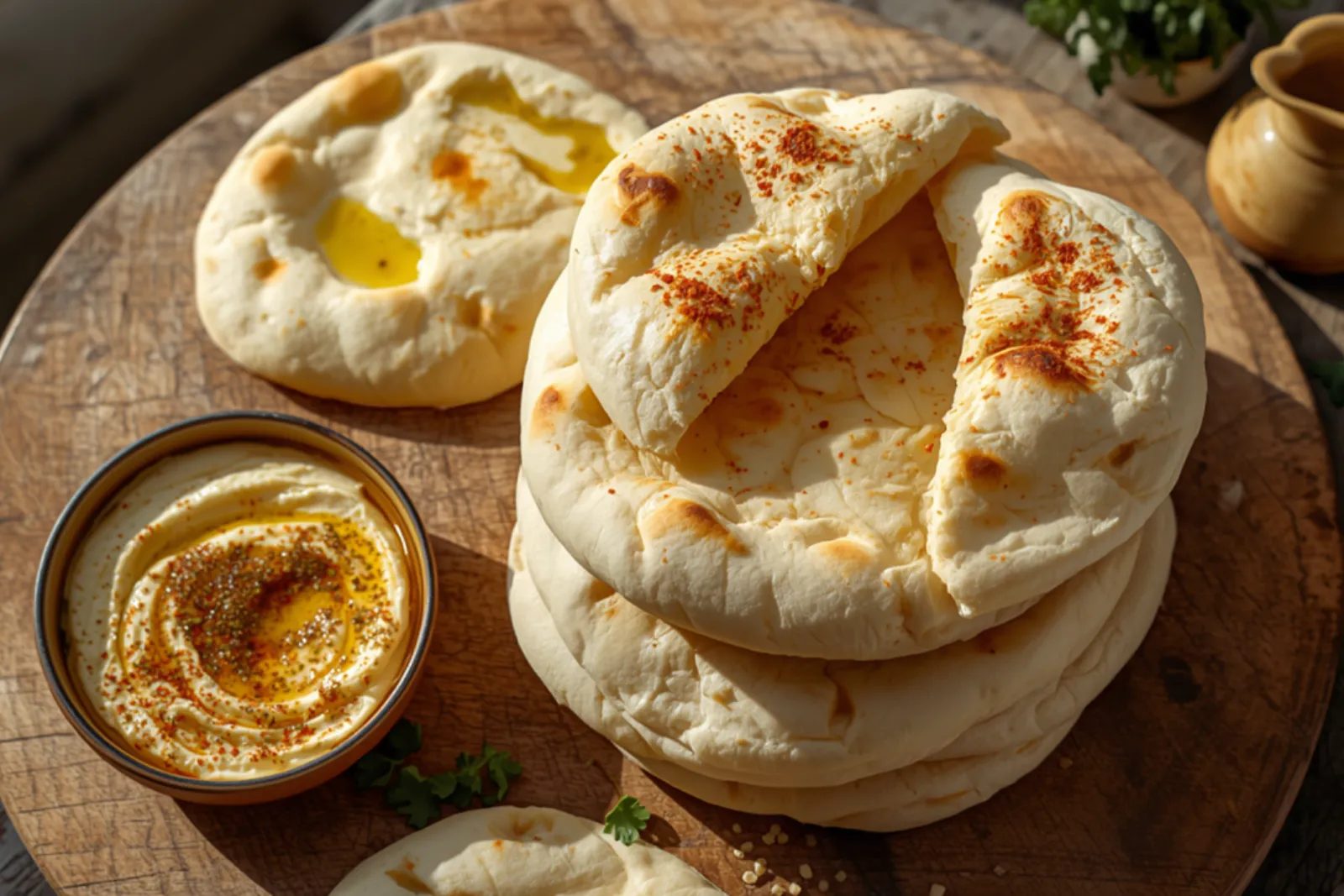
Levantine pita that actually balloons: a lean 65% dough, an even 5 mm roll, and a screaming-hot stone. Sixty seconds of steam pressure does the rest — soft, pale, and hollow all the way through.
Published September 22, 2026
Cultural context
Thin leavened flatbreads baked against a hot surface go back thousands of years in Mesopotamia and the wider Fertile Crescent, and the two-layered pocket version is the everyday bread of the Levant, where it is simply khubz — bread. It belongs to no single modern country: Lebanese, Syrian, Palestinian, Jordanian, Egyptian, Turkish, Greek, Cypriot and Armenian kitchens all have their own version and their own name for it. The English word is borrowed from Modern Greek πίτα, attested in Byzantine Greek by 1108 — a reminder that a food's international name usually comes from whoever exported it westward, not from where it was first baked.
Pita bread is one of the few breads defined by an empty space. Everything about the recipe — the strong flour, the 65% hydration, the even 5 mm roll, the stone that has been heating for an hour — exists to produce sixty seconds of trapped steam and the hollow it leaves behind. Across the Levant this is not a special bread but the bread: khubz, the thing on the table at every meal, torn into and used as a spoon, a wrapper and a plate.
A bread older than the word for it
Thin leavened rounds baked against hot stone or the wall of a clay oven are among the oldest prepared foods we can document, going back thousands of years across the Fertile Crescent, with the Mesopotamian evidence often dated to around 2500 BC. The two-layered pocket version is much younger than that, but it has been the daily bread of the eastern Mediterranean for a very long time, and it belongs to no single modern state. Lebanese, Syrian, Palestinian, Jordanian and Egyptian bakeries all make it; so do Turkish, Armenian, Cypriot and Greek ones, each with a different name, a different diameter and a different opinion about thickness.
The English name is itself an accident of trade. Pita comes from Modern Greek πίτα, attested in Byzantine Greek as early as 1108, and reached English through the Greek diaspora rather than the Arabic-speaking bakeries that make the most of it — which is why a bread whose home is Beirut and Damascus is known worldwide by a Greek word. Confusingly, the Greek pita served with souvlaki is a denser, unpocketed round: the same name, a different bread.
The physics of the pocket
Nothing mystical happens in the oven. The dough carries about 65% of its flour weight in water. When a 5 mm round hits a surface at 260°C, the underside sears almost instantly into a dry, sealed skin, and moments later the top does the same. Between those two skins, the water in the crumb flashes to steam and has nowhere to go. Pressure builds, the two sheets of gluten peel apart, and the round inflates into a sphere. Once you understand it as a pressure vessel, every requirement of the recipe explains itself.
Even thickness beats thin
If one patch of the round is thinner than the rest, it bakes through and dries out early — and a dry patch is a hole. The steam escapes there, the pressure drops, and the pita stays flat. This is why the twenty-minute rest after balling matters more than it looks: a tense dough springs back under the pin and gives you a round that is thick in the middle and thin at the edge. Roll from the centre outward, turn the disc a quarter turn between passes, and stop the moment it is even rather than trying to get it thinner.
The other silent killer is a cold baking surface. Steam only inflates the dough if the crust seals first; on a slow-heating tray the interior dries out through an unsealed surface and you end up with a passable, entirely flat flatbread. An hour of preheating is not padding.
Pull them pale, and wrap them warm
The two habits that separate home pita from bakery pita both happen at the end. Take the rounds out while they are still pale, with at most a few faint freckles — browning means the crumb has dried, and a dried pita cracks along the fold instead of bending around a filling. Then stack them straight into a folded tea towel and leave them there. Fresh from the oven a puffed pita is stiff and papery; wrapped, it reabsorbs its own steam and goes soft and pliable within ten minutes. Cool them uncovered on a rack and they set like parchment.
Bake a batch and the obvious next move is a bowl of hummus to tear it into, or a tray of chicken shawarma to stuff it with. For more of the world’s essential breads and staples, see the World classics guide.
Ingredients
For the dough
- 500 g (about 4 cups) bread flour 11.5–13% protein. Strong flour builds the elastic skin that has to hold a balloon of steam without tearing. All-purpose works but puffs less reliably — see the FAQ.
- 325 g (1 1/3 cups + 1 tbsp) warm water, about 38°C / 100°F 65% hydration. Wetter than a bagel and drier than a focaccia — enough water to turn to steam, not so much that the round is impossible to roll evenly.
- 7 g (2 1/4 tsp) instant dried yeast Active dry works too: dissolve it in the warm water with the sugar and wait 10 minutes for a foam.
- 10 g (1 3/4 tsp) fine sea salt
- 1 tsp sugar or honey Not for sweetness — it gives the yeast an immediate food source so a short, single bulk rise is vigorous enough. Use sugar to keep the loaf vegan.
- 1 1/2 tbsp extra-virgin olive oil Optional but traditional in Lebanese and Palestinian home doughs. It softens the crumb and keeps the baked pita pliable for longer. A strictly lean bakery dough uses none.
For rolling and baking
- as needed flour, for dusting Dust lightly. Excess flour on the round scorches on the stone and can stop the two layers sealing at the rim.
Method
Tap a step’s number to check it off as you go.
-
Whisk the flour, instant yeast, sugar and salt together in a large bowl.
Why: Instant yeast can meet salt in dry flour without harm — it is direct contact in water that stresses it. Whisking first also stops the salt landing in one pocket of dough.
-
Add the warm water and the olive oil and mix to a shaggy mass. Turn out and knead 8–10 minutes by hand, or 6 minutes on low in a stand mixer, until smooth, elastic and just slightly tacky.
Why: The pocket is entirely a gluten job. Steam will push the round into a sphere from the inside, and only a well-developed, extensible gluten network can stretch that far without splitting and letting the pressure out.
-
Shape into a ball, cover, and leave at warm room temperature for 60–90 minutes, until roughly doubled.
Why: This is a short, straightforward rise — pita is not a flavour-development bread like a bagel or a sourdough. What it needs is gas and an extensible dough, both of which arrive in an hour or so.
-
About an hour before baking, put a baking stone, baking steel or a heavy upturned tray on the middle rack and heat the oven to its maximum — 260°C / 500°F or higher. Give it a full hour.
Why: Bottom heat is the whole game. The moment the dough lands, a hot surface has to sear the underside into a dry, sealed crust before the interior gets going; that crust is what traps the steam. A stone or steel holds enough stored heat to do it instantly, while a bare rack or a cold tray does not, and the round bakes into a cracker instead.
-
Divide the dough into 8 pieces of about 105 g. Roll each into a tight ball, set them on a floured tray, cover with a cloth and rest 20–30 minutes.
Why: A freshly balled dough is tense and will spring back under the pin, giving you a round that is thin at the edge and thick in the middle. Uneven thickness is the single most common reason a pita refuses to puff, and this rest is what prevents it.
-
On a lightly floured counter, roll one ball into an even round about 20 cm (8 inches) across and 5 mm (1/4 inch) thick. Work from the centre out, turning the disc a quarter turn between passes, and stop rolling the moment it is even — do not chase it thinner.
Why: Even beats thin. Any thin patch bakes through early, vents the steam and kills the balloon. The quarter-turn habit is what keeps the thickness consistent, and 5 mm is the sweet spot: thick enough to hold pressure, thin enough for the heat to reach the middle inside a minute.
-
Let the rolled rounds rest, uncovered, for 10 minutes before they go in. Roll the next ones while they wait.
Why: A second short relaxation lets the stretched gluten settle so the round does not shrink back on the stone, and a few minutes of open air dries the surface very slightly, which helps the top layer set cleanly.
-
Slide one or two rounds directly onto the hot stone, floured-side down. Bake 2–3 minutes: the round will bubble, then inflate into a dome in the last 30–60 seconds.
Why: The inflation is a single fast event — water inside the dough flashes to steam, the sealed top and bottom skins are forced apart, and the round becomes a balloon. It either happens in the first two minutes or it does not happen at all, so resist opening the door to look.
-
Pull them out while still pale, with no more than a few faint golden freckles. Do not wait for colour.
Why: Colour means the crumb has dried out, and a dry pita cracks along the fold instead of bending. Bakery pita looks underbaked to anyone used to bread — that pallor is exactly the point.
-
Stack the hot pita immediately inside a clean tea towel, one on top of the next, and keep them wrapped for at least 10 minutes.
Why: A puffed pita comes out of the oven stiff and papery. Wrapped in a cloth, its own trapped steam is reabsorbed by the crumb and the whole bread relaxes into the soft, foldable round you want. Cool them on a rack instead and they set brittle.
A quick, anonymous tap — no review needed.
Variations
- Whole-wheat (khubz asmar)
Replace 150 g of the bread flour with fine whole-wheat flour and add 15 g more water. The bran cuts through the gluten sheets, so expect a slightly lower, more domed puff and a nuttier, sturdier bread.
- Man'oushe bi za'atar
Take the same dough one stage further: roll slightly thicker, dimple with your fingers, and spread with 3 tbsp za'atar slaked in 4 tbsp olive oil. It will not pocket — the topping weighs the top layer down — and it is not meant to. Bake 5–6 minutes.
- Skillet pita (no oven)
Heat a dry cast-iron pan over the highest flame for 5 minutes. Cook each round 30 seconds, flip, 1 minute until it lifts and balloons, then flip once more for 30 seconds. Slightly more blistered and chewier than oven pita, and the method most like a village saj.
- Sourdough pita
Swap the yeast for 120 g of active 100% starter and reduce the water to 265 g. Bulk 3–4 hours, or overnight in the fridge. The pockets form just as well and the flavour gains a faint tang.
- Saj-style markook
Halve the dough pieces, then stretch each paper-thin over the backs of your hands and cook seconds a side on an upturned wok. This is the tissue-thin mountain bread of the Levant — a different bread from the same dough, flexible rather than pocketed.
Serving & Storage
Tear warm pita straight into hummus, mutabbal or labneh while it still steams — that is how it is eaten across the Levant, torn rather than cut. Split and open the pocket for shawarma, falafel, grilled kofte or a fried-egg breakfast. Day-old rounds are too good to waste: cut into triangles, toss with olive oil and sumac and bake until crisp for fattoush, or fry them for fattet hummus.
Pairs with: Hummus, Chicken shawarma, Tabbouleh, Labneh and olive oil, Za'atar and olive oil, Mujaddara.
Storage: Best within hours of baking. Once fully cool, seal in a bag at room temperature for up to 2 days — unlike a crusty loaf, pita wants a sealed bag, because the softness is moisture. Freeze in a stack with parchment between the rounds for up to 3 months, and reheat straight from frozen: 30 seconds a side in a dry pan, or 3 minutes in a 180°C / 350°F oven wrapped in foil. A dried-out pita will soften again if you sprinkle it with water and warm it briefly.
Nutrition
Per serving (1 pita (about 95 g))
- Calories
- 255
- Protein
- 8 g
- Carbs
- 49 g
- Fat
- 3 g
- Fiber
- 2 g
- Sugar
- 1 g
- Sodium
- 390 mg
Notable micronutrients: Iron, Selenium, Thiamine, Folate, Manganese
Estimated using standard ingredient data. Values vary with brands and substitutions.
Frequently Asked Questions
Why didn't my pita puff?
Almost always one of three things. The baking surface was not hot enough — a stone or steel needs a full hour at maximum heat, and a lukewarm tray will never sear the underside fast enough to trap steam. Or the round was rolled unevenly, so a thin patch baked through early and vented the pressure. Or the dough was under-kneaded and the gluten tore instead of stretching. A pita that fails to inflate is still perfectly good flatbread — serve it with a dip rather than as a pocket.
Do I need a baking stone or steel?
You need thermal mass, not a specific product. A heavy cast-iron pan or a thick upturned baking sheet, preheated for a full hour, will do the job. A bare oven rack will not. The stovetop method in the variations is the best no-equipment route: a dry cast-iron skillet over a high flame gives fierce, concentrated bottom heat and puffs pita very reliably.
Is pita the same as Lebanese flatbread, khubz or laffa?
They overlap but are not identical. Khubz is simply the Arabic word for bread and covers the whole family. The thin, two-layered pocket round sold as pita in the West is the everyday khubz arabi of the Levant. Lebanese khubz is usually wider and thinner, torn rather than stuffed; laffa and taboon bread are thicker single-layer breads baked against the wall of a clay oven and do not pocket at all; markook or saj bread is stretched tissue-thin over a domed griddle. Greek pita, confusingly, is the denser unpocketed round served with souvlaki.
Can I make the dough ahead?
Yes, and the flavour improves. After kneading, refrigerate the dough 12–24 hours instead of rising at room temperature, then divide, ball and let the pieces come back to room temperature for about an hour before rolling. Cold dough rolled straight from the fridge is tight and springs back. You can also freeze rolled, floured rounds between sheets of parchment and bake them from frozen, adding about a minute.
Can I use all-purpose flour?
You can, and plenty of home bakers in the region do. Expect a softer, less dramatic puff and a crumb that stales a little faster, because there is less gluten to stretch around the steam. If all-purpose is what you have, drop the water to 310 g so the dough holds its shape under the pin, and knead an extra two minutes.
What to drink with this
All drinks →Hand-picked pours to match this dish.

Morocco (the Maghreb) · Moroccan
Moroccan Mint Tea (Atay — Maghrebi Mint Tea)
Morocco's sweet, fragrant green tea poured from a height into a frothy glass. The proper method — washing the tea, layering the mint, and the famous long pour — plus how sweet it really should be.

Turkey (Ottoman coffee tradition) · Turkish
Turkish Coffee (Türk Kahvesi — Unfiltered & Foamy)
Finely ground coffee simmered slowly in a cezve to a rich foam, served unfiltered in tiny cups. The grind, the heat and the foam that make it — plus the ritual of the grounds left behind.

North & West India (peak-summer drink across the subcontinent) · Indian
Aam Panna (Raw Green Mango Summer Cooler)
India's tangy, jade-green raw-mango cooler — roasted or boiled green mangoes blended with cumin, black salt and mint. The traditional heat-stroke remedy that tastes like summer.
From our kitchen community
Ratings & Reviews
My Rating
Tap a star to rate — no sign-in, no form needed.
My Review
0 Ratings
🥣 0 home cooks made it!
Be the first to rate Pita Bread (Khubz Arabi, Puffed and Pocketed).
Related Recipes
The Levant (Lebanon, Syria, Palestine) · Lebanese
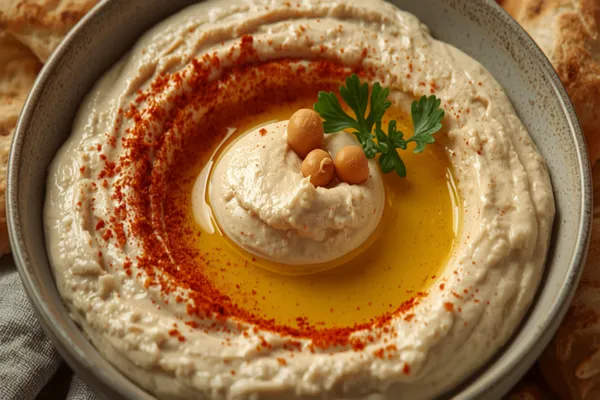
Hummus (Lebanese Chickpea and Tahini Dip)
Properly smooth, lemony hummus: chickpeas blended with a generous amount of tahini, lemon and garlic into a silky, savoury dip, swirled in a bowl and pooled with good olive oil. The cornerstone of the mezze table.
The Levant (Lebanon, Syria, Palestine) · Lebanese
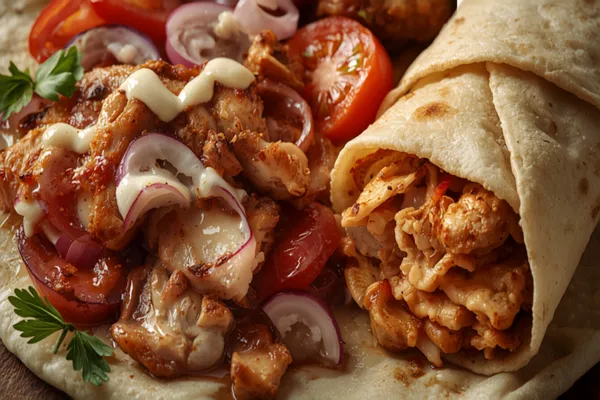
Chicken Shawarma (Levantine Spiced Roast Chicken)
Home-style chicken shawarma: thigh meat marinated in yogurt, garlic and a warm Levantine spice blend, roasted until charred and juicy, then sliced and wrapped in flatbread with garlic sauce, pickles and tomato.
The Levant (Lebanon & Syria) · Lebanese
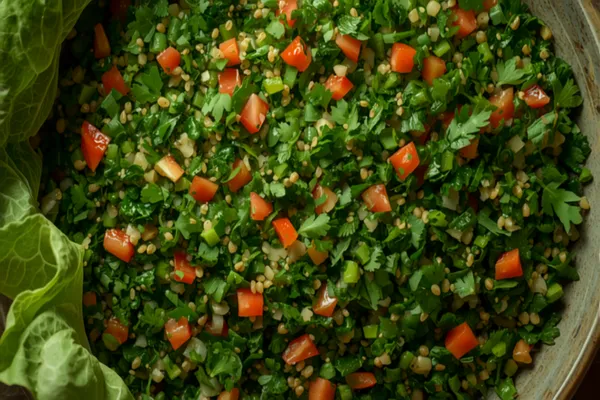
Tabbouleh (Lebanese Parsley and Bulgur Salad)
The real Lebanese tabbouleh: a vivid green salad that's mostly finely chopped parsley and mint, with just a little fine bulgur, sweet tomato and a sharp lemon-and-olive-oil dressing. Fresh, herby and nothing like the grain-heavy imitations.
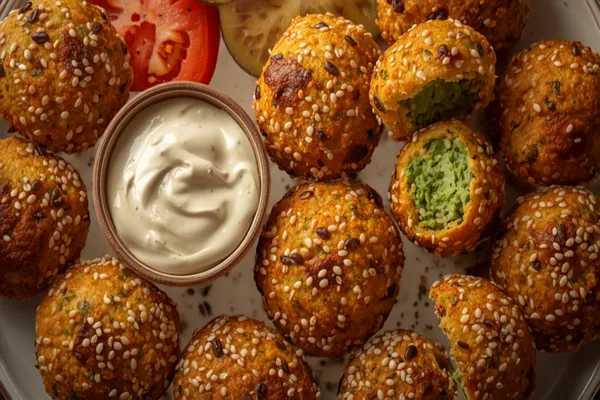
Egypt (Cairo & the Delta) · Egyptian
Ta'ameya (Egyptian Fava Bean Falafel)
Egypt's own falafel: split dried fava beans blitzed with herbs, leeks and garlic into a vivid green batter, formed into patties and fried until shatteringly crisp outside and fluffy-green within. Lighter and herbier than its chickpea cousin.
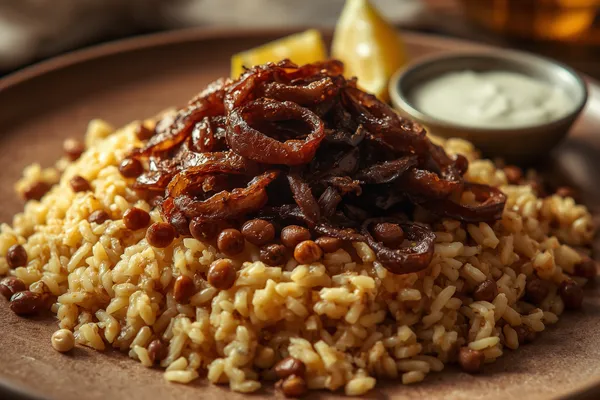
The Levant (Lebanon, Syria, Jordan, Palestine) · Middle Eastern
Mujaddara (Lentils and Rice with Crispy Caramelized Onions)
The Levantine dish of lentils, rice, and deeply caramelized onions — humble, ancient, and quietly luxurious. A handful of ingredients turned into something far greater than their cost, crowned with onions fried until almost black and sweet.